
Reviewed · HISTORICAL TOURS
From Salvador: Quilombo Heritage Daytrip with Lunch
Bahia’s past is still lived here. This 8-hour small-group trip from Salvador connects Santo Amaro’s sugar-era streets, the Quilombo Kaonge community, and colonial Cachoeira. I like the chance to learn how manioc flour and palm oil are made, and I like the direct conversation with a community elder. The main caution is value: at $170 per person, the hands-on portion may feel brief if you expect a full workshop rather than a cultural visit with demonstrations.
The guide can make a major difference. Wilson earned especially warm praise for his friendly manner and useful explanations, while another recent participant found the guide excellent but felt the Quilombo activities were too basic for the price. That mixed impression is useful: book this for context, conversation, and access to a traditional community, not for a packed schedule of attractions.
In This Review
- Key points to know before booking
- Why the Recôncavo makes a better day trip than a quick city tour
- Santo Amaro and Praça da Purificação
- The road through cane, manioc, and tobacco country
- Inside Quilombo Kaonge
- Making manioc flour and palm oil
- Crossing the Paraguaçu River into Cachoeira
- What the $170 price really covers
- Languages, comfort, and practical planning
- Who should choose this day trip?
- Should you book the Quilombo Kaonge day trip?
- FAQ
- How long does the tour last?
- Where does pickup take place?
- Is lunch included?
- Are drinks included with lunch?
- Is a vegetarian meal available?
- Which languages are available?
- What will I do at Quilombo Kaonge?
- Does the trip include Cachoeira?
- What is the cancellation policy?
Key points to know before booking
- Santo Amaro opens the day with sugar history: Walk around Praça da Purificação, public-market areas, and old secular houses in a town shaped by sugar plantations and enslaved labor.
- Quilombo Kaonge is the heart of the experience: You visit a traditional Quilombola community and learn about daily life, food, and local knowledge.
- Manioc flour becomes your hands-on lesson: You get the chance to take part in the process rather than simply hear about it.
- A griô, or community elder, adds personal depth: Time with an elder gives the visit a human voice that a standard sightseeing stop cannot provide.
- Cachoeira supplies the colonial finale: Cross the Paraguaçu River on an 1830 bridge built by the English, then visit the Danneman cigar factory.
- Small groups keep the day personal: The experience is advertised as limited to four participants in one place and as a maximum of six in another, so confirm the exact group size when booking.
Why the Recôncavo makes a better day trip than a quick city tour
The Bahia Recôncavo is not just a pretty rural setting outside Salvador. It is a region shaped by Portuguese colonization, sugar production, African heritage, religious traditions, and long struggles connected to Brazil’s independence.
That combination gives the day its purpose. You are not simply driving from one photogenic town to another. You are following the links between plantation agriculture, enslaved labor, Afro-Brazilian culture, local food, and the communities that preserved their identity after slavery.
I find this kind of outing most rewarding when you arrive with patience. The schedule allows time for walking, talking, eating, and observing. It does not promise a constant stream of major sights. Some moments may feel quiet, and the visit to the Quilombo may depend heavily on the quality of the explanations and the amount of participation offered that day.
Transportation, hotel pickup, drop-off, a guide, lunch, and a small group are included. Drinks are not included, so carry some Brazilian reais or ask your guide about buying something along the way.
A few more trips worth weighing up before you book
- Salvador: Anthropological City Tour with Lunch IN 6 HOURS
★ 4.9 · 20 reviews - Rio de Janeiro: 6-Stop Highlights of Rio with Lunch
★ 4.4 · 5,157 reviews - Rio: Christ the Redeemer, Sugarloaf, Selaron & BBQ Lunch
★ 4.5 · 2,428 reviews
Santo Amaro and Praça da Purificação
The day begins with pickup at your hotel lobby in Salvador, followed by the drive toward Santo Amaro. The exact road conditions and traffic can affect the pace, but the overall activity lasts about eight hours, so expect a full day outside the capital.
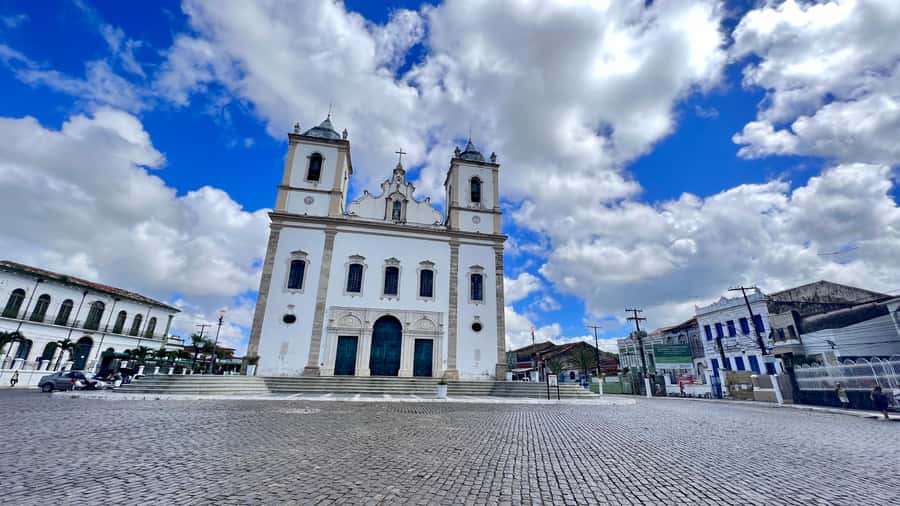
Santo Amaro is introduced through Praça da Purificação, with about 30 minutes for a guided visit, sightseeing, and photographs. The town’s old houses and public spaces reflect its former importance in the sugar economy.
This stop matters because it gives you a historical frame before you reach the Quilombo community. Sugar cane shaped local wealth, while enslaved labor supplied much of the work behind it. Walking among secular houses and through public market areas helps connect that history to an actual town rather than leaving it as a lecture inside a museum.
You will not have hours to explore Santo Amaro independently. The stop works best as an introduction, not as a complete town tour. If you like architecture, markets, and social history, you will probably wish for extra time. If your priority is meeting the community and taking part in food production, the short visit keeps the day moving.
A guide who explains the local setting well is especially valuable here. Wilson was praised for making the experience fun while supplying useful information. That kind of guide can turn a brief stop into a meaningful one.
The road through cane, manioc, and tobacco country
After Santo Amaro, the route continues through agricultural areas growing sugar cane, manioc, and tobacco. These crops are not random scenery. They help explain how food, labor, and commerce have shaped the Recôncavo.
The drive also prepares you for the Quilombo visit. Manioc is central to the food lesson later in the day, and seeing farmland along the route gives you a better sense of the rural setting where these products are grown and processed.
Do not expect a polished theme park or a staged historical village. The appeal is the chance to see a community connected to its own practices and traditions. At the same time, you should keep expectations sensible. The program offers a cultural encounter and demonstrations, but the available information does not promise a long farm walk, extensive craft workshop, or a large number of organized activities.
That distinction matters at $170. The cost is easier to justify if you value private transportation, a guide who can interpret the region, lunch, and access to a place you would not easily reach on your own. It is harder to justify if you measure value by the number of attractions or the length of each activity.
Inside Quilombo Kaonge
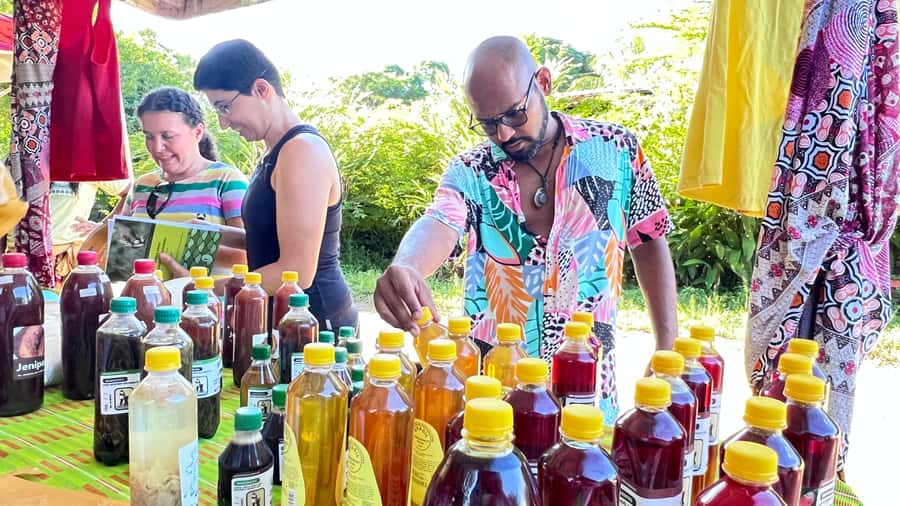
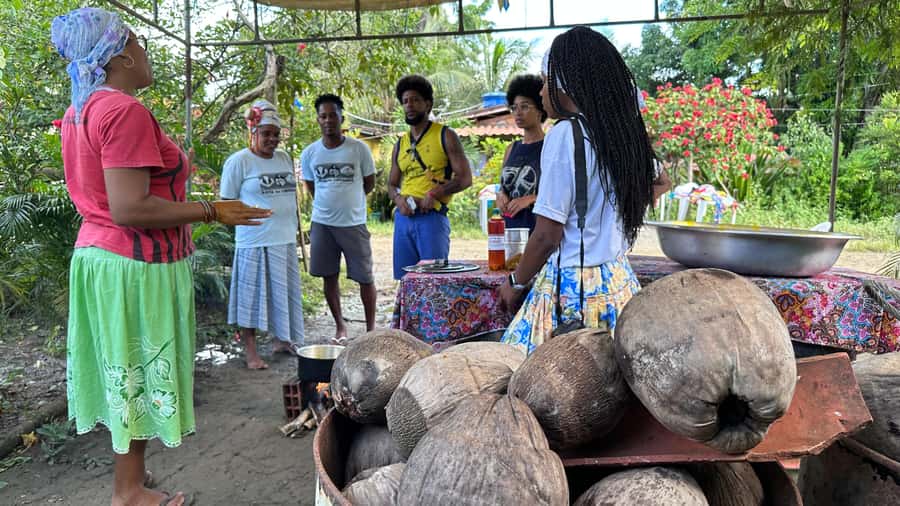
Quilombo Kaonge is the central stop. A Quilombola community is made up of descendants of people who resisted slavery and maintained community life outside the direct control of plantation society. The visit gives you a chance to hear about that continuing identity from people connected to the place.
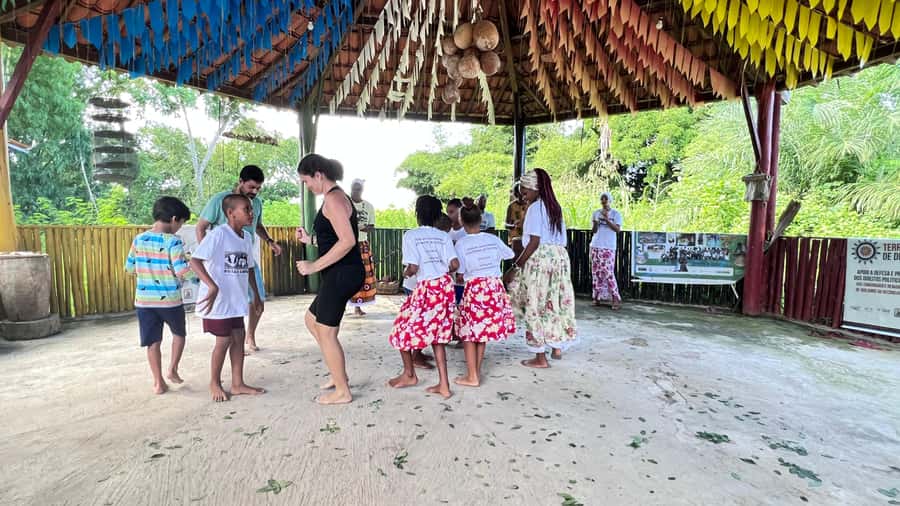
The most personal part is the conversation with the community’s griô, or elder. In many traditional communities, an elder carries memory through spoken accounts, practical knowledge, and stories. Here, that conversation is intended to offer more than a guide’s general history. It gives you a direct link to local experience.
You should approach this part with respect and curiosity. Ask questions, listen carefully, and allow the conversation to set the pace. This is not a quick photo opportunity. Its value comes from hearing how culture and daily life are understood within the community itself.
The group size helps. A smaller party makes conversation easier and reduces the awkwardness that can come with a large tour bus. The advertised group information is inconsistent, however. One description says a maximum of six people, while another says the group is limited to four participants. Confirm this point if privacy and conversation are important to you.
The strongest criticism concerns the amount of activity at the Quilombo. One December 2025 participant considered the guide excellent but felt that the community portion offered only a few basic demonstrations. That is the clearest warning in the available feedback. You may find the encounter worthwhile for its setting and human contact, but do not book it expecting an all-day practical course.
More history-led tours:
- Salvador Historic Walking Tour – Pelourinho
★ 4.8 · 62 reviews - Historic City Tour in Salvador
★ 3.6 · 17 reviews - Rio de Janeiro: Historic Rio and Santa Teresa Half-Day Tour
★ 4.4 · 228 reviews - São Paulo: Downtown Historical Bike Tour
★ 4.9 · 191 reviews
Making manioc flour and palm oil
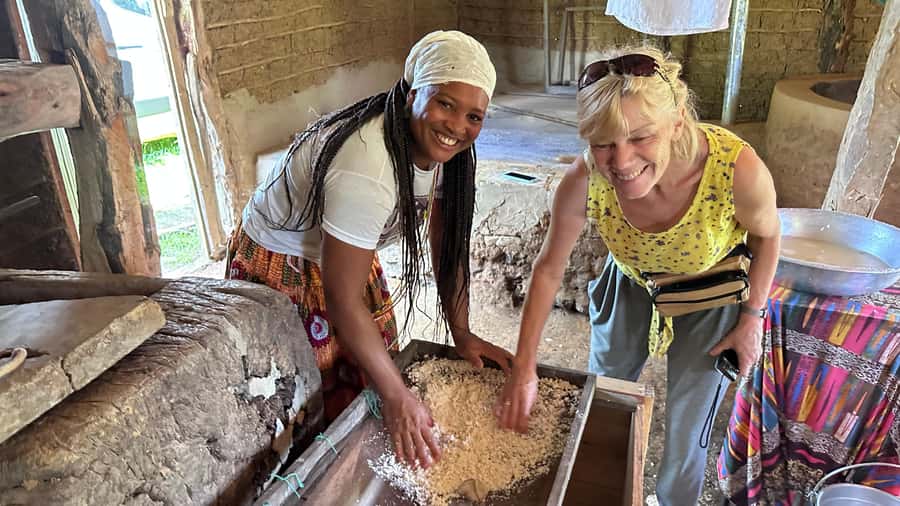
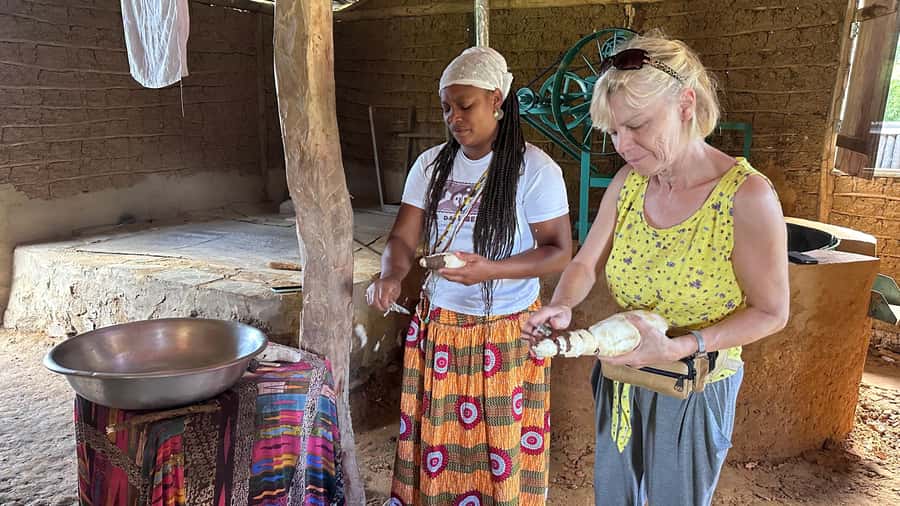
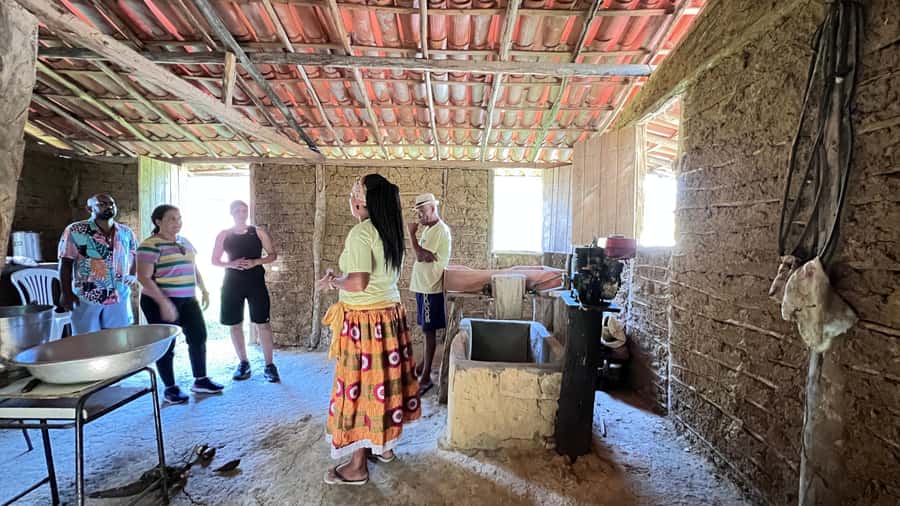
The hands-on food portion brings the cultural information into focus. You learn how manioc becomes flour, one of the staple foods of Brazil, and you have the chance to participate in the process.
Manioc flour is more than a cooking ingredient. It is a basic part of Brazilian meals and a useful way to understand how local communities turn a crop into something durable, practical, and widely eaten. Taking part in its manufacture makes the lesson physical. You are not just hearing that manioc matters. You are seeing the work involved.
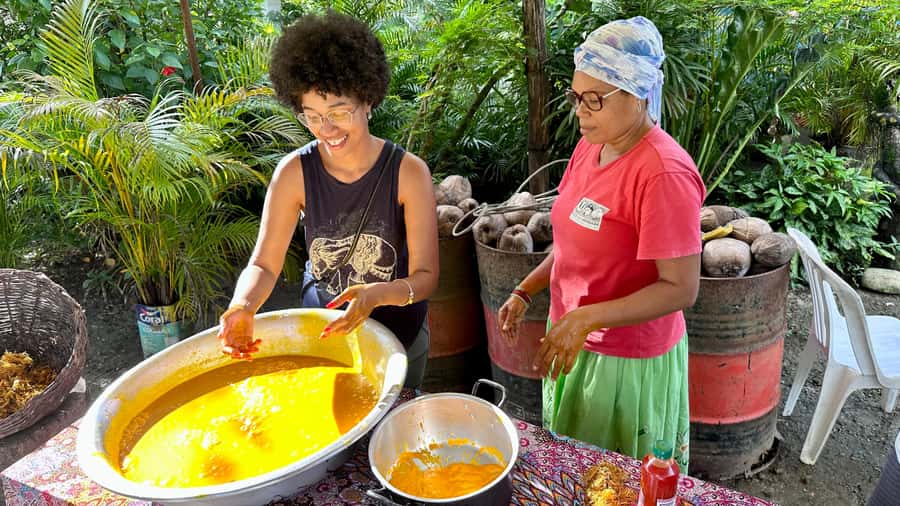
The program also includes a lesson in making palm oil after lunch. The supplied information does not provide the exact equipment, length of the demonstrations, or every step involved, so you should not assume a full production session. Think of it as an introduction with participation when possible.
This is where expectations and price need to line up. If you enjoy food traditions and simple practical demonstrations, the activity may be one of the day’s best moments. If you want intensive work with plenty of time to repeat each step, the session could seem thin.
The lunch is included and features regional food. A vegetarian option is available, but you need to request it when booking. Drinks cost extra. Since the meal is part of the community visit, it also gives you time to slow down and appreciate local tastes rather than rushing between sights.
Crossing the Paraguaçu River into Cachoeira
In the afternoon, the trip continues to Cachoeira, described as the most important city in the Recôncavo region. Its colonial character provides a strong contrast with the rural community visit and Santo Amaro’s market spaces.
The route includes a crossing of the Paraguaçu River on a bridge built by the English in 1830. That detail gives the journey a physical reminder of the region’s commercial past and outside influence. You do not need to be an architecture specialist to appreciate the bridge as part of the story.
Cachoeira is a colonial city, but this is not presented as a long walking tour through every street. The stop forms a final cultural layer before the return to Salvador. You get a sense of the town, take in the river crossing, and visit the Danneman cigar factory.
The cigar factory adds an industrial and commercial note to a day otherwise centered on agriculture and community life. Together, Cachoeira and the factory show how the Recôncavo has been shaped by production, trade, and colonial connections.
The afternoon stop may feel short if Cachoeira captures your interest. That is the tradeoff of fitting three distinct places into one day. You gain variety, but you do not get extended free time in any one location.
What the $170 price really covers
At $170 per person, this is not a bargain day trip in the basic transportation sense. The value lies in the package: hotel pickup and drop-off from Salvador, transport across the region, an accredited guide, lunch, and a small group.
Private or small-group access can save you the trouble of arranging several connections to Santo Amaro, the Quilombo, and Cachoeira. It also gives you a guide to explain the relationship between African heritage, Portuguese colonial rule, agriculture, and local traditions.
Still, the price is high enough that you should think about what you want from the day. I would consider it a fairer purchase for someone who values cultural context and direct contact over a long list of attractions. I would be more hesitant for someone who wants extensive workshops, many sites, or lots of free time.
The mixed score of 3.4 from three ratings reflects that tension. The guide service can be a real strength, but the community activities may not feel substantial enough for every budget. The fact that this was described as the least expensive Quilombo option by one participant gives useful context, but cheaper compared with similar tours does not automatically make it good value for you.
Languages, comfort, and practical planning
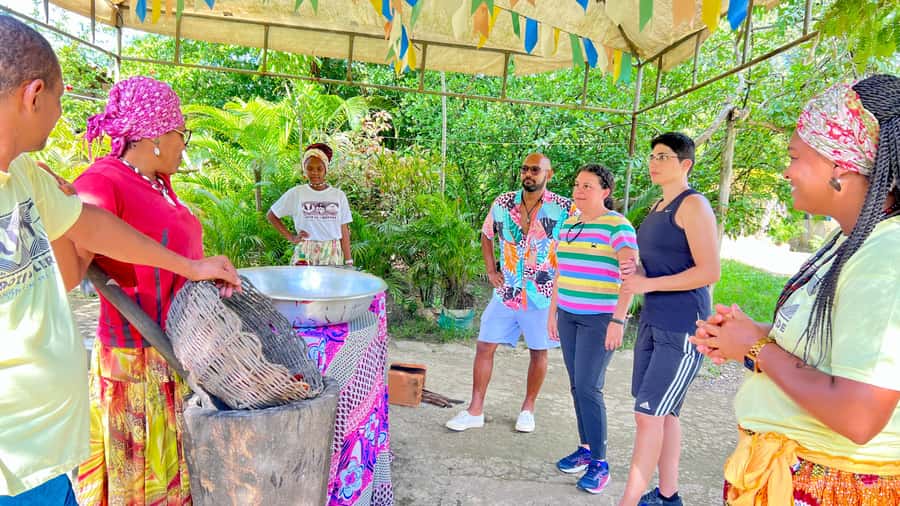
Live guiding is available in Spanish, English, and Portuguese. Choose the language that lets you ask questions comfortably, especially during the conversation with the griô and the food demonstrations.
The experience is described as wheelchair accessible. Because the day includes walking through a public area, visiting a community, and moving between several places, you should still discuss your specific mobility needs with the provider before departure.
Smart-casual clothing is requested. Comfortable clothing and shoes make sense for the walking and practical activities, even though the stated dress code is not formal. You will be spending time outdoors and in working community spaces, so avoid dressing as if you are heading to a fine restaurant.
Hotel pickup and drop-off are included, with pickup at your hotel lobby. Starting times vary, so check availability for your date. Free cancellation is available up to 24 hours before departure, and you can reserve now and pay later, which helps if your Salvador plans may change.
Who should choose this day trip?
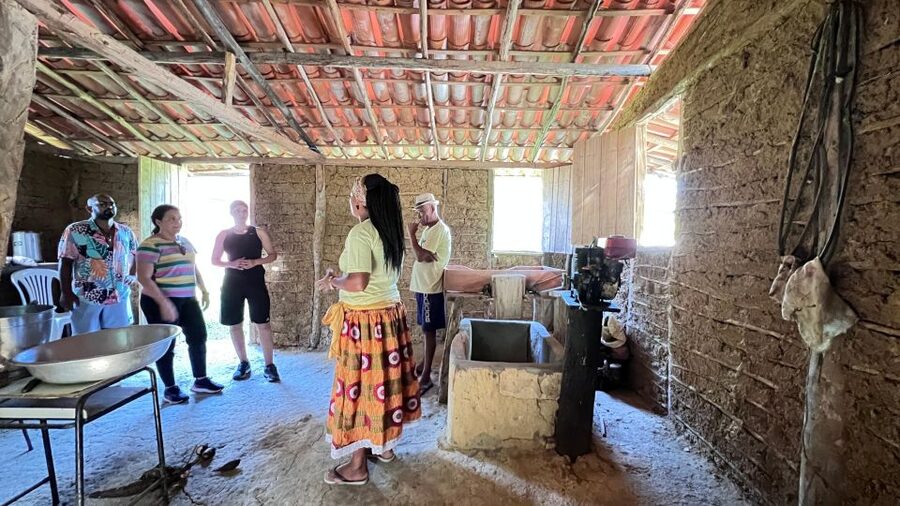
I would recommend it to you if you want to understand Bahia beyond Salvador’s central sights. It suits people interested in Afro-Brazilian heritage, food production, colonial towns, agriculture, and direct conversation with local residents.
It is also a sensible choice if you prefer a small group and want the ease of door-to-door transport. The language options make it practical for English, Spanish, and Portuguese speakers.
I would not make it my first choice for you if your main goal is a long, detailed workshop. The strongest negative point is clear: the demonstrations at the Quilombo may feel basic. You also spend much of the day moving between Santo Amaro, the community, and Cachoeira, so none of the stops receives a full day.
Should you book the Quilombo Kaonge day trip?
Book it if you see the price as payment for access, interpretation, transport, and a personal encounter rather than a packed attraction schedule. The griô conversation, manioc flour lesson, regional lunch, and small-group format give the day a clear cultural purpose.
Before paying, confirm the exact group limit and tell the provider if you need a vegetarian meal or have accessibility concerns. I would also ask how much hands-on time is planned at the Quilombo, since that is the part most likely to determine whether the $170 feels worthwhile.
If Wilson is your assigned guide, you may be in particularly good hands. His friendly style received the strongest personal praise available. Just keep your expectations grounded: this is a thoughtful introduction to the Recôncavo and Quilombola culture, not an intensive skills course.
FAQ
How long does the tour last?
The experience lasts eight hours.
Where does pickup take place?
Pickup and drop-off are provided at your hotel, with pickup at the hotel lobby in Salvador.
Is lunch included?
Yes. Lunch featuring regional food is included.
Are drinks included with lunch?
No. Drinks are not included.
Is a vegetarian meal available?
Yes. You need to advise the provider at the time of booking if you require a vegetarian option.
Which languages are available?
The live guide service is available in Spanish, English, and Portuguese.
What will I do at Quilombo Kaonge?
You will visit the traditional Quilombola community, talk with a community elder, and learn about and take part in making manioc flour and palm oil.
Does the trip include Cachoeira?
Yes. The afternoon includes a visit to Cachoeira, a crossing of the Paraguaçu River on an 1830 English-built bridge, and a visit to the Danneman cigar factory.
What is the cancellation policy?
You can cancel up to 24 hours in advance for a full refund. You can also reserve now and pay later.
Just added around Salvador
- From Salvador: Schooner Tour to Frades Island★ 3.9 · 3 reviews
- Salvador: Caipirinha Masterclass with Unlimited Drinks★ 4.2 · 4 reviews
- Salvador: Schooner Cruise with Pickup and Itaparica Stop★ 3.8 · 5 reviews
- BOXE CLASS – EX BAHIAN CHAMPION (SALVADOR-BA)★ 5.0 · 7 reviews
- Salvador by Night: Pelourinho & Old Town Tour★ 4.3 · 8 reviews
- Salvador: Traditional Drumming and Percussion Workshop★ 4.4 · 10 reviews
- Salvador: 3-Hour Percussion Class★ 4.9 · 10 reviews
- From Salvador: Morro de São Paulo Tour★ 4.2 · 13 reviews
Historical Tours, compared.



Scenic Train ride to historical cities of Morretes and Antonina
Read our review →
From Foz do Iguazu: Triple Frontier Landmark Ticket
Read our review →
Explore Little Africa : Unveiling Afro Heritage in Rio de Janeiro
Read our review →
Downtown-Center History Walking Tour – in English
Read our review →Browse the lists this tour appears in