
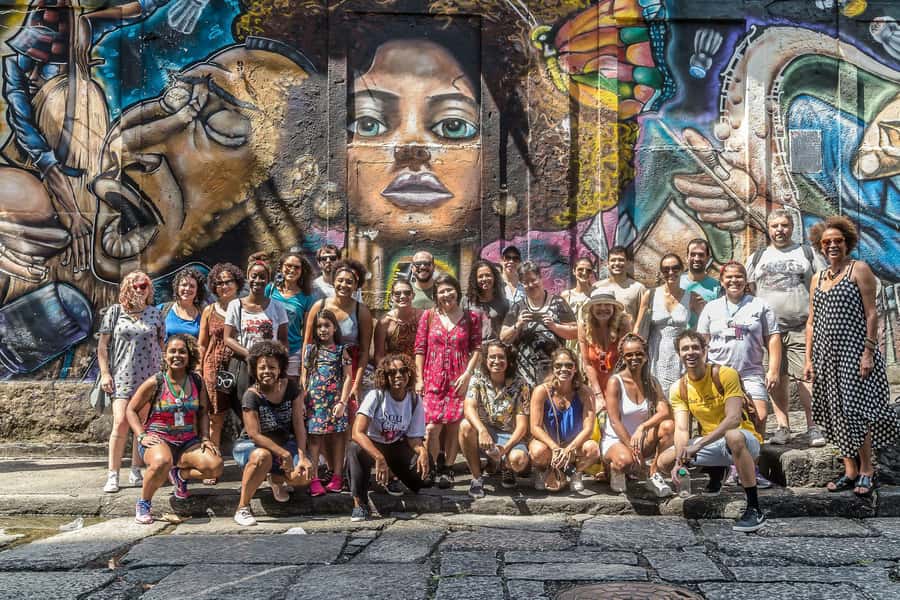
Reviewed · HISTORICAL TOURS
Rio de Janeiro: Little Africa Heritage Walking Tour
Rio’s samba story begins far from the beach. This 150-minute walk through Little Africa links Brazil’s colonial past with the living culture of Rio’s port district. I like the clear focus on Afro-Brazilian history and the rooftop view over Mauá Square and Guanabara Bay. I also like that the walk reaches places you could easily pass without understanding, including Pedra do Sal and the Valongo waterfront.
The main consideration is the heat. You spend about two and a half hours outside, and the tour runs rain or shine. Comfortable shoes, water, sunscreen, and light clothes are not optional extras here. The history can also be painful, so this is an educational walk rather than a light sightseeing stroll.
Guides such as Luana, Nathalia, Larissa, Marina, Ryane, and Eddie have earned especially warm praise for their passion, clear explanations, and care with difficult subjects. At $40 per person, I find the tour a good value if you want context, not just photographs. You are paying for a guide who connects scattered monuments, streets, food, music, and memory into one understandable story.
In This Review
- Key points about Rio’s Little Africa Heritage Walking Tour
- Why Little Africa belongs on your Rio schedule
- Meeting at the Rio Art Museum and looking over Mauá Square
- Morro da Conceição, where the city’s layers meet
- Largo de São Francisco da Prainha and the taste of Africa
- Mercedes Baptista and the power of Afro dance
- Pedra do Sal, samba’s birthplace
- The Hanging Garden of Valongo
- Cais do Valongo, the tour’s most important stop
- What $40 buys you
- Heat, rain, pace, and what to bring
- Who should book this walk?
- Should you book the Little Africa Heritage Walking Tour?
- FAQ
- Where does the Little Africa tour begin?
- How long does the tour last?
- Which places are included on the walking route?
- Is the rooftop view included?
- Is the tour offered in English?
- What should I bring?
- Are meals and hotel transportation included?
Key points about Rio’s Little Africa Heritage Walking Tour

- The tour starts at the Rio Art Museum: Meet your English-speaking guide in front of the museum and arrive five minutes early.
- The rooftop view sets the scene: A short stop looks over Mauá Square and Guanabara Bay while introducing Brazil’s colonial period.
- Largo da Prainha connects history with food: You learn about African influence on Brazilian gastronomy in one of the area’s key public spaces.
- Pedra do Sal links place and music: This is presented as the birthplace of samba and one of the oldest continuously inhabited Black neighborhoods in Brazil.
- The Valongo stops carry the greatest weight: The Hanging Garden of Valongo and Cais do Valongo bring the story back to slavery, forced migration, and memory.
- The walk suits adults and older children: Children under five are not permitted, and the outdoor route requires a reasonable tolerance for heat and rain.
Why Little Africa belongs on your Rio schedule
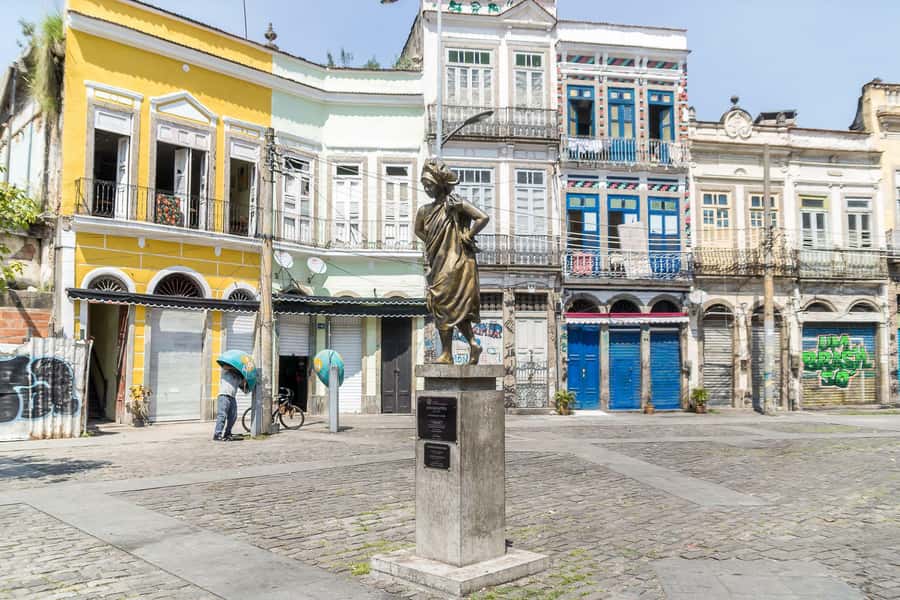
Rio is often introduced through beaches, mountains, carnival, and famous viewpoints. Those are important, but they do not explain the city on their own. The port area tells another story, one tied to colonial Brazil, the Atlantic slave trade, Black resistance, music, dance, food, and the formation of modern Rio.
The neighborhoods around the port became known as Little Africa around the turn of the 20th century. After the slave trade was outlawed in Brazil, freed people remained in the area and built lives there. That simple fact gives the walk its shape: you are not only studying a vanished past. You are walking through a part of Rio where African traditions continued, changed, and helped form Brazilian culture.
I especially value the tour’s opening history lesson. Starting with the colonial period gives you the basic timeline before the group reaches the individual sites. Without that introduction, a statue, garden, or old stone street can feel disconnected. With it, the stops begin to answer one another.
The subject is serious. Slavery and structural racism are discussed directly, along with the continued racial issues of present-day Brazil. Guides have been praised for handling sensitive questions with care while keeping the conversation open. A strong guide may use humor, acting, personal stories, and questions to keep the group involved, but the purpose remains learning rather than entertainment.
More Historical Tours in Rio de Janeiro
- Rio de Janeiro: Historic Rio and Santa Teresa Half-Day Tour
★ 4.4 · 228 reviews - Explore Little Africa : Unveiling Afro Heritage in Rio de Janeiro
★ 5.0 · 97 reviews - Learn the History of Rio with an Unforgettable City Center Walking Tour
★ 5.0 · 82 reviews
Meeting at the Rio Art Museum and looking over Mauá Square
The walk begins in front of the Museu de Arte do Rio, usually called MAR. Your guide meets you outside, so arrive five minutes before the scheduled start. The guide can wait only 15 minutes for late arrivals, a useful warning in a city where traffic and ride-hailing delays can be unpredictable.
The museum provides a fitting starting point. The first portion covers Brazil during the colonial period, giving you a foundation for the rest of the walk. This is not just background filler. It helps explain how African people arrived in Brazil, how slavery shaped the country, and why the port district became so important.
There is also a ten-minute break at the museum area, including time to admire the view from a rooftop. From above, you can take in Mauá Square and Guanabara Bay. The view is attractive, but its real value is visual orientation. You can see the port zone as a connected part of the city rather than a few isolated monuments.
I would not treat this as a museum tour. The museum is the meeting point and the opening setting, while the main experience takes place outdoors. If you want to visit the museum’s exhibitions, plan separate time rather than expecting them to be part of the walk.
Morro da Conceição, where the city’s layers meet
From the museum area, the route continues toward Morro da Conceição. The guided walk here takes about 20 minutes. This section helps you read the port district as an old urban neighborhood, not simply as a backdrop for major attractions.
The route moves between history and everyday streets. That matters because Little Africa is not presented as a single preserved attraction. Its meaning is spread across hills, squares, homes, religious connections, public art, food traditions, and memorial sites. A guide points out those links in a way that a solo walk may not.
The climb or uneven walking around a hill area may require more effort than the flat parts of the port. The supplied information does not give a full accessibility description, so you should be prepared for ordinary city walking rather than a step-free museum visit. Good shoes will help, especially in rain.
This is also where a guide’s personal approach can make a real difference. Marina, described as a Carioca with family connections to the subject, has been praised for relating national history to local experience. Other guides, including Eddie and Ryane, have been singled out for connecting the past to the wider African diaspora and to their own communities.
Largo de São Francisco da Prainha and the taste of Africa
The next major stop is Largo de São Francisco da Prainha, with about 20 minutes for a visit and explanation. The square is used to discuss African influence on Brazilian gastronomy, adding a welcome sensory side to a tour that could otherwise remain focused on dates and monuments.
Food is one of the clearest ways culture survives. Recipes, ingredients, cooking methods, and shared meals can carry family and community memory across generations. This stop helps you see Afro-Brazilian culture as something lived, not merely commemorated.
The tour price does not include lunch or food tastings. Still, several guides have offered useful suggestions for eating afterward, and some groups have continued together for a meal. One recommendation from the experience was a restaurant serving bobó de camarão, a shrimp stew. Another guide took guests to a market after the walk.
Treat those possibilities as optional follow-up plans, not guaranteed parts of the booking. If food is a major reason you want to visit Little Africa, ask your guide for current suggestions at the end. You will already be in the right area to continue exploring.
The square also helps balance the difficult material. You learn about oppression and loss, but you also see how African culture shaped the food and social life of Brazil. That fuller view is one of the tour’s strongest features.
More Walking Tours in Rio de Janeiro
- Rio de Janeiro: Rocinha Favela Walking Tour with Local Guide
★ 4.8 · 3,052 reviews - Rio De Janeiro: Half-Day Rocinha Favela Walking Tour
★ 4.7 · 2,272 reviews - Sunrise and Sunrise Walk Two Brothers with Local Guide
★ 5.0 · 193 reviews - Rio’s city walking tour: a glimpse of history and olympic legacy
★ 4.5 · 78 reviews
Mercedes Baptista and the power of Afro dance
The walk includes a statue honoring Mercedes Baptista, a major figure in Brazilian dance. She was the first Black dancer at Rio’s Municipal Theater and a forerunner of Afro dance in Brazil.
This stop gives the tour a person-centered focus. Instead of discussing African heritage only through broad historical forces, you encounter an individual who challenged barriers in the arts. Her achievement matters because cultural recognition and institutional access have not always been available equally.
The supplied route information places this statue in the Little Africa walk, though it does not specify a separate timed stop. Your guide explains its place in the wider story while the group continues through the port district. It is another reason to pay attention to what is around you rather than rushing between famous attractions.
Guides have received repeated praise for making these stories memorable. Susan described a guide using expressive acting and facial expressions to explain key points. That sort of presentation can help a group stay focused during a long outdoor explanation, especially when the material is complex.
Pedra do Sal, samba’s birthplace
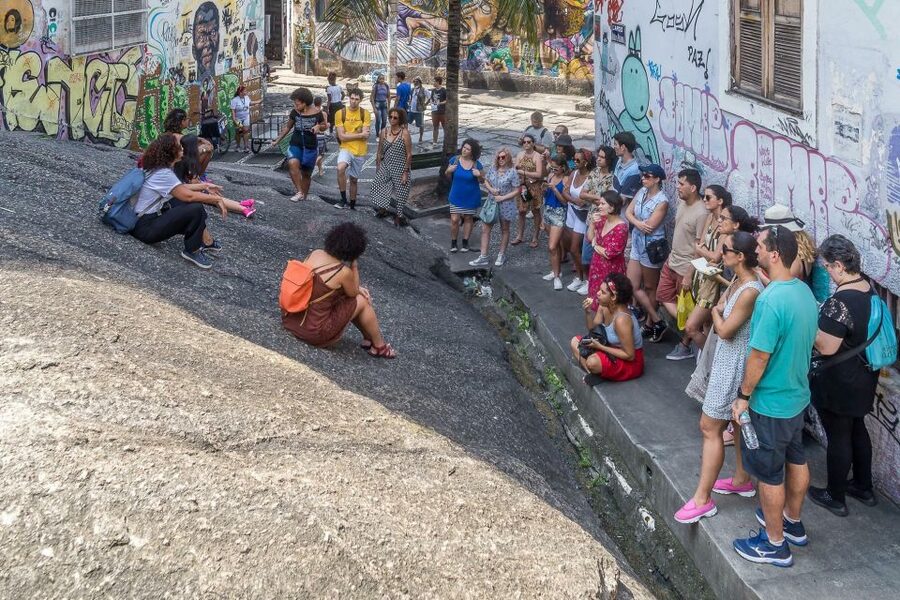
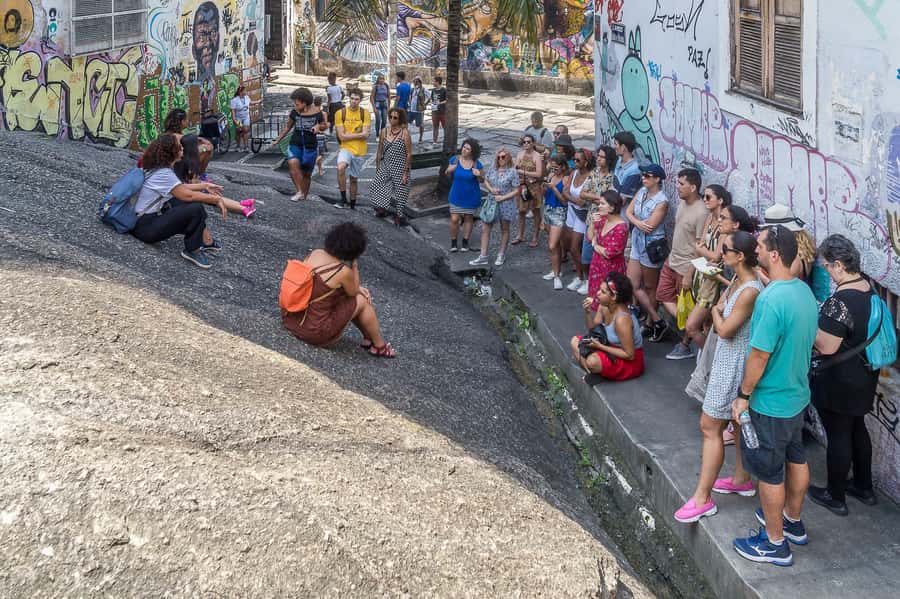
Pedra do Sal is one of the tour’s headline stops, with roughly 20 minutes for a guided visit. It is considered the place where samba was born and is described as the oldest continuously inhabited Black neighborhood in Brazil.
For many people, this is the moment the walk connects most clearly with Rio’s familiar image. Samba is not treated as a free-floating symbol of carnival. Instead, the guide places it in a Black community and in a neighborhood shaped by migration, work, faith, music, and social life.
That context is valuable. You may already know samba as a sound or a dance, but this stop shows why its origin story is also a story about belonging and survival. The stones and surrounding streets become evidence of how communities created culture under difficult conditions.
Do not expect a samba performance to be included. The experience is a guided historical visit in front of Pedra do Sal, not a music show or dance class. If you want nightlife or a separate samba event, your guide may be able to suggest options, but that is outside the stated tour.
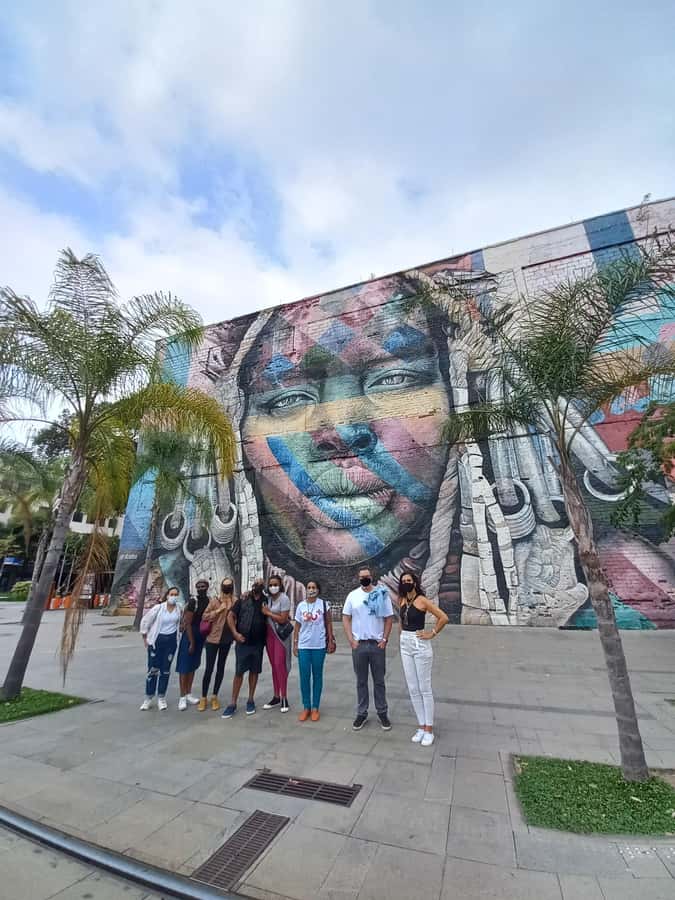
The area can also be visually rewarding. Guests have noted murals and public art celebrating cultural figures, both historical and modern. Those details give the walk a present-day edge. Little Africa is not frozen in the past, and the art helps show who is being remembered now.
The Hanging Garden of Valongo
The Jardim Suspenso do Valongo, or Hanging Garden of Valongo, comes later in the route. The guided visit lasts about 20 minutes. It provides a quieter setting for considering the port’s past and the way public spaces can be reshaped to preserve memory.
The garden is part of the Valongo area, which is central to the story of the transatlantic slave trade in Rio. The tour does not treat the site as an attractive garden alone. Its significance comes from what lies beneath and around the carefully arranged setting, and from the guide’s explanation of the port’s role.
This section may feel more reflective than the earlier stops. You have already discussed colonial Brazil, freed communities, food, dance, and samba. Here, those threads return to the people who were brought through the port and to the long effects of that system.
I would give this portion your full attention. The site itself may not explain everything to a first-time visitor, and signage cannot replace the broader account provided by the guide. This is exactly the sort of place where an informed explanation changes what you see.
Cais do Valongo, the tour’s most important stop
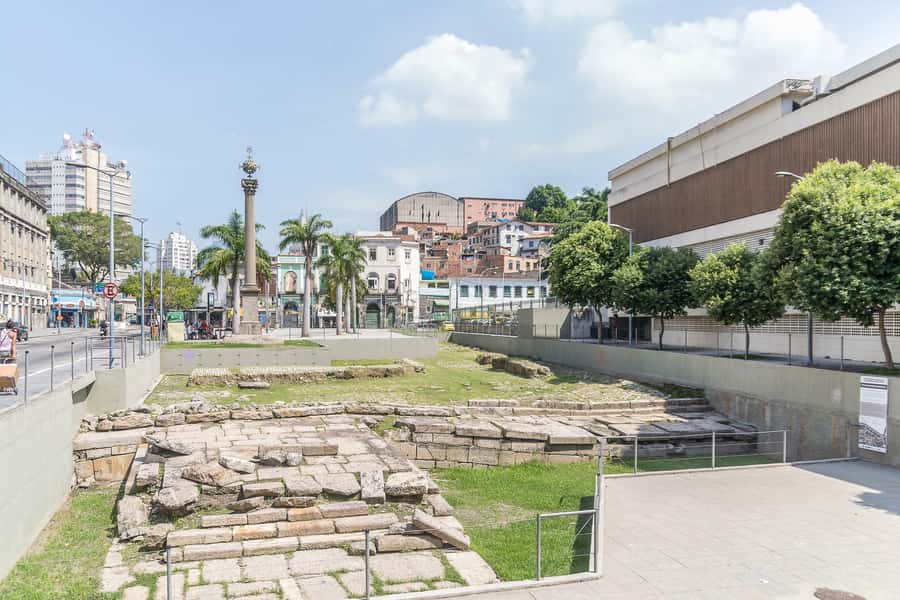
The final stop is Cais do Valongo, also visited with a 20-minute guided explanation. The route then returns to the Museu de Arte do Rio.
Cais do Valongo carries enormous historical weight. It connects the port directly to the forced arrival of enslaved Africans in Brazil. For many people, this is the point when the earlier discussion becomes concrete. The tour’s movement from colonial history to Little Africa, and then to samba and Afro-Brazilian culture, ends by asking you to remember the violence that shaped those later developments.
The guide’s role here is crucial. The subject includes slavery, racism, identity, and the difficult gap between national celebration and historical truth. Several guides have been praised for answering challenging questions with patience and sensitivity. That is worth seeking in a tour of this kind.
The return to the museum makes the route practical. You do not finish in an unfamiliar part of the city with no clear next step. You can use the port district as a base for lunch, more sightseeing, or a ride back to your accommodation. Hotel pickup and drop-off are not included, so you arrange your own transport before and after the walk.
What $40 buys you
At $40 per person, this is not the cheapest way to walk through Rio. You could pass several of these sites on your own for little or no cost. The question is what you would understand without a guide.
I think the price is fair for three reasons. First, the tour covers a focused subject that general city tours often give only brief attention. Second, the guide links sites that might otherwise seem unrelated. Third, the best guides add interpretation, personal perspective, and recommendations for food and further sightseeing.
The tour lasts 150 minutes, so you are paying for a concentrated half-day experience rather than a full-day excursion. There is no hotel transport, meal, or attraction admission listed as included. That keeps the value calculation straightforward: the main purchase is the guide’s time and the historical explanation.
A 4.9 rating from 177 reviews suggests very strong satisfaction, and the most consistent praise centers on the guides. Luana has been described as kind and caring, Nathalia as warm and engaging, Larissa as passionate and welcoming, Marina as lively and well prepared, Ryane as energetic, and Eddie as generous with his time. Individual guides can vary, but the pattern is clear: the human element is the reason to book.
Heat, rain, pace, and what to bring
This is an outdoor walking tour in Rio, and it takes place rain or shine. Wear comfortable shoes, sunscreen, and comfortable clothes. Bring water, especially if you are visiting during a hot period.
The walk is not described as strenuous, but two and a half hours outside can feel demanding in the heat. Plan your energy around the weather. The ten-minute break at the museum offers a pause, but most of the experience involves listening while standing or walking.
Rain does not automatically cancel the tour. One guest described taking the walk in heavy rain and still finding it worthwhile. That said, you should bring suitable rain protection if the forecast is poor. Wet pavement and reduced comfort can make the route harder, even when the guide continues as planned.
Children under five are not suitable for this activity. Older children may appreciate the stories, but the subject matter is serious and the tour depends on sustained listening. I would recommend it most for adults, older teenagers, students of history or culture, and anyone who wants a more thoughtful introduction to Rio.
The tour is offered only in English according to the important information provided, despite the broader wording that mentions English or Portuguese. If language matters to your booking, confirm the current arrangement before you pay.
Who should book this walk?
I would book it early in a Rio visit, perhaps on your first or second day. The opening explanation can help you understand later encounters with samba, Afro-Brazilian food, carnival, public art, and racial identity throughout Brazil.
It is especially useful if you plan to visit Bahia. One guest said the walk increased interest in seeing more of Brazil’s history there, and that makes sense. The tour gives you a starting point for thinking about the African diaspora across the country, not just a narrow account of one neighborhood.
I would skip it only if you want a relaxed sightseeing walk with little discussion of difficult history. It is not a beach break, a photo-only tour, or a food tour. The content includes slavery and present-day racial dynamics, and you need to be ready to listen and think.
Should you book the Little Africa Heritage Walking Tour?
Yes, if you want to understand Rio beyond its postcard views. The strongest reason to book is the combination of place and explanation: Mauá Square, Morro da Conceição, Largo da Prainha, Pedra do Sal, the Hanging Garden of Valongo, and Cais do Valongo each add a different piece.
Book it for the guide, not for a checklist of attractions. The route is reasonably priced, focused, and short enough to fit into a busy visit, but the quality depends on the person leading it. Arrive early, prepare for weather, wear proper shoes, and leave time for lunch afterward.
If you want Rio’s African heritage treated as central to the city rather than as a footnote, this is a strong choice.
FAQ
Where does the Little Africa tour begin?
The tour begins in front of the Museu de Arte do Rio. You should arrive five minutes before the activity starts.
How long does the tour last?
The experience lasts 150 minutes, or two and a half hours.
Which places are included on the walking route?
The route includes the Rio Art Museum area, Morro da Conceição, Largo de São Francisco da Prainha, Pedra do Sal, the Hanging Garden of Valongo, and Cais do Valongo. It returns to the Museu de Arte do Rio.
Is the rooftop view included?
Yes. During the introduction, you can view Mauá Square and Guanabara Bay from a rooftop at the Rio Art Museum.
Is the tour offered in English?
Yes. The important information states that the tour is offered only in English and includes a live English-speaking guide.
What should I bring?
Bring comfortable shoes, sunscreen, water, and comfortable clothes. The tour runs outdoors in rain or shine.
Are meals and hotel transportation included?
No. Hotel pickup and drop-off are not included, and the tour price does not include a meal.
More Walking Tours
- Walking tour of the bohemian neighborhoods of Santa Teresa and Lapa
★ 5.0 · 59 reviews - Guided Walk to Telegraph Stone
★ 4.5 · 49 reviews - Bossa Nova Walking Tour
★ 5.0 · 48 reviews - Rio de Janeiro: Bossa Nova Walking Tour with Guide
★ 4.9 · 46 reviews
More Historical Tours
- Olympic Boulevard, Museum of Tomorrow & Historical Rio
★ 4.5 · 66 reviews - Rio: Olympic Boulevard, Museum of Tomorrow & History Tour
★ 4.1 · 47 reviews - Petropolis Bohemia: Historic tour and visit to the Bohemian Brewery
★ 4.5 · 45 reviews - Historical Downtown and Lapa – Walking Tour
★ 5.0 · 44 reviews
Just added around Rio de Janeiro
- Pedra Bonita Trail: The easiest trail with a beautiful view of Rio★ 4.6 · 3 reviews
- Rio: Private, Custom express, Main Attractions!★ 5.0 · 3 reviews
- Rocinha Jeep Tour: A Journey into the Soul of the Favela!★ 3.8 · 3 reviews
- Rio: Favela Walking Tour of Rocinha with a Resident Guide★ 4.7 · 3 reviews
- Rio: Museum of Tomorrow, Yup Star & Olympic Boulevard★ 3.7 · 3 reviews
- Explore Fernando de Noronha: 7-Hour Ilhatour★ 4.9 · 3 reviews
- Rio de Janeiro by Air: 10-Minute Helicopter Tour★ 4.4 · 3 reviews
- Rio: Best Dive Experience All Inclusive Scuba Diving Package★ 5.0 · 3 reviews
Historical Tours, compared.


Scenic Train ride to historical cities of Morretes and Antonina
Read our review →
From Foz do Iguazu: Triple Frontier Landmark Ticket
Read our review →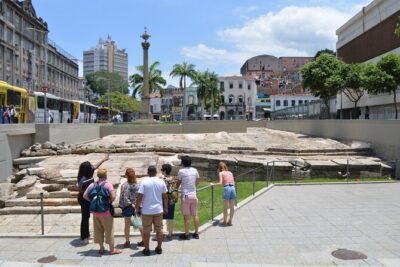
Explore Little Africa : Unveiling Afro Heritage in Rio de Janeiro
Read our review →
Downtown-Center History Walking Tour – in English
Read our review →
Learn the History of Rio with an Unforgettable City Center Walking Tour
Read our review →Browse the lists this tour appears in