
Reviewed · CYCLING TOURS
São Paulo: Downtown Historical Bike Tour
See São Paulo on two wheels. UrbanBikeSP links Paulista Avenue and the historic center in three useful hours, giving you a quick feel for the city’s architecture, parks, art, and neighborhoods. I like the broad route, which covers roughly 9 to 12 miles, and the way the ride mixes major sights with everyday city life. The main drawback is that you must be comfortable cycling in traffic, and the $85 price is higher than some city bike tours.
I also like the small-group setup, capped at 10 people, plus the easy meeting point near Ana Rosa Subway Station. Guides such as Juliana, Arthur, Pedro, Roberto, and Jefferson have earned praise for clear explanations and careful pacing. Still, São Paulo can be hot, crowded, and unpredictable, so this is not a gentle sightseeing ride for anyone who rarely cycles.
In This Review
- Key points to know before you book
- Why a bike is a smart way to meet São Paulo
- Starting at Portinha183 in Vila Mariana
- Paulista Avenue, Casa das Rosas, and MASP
- Liberdade and the city’s many identities
- Copan Building and São Paulo’s modernist side
- Municipal Theater and Vale do Anhangabaú
- Luz Station, Pinacoteca, and Luz Park
- Pátio do Colégio and Sé Cathedral
- What the ride feels like on the streets
- Is $85 a fair price?
- Who should book this São Paulo bike tour?
- Should you book it?
- FAQ
- How long is the São Paulo Downtown Historical Bike Tour?
- Where does the tour begin?
- What is included in the tour?
- What languages are available?
- Is the tour suitable for children?
- What happens if the weather changes?
Key points to know before you book
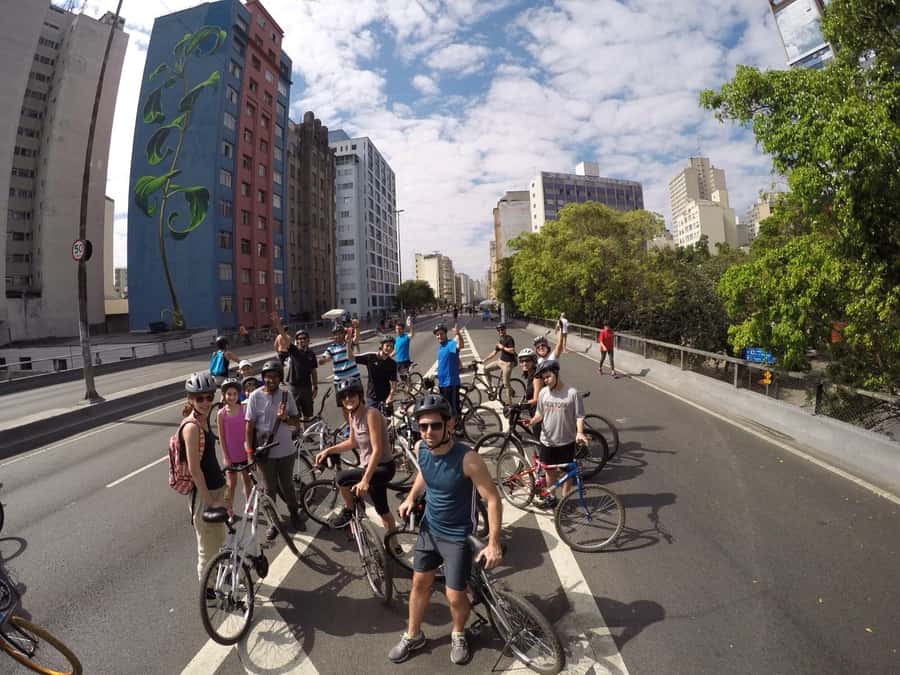
- Covers a large slice of São Paulo: In three hours, you ride from Paulista Avenue through downtown, Luz, Sé, and Liberdade.
- Mostly uses bike paths: Several guides keep groups on cycling routes when possible, but busy streets, pedestrians, cars, and some slopes still require attention.
- Strong local storytelling: The tour links buildings and public spaces to São Paulo’s colonial beginnings, modernist design, immigration, politics, music, and social issues.
- Begins and ends at a café: Portinha183 offers coffee, juice, iced mate tea, pão de queijo, ice cream, and açaí.
- Best for confident cyclists aged 13 and up: You need to know how to ride a bike and manage a 9 to 12 mile route.
- Useful for a first day in town: The ride gives you a city overview before you return to favorite areas on foot or by subway.
Why a bike is a smart way to meet São Paulo
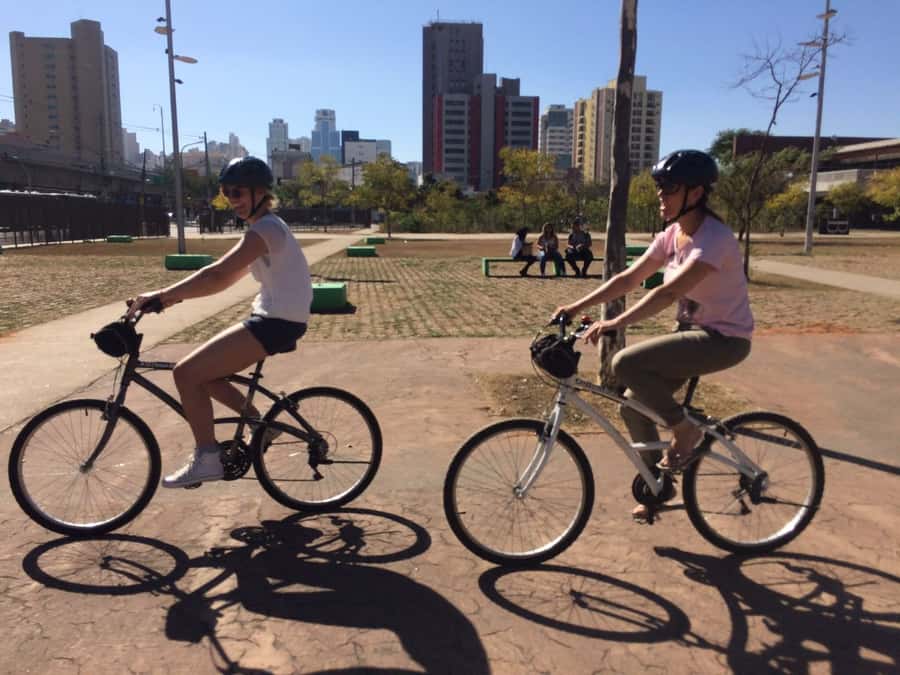
São Paulo is huge. A car can leave you staring at traffic, while walking limits how much ground you can cover in a short visit. This ride gives you the middle path: enough distance to see several districts, but enough stops to pause, listen, and take photos.
I especially like the contrast built into the route. You move from the polished cultural corridor of Paulista Avenue to the older streets downtown, then into Liberdade, where Japanese-Brazilian traditions shape the signs, lanterns, and street atmosphere. The city changes block by block.
The cycling also gives you a better sense of scale. You see the distance between São Paulo’s cultural institutions, office towers, parks, railway buildings, and historic squares. That matters because the city can feel like a collection of disconnected areas when you explore it only by taxi or subway.
The ride is not presented as a race. Guides have adjusted the pace for mixed groups, checked that everyone was keeping up, and reminded people to drink water. Some tours have included a guide at the front and another at the back, which is reassuring in city traffic.
More Historical Tours in São Paulo
Starting at Portinha183 in Vila Mariana
The meeting point is Portinha183 Café on Rua França Pinto, 183, in Vila Mariana. It is about five minutes from Ana Rosa Subway Station, served by the Blue and Green lines. Arrive 10 minutes early so you have time to check the bike, fit the helmet, and settle in.
The café is more than a place to wait. You receive an iced mate tea and pão de queijo before or after the ride, depending on timing. Coffee and juice are also available, and the tour returns here for ice cream, an açaí bowl, or another drink.
That café start gives the outing a friendly local touch. You are not gathering in a generic hotel lobby or beside a large attraction. You begin in an active neighborhood and finish where you can sit down and talk through what you have seen.
The bikes, helmets, water bottle, and raincoat if needed are included. A small souvenir is also provided. You should still bring sunscreen, comfortable clothes, and a phone or camera. Keep your device secure while riding, since city streets always call for awareness.
Paulista Avenue, Casa das Rosas, and MASP
The first major stretch follows Paulista Avenue, one of São Paulo’s best-known streets. It is lined with large buildings, cultural venues, shops, offices, and public spaces. On a bike, you can grasp the scale of this important avenue without spending the whole morning walking from one end to another.
Casa das Rosas offers an early change of mood. This preserved French-style mansion now serves as a cultural center, and its historic design looks striking beside the modern buildings around it. The stop is useful because it shows how older residential architecture survives within one of the city’s busiest corridors.
The São Paulo Museum of Art, known as MASP, is one of the route’s main photo stops. Its bold structure, raised above the ground on large supports, is easy to recognize. The tour focuses on seeing and photographing the building, not on a full museum visit, so plan a separate return if the collection interests you.
Trianon Park adds trees and shade to the avenue. This small green space gives you a break from concrete and traffic and helps explain why São Paulo’s parks matter so much to daily life. The planned stop lasts about 20 minutes, enough for a short pause rather than a long walk through the park.
Augusta Park brings another version of urban nature. It blends planted areas with city activity and makes a good photo stop. These parks are not filler. They keep the route from becoming a nonstop parade of façades and give your legs a brief reset.
Liberdade and the city’s many identities
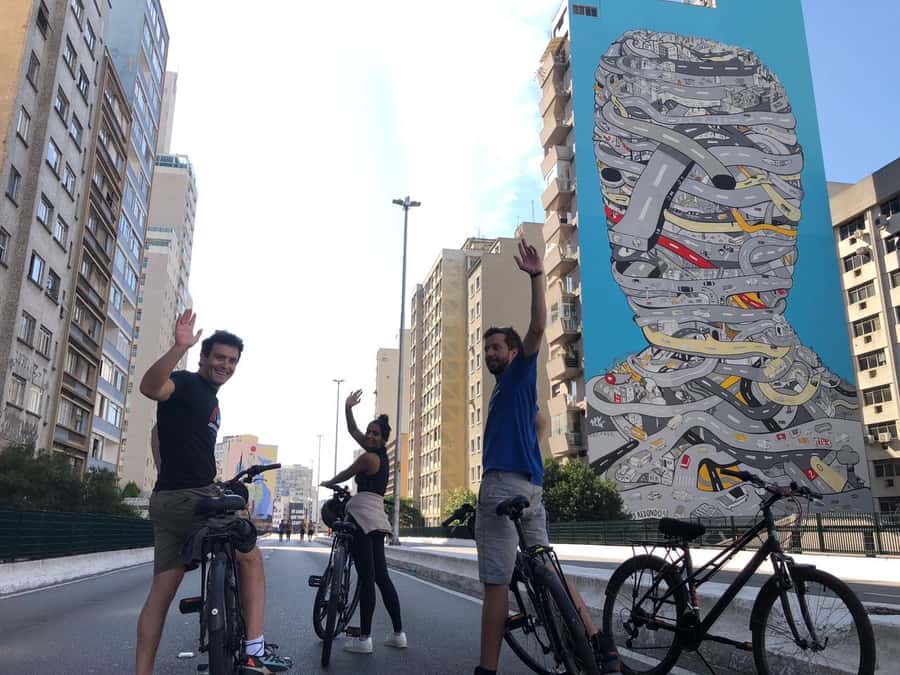
Liberdade is one of the most memorable parts of the ride. The neighborhood is associated with São Paulo’s large Japanese community, and its lanterns, torii gates, and Asian-influenced streets give the area a distinct visual character.
The value of stopping here is not just the photo opportunity. A good guide can help you see Liberdade as part of São Paulo’s wider immigrant story and as a place where Brazilian and Japanese traditions meet. The planned stop is about 30 minutes, making it one of the longer pauses on the route.
Because this is still a bike tour, do not expect a food crawl or extended shopping time. You will have a short chance to look around and take in the setting. If you want to eat in Liberdade, browse shops, or visit a specific venue, return later on foot.
The route may also include other downtown areas and public spaces not listed with full detail in the stop-by-stop schedule. That flexibility can be useful. Guides have included areas such as Praça Roosevelt, Largo do Arouche, and Bom Retiro on different outings, depending on the route and group. Ask at the start which stops your guide plans to make that day.
More bike days:
- Street Art and Park Bike Tour
★ 5.0 · 56 reviews - Sao Paulo: The Coolest Urban Scenes Bike Tour
★ 5.0 · 22 reviews - São Paulo: Street Art Bike Tour
★ 5.0 · 19 reviews - São Paulo Highlights: Culture, History, and Vibrance by Bike
★ 4.9 · 6 reviews
Copan Building and São Paulo’s modernist side
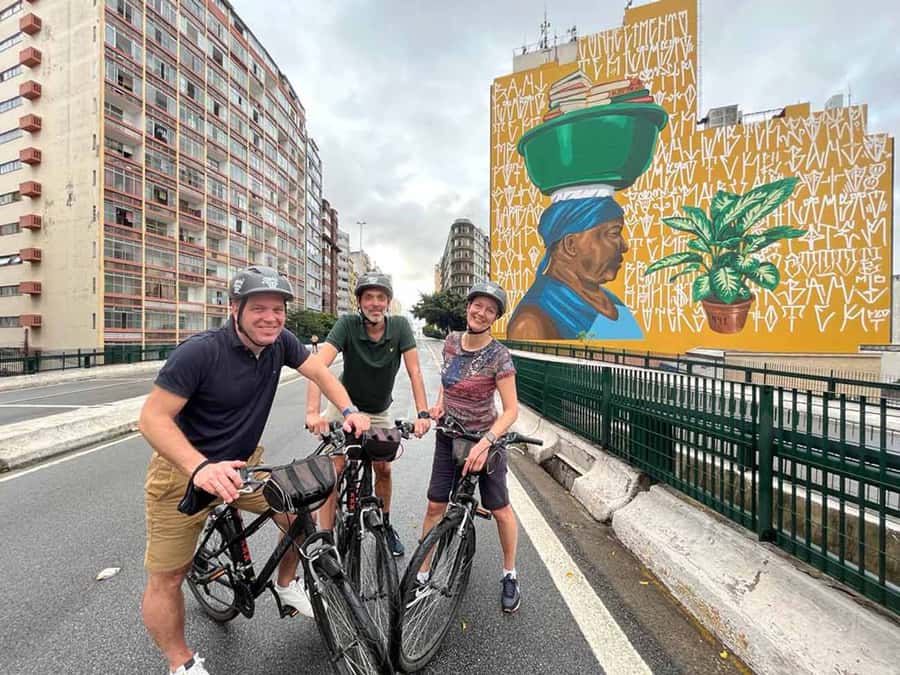
The Copan Building is a highlight for architecture fans. Designed by Oscar Niemeyer, the large curved residential building represents the bold modernist style that helped define São Paulo’s image in the 20th century.
You stop outside for photos and explanation rather than taking an extended interior visit. The building becomes more interesting when a guide connects its shape and scale to the surrounding downtown streets. This is one place where the cycling format works well: you arrive, see the building in context, and continue before the tour loses momentum.
I would give special attention to the area around Copan. One participant returned independently after the tour, which makes sense. The building and nearby streets reward a slower look, especially if you enjoy urban design, cafés, and the contrast between older façades and huge apartment blocks.
Municipal Theater and Vale do Anhangabaú
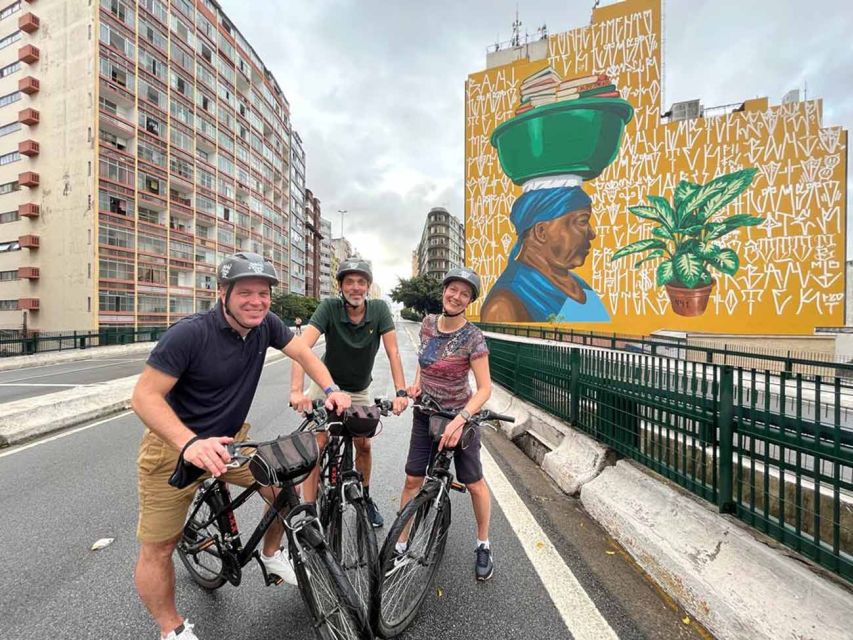
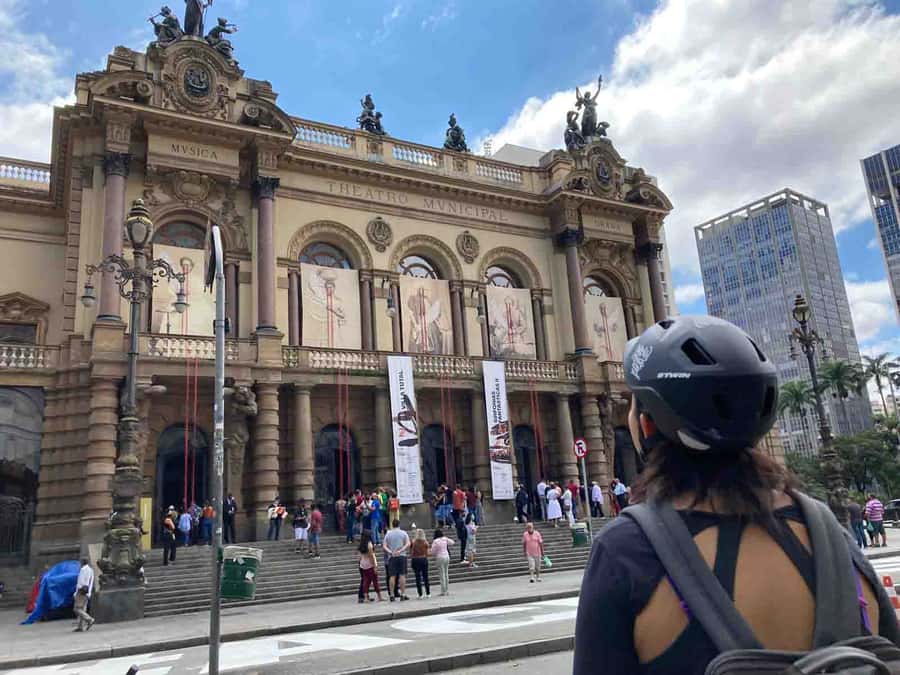
The Municipal Theater brings a different architectural mood. Inspired by European theater design, it has a grand façade and a formal presence that contrasts with Copan’s sweeping modern lines.
The nearby Praça Ramos de Azevedo provides the right viewing point. You can stop, take pictures, and hear how the theater fits into the city’s cultural development. As with MASP and Copan, the experience is an exterior visit, so you should not book this tour expecting inside access.
From there, the route continues to Vale do Anhangabaú. This large central public space has hosted major political and cultural events and remains one of the defining open areas of downtown. It also helps you understand how São Paulo uses public space on a very large scale.
The stop lasts about 20 minutes. That is enough to take in the setting and hear the main story, but not enough for a detailed exploration of every surrounding building. If you want a slower look at downtown, note the places that interest you and return later.
Luz Station, Pinacoteca, and Luz Park
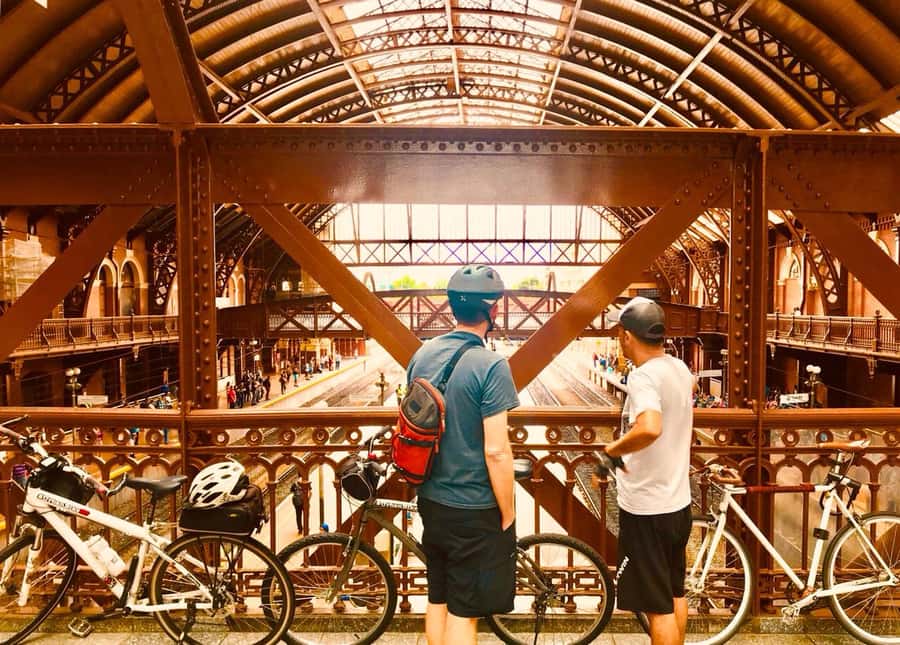
Luz Station brings the city’s railway past into view. The 19th-century station has an impressive historic design and recalls the importance of rail connections to São Paulo’s growth.
Nearby Pinacoteca is one of Brazil’s leading art museums. The tour makes a short photo stop, listed at around 10 minutes, so the museum visit itself is not part of the three-hour ride. That distinction matters. Art lovers should save time for a separate entry and visit.
Luz Park offers a quieter stretch after the central streets. A brief walk through the park gives you space to catch your breath and see another side of the district. The combination of station, museum, and park makes this one of the route’s strongest sections because the attractions are close in distance but different in mood.
You then cross the Santa Ifigênia Viaduct, a useful viewpoint over the historic center. From the bridge, you can take in the dense pattern of streets and buildings below. It is a good example of how the bike tour uses movement to create views that you might miss from ground level.
Pátio do Colégio and Sé Cathedral
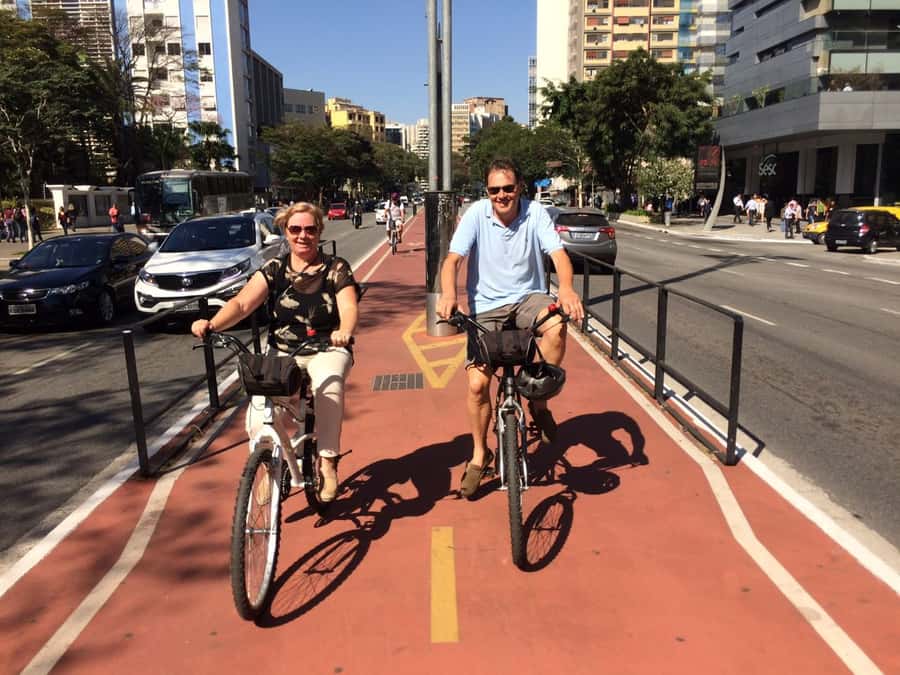
Pátio do Colégio marks the city’s founding in 1554. It is one of the most important historical points on the route, and the short stop gives your guide a chance to explain how São Paulo began before growing into a giant metropolis.
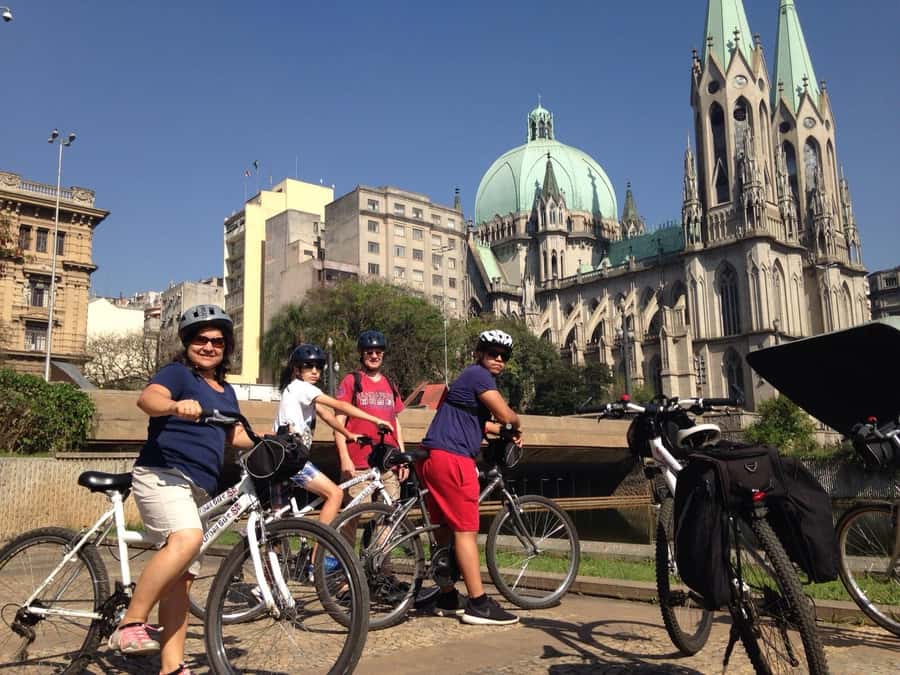
The nearby Sé Cathedral changes the visual tone again. Its neo-Gothic design, stained-glass windows, and tall columns give the building a grand interior and exterior presence. The tour includes a photo stop of about 10 minutes, so check the schedule if you hope to spend time inside.
This section is where the tour’s title, Downtown Historical Bike Tour, earns its name. You are not simply checking off famous buildings. You are moving between the city’s founding point, religious center, civic spaces, railway past, and modern business corridors.
Downtown also requires a clear-eyed approach. One guide helped explain poverty and the social problems visible in the center, along with the effects of Brazil’s colonial past and later economic cycles. That context can make the area more understandable, but it may also feel confronting. Come prepared for a real city, not a polished stage set.
What the ride feels like on the streets
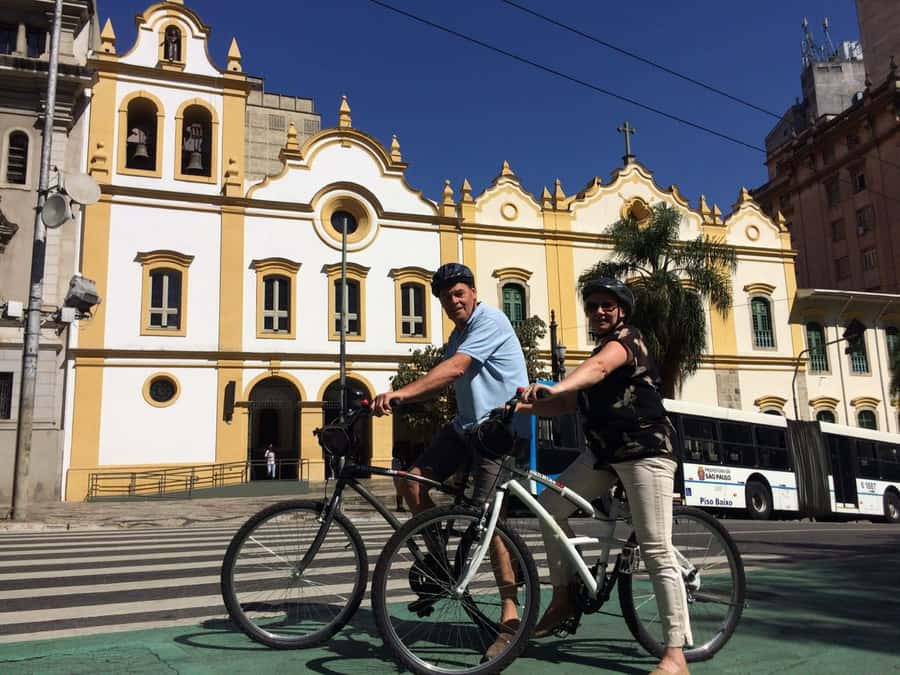
The route is generally manageable for people who cycle regularly. One rider described it as smooth and not especially difficult, with some easy uphill sections. Another noted that a few parts can feel steep depending on your experience.
The biggest challenge is not athletic ability. It is concentration. You may ride beside cars, pedestrians, and busy crossings, and at times you will pay more attention to the road than to the view. Several guides have made safety a priority, using bike paths when possible, managing traffic, checking the group, and carrying out route support.
Sunday may be a particularly comfortable choice. Some traffic lanes close on that day, leaving more room for bikes. This is practical advice if your schedule allows it, though traffic conditions can still vary.
The weather can change quickly. One outing began with rain and ended in temperatures around 32 C. A raincoat is supplied if needed, but sunscreen and light, comfortable clothing remain your responsibility. Drink the water provided, and use the café stop wisely.
Is $85 a fair price?
At $85 per person, this is not a bargain bike rental. You are paying for a guide, equipment, refreshments, a small souvenir, route planning, and the ability to cover a large part of São Paulo without arranging the details yourself.
The value is strongest if you have only a day or two in the city. A guide can connect Paulista Avenue, the historic center, Luz, Sé, and Liberdade in one outing. You also gain a starting map in your head, which helps you decide where to return for museums, meals, or longer walks.
The price is less attractive if you already know São Paulo, prefer to ride alone, or want long visits inside museums. This is a moving overview with short stops, not a museum tour or a leisurely neighborhood stroll.
The small group helps justify the cost. With no more than 10 people, the guide can watch the pace and answer questions. On quieter dates, you might even find yourself in a very small group or on a private outing, as has happened before.
Who should book this São Paulo bike tour?
I would choose this tour for a solo visitor who wants company without joining a huge group. It also works well for couples, friends, and business visitors with a free morning or afternoon.
It suits you if you:
- Ride a bike with confidence
- Want an overview before exploring alone
- Enjoy architecture, public spaces, and city history
- Can manage 9 to 12 miles in changing weather
- Are comfortable seeing both appealing and difficult parts of downtown
- Want guiding in English, Spanish, or Portuguese
I would skip it if you dislike urban cycling, have limited mobility on a bike, or want a slow, indoor-focused cultural day. Children under 13 cannot join, and the route demands active participation from every person in the group.
The guide can make a large difference. Juliana has been praised for her warmth and city knowledge, Arthur for friendly explanations and careful safety, Pedro for connecting buildings with economic periods, and Roberto for keeping everyone together and hydrated. Jefferson has also been praised for discussing Brazil’s social issues and music. Guide assignments can change, but the company clearly puts weight on personal storytelling rather than memorized facts alone.
Should you book it?
Book it if you want to see São Paulo’s major districts in one active outing and you are happy to trade a little comfort for range. The best reason to go is the mix: Paulista Avenue, parks, MASP, Copan, the Municipal Theater, Luz, Pátio do Colégio, Sé, and Liberdade all appear within three hours.
Choose a Sunday if possible for more room on the streets, arrive early at Portinha183, and treat the ride as an orientation rather than a series of full attraction visits. At $85, it is worth the money for first-time visitors, solo visitors, and anyone with limited time. Confident cyclists who want a broad, thoughtful introduction to São Paulo should book it. If traffic makes you nervous or you prefer to linger, spend the same time exploring one district on foot instead.
FAQ
How long is the São Paulo Downtown Historical Bike Tour?
The tour lasts three hours. The planned ride covers approximately 9 to 12 miles.
Where does the tour begin?
It begins at Portinha183 Café, Rua França Pinto, 183, in Vila Mariana. The café is about five minutes from Ana Rosa Subway Station on the Blue and Green lines.
What is included in the tour?
Bike rental, a helmet, a water bottle, a raincoat if needed, a live guide, a souvenir, iced mate tea, and pão de queijo are included.
What languages are available?
The tour is offered in English, Spanish, and Portuguese.
Is the tour suitable for children?
No. Children under 13 cannot participate, and knowing how to ride a bike is essential.
What happens if the weather changes?
A raincoat is provided if needed. You should also bring sunscreen and wear comfortable clothing. The weather can change during the ride, so prepare for both rain and heat.
More Historical Tours
- Full Day Private Beach Tour Santos & Guarujá – Combine Culture, History & Beach
★ 5.0 · 37 reviews - São Paulo: Food, Culture & History Private Tour
★ 5.0 · 6 reviews - Best São Paulo City Tour History 5Hours Private Experience.
★ 4.0 · 3 reviews - São Paulo: Jewish History Downtown Private Walking Tour
★ 3.7 · 3 reviews
Just added around Sao Paulo
- Campos do Jordão: Full-Day Private Tour from São Paulo★ 5.0 · 3 reviews
- Walk to the Big Rock in Cantareira State Park★ 5.0 · 3 reviews
- Best São Paulo City Tour History 5Hours Private Experience.★ 4.0 · 3 reviews
- Sao Paulo: City Highlights and LGBTQIA+ Scene Private Tour★ 5.0 · 3 reviews
- São Paulo Carnival Seating with Food, Drinks, & Transfer★ 5.0 · 3 reviews
- Special tour 8 hour (walking tour + nightlife )★ 5.0 · 3 reviews
- São Paulo: Downtown Walking Tour with Farol Santander Entry★ 4.6 · 3 reviews
- São Paulo: Jewish History Downtown Private Walking Tour★ 3.7 · 3 reviews
Cycling Tours, compared.
Pirenópolis, the charming baroque city inaugurated in 1723 in the gold cycle
Read our review →Browse the lists this tour appears in