
Reviewed · WORKSHOPS
Salvador: 3-Hour Percussion Class
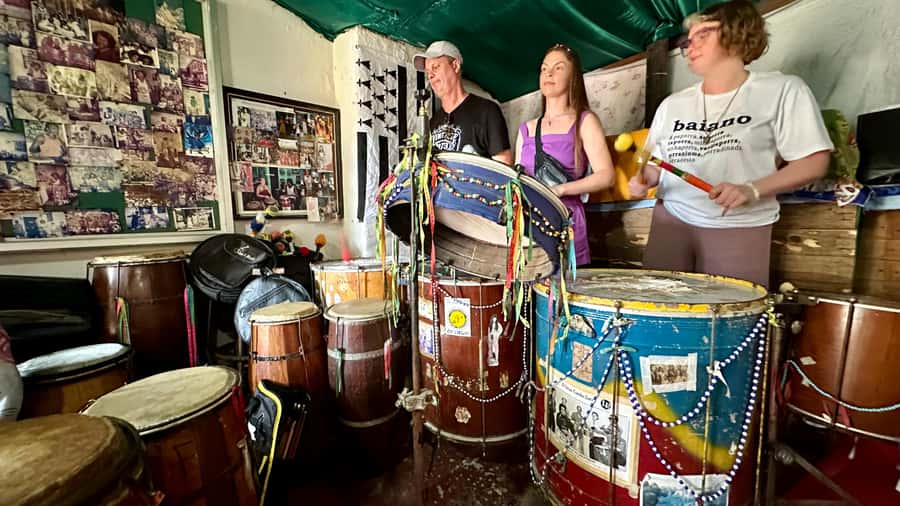
Bring your hands and your curiosity. This three-hour Salvador percussion class offers a direct way into Bahia’s musical culture, from samba reggae to samba and other Afro-Brazilian rhythms. I like the chance to play several drums rather than sit through a music demonstration, and I like the small maximum group of six, which should give you more room to follow the teacher.
I also like the local setting and the help of a guide who can translate between English, Spanish, and Portuguese. The main caution is the timing: although the experience is sold as three hours, several participants found that transportation reduced the actual class to about one hour and 30 minutes, or roughly one hour and 45 minutes.
In This Review
- Key points to know before booking
- Why percussion is such a good way to meet Bahia
- Hotel pickup makes the morning easier
- Arriving at a working music space
- Learning samba reggae one beat at a time
- Trying different drums and building a group sound
- The guide adds more than translation
- Is $90 a fair price?
- Who will enjoy this class most?
- What to bring and how to plan your time
- My final call: book it for culture, not a long lesson
- FAQ
- How long does the Salvador percussion class last?
- How much does the experience cost?
- Is hotel transportation included?
- What languages are available?
- How large is the group?
- What music will I learn?
- Can beginners join the class?
- Are food and drinks included?
- Is the activity wheelchair accessible?
Key points to know before booking
- Samba reggae takes center stage: You learn the Bahia rhythm associated with large percussion groups and famously admired by Michael Jackson.
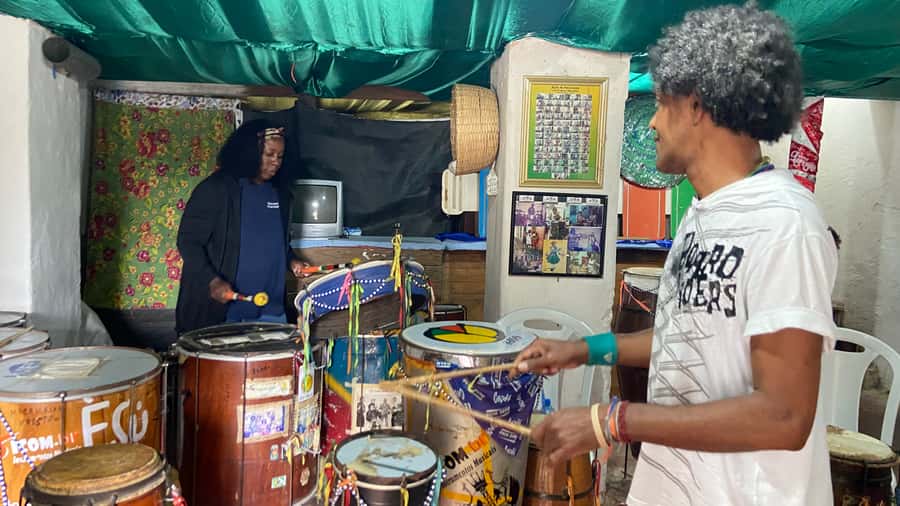
- Several drums are available: The class lets you try different instruments and play rhythms together rather than only watch a performance.
- Small groups matter: With no more than six participants, the teacher can give more personal attention, especially if you are new to percussion.
- Translation is part of the experience: A guide helps explain the instructor’s demonstrations in English, Spanish, or Portuguese.
- Allow for a shorter playing session: The advertised three hours include hotel transport, according to several participant accounts.
- The price is high for the active class time: At $90 per person, the cultural access may justify the cost, but serious percussionists should note the limited playing time.
Why percussion is such a good way to meet Bahia
In Bahia, percussion is not just a stage art. It appears in everyday celebrations and in traditions such as Samba de Roda and Candomblé ceremonies. The drums provide pulse, shape the melody, and bring people into the same musical moment.
That context gives this class more weight than a standard tourist activity. You are not simply learning a beat for an afternoon photograph. You are being introduced to a sound system tied to Bahia’s African heritage and to Brazil’s wider musical life.
The session also points to the range of Brazilian music. Samba reggae is one focus, but the teaching may touch on samba and even jazz. That variety helps you hear that Brazilian percussion is not one single style. Different rhythms can be sharp, rolling, layered, or highly controlled.
I would not expect a full academic lesson in Brazilian music. Three hours is not enough for that, particularly when transport takes part of the schedule. But you can expect an active introduction that gives meaning to the music you hear elsewhere in Salvador.
A few more trips worth weighing up before you book
- Salvador: Capoeira Class at Mestre Bimba’s 1st Ever School.
★ 4.9 · 34 reviews - Salvador: CAPOEIRA CLASS – CULTURAL
★ 4.6 · 13 reviews - Salvador: Traditional Drumming and Percussion Workshop
★ 4.4 · 10 reviews
Hotel pickup makes the morning easier
Your guide collects you from your hotel lobby and brings you back afterward. That is useful in Salvador, where a first visit can involve unfamiliar streets, different neighborhoods, and the small challenge of getting to a local music workshop without losing time.
The included transport also helps if you are traveling with family or if you do not speak Portuguese. You can focus on the class instead of sorting out the route. Entrance fees and a professional guide are included as well.
Still, you should treat the three-hour figure as the full outing, not necessarily three hours with drums in your hands. One participant described the class itself as about one hour and 30 minutes. Another reported about one hour and 45 minutes for the complete experience. These accounts do not match perfectly, but they point to the same practical issue.
I recommend asking for the expected pickup time and class time before you go. That simple question will help you plan lunch, another tour, or an airport transfer. Food and drinks are not included, so you should not count on a meal during the session.
Arriving at a working music space
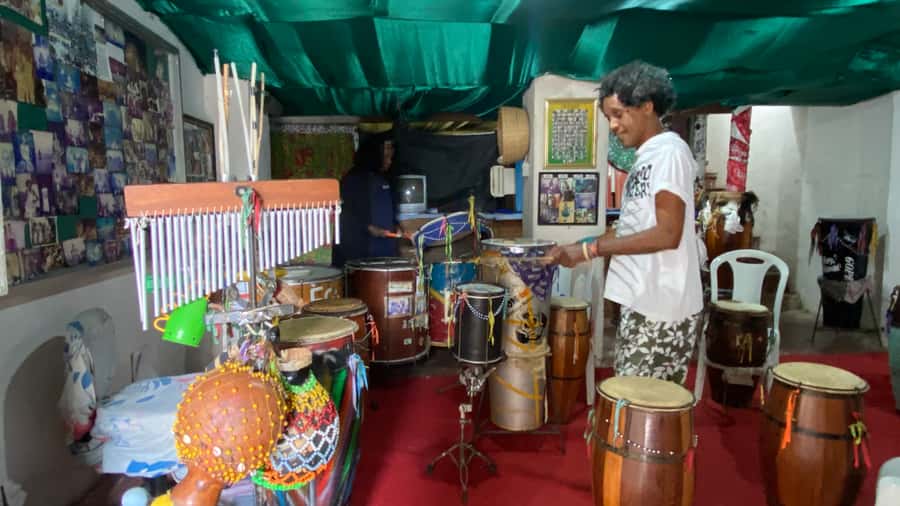
The class takes you to an area associated with cultural and musical production in Salvador. The point is to see how sounds inspired by Africa have become part of Bahia’s own creative language.
The information provided does not name the exact neighborhood or promise a public performance. You should therefore think of this as a workshop, not a concert tour. The special part is the contact with the musicians and the chance to handle the instruments yourself.
That distinction matters. A performance can impress you in an instant, but a workshop lets you hear how a rhythm is built. You can make mistakes, repeat a pattern, and feel how a basic beat fits with other players. The result may be less polished than a stage show, but it is far more participatory.
The class has also worked well for different ages and skill levels. One participant described a memorable experience shared by three generations. Another had a one-on-one morning and enjoyed playing multiple instruments. If your group includes children, parents, or grandparents, the small format may make it easier for everyone to take part.
Learning samba reggae one beat at a time
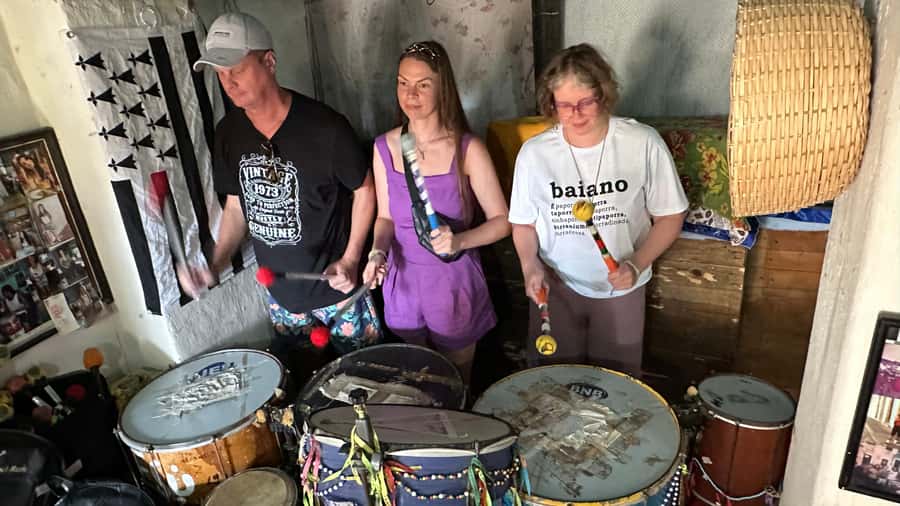
Samba reggae is the class’s most distinctive musical focus. The style links samba’s Brazilian identity with reggae influence and the strong percussion traditions of Bahia. It became known far beyond Brazil, including through Michael Jackson’s interest in the sound.
You should expect the instructor to demonstrate a rhythm and then have you repeat it. The guide may translate the explanation and help connect the instructor’s gestures with the sound. This is especially helpful when the teaching moves quickly or when the instruction depends more on listening and watching than on spoken explanation.
The first patterns may feel simple. That is not a flaw by itself. Percussion groups need a steady base before they can add more layers. A basic rhythm lets beginners succeed quickly and gives the group a common pulse.
The limitation is that some participants felt the beats remained very simple and that they tried fewer instruments than expected. If you already play drums, you may want more technical detail, more complex arrangements, or more time with each instrument. The class appears better suited to cultural discovery and first-hand participation than to serious musical training.
Still, simple does not mean dull. Playing a shared beat with other people can be surprisingly satisfying. You hear the rhythm change when one person comes in early or loses the pattern. You also learn why experienced percussionists listen so closely to one another.
A completely different kind of day out around Salvador:
- From Salvador: Schooner Tour to Frades Islands and Itaparica
★ 3.9 · 98 reviews - Afro-Brazilian Roots Private City Tour in Salvador
★ 4.7 · 88 reviews - Salvador Historic Walking Tour – Pelourinho
★ 4.8 · 62 reviews - Salvador de Bahia African Culture Tour
★ 4.5 · 60 reviews
Trying different drums and building a group sound
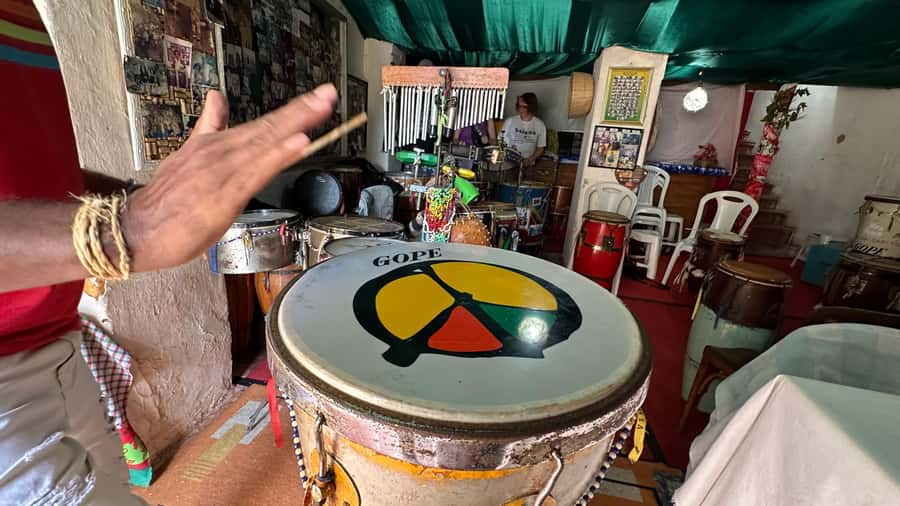
A strong part of the class is the chance to play more than one type of drum. Exact instruments are not specified, so you should not book this expecting a particular drum. The useful point is variety: you are not limited to a single demonstration or one short turn.
The teacher, described in one account as Maestro Macambira, has been praised for patience and for adapting to different ability levels. That matters more than fancy equipment. A calm teacher can show a beginner how to hold a rhythm without making the class feel like a test.
The guide also remains involved as translator and helper. One participant specifically praised the exchange between the maestro and the guide. This two-person format gives you a better chance of understanding what you are meant to do, especially if Portuguese is not part of your daily life.
At some point, the class comes together as a group jam. That is the payoff. You hear individual beats combine into a fuller sound, and you get a small taste of how a percussion section works.
Do not expect to leave as a samba band leader. The real reward is the physical sense of the music. Afterward, a street performance or Carnival recording may sound different because you will recognize the role of the underlying rhythm.
The guide adds more than translation
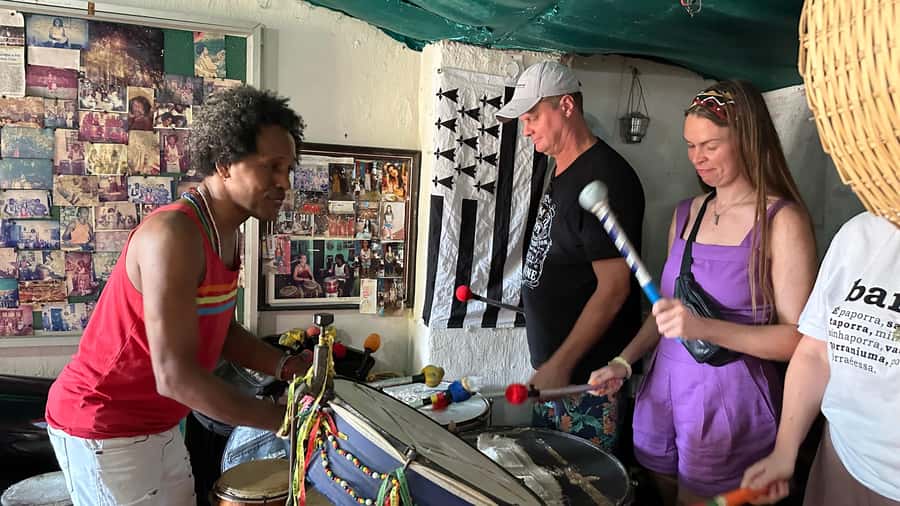
The guide’s job is not only to convert Portuguese into English or Spanish. The guide can also provide local context and help explain why percussion matters in Bahia.
That local connection is one reason I see value in the activity. You get a person who can help bridge the gap between a classroom exercise and the wider culture. The experience is conducted in English, Spanish, or Portuguese, so you can choose the language that lets you follow instructions most easily.
Language is particularly important in a rhythm class. If you miss a sentence during a walking tour, you can look at the next building. If you misunderstand a short musical instruction, you may lose the beat and feel out of step with the group.
If you speak Portuguese, you may appreciate hearing the instructor without a translation layer. If you do not, the translator is a major practical benefit. The guide can clarify the demonstration so you are not left guessing.
Is $90 a fair price?
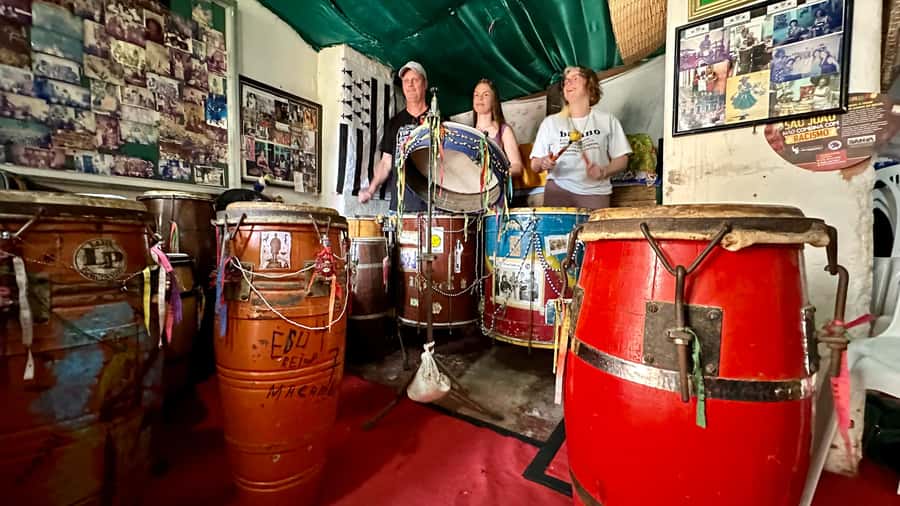
At $90 per person, this is not a cheap add-on. The price includes hotel pickup and drop-off, entrance fees, and a professional guide. It also buys a small group, capped at six people, rather than a large class where you may spend much of the time waiting.
The value depends on what you want. If you want an easy cultural activity with transport, instruction, translation, and a personal connection to Bahian music, the price can make sense. You are paying for access and organization as much as for the drumming itself.
The calculation changes if you are mainly paying for three full hours of instruction. Several accounts put the active teaching time closer to 90 minutes, with one estimate at 105 minutes. At that length, $90 feels expensive, especially if you have already booked other music activities in Salvador.
I would compare this with the cost of a concert, a museum visit, or another guided cultural outing. The class offers something those options cannot: you physically make the sound. But if your budget is tight, you should decide if that direct participation is worth the premium.
The best value comes for a small private party, a family group, or anyone with a strong interest in percussion. The weakest value comes for someone expecting a long, advanced lesson with many instruments and complex rhythms.
Who will enjoy this class most?
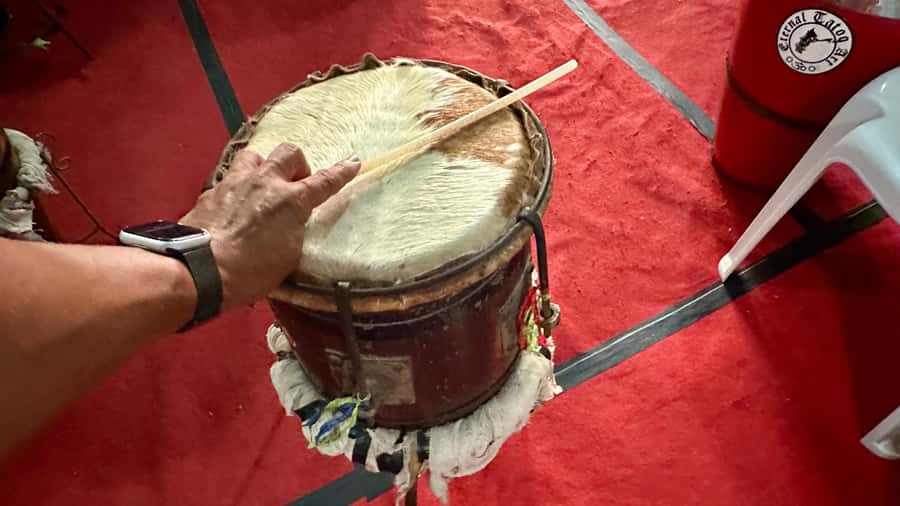
I would recommend it most strongly to people who want to connect with Salvador through music rather than through a standard sightseeing route. It suits first-time percussion players because the teacher is described as patient and willing to work with different skill levels.
It also suits experienced musicians who want a brief introduction to Afro-Brazilian percussion. You may not get advanced instruction, but you will hear local rhythms and play in a Bahian setting. That can be more useful than a generic drum lesson at home.
Families can also consider it. The three-generation account suggests the format can work across ages, and the small group makes a shared activity easier. People who enjoy cultural exchanges may value the talk with the guide as much as the playing.
I would hesitate if you dislike group participation, want a quiet cultural visit, or need a wheelchair-accessible activity. The experience cannot accommodate wheelchairs. I would also hesitate if you need a precisely timed three-hour class for a tight itinerary.
What to bring and how to plan your time
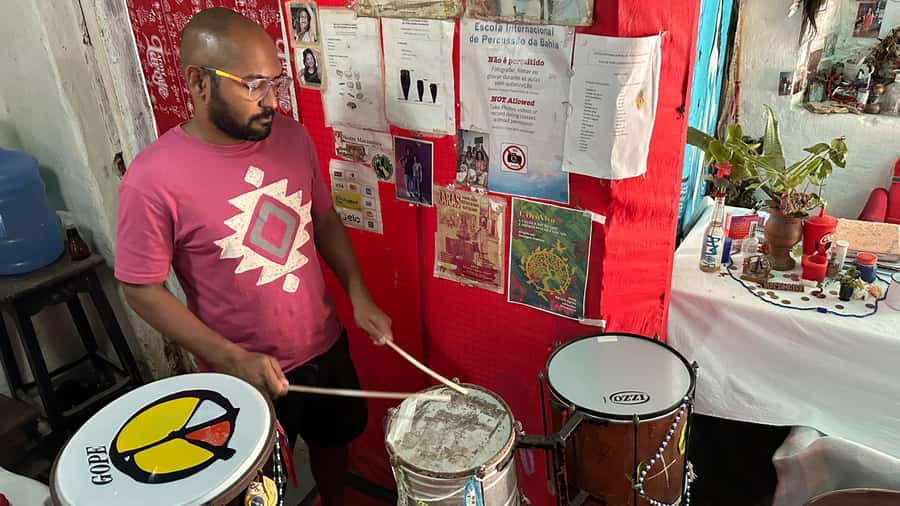
Wear something comfortable enough for active playing. The supplied details do not specify a dress code or required equipment, so you do not need to arrive with percussion gear.
Keep your schedule flexible around pickup and return. Since transport is part of the three-hour booking and actual class time may be shorter, leave room before your next fixed appointment. Hotel pickup is from the lobby, so be ready there at the arranged time.
Bring water for before or after the class, since food and drinks are not included. You may also want to carry a phone for photos, but the main activity is listening, watching, and playing. The experience works best when you give the rhythm your full attention.
If you have a musical background, tell the guide at the start. If you are a complete beginner, say that too. The teacher’s reported patience suggests that the class can adjust, but clear communication will help you get the most from the limited playing time.
My final call: book it for culture, not a long lesson
I would book this Salvador percussion class if you want a friendly, hands-on introduction to Bahia’s Afro-Brazilian music and you value hotel pickup, translation, and a group of no more than six. The chance to play different drums, learn samba reggae, and finish with a shared jam gives the experience real character.
I would not book it expecting three uninterrupted hours of instruction. The most important practical warning is the gap between the advertised duration and the playing time described by several participants. At $90, that shorter class makes the cost harder to defend for serious drummers.
For most visitors, this is best treated as a compact cultural encounter. Go for the sound, the local teacher, and the chance to make music with other people. If that is worth more to you than technical depth, it can be one of Salvador’s more memorable activities.
FAQ
How long does the Salvador percussion class last?
The activity is advertised as three hours, including hotel transportation. Several participant accounts describe the actual class as about one hour and 30 minutes to one hour and 45 minutes.
How much does the experience cost?
The price is $90 per person.
Is hotel transportation included?
Yes. Pickup and drop-off are included, with pickup from your hotel lobby.
What languages are available?
The live guide is available in English, Spanish, and Portuguese.
How large is the group?
The experience is limited to a maximum of six participants.
What music will I learn?
The class focuses on Bahian sounds, including samba reggae and samba. The broader musical discussion may also include other Brazilian styles, including jazz.
Can beginners join the class?
Yes. The teacher, Maestro Macambira, has been described as patient and able to work with people at different skill levels.
Are food and drinks included?
No. Food and drinks are not included in the price.
Is the activity wheelchair accessible?
No. The tour cannot accommodate wheelchairs.
Just added around Salvador
- From Salvador: Schooner Tour to Frades Island★ 3.9 · 3 reviews
- From Salvador: Quilombo Heritage Daytrip with Lunch★ 3.4 · 3 reviews
- Salvador: Caipirinha Masterclass with Unlimited Drinks★ 4.2 · 4 reviews
- Salvador: Schooner Cruise with Pickup and Itaparica Stop★ 3.8 · 5 reviews
- BOXE CLASS – EX BAHIAN CHAMPION (SALVADOR-BA)★ 5.0 · 7 reviews
- Salvador by Night: Pelourinho & Old Town Tour★ 4.3 · 8 reviews
- Salvador: Traditional Drumming and Percussion Workshop★ 4.4 · 10 reviews
- From Salvador: Morro de São Paulo Tour★ 4.2 · 13 reviews
Workshops, compared.

Capoeira Class at Mestre Bimba’s 1st Ever School.
Read our review →
Surf lessons with local instructors in Copacabana/ipanema!
Read our review →Browse the lists this tour appears in