
Reviewed · HISTORICAL TOURS
Explore Little Africa : Unveiling Afro Heritage in Rio de Janeiro
Little Africa changes how you see Rio. This three-and-a-half-hour tour connects churches, museums, archaeological sites, and Black cultural landmarks in the port district, using a decolonial account of Brazil’s past rather than the usual postcard version of the city. I like the way it links the sites into one story, and I like that guides such as Carolina, Rafael, Malu, and Raphael bring warmth and clear personal energy to difficult subjects. The main drawback is the amount of walking, with limited suitability for people who have trouble moving around.
You’ll visit six places around Saúde, Gamboa, and the old port, with a short VLT tram ride included in the price. The $82.53 fee is not cheap for a half-day outing, but it covers the museums and a specialist-led interpretation of an area many standard Rio itineraries skip. Plan carefully, since museums close on Sundays, during Carnival season, and from December 16 through January 5.
In This Review
- Key points to know before you book
- Why Little Africa belongs on your Rio schedule
- Starting at Santa Rita in Rio’s old center
- IPN and the evidence beneath the city
- MUHCAB puts Afro-Brazilian culture at the center
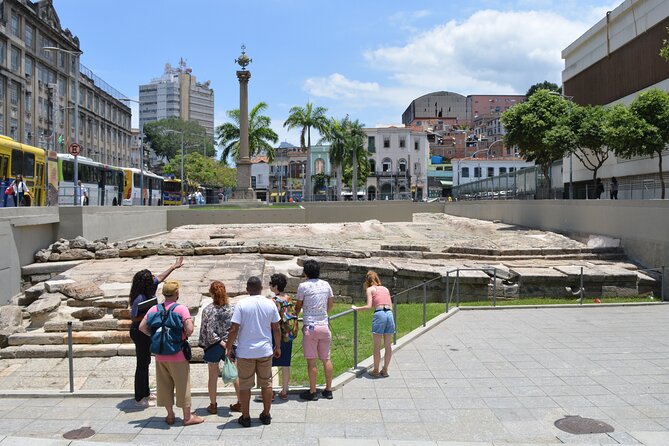
- Cais do Valongo and the weight of the port
- Pedra do Sal, where history meets living culture
- Largo São Francisco da Prainha ends the walk
- Is $82.53 a fair price?
- Walking, timing, and comfort
- The guides make or break the day
- Who should book Little Africa?
- Should you book it?
- FAQ
- How long does the Little Africa tour last?
- How much does the tour cost?
- Where does the tour begin?
- Where does the tour end?
- Is public transportation included?
- Is museum admission included?
- Does the tour operate on Sundays?
- Can I cancel for a full refund?
Key points to know before you book
- Cais do Valongo reveals Rio’s connection to the Atlantic slave trade: This former wharf is one of the tour’s most serious and important stops.
- The route combines indoor museums with open-air memorial sites: You get context inside IPN and MUHCAB, then continue through the streets and squares where this story unfolded.
- Guides are the heart of the experience: Carolina, Rafael, Raphael, Malu, and others have been praised for clear explanations, good pacing, humor, and strong personal commitment.
- A short VLT ride breaks up the walking: The tram ride is included and helps connect the central meeting point with the port area.
- Comfortable shoes matter: The tour lasts about three hours and 30 minutes, and the route includes a considerable amount of walking.
- The afternoon start has a practical reason: It can be easier to focus after lunch and away from Rio’s strongest midday heat, though late afternoon light may be weaker for photos.
Why Little Africa belongs on your Rio schedule
Rio is often reduced to Christ the Redeemer, Sugarloaf Mountain, beaches, and samba. Those sights are worth your time, but they do not explain the people and forces that helped shape the city. This tour takes you into the port district, where Afro-Brazilian memory is not an added side note. It is the subject.
I like that the experience does not treat history as a list of dates. At each stop, you move between architecture, archaeology, public memory, religion, music, and present-day cultural life. The guides explain the links between them, helping you understand why a modest square or stone slope can matter as much as a grand monument.
The subject is painful. The route deals with enslavement, displacement, institutional inequality, and the loss of human lives. Yet the tone described by the guides and built into the route is not only tragic. You also encounter faith, survival, music, community, and the continuing strength of Afro-Brazilian culture.
That makes this a good choice for you if you want Rio beyond its famous viewpoints. It is also useful if you have studied slavery in the United States and want a different view of the African diaspora in the Americas. The tour allows comparisons, but it also makes clear that Brazil has its own history and social realities.
The maximum group size is 20 people. That is large enough to create a social outing but small enough for a guide to speak to the group without turning the walk into a moving crowd. The quality of your day will depend heavily on the guide assigned to you. Past experiences have praised Carolina, Rafael, Raphael, Malu, Val, and others for their subject knowledge, enthusiasm, compassion, and ability to explain complex material in English.
More Historical Tours in Rio de Janeiro
- Rio de Janeiro: Historic Rio and Santa Teresa Half-Day Tour
★ 4.4 · 228 reviews - Rio de Janeiro: Little Africa Heritage Walking Tour
★ 4.9 · 177 reviews - Learn the History of Rio with an Unforgettable City Center Walking Tour
★ 5.0 · 82 reviews
Starting at Santa Rita in Rio’s old center
The tour begins at Santuário de Santa Rita, at Largo de Santa Rita in central Rio. The first stop is an external visit to Matriz da Paróquia de Santa Rita, where the guide introduces the area’s cultural and heritage meaning through a decolonial narrative.
You should not expect a long indoor church visit here. The value is in the explanation around the building and the historical setting. This opening gives you a frame for the rest of the route, showing how places connected to Black life can be overlooked when history is told only through colonial institutions or official monuments.
The stop lasts about 20 minutes and has no admission charge. Since it is an outdoor introduction, listen closely and ask questions early. The guide’s interpretation is especially important here because the building itself may not immediately explain why it belongs in a Little Africa itinerary.
From the starting point, the route continues toward the port district. A short ride on Rio’s VLT public transport is included in the final price. That small detail matters: you are not left to work out the local transit connection yourself, and the ride gives your legs a brief rest before the next part of the program.
IPN and the evidence beneath the city
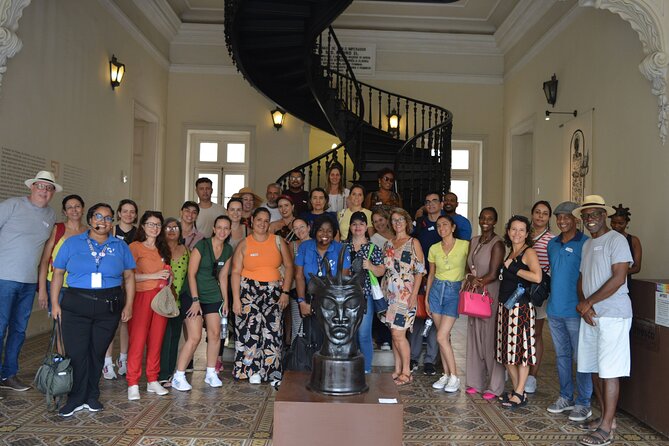
The Instituto de Pesquisa e Memória Pretos Novos, usually called IPN, is one of the most significant stops. The institute is connected to archaeological remains associated with Pretos Novos, and the tour includes admission.
This is where the story becomes physical. Instead of hearing only about the past through monuments or written accounts, you encounter an archaeological site tied to the people brought to Rio under brutal conditions. The setting asks you to think about whose remains are preserved, whose lives were ignored, and how modern Rio sits above layers of difficult memory.
The visit lasts about 40 minutes. That is enough time for a focused explanation, but not enough for a slow museum afternoon. I would give the guide your full attention and avoid treating this as a quick photo stop. The importance of IPN comes from its ability to connect human suffering with the city’s development.
The tour includes all fees and taxes, as well as the ticket for the institute. The supplied information uses both IPN and The New Black Institute in its admission details, so check the exact confirmation wording when you book if the name matters to you.
Sunday planning is essential. The New Black Institute is closed on Sundays, so this experience does not operate in its normal form on that day. All museums also close from December 16 through January 5 and during Carnival season.
MUHCAB puts Afro-Brazilian culture at the center
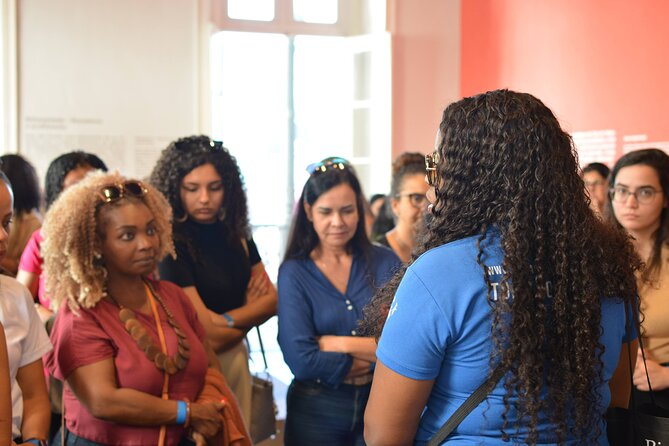
Next comes MUHCAB, the Museu da História e da Cultura Afro-Brasileira. It is described as a territory museum focused on Afro-Brazilian history and culture in Gamboa.
That phrase, territory museum, points to the way the museum relates its displays to the surrounding district. You are not simply entering a building to look at isolated objects. The neighborhood itself forms part of the lesson, and the guide helps connect what you see inside with the streets and landmarks outside.
The visit lasts about 40 minutes, with admission listed as free. This stop gives the tour room to move beyond enslavement and examine Afro-Brazilian identity, cultural expression, and the people who shaped Rio over generations.
Several guides have been praised for making the museum accessible to families, older relatives, and people who do not usually seek out history tours. That is useful information for you. The subject is serious, but the presentation is not described as stiff or academic. Guides have been noted for warmth, wit, patience, and positive energy.
Still, remember that 40 minutes is a compact visit. If you enjoy museums and want to read every label, you may wish the tour lasted longer. The group must keep moving to cover the remaining sites.
More history-led tours:
- Rio’s city walking tour: a glimpse of history and olympic legacy
★ 4.5 · 78 reviews - Olympic Boulevard, Museum of Tomorrow & Historical Rio
★ 4.5 · 66 reviews - Rio: Olympic Boulevard, Museum of Tomorrow & History Tour
★ 4.1 · 47 reviews - Petropolis Bohemia: Historic tour and visit to the Bohemian Brewery
★ 4.5 · 45 reviews
Cais do Valongo and the weight of the port
Cais do Valongo is the emotional center of the route for many people. The former wharf lies in Rio’s port district, between the present-day Coelho e Castro and Sacadura Cabral streets.
The stop lasts about 30 minutes and is free. The physical setting is not a grand attraction in the usual Rio sense. Its importance comes from what happened there and what the site represents. Your guide gives the historical meaning that the stones and streets cannot provide on their own.
This is a place to slow down mentally. You may be surrounded by ordinary city life, yet the location carries the memory of Africans brought to Brazil through the Atlantic slave trade. The tour asks you to hold those two realities together: modern Rio continues around the site, while the ground recalls a human catastrophe that helped shape the country.
I value the fact that Cais do Valongo is not treated as a detached memorial. It forms part of a connected route that includes religious, archaeological, museum, and community spaces. That structure helps you see how the past is remembered in several different ways.
The subject can be hard to discuss, especially when the guide connects past enslavement with inequality that continues today. The tour handles this directly rather than softening the facts. You should come ready to listen, think, and perhaps ask questions that go beyond the standard sightseeing script.
Pedra do Sal, where history meets living culture
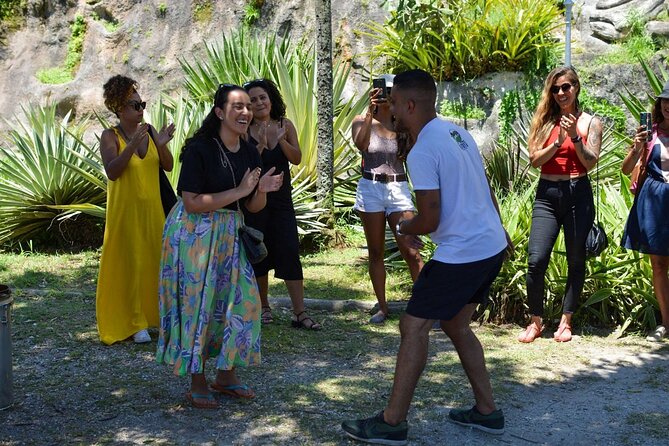
The tour then reaches Pedra do Sal in the Saúde neighborhood, near Largo da Prainha. This is an external visit lasting about 25 minutes, with no admission fee.
Pedra do Sal is both a historical and religious landmark. It also carries strong links to Black cultural life and music in Rio. The stone and surrounding streets help show that Afro-Brazilian heritage is not confined to museums. It remains part of places people use, remember, and identify with today.
Your guide’s role here is to explain the layers. You may see a simple urban landmark, but the story includes religion, migration, community, and cultural expression. This is one reason I prefer a guided visit to simply walking through the district with a guidebook. Without context, you could pass by and miss much of its meaning.
The stop is short. You will not get an extended neighborhood exploration, and the tour does not include a meal or a dedicated music performance. Think of Pedra do Sal as a concentrated introduction, not a full evening in the area.
Largo São Francisco da Prainha ends the walk
The final stop is Largo São Francisco da Prainha, a square in the Saúde neighborhood. The tour ends at R. São Francisco da Prainha, 7, close to the square.
The area was once a symbolic part of Little Africa, marked by Black presence and the zungus, communal spaces associated with Afro-Brazilian life. Today, it is also recognized as one of Rio’s cool places by Time Out.
That contrast gives the ending a useful present-day note. After spending much of the route confronting painful history, you finish in a place where the district’s social and cultural identity continues to be visible. The square is not merely the endpoint for transport. It helps bring the story into the present.
The visit lasts about 20 minutes and is external. Since the tour ends here, you can decide what to do next on your own, though lunch is not included. The area provides a natural point to continue exploring or find food nearby, but no restaurant arrangement is part of the experience.
One practical warning concerns daylight. A participant who took the afternoon departure enjoyed the content but found that it became darker toward the end, making photographs harder. The afternoon schedule can help you avoid Rio’s strongest heat and the hunger that may distract you earlier in the day, but you should not expect bright light at every stop.
Is $82.53 a fair price?
At $82.53 per person, this is more expensive than an ordinary self-guided walk through the port district. The cost includes all fees and taxes, the institute ticket, and the short VLT ride. More importantly, it pays for a guide who can connect six separate locations into one coherent account.
I think the price works best for you if you value interpretation. A church exterior, archaeological site, public wharf, museum, stone landmark, and square can be visited independently, but the meaning would be much harder to assemble alone. The guide also handles the route and explains the cultural context as you go.
The value is less convincing if you want a relaxed stroll, lots of free time, or a purely visual tour. You will not receive lunch, and tips are not included. The three-and-a-half-hour schedule is tightly packed, so the experience favors learning over lingering.
The strong satisfaction rate, 99 percent recommended and a five-star score based on 97 ratings, suggests that the tour delivers well for its intended audience. Still, guide quality and museum openings matter. Confirm the language and operating date before you commit, especially if you need English interpretation.
Walking, timing, and comfort
Wear comfortable shoes. The route includes a considerable amount of walking, even though the VLT ride provides a short break. Most people can participate, but the activity is not recommended for people with disabilities, according to the supplied accessibility information.
That warning should be taken seriously. One guide, Carolina, adjusted the pace and route so an older family member who could not manage all the walking could still take part. That is encouraging, but it should not replace an honest assessment of your own mobility.
The tour takes place mostly around public streets, squares, and outdoor sites, with museum visits along the way. Rio’s weather matters, and the experience requires good weather. If poor weather causes cancellation, you will be offered another date or a full refund.
You receive confirmation at booking, and service animals are allowed. The meeting point is near public transportation, with the tour ending at Largo da Prainha rather than returning you to Santa Rita. That one-way route is useful if you plan to continue in the port district, but less convenient if you need to return to your hotel immediately.
The guides make or break the day
The most praised part of this experience is the guiding. Carolina has been singled out for her depth, compassion, and ability to adjust the pace. Rafael and Raphael have been praised for making the subject enjoyable without losing its seriousness. Malu has been described as pleasant and well prepared, while Val has been appreciated for clear English and for adding extra context when sites were closed.
That range matters because this is not a tour where the buildings do all the work. Several stops are external, and the historical meaning is carried by the explanation. A flat or rushed presentation would weaken the experience. A guide who can answer questions and connect Brazil’s story with the wider African diaspora makes the route far more valuable.
You should also know that one past departure had to be rescheduled after a guide became ill and an English interpreter could not be found at short notice. It appears to have been an unusual problem, and the operator worked with the affected participant, but it is a reminder to avoid placing this tour on a tight final day if your schedule cannot absorb a change.
Who should book Little Africa?
You should book this tour if you want to understand Rio through Afro-Brazilian history and culture, not just see its famous sights. It suits couples, solo visitors, families, and anyone who likes asking questions while walking through real neighborhoods.
It is especially worthwhile early in your stay. One family wished they had taken it on the first day because the route changed how they understood the city and gave them places they wanted to revisit. The tour can sharpen your eyes for the rest of Rio.
You may want to skip it if you dislike serious historical subjects, cannot manage sustained walking, or want a quiet sightseeing outing with plenty of time for photographs. You will also need to plan around Sunday closures, Carnival season, and the December 16 to January 5 museum shutdown.
Should you book it?
Book it if Afro-Brazilian history is central to your trip, or if you want a side of Rio that standard sightseeing rarely reaches. The route is thoughtful, the museum access adds real value, and the guides have repeatedly been praised for passion, patience, and clear storytelling.
I would schedule it on a day when you have time to think afterward, wear good walking shoes, and choose a date when the museums are open. At $82.53, it is not a bargain walk, but it is a worthwhile fee for a guided experience that gives Cais do Valongo, Pedra do Sal, and the port district their proper meaning.
FAQ
How long does the Little Africa tour last?
The tour lasts approximately three hours and 30 minutes.
How much does the tour cost?
The listed price is $82.53 per person.
Where does the tour begin?
It begins at Santuário de Santa Rita, Largo de Santa Rita, in central Rio de Janeiro.
Where does the tour end?
The tour ends at Largo da Prainha, at R. São Francisco da Prainha, 7, in Saúde.
Is public transportation included?
Yes. The experience includes a short ride on Rio’s VLT public transport, and that ride is included in the final price.
Is museum admission included?
All fees and taxes are included, along with the ticket for The New Black Institute. Admission at MUHCAB and the other listed outdoor stops is free.
Does the tour operate on Sundays?
The New Black Institute is closed on Sundays, so you should not book Sunday if you need the normal museum portion of the experience.
Can I cancel for a full refund?
Yes. You can cancel at least 24 hours before the local start time for a full refund. Cancellations or changes made less than 24 hours before the start are not accepted for a refund.
Just added around Rio de Janeiro
- Pedra Bonita Trail: The easiest trail with a beautiful view of Rio★ 4.6 · 3 reviews
- Rio: Private, Custom express, Main Attractions!★ 5.0 · 3 reviews
- Rocinha Jeep Tour: A Journey into the Soul of the Favela!★ 3.8 · 3 reviews
- Rio: Favela Walking Tour of Rocinha with a Resident Guide★ 4.7 · 3 reviews
- Rio: Museum of Tomorrow, Yup Star & Olympic Boulevard★ 3.7 · 3 reviews
- Explore Fernando de Noronha: 7-Hour Ilhatour★ 4.9 · 3 reviews
- Rio: Best Dive Experience All Inclusive Scuba Diving Package★ 5.0 · 3 reviews
- Rio de Janeiro by Air: 10-Minute Helicopter Tour★ 4.4 · 3 reviews
Historical Tours, compared.


Scenic Train ride to historical cities of Morretes and Antonina
Read our review →
From Foz do Iguazu: Triple Frontier Landmark Ticket
Read our review →
Downtown-Center History Walking Tour – in English
Read our review →
Learn the History of Rio with an Unforgettable City Center Walking Tour
Read our review →Browse the lists this tour appears in