
Reviewed · CITY TOURS
Salvador: Anthropological City Tour with Lunch IN 6 HOURS
Salvador’s real story reaches far beyond its postcard center. This six-hour tour connects Afro-Brazilian traditions with the city’s markets, port, religious communities, and working-class neighborhoods. I especially like the visit to São Joaquim Market and the chance to eat homemade feijoada with a local Black family, two experiences that are difficult to arrange on your own.
The small group, limited to four people, is another strong point. A good guide can explain sensitive subjects such as slavery, Candomblé, and religious survival without reducing them to museum labels. The main consideration is pace: this is a packed half-day, and the tour may feel hurried if you want long, unstructured time at each stop. It is also not wheelchair accessible.
The best part of the experience is its human focus. You see major sights, but you also follow the story of African-descended communities that shaped Salvador’s food, music, faith, and daily life. Guides such as Mônia and D. Maria have earned especially warm praise for their depth of explanation and friendly manner, while Fernando is remembered for making the local lunch possible.
In This Review
- Key points to know before booking
- Why this Salvador tour takes a different route
- Starting with Pelourinho and Salvador’s African story
- Dique do Tororó and the public face of Candomblé
- São Joaquim Market: food, faith, and daily commerce
- The old port and the difficult history of arrival
- Ilê Axé Iyá Nassô Oká and a living religious tradition
- Rio Vermelho and the Queen of the Sea
- Feijoada in Garcia, served by a local family
- Ending with an hour in Pelourinho
- Is $150 a fair price for six hours?
- Guide quality, group size, and languages
- Who should book this experience?
- Final recommendation: book it for meaning, not just monuments
- FAQ
- How long does the tour last?
- What is the price?
- What is included in the price?
- Are drinks included?
- Where does pickup take place?
- How many people can join the tour?
- Which languages are available?
- Is vegetarian food available?
- Can I share other dietary requirements?
- Is the tour wheelchair accessible?
- Can I cancel for a full refund?
- Do I have to pay when I book?
Key points to know before booking
- A six-hour route through Afro-Brazilian Salvador: The day links Pelourinho, Dique do Tororó, São Joaquim Market, the old African arrival port, a historic Candomblé terreiro, and Rio Vermelho.
- Lunch is part of the cultural experience: You eat homemade feijoada in the Garcia neighborhood with a Black family whose food tradition reaches back more than 50 years.
- A maximum of four participants: This is much better suited to conversation and questions than a large coach excursion.
- Candomblé is treated as a living faith: The visit to Ilê Axé Iyá Nassô Oká introduces one of the earliest Yoruba-rooted terreiros in the Americas.
- The guide matters greatly: English, Spanish, French, Italian, and Portuguese are available, and the strongest praise has gone to guides who explain history, spirituality, and local life with patience.
- The $150 price covers the useful basics: Hotel pickup and drop-off, entrance fees, lunch, a driver, and a professional guide are included. Drinks are extra.
Why this Salvador tour takes a different route
Many first visits to Salvador begin and end in Pelourinho. That historic center deserves your time, with its colorful facades, churches, steep streets, and colonial-era squares. But Pelourinho shows only one part of the city.
This tour uses Salvador’s streets to explain how African traditions survived forced displacement, slavery, poverty, and social pressure. The subject is serious, but the approach is not simply a sequence of dates. You move through places tied to trade, food, religion, resistance, and community life.
That makes the tour a good choice if you want context rather than a quick collection of photo stops. You will still take pictures, but the main reward is understanding why Salvador feels so distinct within Brazil.
The route also gives you a look at changing urban areas as you travel toward the railway suburbs. The shift from the historic center to territories shaped by enslaved descendants helps put Salvador’s social divisions into view. Since the tour lasts only six hours, the explanations and drive between stops are an important part of the experience.
A few more trips worth weighing up before you book
- From Salvador: Quilombo Heritage Daytrip with Lunch
★ 3.4 · 3 reviews - Rio de Janeiro: 6-Stop Highlights of Rio with Lunch
★ 4.4 · 5,157 reviews - Rio: Christ the Redeemer, Sugarloaf, Selaron & BBQ Lunch
★ 4.5 · 2,428 reviews
Starting with Pelourinho and Salvador’s African story
Pelourinho appears in the schedule near the end, but the tour begins in Salvador’s historic region. This order can work well. You first get an introduction to the city’s colonial center, then spend the middle of the day seeing how African culture continues beyond its famous streets.
The Afro-Brazilian Museum is a key stop. Its collection focuses on the history and cultural presence of Black people in Brazil. This gives you a useful foundation before the market, port, and Candomblé visits.
I would pay close attention here, even if museums are not normally your favorite part of a city tour. The museum helps explain the symbols, religious practices, and social forces that appear later in the day. Without that background, a market altar or Candomblé object could be easy to misunderstand.
The scheduled visit to this part of the city lasts about 30 minutes. That is enough for an introduction, but not enough for a slow museum visit. If you like to read every display, you may need to accept a quicker look.
Dique do Tororó and the public face of Candomblé
Dique do Tororó provides a short stop of about 20 minutes. It is known for its large sculptures of orixás, the divine beings honored in Candomblé and related Afro-Brazilian religious traditions.
This is a useful visual introduction. Instead of treating Candomblé as something hidden or mysterious, the sculptures show how these figures occupy public space in Salvador. You can connect what you see here with the later visit to a terreiro and the seaside devotion to Iemanjá.
The stop is brief, so think of it as an orientation point rather than a full visit. You will have time for photographs and a guide’s explanation, but probably not a long walk around the area.
São Joaquim Market: food, faith, and daily commerce
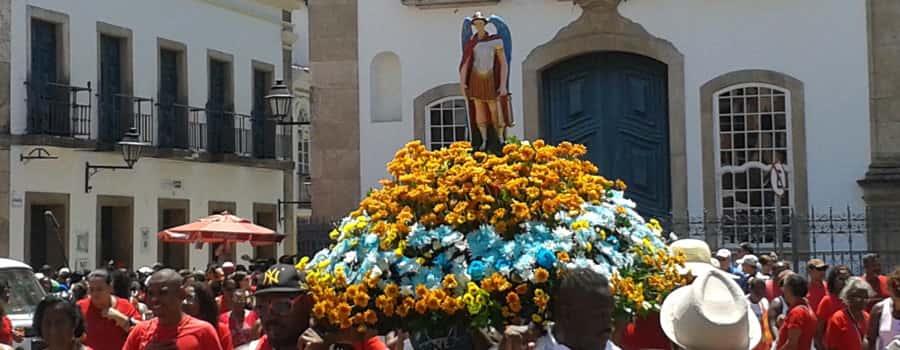
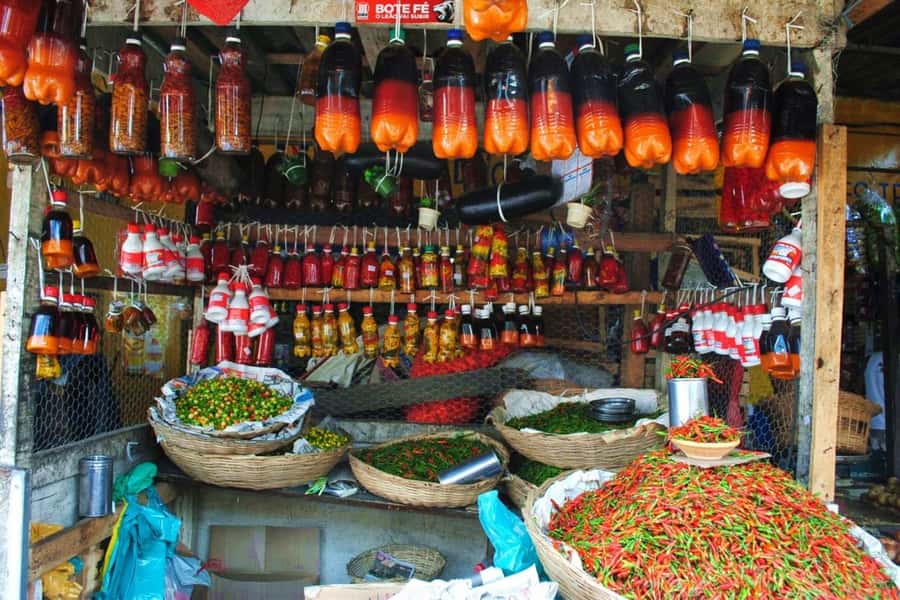
São Joaquim Market is one of the most interesting stops on the route. It is the city’s largest open market and is recognized as part of Brazil’s intangible cultural heritage. Its origins are linked to enslaved Africans in the 19th century, which gives the market a direct connection to the wider subject of the day.
A market visit can tell you more about a city than a polished monument. Here, food, household goods, religious items, and local commerce come together. You may see ingredients and objects connected to Bahia’s African and Brazilian traditions, although the exact stalls and products will vary.
The tour allows about 40 minutes here. That is enough to get a strong impression and follow the guide through selected areas. It is not enough to examine the entire market at leisure, so keep your camera ready and stay close to the group.
I like this stop because it links culture to ordinary life. African heritage is not presented only as something preserved in a museum. It appears in what people cook, sell, buy, and use in religious practice.
A completely different kind of day out around Salvador:
- From Salvador: Schooner Tour to Frades Islands and Itaparica
★ 3.9 · 98 reviews - Afro-Brazilian Roots Private City Tour in Salvador
★ 4.7 · 88 reviews - Salvador Historic Walking Tour – Pelourinho
★ 4.8 · 62 reviews - Salvador de Bahia African Culture Tour
★ 4.5 · 60 reviews
The old port and the difficult history of arrival
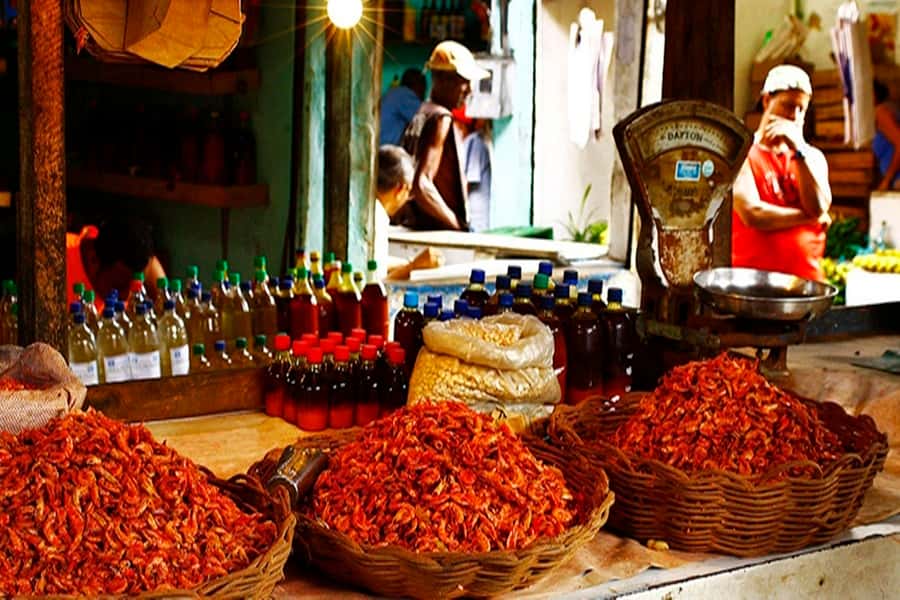
Another stop brings you to the old port where Africans were brought to Brazil and where a slave market operated. This is one of the more sobering parts of the tour.
The purpose is not to turn suffering into a sightseeing spectacle. A thoughtful guide can help you understand the port as a place of forced arrival and the beginning of an enormous human tragedy. The location also makes clear how closely Salvador’s wealth and development were tied to slavery.
You should expect this part of the day to be emotionally heavier than the market or waterfront stops. That is not a flaw, but it is worth knowing before you book. The tour deals openly with historical violence and with the long effort to preserve African identity under terrible conditions.
The route gives roughly 40 minutes to one of these central cultural and historical visits. Because the supplied timing groups some stops without naming every location, the exact amount of time at the port may depend on the day’s traffic and guide’s order.
Ilê Axé Iyá Nassô Oká and a living religious tradition
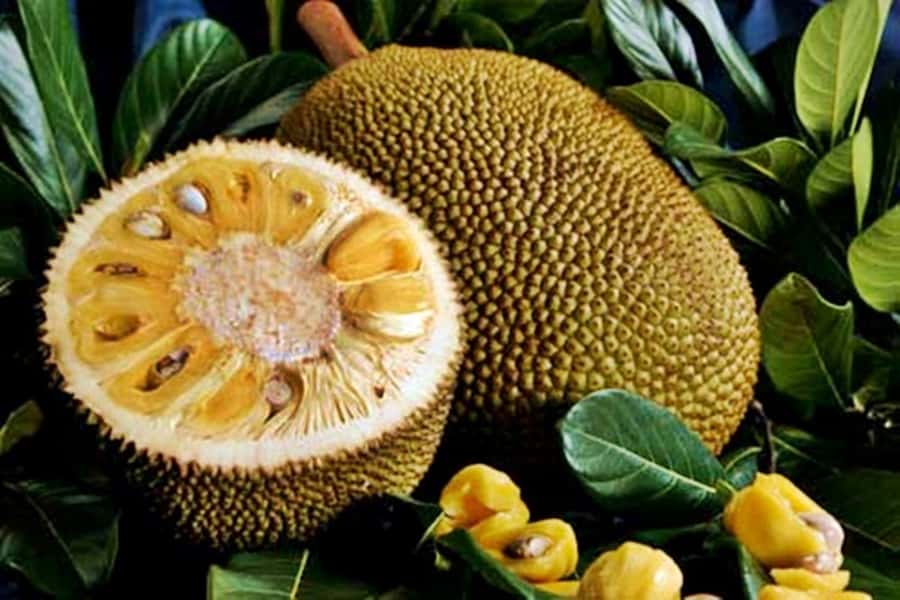
The visit to Ilê Axé Iyá Nassô Oká is a major reason to choose this experience. It is described as the first Yoruba-origin Candomblé terreiro founded in the New World. The terreiro is grounded in matriarchal leadership and represents a religious tradition that has survived across generations.
This is not simply another church visit. Candomblé has its own sacred figures, ceremonies, spaces, and forms of authority. Your guide’s role is especially important here, since respectful explanation helps you understand what you are seeing without treating the faith as an oddity.
The tour’s strongest guide praise centers on this kind of interpretation. D. Maria is described as able to answer many questions about Bahian history, spirituality, culture, and even wider world connections. Mônia is also praised for making a full day of information feel friendly and engaging.
You should follow any instructions given at the terreiro. Dress and photography rules are not specified in the supplied details, so ask your guide before taking pictures or handling anything. A respectful attitude matters more here than collecting another set of images.
Rio Vermelho and the Queen of the Sea
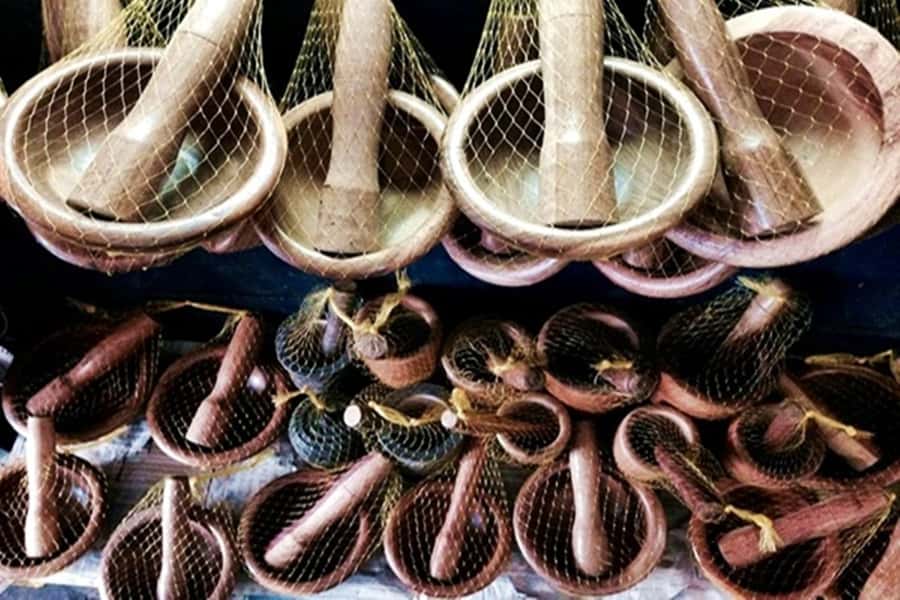
The tour continues to Rio Vermelho, a beach area connected to a fishermen’s community. Here, you visit the Queen of the Sea House, a shrine devoted to Iemanjá, the African orixá associated with the sea.
Iemanjá is one of the most widely recognized figures in Afro-Brazilian religious life. On February 2 each year, the area hosts a major ceremony in her honor, drawing more than 400,000 people. Even if you visit at another time, the altar and community setting help show how faith connects to the sea and to the working life of local fishermen.
This stop adds a different mood to the day. The old port focuses on forced migration and exploitation. Rio Vermelho shows devotion, continuity, and public celebration.
The tour does not promise a festival-day visit, and February 2 would bring a very different crowd and atmosphere. You should treat the shrine as a place of reverence rather than a standard attraction.
Feijoada in Garcia, served by a local family
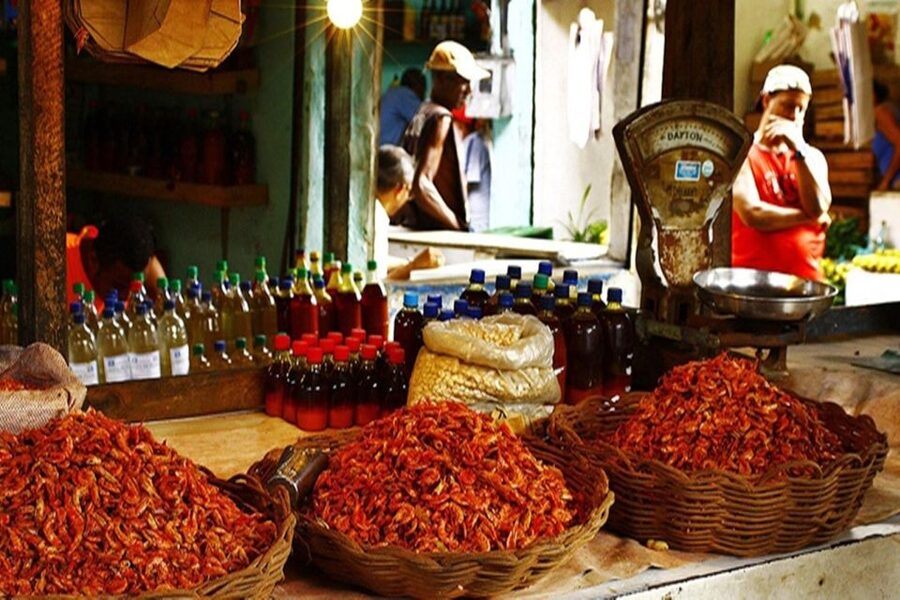
Lunch is not a break from the tour. It is one of its central experiences.
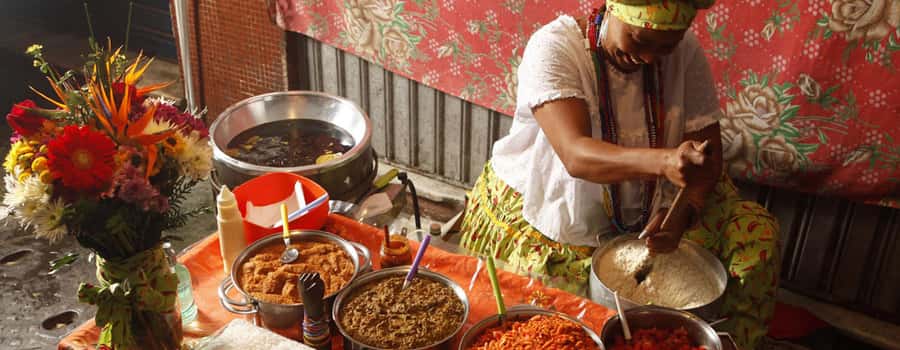
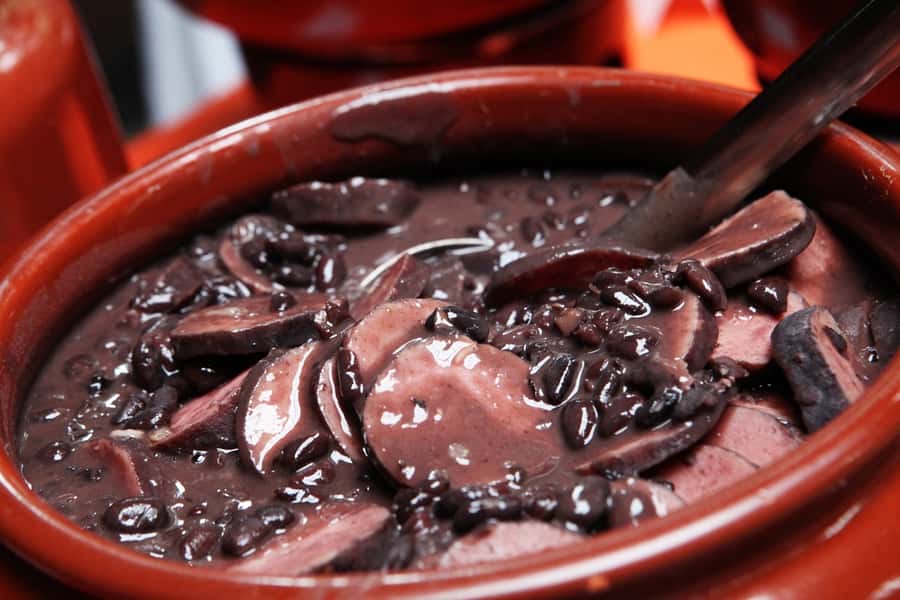
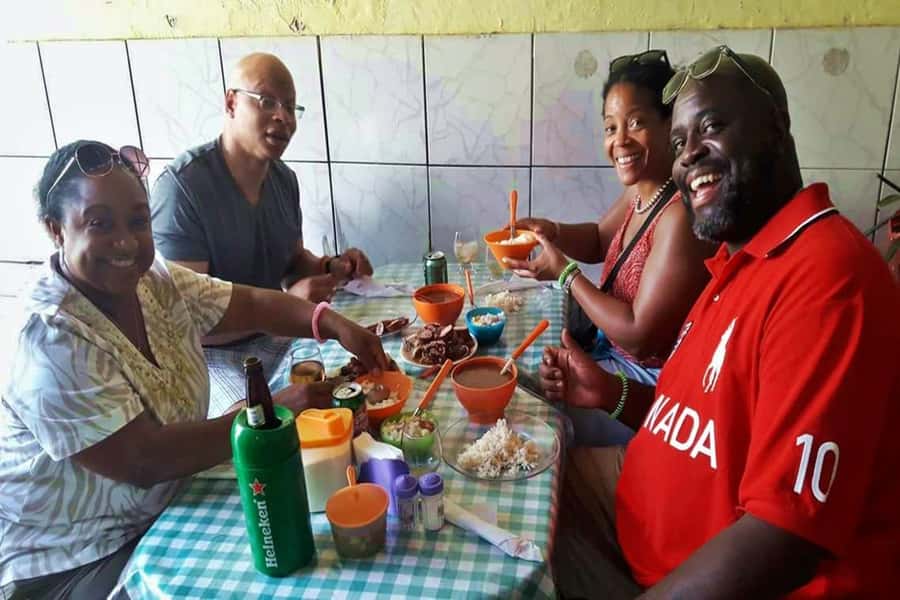
In the Garcia neighborhood, you have the chance to share feijoada, a homemade bean stew, in a Black community with a family whose food tradition has continued for more than 50 years. This is the kind of meal that can make a city feel less like a collection of sights and more like a place where people live.
The included lunch is a real value at this price. It gives you access to a meal and setting that would be difficult to find through a regular restaurant search. One participant specifically credited Fernando for making this local lunch possible, which suggests that the guide’s relationship with the family is part of what gives the meal its character.
The lunch lasts about one hour. Drinks are not included, so bring extra money for them. A vegetarian option is available, but you need to request it when booking and share any other dietary needs in advance.
You should not expect a formal cooking lesson or a long family visit, since no such activities are promised. The value is in eating a traditional dish in a community setting, with the guide explaining why the meal matters.
Ending with an hour in Pelourinho
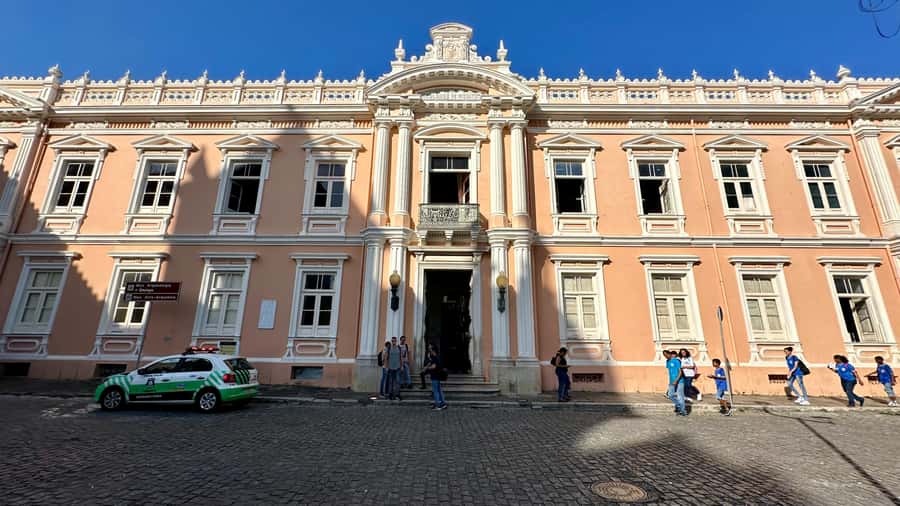
The final scheduled visit gives Pelourinho about one hour. By this point, you will see the historic center differently. The colorful buildings and public squares are no longer isolated images. They form part of a larger story involving African arrival, forced labor, religious survival, markets, and modern Black identity.
The hour is enough for a guided walk and photo stops, but it is not enough to cover every church, museum, shop, and side street. If you want extended time in Pelourinho, return on another day.
Ending here is practical. You finish near the part of Salvador many people recognize, then return to your hotel. The tour includes hotel pickup and drop-off, so you do not have to arrange transport across several parts of the city.
Is $150 a fair price for six hours?
At $150 per person, this is not the cheapest way to see Salvador. It is also not a basic sightseeing transfer.
The price includes hotel pickup and drop-off, entrance fees, lunch, a driver, and a professional guide. With a maximum of four participants, you are paying for a more personal format rather than a large vehicle with a fixed script.
The value improves if you are short on time. In six hours, you cover the historic center, a major market, religious sites, a port tied to slavery, Rio Vermelho, and a local meal. Doing all that independently would require careful transport planning and advance research, especially if you want the context provided by a multilingual guide.
The price is harder to justify if you prefer to explore slowly, spend hours shopping, or visit museums at your own pace. This is a guided overview with several stops, not a relaxed neighborhood day.
Guide quality, group size, and languages
The tour depends heavily on the guide. The strongest praise has been directed at Mônia and D. Maria, both of whom are described as warm, informed, and able to respond to many questions. That matters because the subject includes history, race, religion, and local customs.
Fernando is also associated with the memorable community lunch. The driver receives a brief word of thanks as well, though the driver’s name is not provided.
Guiding is available in Spanish, English, French, Italian, and Portuguese. Confirm your preferred language when you book, especially if the nuances of Candomblé and slavery are important to you.
The group limit of four is excellent for a tour with sensitive subjects. You can ask questions without holding up a busload of people. You also get a better chance to hear explanations during short stops.
Who should book this experience?
I would choose this tour if you want to understand Salvador through its African and Afro-Brazilian foundations. It is particularly useful for a first visit, a short stay, or a port call when you want more than Pelourinho and a quick city drive.
It suits you if you enjoy guided conversation, local food, museums, markets, and cultural history. It is also a good match if you want a small group and hotel transport.
You may want a different plan if you need wheelchair access, dislike a tight schedule, or prefer to avoid emotionally difficult historical subjects. The tour is also not ideal if you want a full day at the beach or a long, independent shopping session.
The experience includes native wildlife in its stated highlights, but no specific wildlife site or species is identified in the details provided. I would not book this tour mainly for animals. Book it for Salvador’s communities, faith traditions, food, and difficult past.
Final recommendation: book it for meaning, not just monuments
I recommend this tour for visitors who want Salvador explained from an Afro-Brazilian point of view. The market, Candomblé terreiro, Iemanjá shrine, old port, and family lunch give the day a clear purpose.
The main tradeoff is speed. You will see many places, but none receives a leisurely half-day visit. At $150, the tour earns its price through the small group, included meal, transport, entry fees, and guide interpretation.
Request a vegetarian meal or other dietary accommodation at booking, confirm your language, and keep money for drinks. If those details suit you, this is a strong way to spend six hours in Salvador.
FAQ
How long does the tour last?
The tour lasts six hours, including transportation, visits, and a one-hour lunch.
What is the price?
The price is $150 per person.
What is included in the price?
Hotel pickup and drop-off, entrance fees, lunch, a driver, and a professional guide are included.
Are drinks included?
No. Drinks are not included.
Where does pickup take place?
Pickup is provided in your hotel lobby in Salvador.
How many people can join the tour?
The tour is limited to four participants.
Which languages are available?
The live guide is available in Spanish, English, French, Italian, and Portuguese.
Is vegetarian food available?
Yes. A vegetarian option is available, but you need to request it when booking.
Can I share other dietary requirements?
Yes. You should advise the provider of any specific dietary requirements when booking.
Is the tour wheelchair accessible?
No. The tour is not wheelchair accessible and is not suitable for wheelchair users.
Can I cancel for a full refund?
Yes. You can cancel up to 24 hours in advance for a full refund.
Do I have to pay when I book?
No. The reserve-now, pay-later option allows you to book without paying immediately.
Just added around Salvador
- From Salvador: Schooner Tour to Frades Island★ 3.9 · 3 reviews
- From Salvador: Quilombo Heritage Daytrip with Lunch★ 3.4 · 3 reviews
- Salvador: Caipirinha Masterclass with Unlimited Drinks★ 4.2 · 4 reviews
- Salvador: Schooner Cruise with Pickup and Itaparica Stop★ 3.8 · 5 reviews
- BOXE CLASS – EX BAHIAN CHAMPION (SALVADOR-BA)★ 5.0 · 7 reviews
- Salvador by Night: Pelourinho & Old Town Tour★ 4.3 · 8 reviews
- Salvador: Traditional Drumming and Percussion Workshop★ 4.4 · 10 reviews
- Salvador: 3-Hour Percussion Class★ 4.9 · 10 reviews
City Tours, compared.
Main City Sights in 7 Hours – Shared Group Tour
Read our review →
Carnival Backstage Tour at Samba City with Cocktail
Read our review →

Browse the lists this tour appears in