
Reviewed · WORKSHOPS
Salvador: Traditional Drumming and Percussion Workshop
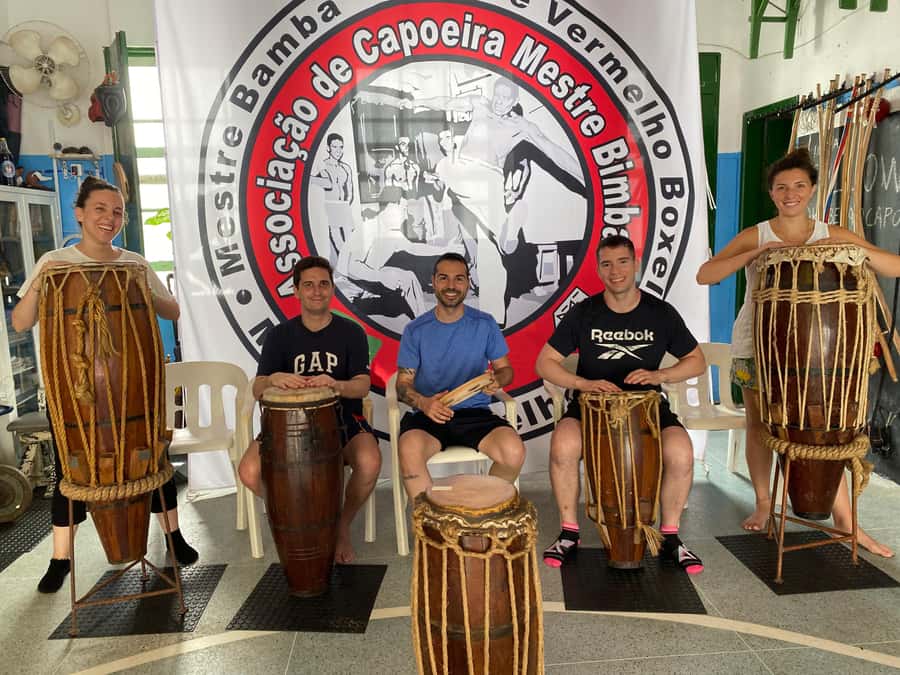
Let the drums tell Salvador’s story. This one-hour class at Mestre Bimba’s First Ever School gives you a hands-on way to connect with Afro-Brazilian culture, not just look at it from a sightseeing bus. I like the small groups, limited to 10 people, and the chance to learn from instructors who care about both music and heritage. The $43 price is fair for a focused class in Pelourinho, especially if you are already exploring Salvador’s historic center.
I also like that no musical background is needed. You can arrive with two left hands and still take part. The main consideration is language: Portuguese and English are offered, but one recent participant booked English and found that the instructor could not teach in English. If clear English instruction matters to you, confirm it before booking.
In This Review
- Key points at a glance
- Why this school matters in Salvador
- Finding the school in Largo do Terreiro de Jesus
- The first minutes: cultural context before the rhythm
- Learning the basic movements and posture
- Trying different percussion instruments and rhythms
- What the small group changes
- English instruction needs a quick check
- Is $43 a good value for one hour?
- Who should book this workshop?
- Booking details that matter
- Should you book the drumming workshop?
- FAQ
- Do I need musical experience?
- How long does the workshop last?
- Where does the workshop meet?
- Is hotel pickup included?
- What languages are available?
- What is included in the price?
Key points at a glance
- Learn at Mestre Bimba’s first school: The setting connects the class to Capoeira’s long struggle for acceptance in Brazil.
- Hands-on Afro-Brazilian rhythms: You will practice drumming and other percussion techniques rather than simply watch a performance.
- One hour is enough for a first lesson: The compact format gives you useful instruction without taking over your day in Salvador.
- Small groups help with technique: A maximum of 10 participants allows more room for correction and questions.
- English and Portuguese are offered: English may not always be available in practice, so confirm your language needs in advance.
- Easy to pair with Pelourinho sightseeing: The meeting point is near Ó Paí Ó Restaurante and São Domingos Gusmão Church in Largo do Terreiro de Jesus.
Why this school matters in Salvador
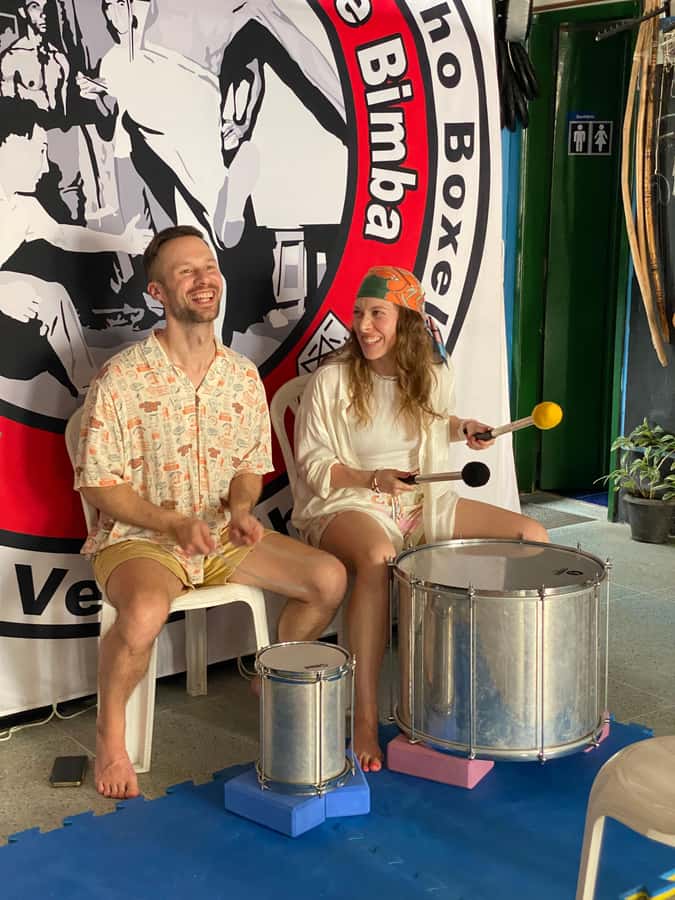
This is more than a basic drum lesson held in a rented studio. The class takes place at the Associação de Capoeira Mestre Bimba, connected to Mestre Bimba’s first school. The location is presented as a Quilombo of resistance and resilience, a place tied to the survival of Afro-Brazilian cultural practices.
That background matters because Capoeira, Samba, and drumming were once treated with suspicion and, at times, criminalized in Brazil. Today, they are central parts of Brazilian identity. Learning a rhythm in this setting gives you a small but direct link to that change.
I would not book this as a substitute for a full history tour of Salvador. The class lasts only one hour, and the main focus is practical music instruction. Still, the cultural explanation adds weight to the lesson. You are not simply tapping a drum for entertainment. You are learning a form shaped by resistance, community, and generations of practice.
The historical setting also makes this a good choice for visitors who want an activity with local meaning. It does not require a full day, a long bus ride, or specialized preparation. You can fit it around a visit to Pelourinho and nearby churches.
A few more trips worth weighing up before you book
- Salvador: Capoeira Class at Mestre Bimba’s 1st Ever School.
★ 4.9 · 34 reviews - Salvador: CAPOEIRA CLASS – CULTURAL
★ 4.6 · 13 reviews - Salvador: 3-Hour Percussion Class
★ 4.9 · 10 reviews
Finding the school in Largo do Terreiro de Jesus
You are responsible for reaching the meeting point at the Associação de Capoeira Mestre Bimba. Hotel pickup and drop-off are not included, so plan your route before class. The location is close to Ó Paí Ó Restaurante and São Domingos Gusmão Church, both useful landmarks in Largo do Terreiro de Jesus.
This central location is one of the workshop’s practical strengths. You can combine the class with time in Pelourinho rather than treating it as a separate excursion. One participant attended during Carnaval celebrations and used the class as part of an afternoon in Salvador’s historic center. That is a smart way to get more value from the $43 fee.
Give yourself enough time to find the association. The available information does not specify a hotel transfer, street-level meeting procedure, or exact check-in instructions. I would use the nearby restaurant or church as a reference point and verify the precise meeting details when booking.
Because the workshop lasts one hour, arriving late would cost you a large part of the activity. The class is short enough that every minute counts, especially if you want individual help with posture and hand movements.
The first minutes: cultural context before the rhythm
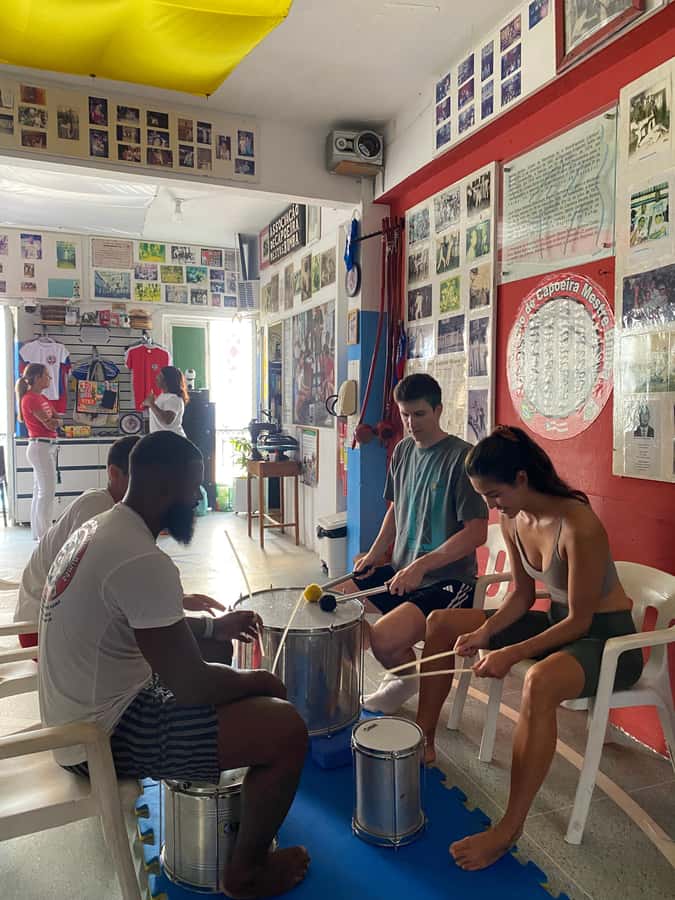
The class begins your connection with Afro-Brazilian culture through the story behind the music. Instructors explain how Capoeira, Samba, and drumming survived periods when these practices were viewed as suspicious or unlawful.
That introduction helps you understand why the rhythms matter. Without it, a percussion class could feel like a quick tourist activity. With it, each beat has a place in a larger story about Afro-Brazilian communities and cultural survival.
The information provided does not give a fixed minute-by-minute schedule, so the balance between discussion and playing may vary. You should expect cultural and historical insight, but the exact amount of talking will depend on the instructor and group.
I like this approach because it gives beginners a reason to pay attention. You are not expected to know the difference between Brazilian percussion styles when you arrive. The instructor provides enough context to make the physical practice more meaningful.
Learning the basic movements and posture
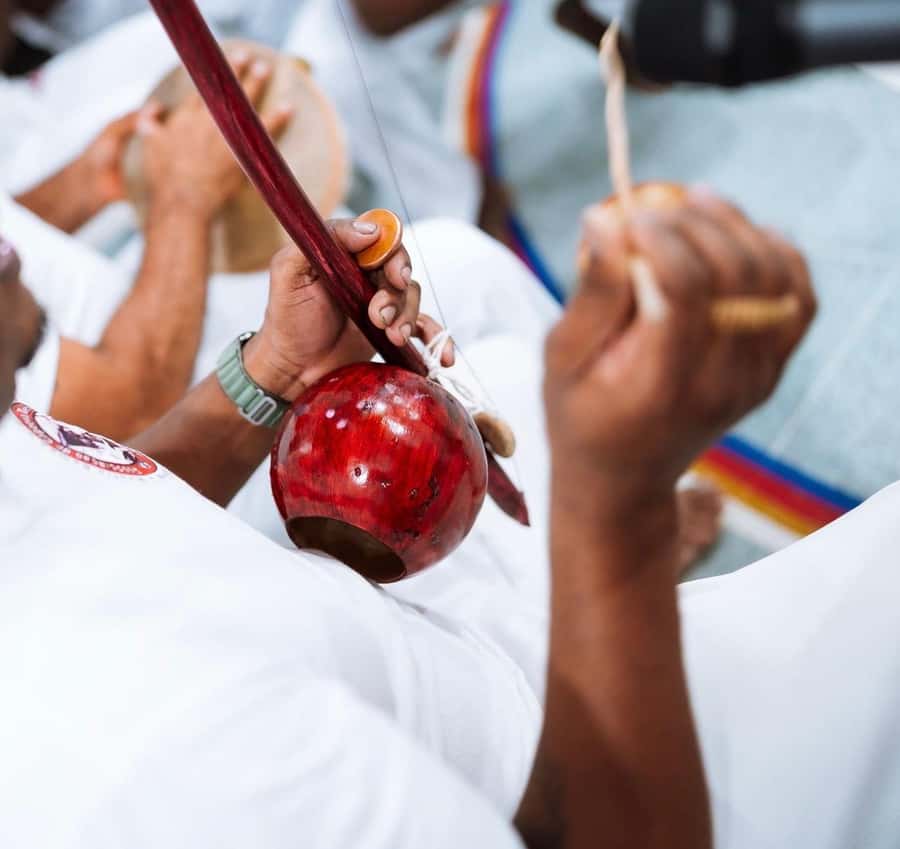
The most praised part of the experience is the patient, hands-on teaching. Alexandra described an instructor who took time to show the correct gestures and postures again. That is important for beginners, since percussion is not only about hitting an instrument in time.
You can expect guidance on how to hold yourself, how to make the basic movements, and how to follow a rhythm. The instruction is designed for complete beginners, so you do not need to read music or have played an instrument before.
A one-hour class cannot turn you into a percussionist. It can, however, give you a clear first lesson and a sense of how the rhythms are built. One participant who expected to struggle found the instruments challenging but manageable, with patient help from Yasmin.
That individual attention may not be guaranteed in every session, but the group limit of 10 improves your chances of receiving corrections. If the class is not full, you might get especially direct instruction. The practical lesson here is simple: do not be embarrassed about making mistakes. The class is built for people who are starting from zero.
A completely different kind of day out around Salvador:
- From Salvador: Schooner Tour to Frades Islands and Itaparica
★ 3.9 · 98 reviews - Afro-Brazilian Roots Private City Tour in Salvador
★ 4.7 · 88 reviews - Salvador Historic Walking Tour – Pelourinho
★ 4.8 · 62 reviews - Salvador de Bahia African Culture Tour
★ 4.5 · 60 reviews
Trying different percussion instruments and rhythms
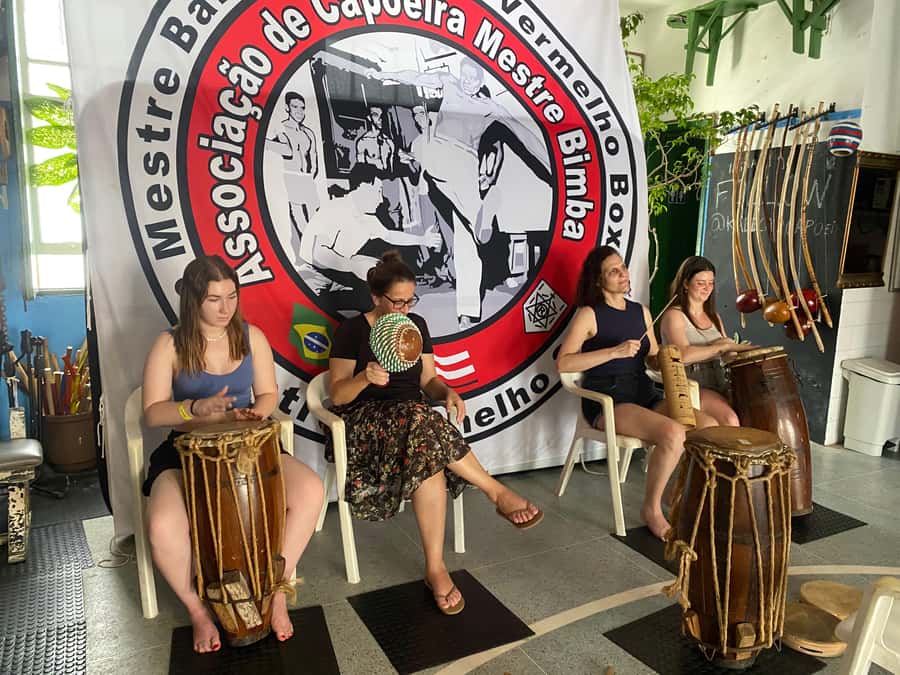
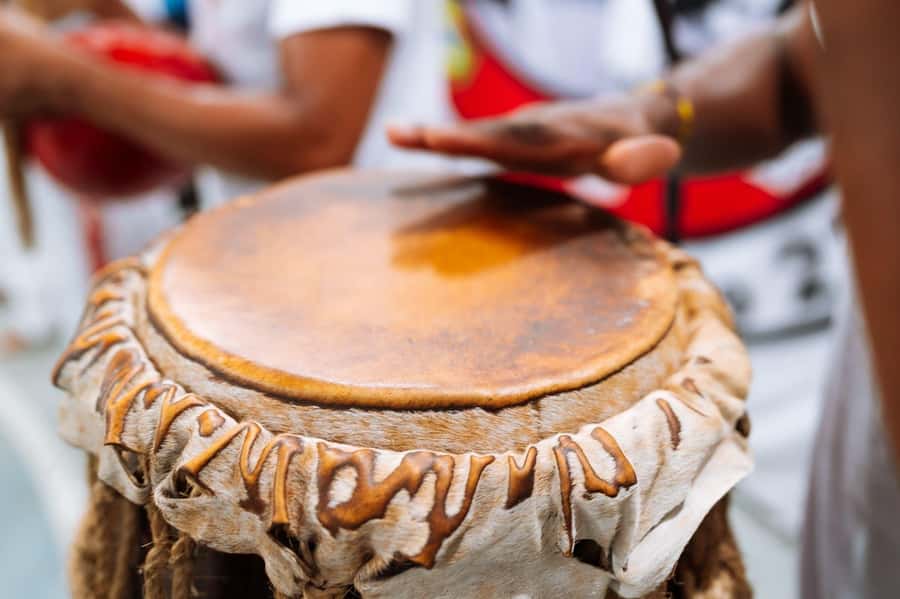
The workshop includes drumming and an introduction to Brazilian Capoeira percussion instruments. The available details do not name every instrument used in each class, so you should not expect a fixed instrument list. You will, however, work with percussion rather than only listen to a demonstration.
Alexandra learned different ways to make percussion sounds and several rhythms during the hour. That variety keeps the class moving and gives you a broader view of Brazilian music than a single repetitive exercise would.
The rhythms may feel more difficult than they first appear. That is part of the appeal. You have to coordinate timing, hand movement, and posture at once. A good instructor can break this down into manageable pieces, and the feedback about repeated demonstrations suggests that this is part of the teaching style.
I would treat the workshop as a cultural introduction, not a formal music course. You will get a taste of several techniques and rhythms, but there is not enough time for sustained practice on every instrument. The one-hour format is useful for a first encounter, though serious musicians may want a longer or more specialized lesson.
What the small group changes
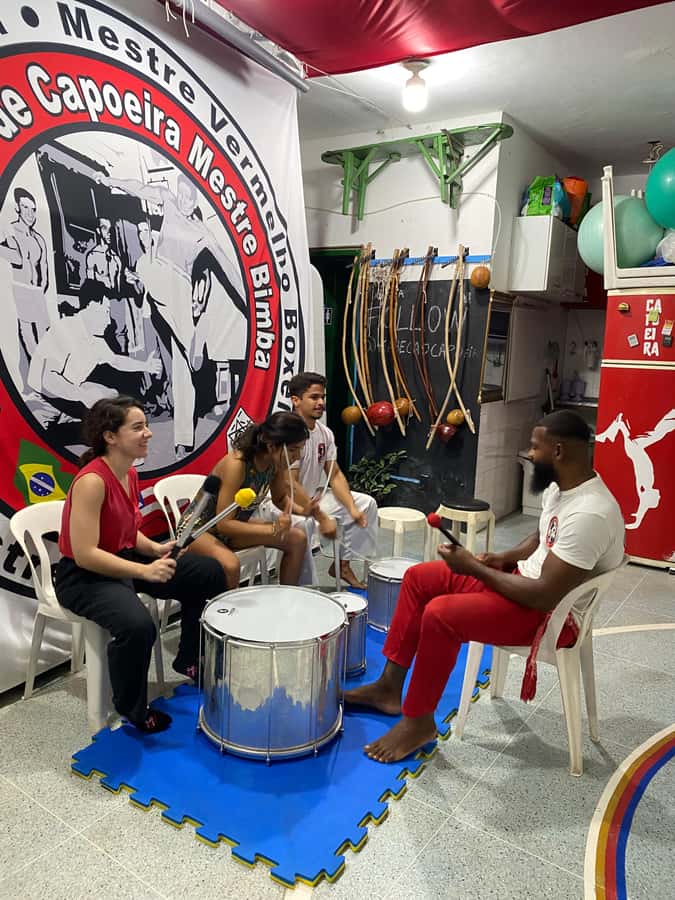
The maximum group size is 10 participants. That is small enough to make a real difference in a practical class, where you need to hear the beat and see the instructor’s hand movements.
A crowded group can turn a drum class into noise and waiting. Here, you have a better chance of following the demonstration and asking for a correction. The report of a thoughtful one-to-one session with Yasmin shows that some bookings may be much more personal, though you should not assume private instruction is included.
The group format also affects the mood. You can learn alongside other beginners without the pressure of performing for a large audience. If everyone is new, mistakes become part of the fun rather than a reason to hold back.
The main limitation is that the group size is a maximum, not a promise of a private class. If you need one-to-one instruction, ask the provider directly rather than relying on the small-group label.
English instruction needs a quick check
The activity is offered in Portuguese and English. That makes it accessible to many international visitors, and the cultural explanations are an important part of the experience.
Still, language delivery deserves attention. One Austrian participant booked an English class but found that the teacher could not speak English. The same person enjoyed the activity but felt the language promise was not met.
I would not ignore this issue. If you speak Portuguese, you have less to worry about. If you need English for technical instruction, confirm that an English-speaking instructor will be present on your date. Percussion can be learned by watching and copying, but historical explanations and posture corrections are easier when you share a language with the teacher.
The experience provider is Associação de Capoeira Mestre Bimba. The instructors are described as passionate about sharing their heritage, and Yasmin received especially warm praise for patient instruction and cultural explanations. That is useful information, but instructor assignment may vary.
Is $43 a good value for one hour?
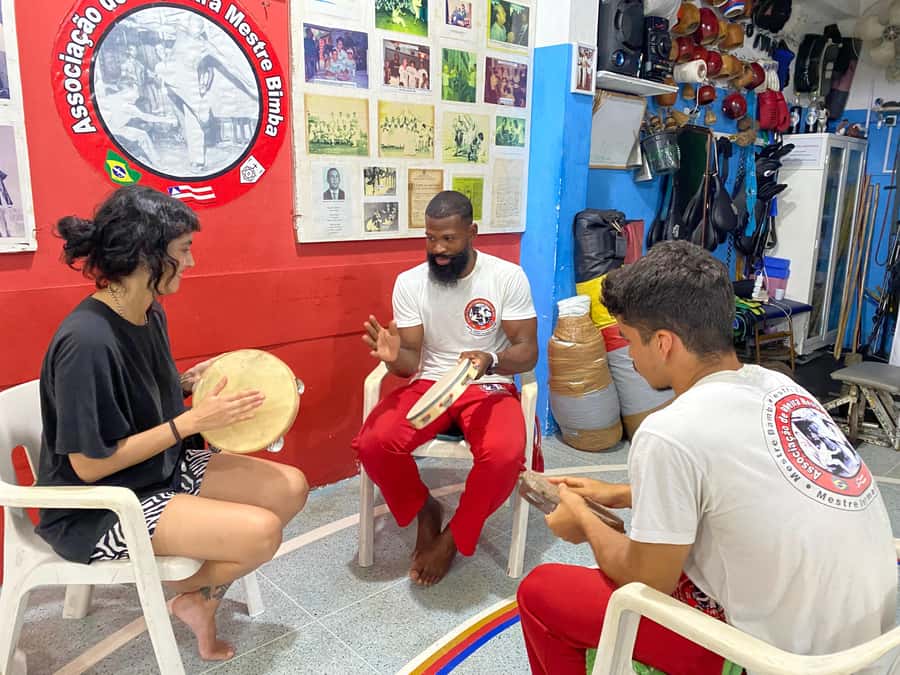
At $43 per person, this is not the cheapest hour you can spend in Salvador. The value comes from the combination of setting, instruction, and cultural context.
You are paying for access to a historic Capoeira school, an instructor, and hands-on practice in a group limited to 10. You are not paying for meals, drinks, transportation, or a full-day tour. Those exclusions are reasonable for a short class, but they mean you should include local transport and refreshments in your own budget.
The price works best if you are already planning to visit Pelourinho. Since the school is in the historic center, you can pair the class with churches, restaurants, and other nearby sights. One participant effectively combined the workshop with an afternoon of sightseeing during Carnaval, making the activity feel like part of a larger day rather than a costly detour.
The value is weaker if you expect a long lesson or advanced training. One hour is enough for an introduction, and Alexandra felt it was sufficient for this purpose. If your goal is to master a particular instrument, you will probably need more instruction elsewhere.
Who should book this workshop?
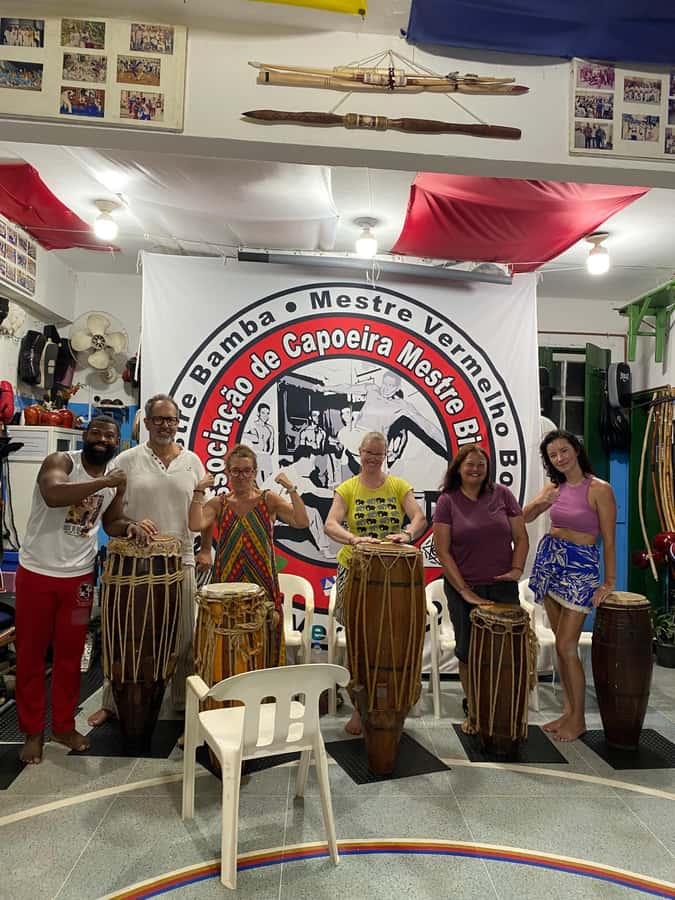
I would recommend it to first-time visitors who want a direct cultural activity in Salvador. It suits solo visitors, couples, and small groups who enjoy learning by doing. You do not need musical skill, and the class does not demand a full day.
It is also a good match for anyone interested in Capoeira, Samba, Afro-Brazilian culture, or the way music carries community history. The school setting adds meaning that you would not get from a generic percussion class.
Families and groups should note that the supplied information does not specify a minimum age or child policy. Ask before booking if you are traveling with children.
This may not suit you if you want a polished performance, a long lesson, or guaranteed private instruction. It may also disappoint you if English teaching is essential and you do not confirm the instructor’s language beforehand.
Booking details that matter
The activity lasts one hour, with starting times subject to availability. You can reserve now and pay later, which helps if your Salvador schedule is still moving around. Free cancellation is available up to 24 hours in advance for a full refund.
Since there is no hotel pickup, plan to reach Largo do Terreiro de Jesus on your own. The nearby landmarks are Ó Paí Ó Restaurante and São Domingos Gusmão Church.
The class includes the drumming workshop and instructor. Meals and beverages are not included, so plan a snack or drink before or after class if needed.
Should you book the drumming workshop?
Book it if you want an affordable, compact activity with real cultural context and hands-on practice. I especially like the location at Mestre Bimba’s first school, the small group limit, and the patient teaching described by people who worked with Yasmin. The 4.4 rating from 10 reviews suggests a strong experience overall, with language delivery as the main concern.
I would book this as part of a Pelourinho day. You get a lesson, a historic setting, and a chance to learn rhythms that have moved from persecution into national cultural life. Just confirm your teaching language and meeting details before paying.
FAQ
Do I need musical experience?
No. The workshop is designed for beginners, and no previous music experience is required.
How long does the workshop last?
The drumming and percussion workshop lasts one hour.
Where does the workshop meet?
It meets at Associação de Capoeira Mestre Bimba in Salvador. Ó Paí Ó Restaurante and São Domingos Gusmão Church in Largo do Terreiro de Jesus are nearby landmarks.
Is hotel pickup included?
No. Hotel pickup and drop-off are not offered, so you must make your own way to the meeting point.
What languages are available?
The activity is offered in Portuguese and English. If you need English instruction, confirm that an English-speaking instructor will be available for your session.
What is included in the price?
The price includes the drumming workshop and an instructor. Meals, beverages, and transportation are not included.
Just added around Salvador
- From Salvador: Schooner Tour to Frades Island★ 3.9 · 3 reviews
- From Salvador: Quilombo Heritage Daytrip with Lunch★ 3.4 · 3 reviews
- Salvador: Caipirinha Masterclass with Unlimited Drinks★ 4.2 · 4 reviews
- Salvador: Schooner Cruise with Pickup and Itaparica Stop★ 3.8 · 5 reviews
- BOXE CLASS – EX BAHIAN CHAMPION (SALVADOR-BA)★ 5.0 · 7 reviews
- Salvador by Night: Pelourinho & Old Town Tour★ 4.3 · 8 reviews
- Salvador: 3-Hour Percussion Class★ 4.9 · 10 reviews
- From Salvador: Morro de São Paulo Tour★ 4.2 · 13 reviews
Workshops, compared.

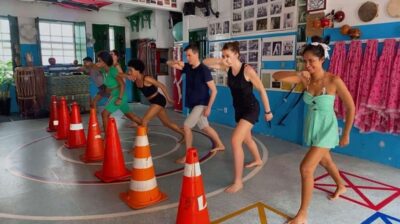
Capoeira Class at Mestre Bimba’s 1st Ever School.
Read our review →
Surf lessons with local instructors in Copacabana/ipanema!
Read our review →Browse the lists this tour appears in