
Reviewed · HISTORICAL TOURS
Sao Paulo: Downtown-Center History Walking Tour – in English
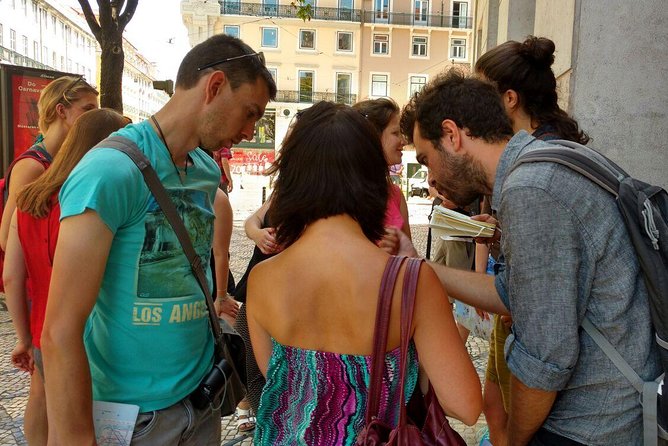
São Paulo reveals itself on foot. This two-hour walk links the city’s grand landmarks with local stories about immigration, politics, architecture, and social change. I like the compact route, which covers roughly 3 kilometers, and the small group limit of 10 people keeps the conversation personal. My main caution is simple: the tour begins at exactly 10:00 am, so even a few minutes of lateness can mean missing it.
I also like the way the walk finishes in Liberdade rather than ending at a single monument. You get São Paulo’s old center, modernist architecture, colonial beginnings, and Japanese-Brazilian culture in one morning. The tradeoff is that this is an overview, not a museum tour, so most stops are viewed from outside and explained on the street.
In This Review
- Key points to know before you go
- Why this São Paulo walking tour works
- Starting at Edifício Itália in Centro Novo
- Copan and São Paulo’s modernist ambition
- Underground culture at the Gallery of Rock
- Theatro Municipal and Brazil’s cultural identity
- Coffee wealth at Centro Cultural Banco do Brasil
- Pátio do Colégio and the city’s difficult beginning
- Sé Cathedral and São Paulo’s symbolic center
- Finishing in Liberdade
- Group size, pace, and comfort
- Is $31.24 a fair price?
- Who should book this walk?
- Final verdict: a smart first morning in São Paulo
- FAQ
- How long does the walking tour last?
- How far do you walk?
- What time does the tour begin?
- Where does the tour start?
- Where does the tour finish?
- How many people can join?
- Is the tour conducted in English?
- Does the tour visit Liberdade?
- What happens if the weather is poor?
Key points to know before you go
- A 3-kilometer route with eight major stops: You move from Edifício Itália and Copan to the Municipal Theatre, Pátio do Colégio, Sé Cathedral, and Liberdade.
- A small group capped at 10 people: This gives you a better chance to ask questions and hear the guide clearly in busy central streets.
- Giuliano is the main guide named in the feedback: He is praised for clear explanations, humor, language skills, and useful food and coffee tips.
- The tour connects architecture with social history: Coffee wealth, immigration, modernism, colonization, protest, and street culture all enter the conversation.
- Liberdade is part of the experience, not just a final address: You finish among lanterns, markets, Japanese-Brazilian culture, and a wide mix of São Paulo life.
- Punctuality matters: The guide cannot delay the group for late arrivals, and the phone may be turned off once the walk starts.
Why this São Paulo walking tour works
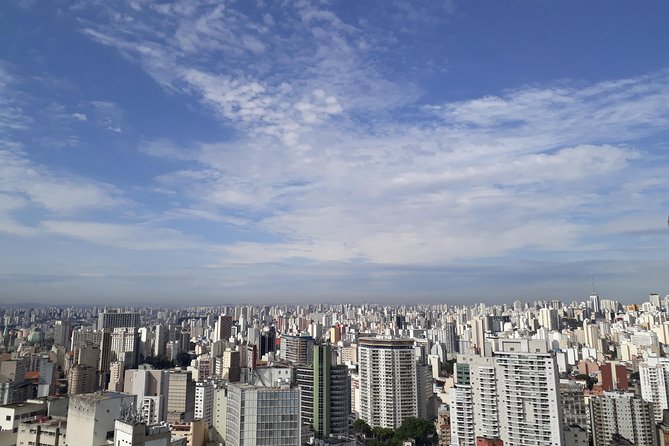
São Paulo can feel too large to grasp in a short visit. The downtown area gives you a useful starting point because the city’s story is packed into a fairly small route. Colonial foundations sit near office towers. Art déco façades face modernist curves. A Japanese neighborhood occupies streets shaped by many waves of migration.
I like this tour because it does not treat the center as a row of unrelated sights. Edifício Itália is not just a tall building. Copan is not just a famous curve. Sé Cathedral is not simply a church for a photograph. Each stop helps explain how São Paulo grew, who gained from that growth, and how different groups shaped the city.
The English-language format is useful for visitors who want more than dates and names. The guide, Giuliano, is repeatedly praised for making complex subjects understandable while keeping the mood light. He has also handled groups speaking multiple languages, which can be valuable if your party is mixed.
The pace appears friendly rather than rushed. You have time to take photographs, ask questions, and pause at the larger buildings. At roughly 15 minutes per listed stop, the walk gives you a framework for the city without consuming an entire day.
More Historical Tours in São Paulo
- São Paulo: Downtown Historical Bike Tour
★ 4.9 · 191 reviews - Gastronomic Tour São Paulo – Culture & History Through The Art Of Food – Private
★ 5.0 · 50 reviews - Full Day Private Beach Tour Santos – Culture, History & Beach (Pickup São Paulo)
★ 5.0 · 47 reviews
Starting at Edifício Itália in Centro Novo
The meeting point is Edifício Itália, at Avenida Ipiranga, 344. This places you in Centro Novo, the central area shaped by São Paulo’s twentieth-century growth. The building was once the city’s tallest and remains one of its best-known landmarks.
Starting here makes practical sense. You begin with the image of São Paulo as a vertical, ambitious city, then gradually work backward toward its colonial roots. It is a neat way to set up the contrast between the modern metropolis and the older center.
Arrive early. The tour begins at 10:00 am, and the guide’s policy is firm about leaving on time. One unhappy experience resulted from arriving only a few minutes late, but the guide’s response explains the rule clearly: the group cannot be held up, and the phone is turned off during the walk so attention stays with the people who arrived on time.
For a large city with traffic and uncertain travel times, I would aim to reach Edifício Itália well before 10:00. The start is near public transportation, but the information provided does not specify which routes or stations to use, so check your own route before setting out.
Copan and São Paulo’s modernist ambition
Next comes Edifício Copan, designed by Oscar Niemeyer. Its broad, sweeping form is one of the defining sights of central São Paulo. The building shows how dramatically the city changed during its mid-century period of rapid vertical growth.
The guide uses Copan to discuss Brazilian modernism and brutalist architecture. That is more useful than simply pointing out its shape. You begin to see the building as a product of a city trying to reinvent itself, with optimism, scale, disorder, and intense urban pressure all packed into one structure.
You should have time for photographs and an explanation of the building’s design. This is an exterior-focused stop, so anyone expecting an extended interior visit should adjust expectations. The value lies in seeing Copan in its urban setting and understanding why it matters.
Underground culture at the Gallery of Rock
The Gallery of Rock changes the mood. Instead of grand civic architecture, you encounter galleries and underground shopping corridors associated with vinyl records, antiques, manga, and pop culture.
This stop gives the walk a welcome everyday edge. São Paulo’s center is not only about institutions and historic façades. It is also a place for collectors, music fans, subcultures, and small businesses. The Gallery of Rock helps show how older commercial spaces can acquire new meaning over time.
The visit may appeal most to anyone interested in music, street culture, or unusual shopping. It also breaks up the architecture-heavy sequence. You are not just looking upward at buildings; you are looking at the people and interests that keep the center active.
More Walking Tours in São Paulo
- Sao Paulo: Downtown-Center Walking Tour | 2 Hours – English
★ 4.9 · 84 reviews - Ecological walk in sao paulo
★ 5.0 · 61 reviews - Night Walking Tour through the Bars of São Paulo
★ 5.0 · 51 reviews - São Paulo : Must-See Sites Walking Tour With A Guide
★ 4.4 · 25 reviews
Theatro Municipal and Brazil’s cultural identity
Theatro Municipal is one of the route’s grandest stops. Its European-inspired design reflects the wealth and ambition that grew around São Paulo’s coffee economy. Yet the building also carries a more rebellious story.
In 1922, the theatre hosted the Week of Modern Art, an important moment when Brazilian artists challenged established European models and searched for a more distinct national voice. That contrast is the point: the building looks toward Europe, while the event helped artists argue for something more specifically Brazilian.
I find this one of the strongest parts of the route because it connects architecture to cultural politics. You see an elegant theatre, then hear how it became a stage for artistic change. The stop should suit you if you want to understand Brazil beyond a list of famous buildings.
Coffee wealth at Centro Cultural Banco do Brasil
At Centro Cultural Banco do Brasil, the subject shifts to art déco buildings, grand façades, and the coffee boom. São Paulo’s early twentieth-century prosperity helped finance infrastructure, culture, and ambitious construction.
The important qualification is that wealth did not reach everyone equally. The tour links the polished center with the social contrasts that still shape the city. That makes the stop more useful than a simple architecture lesson. You get a sense of how money built the city, while also hearing about the unequal results of that growth.
Centro Cultural Banco do Brasil is also a reminder that the historic center is not frozen in the past. Its buildings can serve new cultural purposes, and the walk encourages you to notice how old commercial and financial spaces continue to function.
Pátio do Colégio and the city’s difficult beginning
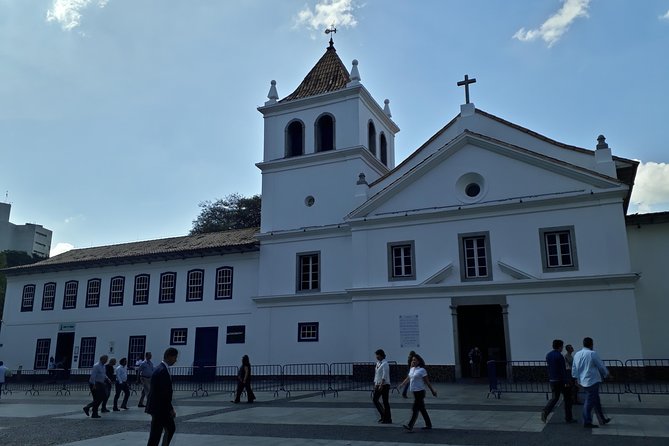
At Pátio do Colégio, the tour reaches the place where São Paulo was officially founded in 1554. Jesuit missionaries and Tupi-Guarani peoples both enter the story here.
This is the point where the walk asks you to look beyond a simple founding-date narrative. The origins of São Paulo involve religion, power, colonization, Indigenous communities, and resistance. The plaza may appear calm, but the history attached to it is not simple.
I appreciate that the route places this stop after the modern center. You have already seen the city as a giant commercial and cultural force. Pátio do Colégio then reminds you that its beginnings were much smaller, and that the city’s growth came through forces that affected different groups in very different ways.
Sé Cathedral and São Paulo’s symbolic center
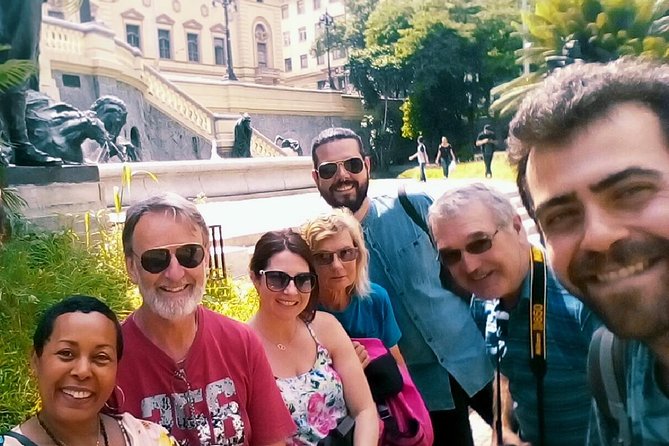
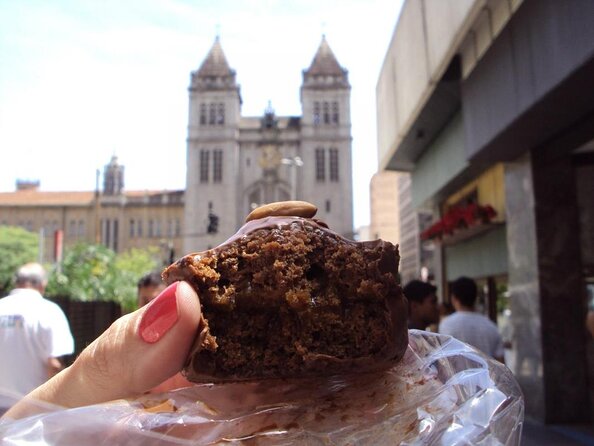
Sé Cathedral is located at Praça da Sé, a symbolic center of São Paulo often described as ground zero. The neo-Gothic church is among the world’s largest of its style and makes an imposing sight in the square.
The guide treats the cathedral as more than religious architecture. Praça da Sé has also been a place for public gatherings, protest, and civic identity. That wider context helps you understand why the cathedral remains important even if you are not especially interested in church interiors.
This is another stop where the exterior explanation is central. You can take in the scale of the building, its position in the square, and its connection to the surrounding city. Some feedback specifically praised the number of historic buildings and churches included, but the tour’s stated route centers on Sé Cathedral rather than a series of interior church visits.
Finishing in Liberdade
The walk ends at Praça da Liberdade, near the listed police base at Praça da Liberdade, 125. This is a useful finish because Liberdade feels different from the earlier parts of downtown.
Liberdade is widely known as the largest Japanese neighborhood outside Japan. Lanterns, markets, Japanese-Brazilian culture, and multicultural streets give the district a strong identity, but the larger lesson is about migration and change. São Paulo has repeatedly been reshaped by people arriving from elsewhere, and Liberdade makes that process visible.
The experience highlights the street market and the produce and authentic foods found there. If you enjoy food, I would treat the final stop as a chance to ask Giuliano for suggestions. He has provided useful food and coffee recommendations, and one participant later followed his advice for a meal and a theatre show.
The tour ends here rather than returning you to Edifício Itália. That is convenient if you plan to eat or continue exploring Liberdade, but you should remember that you are responsible for your onward route. The walk finishes at a different district from where it began.
Group size, pace, and comfort
A maximum of 10 people is one of the strongest practical features. In a central area with busy streets and plenty to explain, a small group makes it easier to hear the guide and ask about subjects that interest you.
The walk covers about 3 kilometers over approximately two hours. Previous participants describe the pace as comfortable, with stops for photographs and questions. The guide has also tried to keep people in the shade when possible, which matters in São Paulo’s often warm conditions.
Most people can participate, and service animals are allowed. The experience requires good weather, so poor conditions may lead to a different date or a full refund. Wear sensible walking shoes and bring water, since the route is a city walk rather than a vehicle-based sightseeing trip.
Safety deserves a practical note. The center has a reputation that can make first-time visitors uneasy, and one participant found the area less threatening than expected. I would still follow normal big-city habits: keep valuables secure, stay alert, and remain with the group. The tour gives you orientation, but no walking tour removes the need for awareness.
Is $31.24 a fair price?
At $31.24 per person, this is a reasonable price for a two-hour, English-language walk with a group capped at 10 people. You are paying for interpretation, local context, and route planning, not admission to a paid attraction. The listed stops have no admission charge.
That distinction matters. If you only want to photograph Copan, the theatre, and Sé Cathedral, you can see many of those places independently for less. The value comes from understanding how the pieces fit together, hearing stories that are not easy to pick up from a guidebook, and getting practical suggestions for food and further sightseeing.
The tour is especially good value early in your stay. A first-day or first-morning walk can help you decide where to return, how the central districts connect, and what kind of São Paulo experience you want next. The price also compares well with a private tour, though this is still a shared group experience.
Who should book this walk?
I would choose this tour if you are visiting São Paulo for the first time and want a clear introduction to the center. It also suits repeat visitors who have seen the main buildings but never understood the politics, architecture, and social changes behind them.
History fans, architecture enthusiasts, photographers, and curious food-focused visitors should find plenty to enjoy. The Gallery of Rock adds appeal for people interested in music and pop culture, while Liberdade gives the route a strong multicultural finish.
You may want a different experience if you dislike walking, need a flexible start time, or want long interior visits at each attraction. The schedule is fixed, the route is outdoors, and late arrivals cannot be accommodated. If you prefer to explore at your own speed, a self-guided walk may be better, though you will lose Giuliano’s explanations and recommendations.
Final verdict: a smart first morning in São Paulo
I would book this tour if you want to understand São Paulo rather than simply pass through its center. Its best qualities are the small group, the steady pace, Giuliano’s clear and lively guiding style, and the range of subjects covered in only two hours.
Plan to arrive early at Edifício Itália, wear comfortable shoes, and keep the rest of your morning open for Liberdade. The experience will not provide a full museum program or a deep visit inside every building, but it gives you a strong base for exploring the city on your own.
FAQ
How long does the walking tour last?
The tour lasts approximately two hours.
How far do you walk?
The route is about 3 kilometers.
What time does the tour begin?
It starts at 10:00 am.
Where does the tour start?
The meeting point is Edifício Itália, at Av. Ipiranga, 344, in Centro Histórico de São Paulo.
Where does the tour finish?
The walk ends at Praça da Liberdade, near Base da PM at Praça da Liberdade, 125.
How many people can join?
The group has a maximum of 10 travelers.
Is the tour conducted in English?
Yes, this experience is offered in English.
Does the tour visit Liberdade?
Yes. The route finishes in Liberdade and includes its streets, market culture, produce, foods, lanterns, and Japanese-Brazilian identity.
What happens if the weather is poor?
If the tour is canceled because of poor weather, you can receive a different date or a full refund. You can also cancel up to 24 hours before the start time for a full refund.
More Walking Tours
- São Paulo : Highlights Walking Tour With A Guide
★ 4.8 · 13 reviews - Walk to the Big Rock in Cantareira State Park
★ 5.0 · 3 reviews - Special tour 8 hour (walking tour + nightlife )
★ 5.0 · 3 reviews - São Paulo: Downtown Walking Tour with Farol Santander Entry
★ 4.6 · 3 reviews
More Historical Tours
- Full Day Private Beach Tour Santos & Guarujá – Combine Culture, History & Beach
★ 5.0 · 37 reviews - São Paulo: Food, Culture & History Private Tour
★ 5.0 · 6 reviews - São Paulo Highlights: Culture, History, and Vibrance by Bike
★ 4.9 · 6 reviews - Best São Paulo City Tour History 5Hours Private Experience.
★ 4.0 · 3 reviews
Just added around Sao Paulo
- Campos do Jordão: Full-Day Private Tour from São Paulo★ 5.0 · 3 reviews
- Walk to the Big Rock in Cantareira State Park★ 5.0 · 3 reviews
- Best São Paulo City Tour History 5Hours Private Experience.★ 4.0 · 3 reviews
- Sao Paulo: City Highlights and LGBTQIA+ Scene Private Tour★ 5.0 · 3 reviews
- São Paulo Carnival Seating with Food, Drinks, & Transfer★ 5.0 · 3 reviews
- Special tour 8 hour (walking tour + nightlife )★ 5.0 · 3 reviews
- São Paulo: Downtown Walking Tour with Farol Santander Entry★ 4.6 · 3 reviews
- São Paulo: Jewish History Downtown Private Walking Tour★ 3.7 · 3 reviews
Historical Tours, compared.

Scenic Train ride to historical cities of Morretes and Antonina
Read our review →
From Foz do Iguazu: Triple Frontier Landmark Ticket
Read our review →
Explore Little Africa : Unveiling Afro Heritage in Rio de Janeiro
Read our review →
Learn the History of Rio with an Unforgettable City Center Walking Tour
Read our review →Browse the lists this tour appears in