
Reviewed · SALVADOR TOURS
Salvador de Bahia African Culture Tour
Feel Salvador’s African soul on foot. This three-hour private walk connects Terreiro de Jesus, the Cross of São Francisco, capoeira, samba, and Olodum with the city’s difficult colonial past. I like the clear focus on Afro-Brazilian culture, and I like that guides such as Eduardo, Sayuri, and Adilson have been praised for making the tour feel like time with a well-informed local friend. The main drawback is value: one rating noted that the walk ended after two hours, and the price can feel high for a route centered on free museums and public sites.
This is a strong first look at Salvador’s African identity, especially if you want history explained in plain language rather than a quick photo stop. The private format lets you ask questions and shape the discussion, but you should confirm the expected route and finish time if you are paying a premium for the full three hours.
In This Review
- Key points to know before booking
- Why Salvador needs an African culture tour
- Starting at Terreiro de Jesus and Salvador Cathedral
- The Cross of São Francisco and the fight for freedom
- Samba and capoeira in the streets of Salvador
- Escola do Olodum and the meaning of Carnival
- What the three-hour private format feels like
- Is the price fair for a walking tour?
- Who will get the most from this experience?
- Practical details for a smoother afternoon
- Should you book the Salvador African Culture Tour?
- FAQ
- Where does the Salvador African Culture Tour meet?
- How long does the tour last?
- Which languages are available?
- Is this a private tour?
- What places are included in the walking route?
- Can I cancel for a full refund?
Key points to know before booking
- Meet at 2 pm in front of Salvador Cathedral, at the start of the historic center.
- Focus on African heritage, including slavery, liberation, samba, capoeira, Carnival, and Black Brazilian identity.
- Walk through Terreiro de Jesus and the Cross of São Francisco, two major central landmarks.
- Visit Escola do Olodum, a cultural and educational center tied to Afro-Brazilian music and Carnival.
- Private groups and three guide languages make the tour flexible for couples, families, and small groups.
- Allow for a value question, since one detailed rating found the tour short for its price.
Why Salvador needs an African culture tour
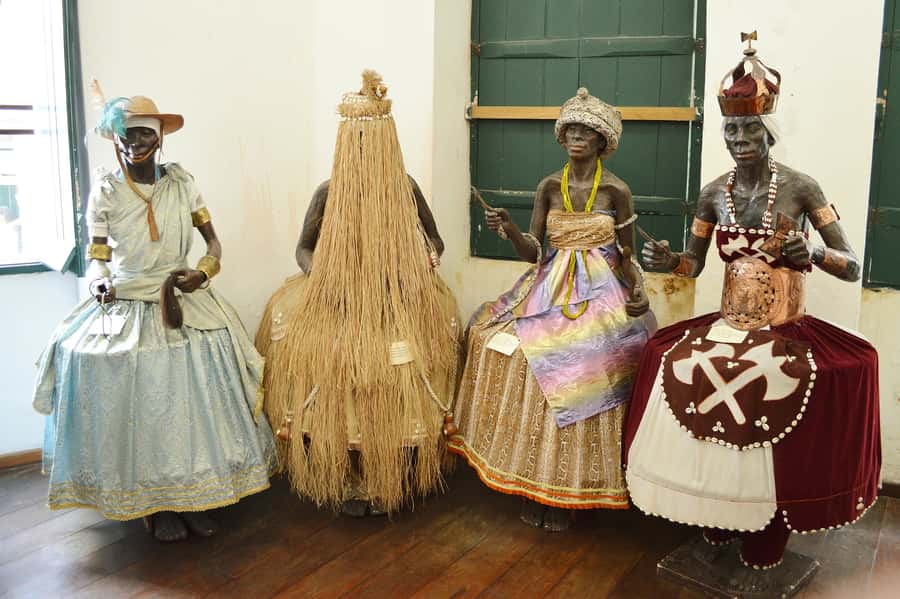
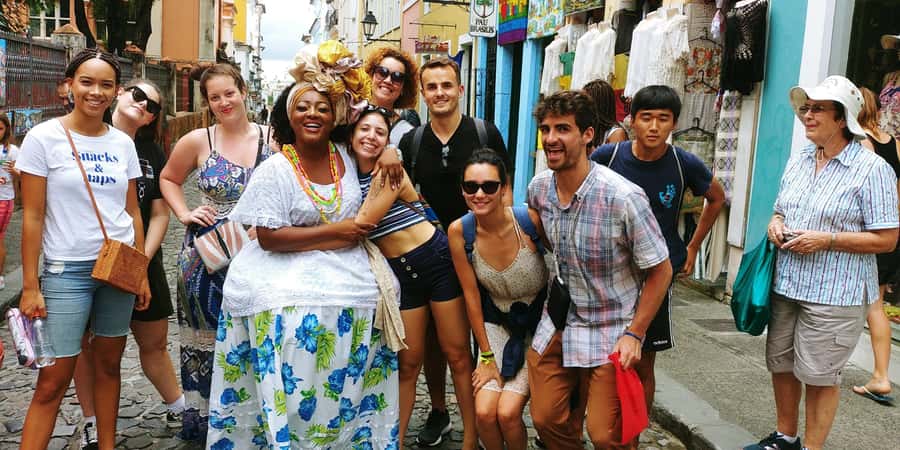
Salvador can look, at first glance, like a city of grand churches, colorful façades, steep streets, and Portuguese colonial design. That view is incomplete. Much of the city’s identity comes from African people and their descendants, whose music, religion, dance, food, language, dress, and political life continue to shape Salvador.
This tour helps you read the center with that wider frame. A church square is not only an architectural stop. A musical tradition is not only entertainment. A Carnival organization is not only a parade group. The guide links those visible parts of the city to colonization, slavery, resistance, and the long struggle for freedom.
I especially like this approach for a first visit. You get the basic city orientation, but the main subject stays focused. This is not a general tour that gives five rushed minutes to African culture before moving on to something else.
The format is also personal. You meet at 2 pm in front of the Cathedral Basilica of San Salvador and walk with a private group. Several highly rated guide experiences describe patient explanations, easy conversation, and room for questions. Sayuri was praised for asking what the group wanted to learn before setting the tone, while Eduardo was singled out for his command of local and Brazilian history.
That flexibility matters. You can ask about slavery, Carnival, capoeira, religion, music, or modern Black Brazilian life instead of simply following a fixed speech.
A few more trips worth weighing up before you book
- From Salvador: Schooner Tour to Frades Islands and Itaparica
★ 3.9 · 98 reviews - Afro-Brazilian Roots Private City Tour in Salvador
★ 4.7 · 88 reviews - Salvador Historic Walking Tour – Pelourinho
★ 4.8 · 62 reviews
Starting at Terreiro de Jesus and Salvador Cathedral
The meeting point is in front of the Cathedral Basilica of San Salvador, at coordinates -12.972854614257812, -38.50970458984375. From there, the walk begins at Terreiro de Jesus, one of the central squares in Salvador’s historic area.
The first section explains how Portuguese colonization and Jesuit missions shaped this part of Brazil. The point is not just to list dates or church names. You are given a way to understand how religious institutions, colonial power, and the lives of enslaved and free Africans intersected in Salvador.
Terreiro de Jesus is a useful opening because the setting brings several layers together. You can look at the formal colonial center while hearing about the people whose labor helped build it and whose descendants transformed the city’s culture. The contrast is important, and a good guide should not soften the difficult parts.
You may also hear about African figures connected with Salvador. The supplied information is not specific about which public figures appear in every version of the tour, so the exact discussion may depend on your guide and your questions. That is one reason the private format helps. If a particular writer, musician, religious leader, or Carnival figure interests you, ask early.
The square is also a good place to settle into the pace. This is a walking tour, not a vehicle tour with distant commentary. You will be looking, listening, and stopping in the center rather than covering a large part of the city.
The Cross of São Francisco and the fight for freedom
The route continues to the Cross of São Francisco. Here, the guide discusses the creation in the 19th century of a men’s organization formed to help Salvador’s Black community in its struggle for liberation.
That subject gives the tour political weight. African culture in Salvador did not survive only through music and celebration. It also survived through mutual support, organized resistance, and communities that worked to protect one another under harsh conditions.
The exact name of the organization is not provided in the tour details, so you should ask your guide to identify it clearly and explain its role. This is a good example of why a live guide adds value over reading a short plaque. You can ask how the group operated, who it served, and how its work fits into Salvador’s wider path from slavery toward freedom.
The Cross of São Francisco also brings the religious side of Salvador into view. The tour uses the stop to show how African identity and Catholic colonial institutions existed in tension and, at times, in combination. Do not expect a simple story with neat boundaries. The guide’s job is to explain those overlaps without turning them into a polished myth.
A detailed account of the experience praised the guide for handling subjects such as slavery, prostitution, and the Black Brazilian experience with care. That is useful to know before you book. This tour does not treat African heritage as a cheerful side note. It includes painful subjects and asks you to think about how the past still affects the city.
Samba and capoeira in the streets of Salvador
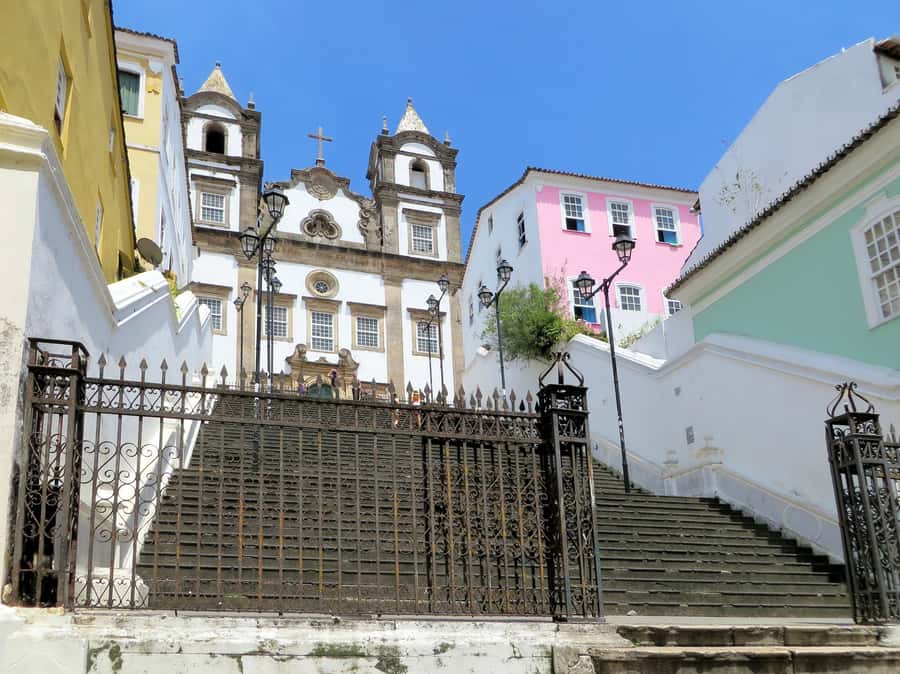
At the Cross of São Francisco, the discussion turns toward samba and capoeira. These are not presented as detached performances for tourists. They are part of the cultural language of Salvador and part of the city’s African inheritance.
Capoeira, with its blend of movement, music, and combat, is especially important to understand in context. The tour information does not promise a class or live demonstration, so you should not book it expecting to practice. Instead, expect an explanation of the dance and its place in Afro-Brazilian culture.
Samba receives a similar treatment. The guide may explain how rhythm, movement, and public celebration connect to identity in Salvador. The description suggests a lively presentation, with enough energy to make you want to move your feet, but the core experience remains a guided walk and conversation.
I like this section because it keeps music and dance tied to history. You are not simply told that Salvador is musical. You learn why those forms matter and how they became visible expressions of a community that faced oppression.
Still, keep your expectations precise. This is not advertised as a full samba show, capoeira class, or drumming workshop. If you want a night of live performance, a separate cultural evening with samba, capoeira, and drumming may suit you better.
A completely different kind of day out around Salvador:
- Salvador: Praia Do Forte and Guarajuba Beach Day Trip
★ 4.1 · 56 reviews - Salvador: Cultural Treasure – Samba de Roda.
★ 4.9 · 51 reviews - Salvador: Walking Tour Through Pelourinho
★ 5.0 · 49 reviews - Salvador: Capoeira Class at Mestre Bimba’s 1st Ever School.
★ 4.9 · 34 reviews
Escola do Olodum and the meaning of Carnival
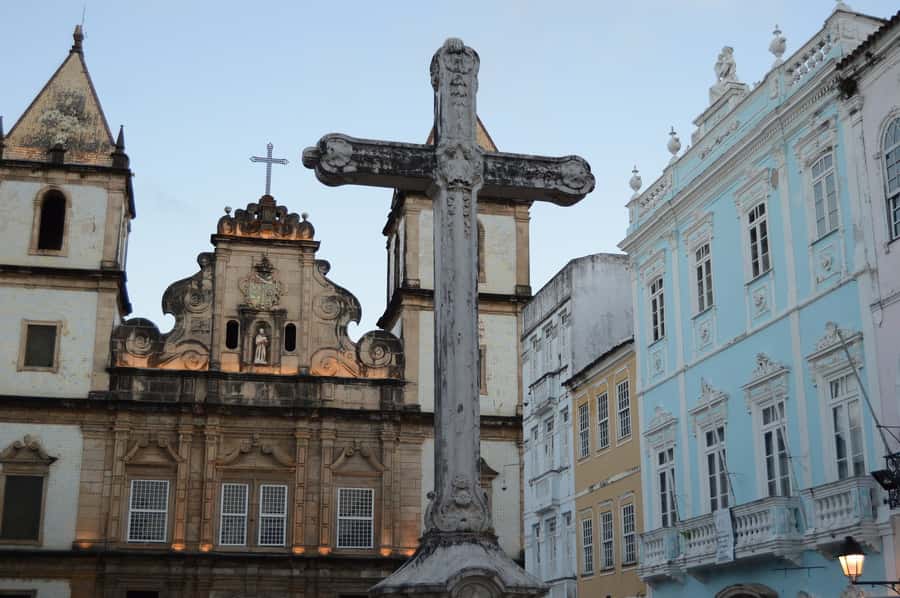
The final planned cultural stop is Escola do Olodum, a cultural and educational center of African descent. The visit focuses on the importance of Carnival in Salvador.
Olodum is one of the names most closely associated with Salvador’s Afro-Brazilian musical identity. Here, Carnival becomes more than a yearly party. It is a public stage for rhythm, community, pride, and social expression.
The stop is particularly useful if you plan to visit during Carnival or are curious about how the event works beyond the costumes and crowds. One guide, Sayuri, was praised for offering practical Carnival advice even beyond the scheduled tour. That kind of help can be valuable because Salvador’s Carnival is not something you understand fully by watching one parade.
The information provided does not promise a performance, rehearsal, workshop, or extended museum visit at Escola do Olodum. Treat it as a cultural and educational stop where the guide explains the center and the role of Carnival.
For many people, this will be the most memorable part of the route. You have already heard about colonization, organized resistance, music, and capoeira. Olodum helps connect those subjects to a living institution and a modern public celebration.
What the three-hour private format feels like
The stated duration is three hours, beginning at 2 pm. The tour ends at the Cross of São Francisco, even though that landmark appears earlier in the route description as well. The details suggest that the route may include a return or a longer discussion there, but the exact sequence should be confirmed with the provider.
That small uncertainty matters. One detailed rating said the guide finished after two hours, despite the advertised three-hour duration. Most of the available ratings are very positive, including a 4.5 score from 60 ratings, but you should still ask how much time is normally spent walking, inside cultural sites, and discussing each stop.
The private group setup is one of the strongest features. You are not locked into a large group’s pace or a one-size-fits-all lecture. A guide can spend more time on subjects you care about, and several high ratings praised guides for allowing the group to guide parts of the conversation.
Language choice is another practical plus. Tours are offered in English, Portuguese, and Spanish. Guide assignment varies, and names associated with highly rated experiences include Eduardo, Sayuri, Sayurin, Aldison or Adilson, Nilza, Facundo, and Carlos. Since different guides may bring different interests and styles, ask in advance which language and guide arrangement applies to your booking.
The walk begins in the center, so wear sensible shoes and be ready to stay outdoors for much of the activity. The supplied details do not promise hotel pickup, transportation, meals, or included admissions. Plan on meeting at the cathedral and reaching the route under your own arrangements.
Is the price fair for a walking tour?
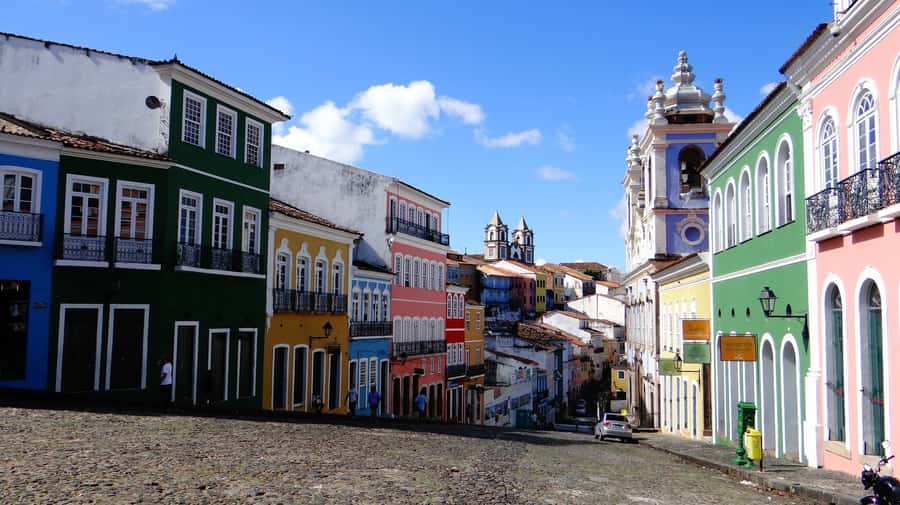
No price is provided here, so I cannot judge the exact cost. I can still explain how to think about the value.
You are paying mainly for the guide’s interpretation, not for transport or a package of paid attractions. The route uses public historic places and museums described as free in one rating. That can make the price feel steep if you expect entry tickets, food, entertainment, or a longer citywide itinerary.
The price makes more sense if your priority is a private conversation about Afro-Brazilian culture. A strong guide can help you understand connections that are easy to miss on your own. You also gain the chance to ask direct questions and adjust the emphasis to your interests.
Value depends heavily on time and guide quality. Eduardo was praised for detailed explanations of Salvador and Brazil, while Sayuri was praised for warmth, patience, and useful Carnival advice. Adilson was described as friendly and interactive, and another guide was praised for taking a group to three museums. These details suggest that the experience can go beyond a basic landmark walk, but they also show that the exact experience may differ by guide.
Before booking, ask three simple questions:
- Will the walk last the full three hours?
- Which sites or museums will we enter?
- Does the route include a Mass, or is Afro-Brazilian Mass only a listed highlight?
That last question is important. Afro-Brazilian Mass appears among the highlights, but the detailed schedule specifically describes Terreiro de Jesus, the Cross of São Francisco, samba and capoeira discussion, and Escola do Olodum. The schedule does not clearly promise attendance at a Mass. Get confirmation if that is the main reason you are interested.
Who will get the most from this experience?
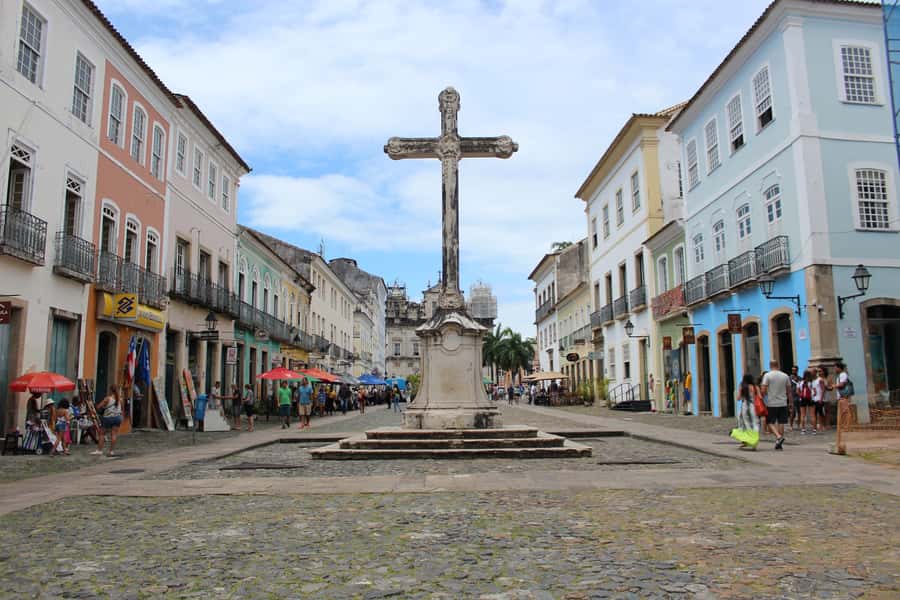
I would recommend this tour to you if you want Salvador’s culture explained through its African roots rather than treated as a background detail. It suits first-time visitors who want a compact introduction before exploring more of the city on their own.
It is also a good match for anyone interested in difficult history. The tour addresses colonization, slavery, liberation, prostitution, and Black Brazilian life. You should come ready for serious discussion, not only colorful streets and music.
The private format works well for families, couples, and small groups with different levels of background knowledge. You can ask basic questions without holding up a large group, or focus on Carnival, dance, religion, or local figures if you already know the basics.
I would hesitate if you want a long sightseeing route, included transportation, a meal, or a guaranteed live show. I would also hesitate if your budget is tight and the listed price is close to what you would pay for a broader paid tour. In that case, compare the cost with a general Salvador city walk or a dedicated cultural performance.
Practical details for a smoother afternoon
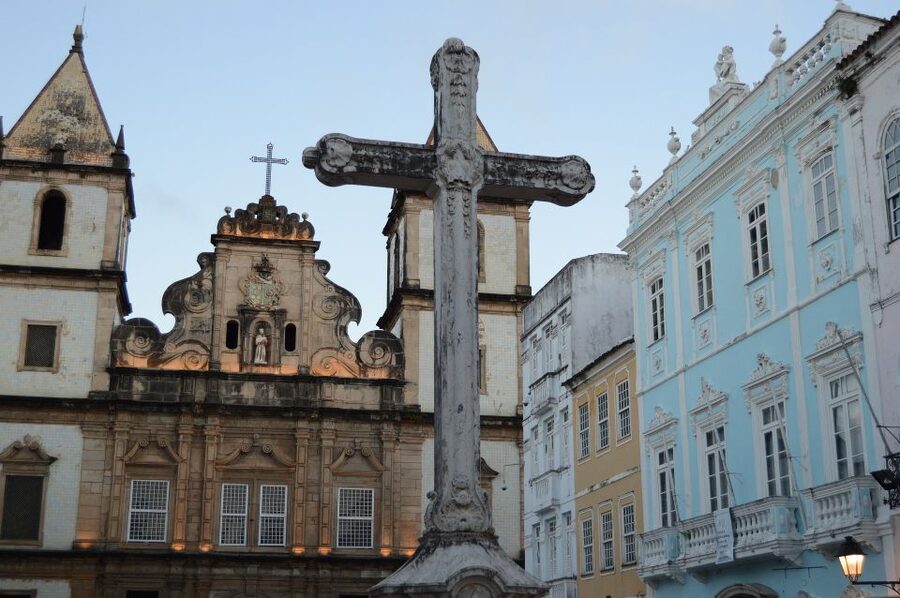
Meet at 2 pm in front of the Cathedral Basilica of San Salvador. Save the coordinates before leaving, since the historic center can be confusing when you are trying to match a square, church, and street entrance.
Ask about the finish point. The stated end is the Cross of São Francisco, but the route description also places that stop before Escola do Olodum. Knowing the final location helps you plan your next activity.
Use the booking flexibility wisely. Free cancellation is available up to 24 hours before the start for a full refund, and you can reserve while paying later. Those terms are useful if your Salvador schedule is still changing.
The experience is offered for private groups, with live guiding in English, Portuguese, or Spanish. Confirm your preferred language and any special interests before the afternoon begins. Guides have shown a willingness to adapt, and you will get more from the walk if you tell them what you want to understand.
Should you book the Salvador African Culture Tour?
Book it if you want a focused, personal introduction to Salvador’s African heritage and you value a thoughtful guide more than a long list of included attractions. The best version of this experience gives you context for Terreiro de Jesus, São Francisco, capoeira, samba, Olodum, and Carnival in one compact afternoon.
Before paying, confirm the three-hour duration, the exact stops, and whether an Afro-Brazilian Mass is actually included. If the price feels high for a walking route, compare it with other Salvador cultural tours. But if Eduardo, Sayuri, Adilson, Nilza, or another strong guide is available in your language, the conversation and local perspective may justify the cost.
FAQ
Where does the Salvador African Culture Tour meet?
The tour meets at 2 pm in front of the Cathedral Basilica of San Salvador. The meeting point coordinates are -12.972854614257812, -38.50970458984375.
How long does the tour last?
The stated duration is three hours. The tour description says it ends at the Cross of São Francisco, but one rating reported a two-hour finish, so confirm the expected timing before booking.
Which languages are available?
Live guiding is available in English, Portuguese, and Spanish.
Is this a private tour?
Yes. The activity is offered for a private group.
What places are included in the walking route?
The route includes Terreiro de Jesus, the Cross of São Francisco, and Escola do Olodum. The guide also discusses samba, capoeira, colonization, liberation, and Carnival.
Can I cancel for a full refund?
Yes. You can cancel up to 24 hours in advance for a full refund. You can also reserve now and pay later.
Just added around Salvador
- From Salvador: Schooner Tour to Frades Island★ 3.9 · 3 reviews
- From Salvador: Quilombo Heritage Daytrip with Lunch★ 3.4 · 3 reviews
- Salvador: Caipirinha Masterclass with Unlimited Drinks★ 4.2 · 4 reviews
- Salvador: Schooner Cruise with Pickup and Itaparica Stop★ 3.8 · 5 reviews
- BOXE CLASS – EX BAHIAN CHAMPION (SALVADOR-BA)★ 5.0 · 7 reviews
- Salvador by Night: Pelourinho & Old Town Tour★ 4.3 · 8 reviews
- Salvador: Traditional Drumming and Percussion Workshop★ 4.4 · 10 reviews
- Salvador: 3-Hour Percussion Class★ 4.9 · 10 reviews
Salvador Tours, compared.


Afro-Brazilian Roots Private City Tour in Salvador
Read our review →
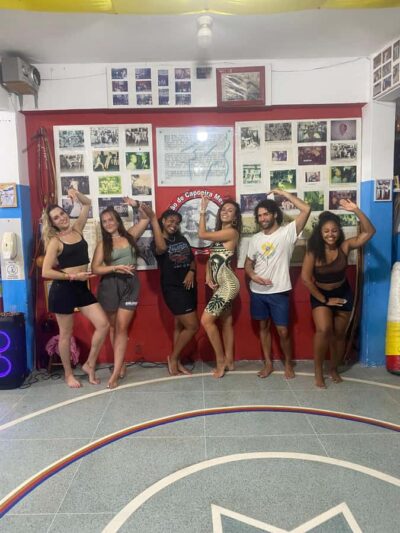
Capoeira Class at Mestre Bimba’s 1st Ever School.
Read our review →Browse the lists this tour appears in