
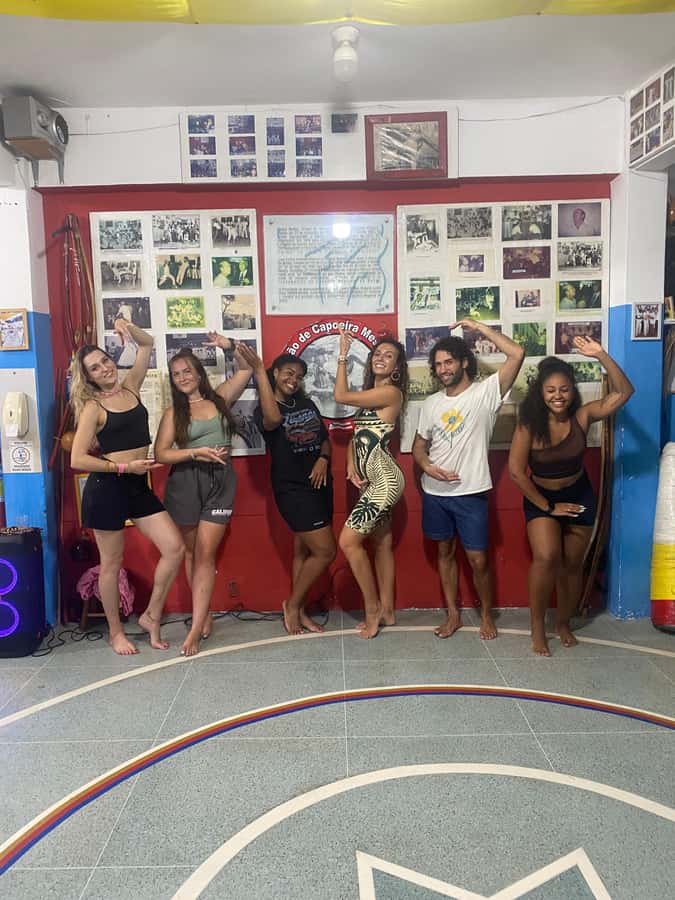
Reviewed · SAMBA & NIGHTLIFE TOURS
Salvador: Cultural Treasure – Samba de Roda.
Samba makes history feel wonderfully physical. This one-hour class in Salvador combines easy beginner steps with an explanation of how Afro-Brazilian music and dance moved from persecution to national pride. I especially like the English-speaking instruction, which makes the cultural background easy to follow, and the chance to learn inside the first Capoeira School in Brazil, founded by Mestre Bimba in 1937. The main limitation is time: one hour gives you a lively introduction, not a full dance course.
You do not need a partner or any previous dance experience. The class is also a good first-day activity because it gives you cultural context for Salvador, along with practical arrival information from instructors such as Yasmin. You will need to make your own way to the meeting point, and the class can get sweaty once the music takes hold.
In This Review
- Key points at a glance
- Why this samba class matters in Salvador
- Entering the school founded by Mestre Bimba
- What happens during the one-hour lesson
- Learning from Yasmin and the English-speaking instructors
- Samba, capoeira, and the story of cultural resistance
- The value of $43 for one hour
- Getting to the meeting point in central Salvador
- Who will enjoy this experience most
- Practical tips for making the hour count
- Should you book the Salvador samba class?
- FAQ
- Where does the samba class take place?
- Is hotel pickup included?
- What landmarks are near the meeting point?
- How long does the activity last?
- How much does the class cost?
- Do I need previous dance experience?
- Do I need to bring a dance partner?
- What languages does the instructor speak?
- What is included in the booking?
- Can I cancel for a full refund?
Key points at a glance
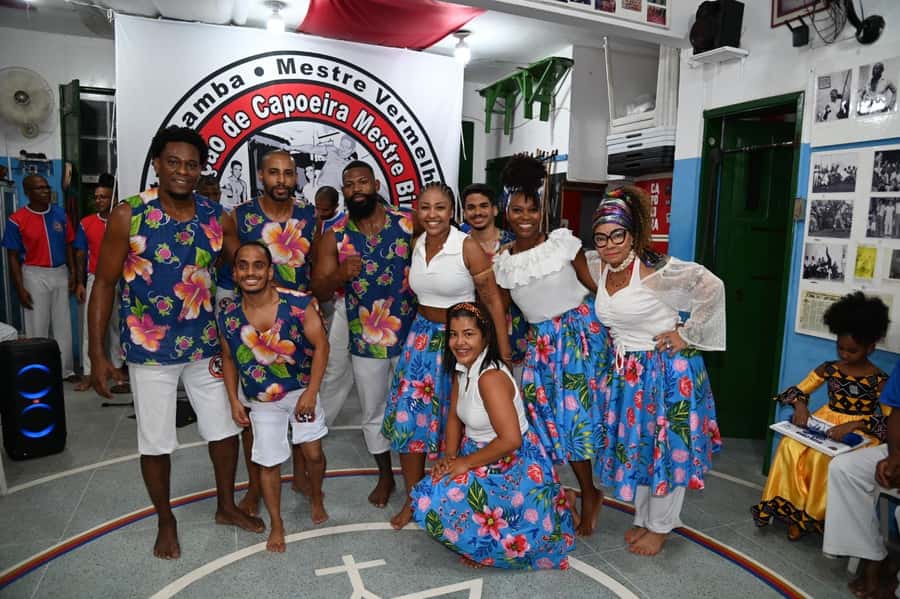
- Dance at Mestre Bimba’s 1937 capoeira school: The venue links your samba lesson to one of Salvador’s most important cultural institutions.
- Beginner-friendly steps: You can join without dance experience, and no partner is required.
- English and Portuguese instruction: English-speaking teachers explain both the movements and the cultural background.
- A short but active class: In one hour, you learn basic samba steps and leave with enough movement to follow the music.
- History beyond the dance floor: You hear how samba, capoeira, and other Afro-Brazilian traditions faced suspicion and criminalization.
- Convenient central meeting point: The Associação de Capoeira Mestre Bimba is near Largo do Terreiro de Jesus, with Ó Pai Ó Restaurante and São Domingos Gusmão Church as useful landmarks.
Why this samba class matters in Salvador
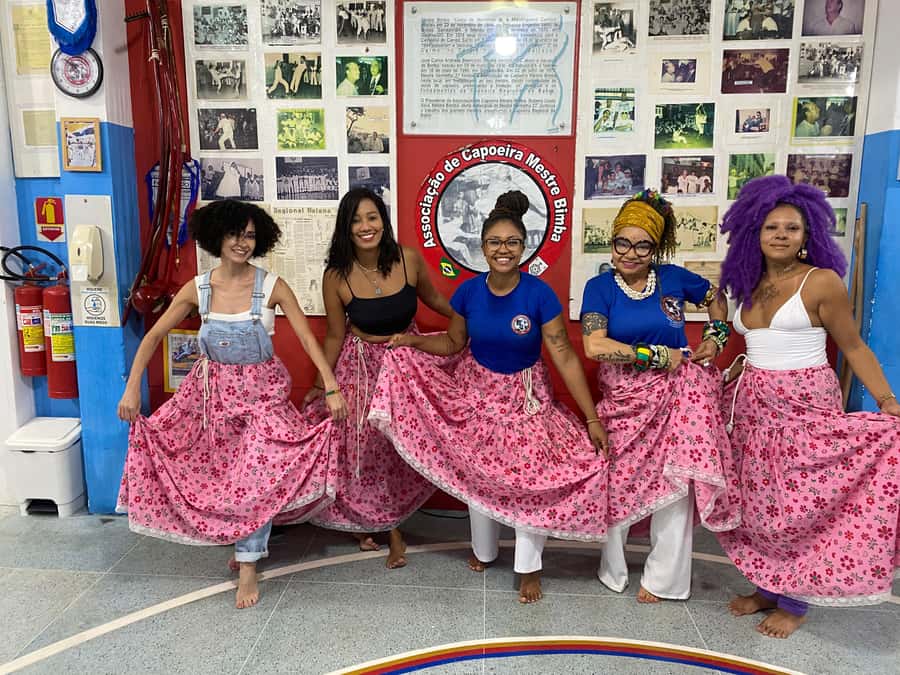
Samba is not simply a party dance to be picked up for a few minutes. Its story reaches into Brazil’s complicated treatment of African cultural traditions.
Samba originated in Afro-Brazilian communities in Bahia in the late 19th century. Cultural practices linked to African communities, including capoeira and Candomblé, were treated with suspicion and were at times criminalized. Samba shared that difficult past.
Today, samba is recognized by UNESCO as an Intangible Cultural Heritage of Humanity. That change, from persecuted expression to a symbol of Brazil, gives the lesson real weight. You are not just copying footwork. You are learning how music, movement, and community helped preserve identity.
I like that the history is taught alongside the steps rather than left for a museum visit later. The cultural explanation helps you hear the music differently. A rhythm that might first seem like background sound begins to carry a story about resistance, pride, and belonging.
More samba nights:
- Salvador: Cultural Night of Capoeira, Samba, and Drumming
★ 4.9 · 17 reviews - Rio de Janeiro: Beginner Samba Lesson in Ipanema
★ 4.9 · 1,071 reviews - Rio: Pub Crawl in Lapa with Cachaça Tasting and Live Samba
★ 4.7 · 881 reviews
Entering the school founded by Mestre Bimba
The class takes place at the Associação de Capoeira Mestre Bimba, described as Brazil’s first capoeira school, founded in 1937. Mestre Bimba created Capoeira Regional, and the school became a respected center for protecting cultural traditions in Salvador.
This setting is the strongest reason to choose this class over a generic dance lesson. A hotel ballroom or tourist studio could teach you the same basic hip movement, but it would not give you the same connection to Salvador’s cultural past. Here, the building itself is part of the lesson.
The school was seen as a great quilombo of resistance, a place that held firm to important cultural elements in the city. The term refers to communities formed by people resisting enslavement and oppression, so it carries serious historical meaning. You should treat the venue with respect, listen carefully during the introduction, and remember that this is not just a stage set for visitors.
The school is near Largo do Terreiro de Jesus. If you are finding the meeting point, Ó Pai Ó Restaurante and São Domingos Gusmão Church are useful landmarks. Pickup is not provided, so plan to arrive independently and allow a little extra time to locate the Associação.
What happens during the one-hour lesson
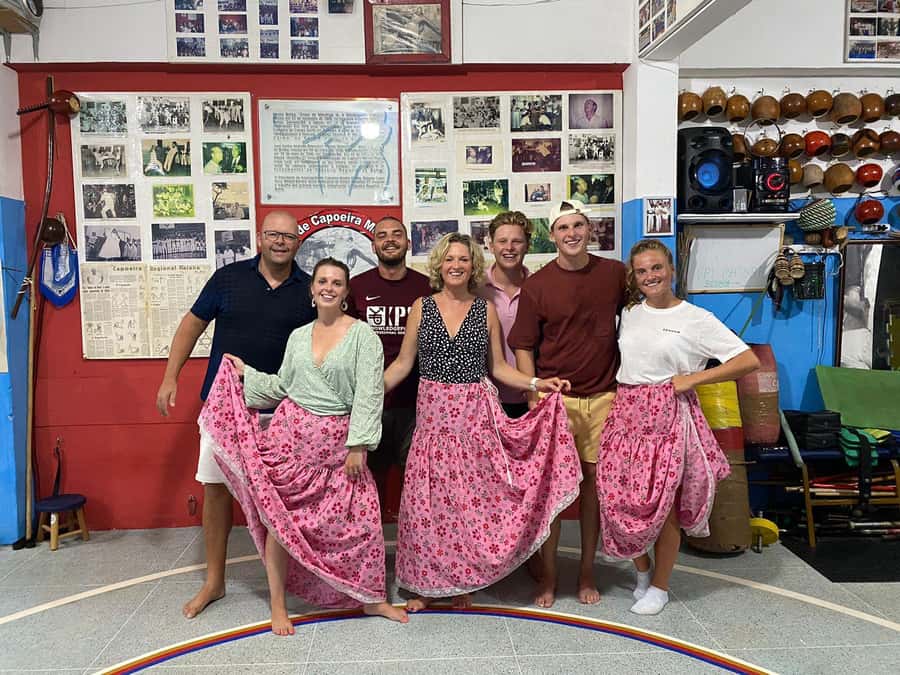
The session is built for beginners. Your instructor introduces the basic samba steps, demonstrates the movements, and then helps you repeat them with music. You do not need to arrive with rhythm, flexibility, or a dance partner. That takes away much of the usual anxiety of signing up for a dance class.
The instruction is practical. You will learn enough basic movement to respond to the beat, rather than spend the full hour listening to a lecture. At the same time, the teacher explains the cultural meaning behind samba and its connection to Salvador.
A good feature is the balance between instruction and encouragement. Yasmin, one of the instructors praised for her teaching, is described as calm, patient, and clear with beginners. Other classes have been led by teachers who bring plenty of energy while still making the movements manageable. That combination matters. A teacher who only performs can make a beginner feel lost, while a teacher who only counts steps can drain the fun from the music.
The class may feel easy at first, then more active once you repeat the sequence at speed. One participant described grinning and sweating halfway through the hour, which sounds about right for a short dance class with music. Wear something you can move in and be ready for a little exercise.
The hour passes quickly. You will not become a polished samba dancer in one visit, but you can leave with several basic movements and a better feel for the rhythm. For many people, that is the right amount of ambition on a busy Salvador day.
Learning from Yasmin and the English-speaking instructors
The language support is one of the practical strengths here. Instruction is available in English and Portuguese, and the English-speaking teacher explains the steps as well as the history of samba, capoeira, music, and Brazilian culture.
That matters because dance instruction often depends on small corrections. You need to understand where to place your weight, how to move your feet, and when to let the rhythm guide you. Clear English makes it easier to ask questions and correct yourself without embarrassment.
Yasmin receives particular praise for her calm nature and encouragement. She has also helped with arrival details and offered practical pointers about getting around Brazil. One visitor who took the class on the first day in the country found it a useful introduction to Salvador’s culture.
You should still understand that instructors may vary. The experience information names English and Portuguese as the available languages, but it does not promise a particular teacher for every booking. The consistent theme is beginner-friendly teaching, cultural explanation, and a welcoming approach.
A few more trips worth weighing up before you book
- From Salvador: Schooner Tour to Frades Islands and Itaparica
★ 3.9 · 98 reviews - Afro-Brazilian Roots Private City Tour in Salvador
★ 4.7 · 88 reviews - Salvador Historic Walking Tour – Pelourinho
★ 4.8 · 62 reviews - Salvador de Bahia African Culture Tour
★ 4.5 · 60 reviews
Samba, capoeira, and the story of cultural resistance
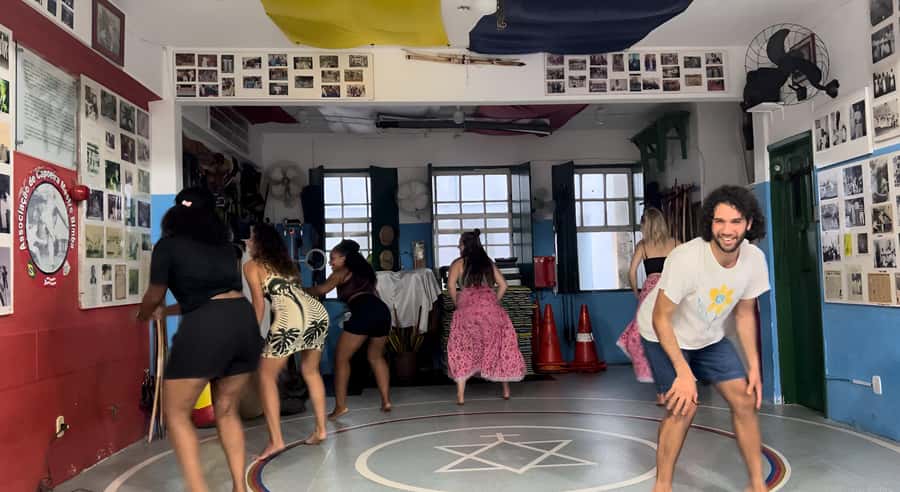
The connection between samba and capoeira is not a marketing add-on. Both traditions grew from Afro-Brazilian communities and faced official suspicion.
Capoeira combines movement, music, and combat. Mestre Bimba’s Capoeira Regional helped shape the school’s place in Salvador’s cultural story. Samba uses music and dance rather than martial movement, but both traditions reflect creativity under pressure.
That connection adds meaning to the lesson. You may arrive thinking you are learning a few party steps. You leave with a clearer idea of how Brazilian communities protected and passed on cultural practices when authorities tried to control them.
Some class participants have also taken drum lessons or attended a culture night at the school. Those options are not part of the advertised one-hour samba experience, so do not assume they are included. Still, the school can be a useful place to ask about other cultural activities if your schedule allows.
If you are especially interested in capoeira, the venue gives you a starting point. A separate capoeira class may be available, but it is not included in this samba booking. Combining a capoeira class with samba could make for a much more physical day, so plan for a serious workout rather than a gentle cultural stroll.
The value of $43 for one hour
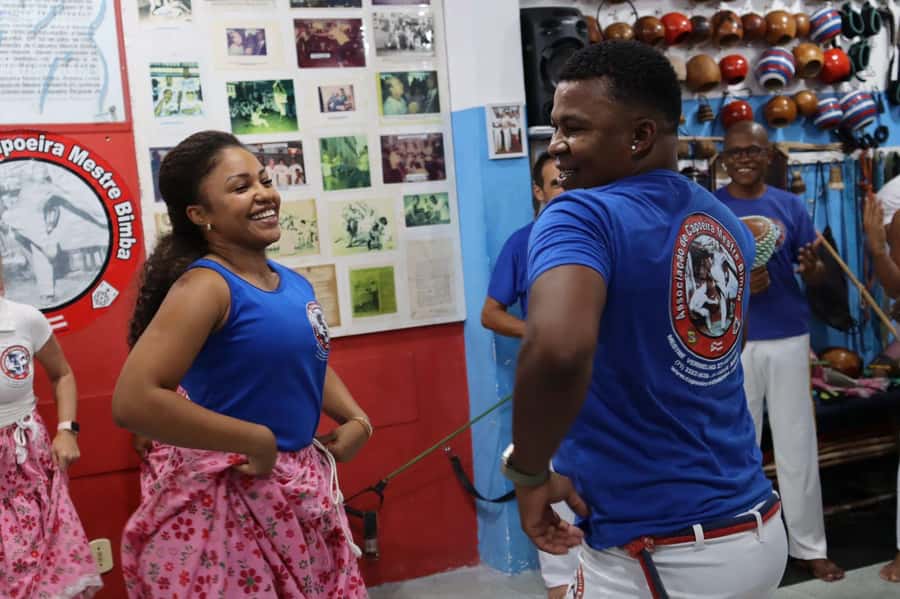
At $43 per person, this is not the cheapest way to fill an hour in Salvador. You can hear samba in public spaces without paying for a lesson. The price makes more sense when you count the instructor, the English-language explanation, the guided practice, and access to a historically important school.
You are paying for context as much as movement. A casual performance might entertain you for an evening, but it will not necessarily explain why samba matters or help you participate. This class gives you a direct role, even if your steps are still a work in progress.
The value is strongest for people who want an active cultural experience. If you enjoy learning by doing, the fee is reasonable for a private or small-scale lesson, though the available information does not specify the group size. If you only want to watch professional dancers, you may find the price harder to justify.
The class also has value for families and mixed-age groups. A 15-year-old joined one beginner session with her stepmother and enjoyed it. Parents should note that the activity is still a dance lesson, so anyone joining should be comfortable with movement and a little exertion.
Getting to the meeting point in central Salvador
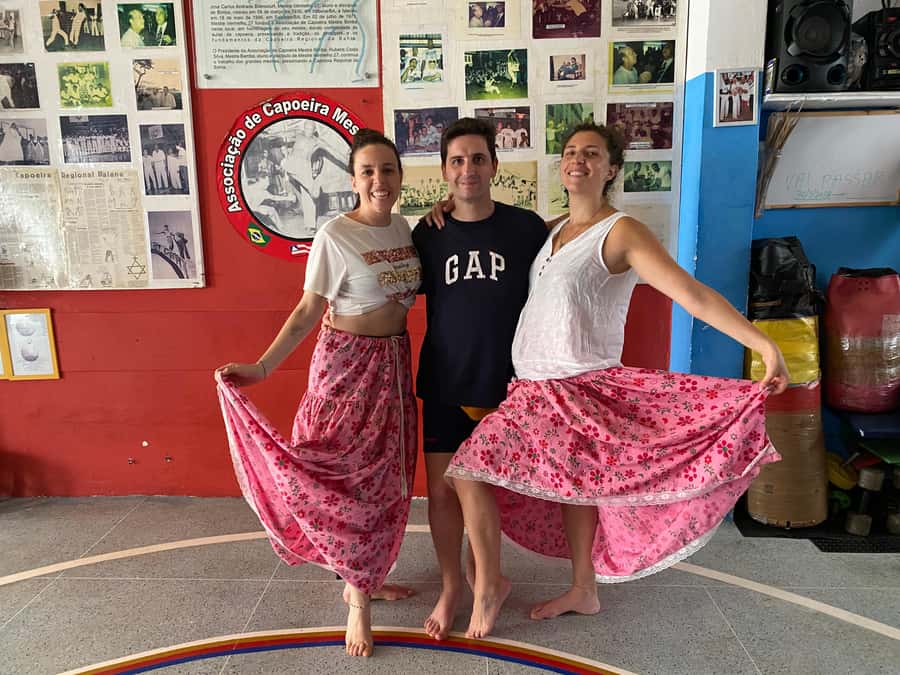
There is no pickup service. You meet at the Associação de Capoeira Mestre Bimba, near Largo do Terreiro de Jesus.
Use Ó Pai Ó Restaurante or São Domingos Gusmão Church as nearby reference points when arranging your route. The supplied directions specifically identify these landmarks, which is helpful because a named church or restaurant can be easier to find than an association entrance.
The class is described as centrally located. One instructor also showed awareness of concerns about arriving at night and gave practical guidance. You should still check the start time carefully and think about your route before leaving your accommodation, especially for an evening session.
The booking system allows you to reserve now and pay later. You can also cancel up to 24 hours in advance for a full refund. Those terms are useful when your Salvador plans are still shifting, but check the available start times before booking because the activity lasts only one hour and does not run at every possible time.
Who will enjoy this experience most
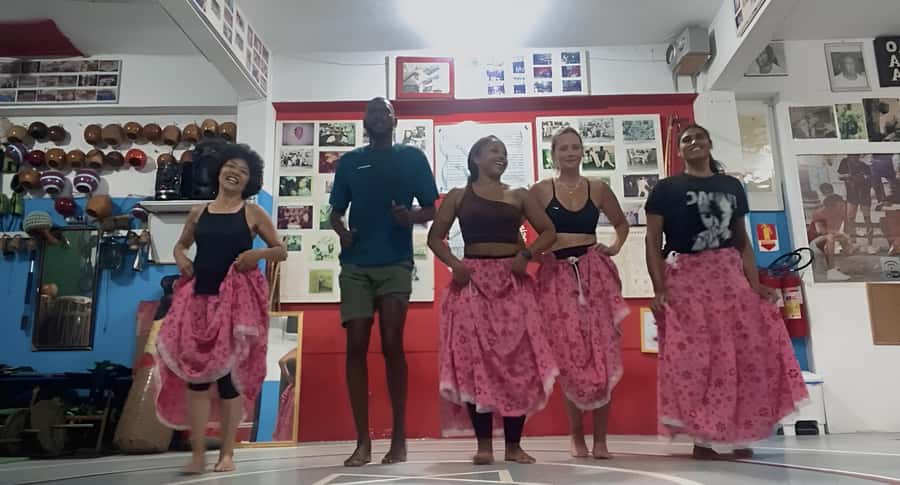
I would recommend this class to you if you want a short, active introduction to Salvador rather than a long sightseeing tour. It works particularly well for:
- First-time visitors who want cultural background on their arrival day
- Beginners who feel nervous about dance lessons
- Solo visitors who do not have a partner
- Couples, friends, and parent-child pairs
- People interested in the links between samba, capoeira, and Afro-Brazilian culture
- Anyone who prefers participation over simply watching a performance
It is less suitable if you want a full technical course, a long performance, or a quiet historical talk. One hour is enough to learn the basics, but not enough to explore every branch of samba or master complicated choreography.
You should also be comfortable with the cultural setting. The school represents a history of resistance, so approach it as a respected community institution, not merely as a photo opportunity.
Practical tips for making the hour count
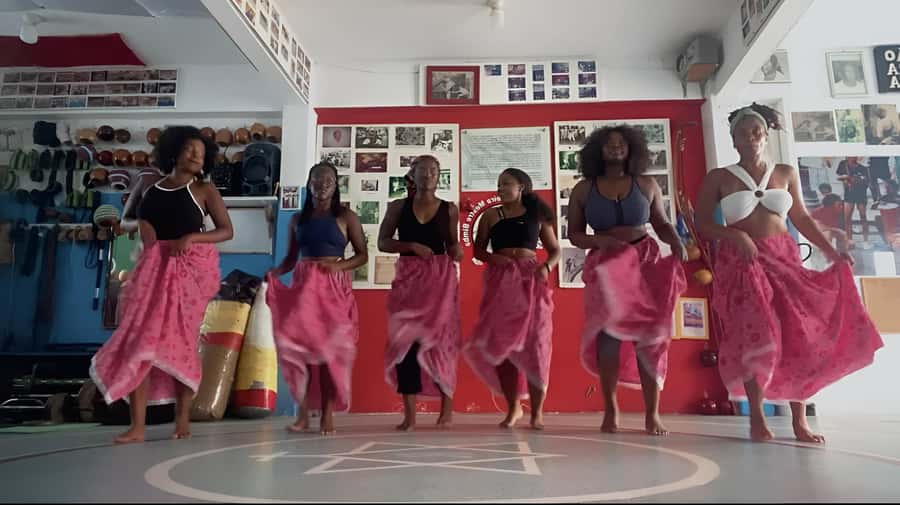
Arrive ready to move. The exact clothing requirements are not specified, but practical clothes and comfortable footwear are sensible choices for any dance lesson.
Do not worry about bringing a partner. The class does not require one, and the teaching is designed for people without previous experience.
Try to listen during the historical explanation. It may be tempting to focus only on getting your feet right, but the background is what makes this activity different from an ordinary dance workout.
If you are visiting Salvador for several weeks, consider asking about further classes. One participant planned another lesson after enjoying the introduction, and the school may offer related activities such as capoeira or drumming. These additional classes are separate from the one-hour samba booking, so confirm what you are reserving.
For an evening class, plan your route in advance. Pickup is not included, and an instructor has specifically helped participants think about safety and arrival logistics. That is useful support, but you remain responsible for getting to and from the school.
Should you book the Salvador samba class?
Book it if you want to connect with Salvador through movement, music, and a place with real cultural importance. The best parts are the English-speaking instruction, the gentle approach to beginners, the lively basic steps, and the chance to learn at Mestre Bimba’s historic capoeira school.
The main caution is simple: this is an introduction. At $43 for one hour, you are buying a focused cultural lesson, not a full evening of entertainment or advanced dance training.
For most visitors, I think the combination is worth it. You learn enough samba to feel the rhythm, hear why the tradition matters, and leave with a stronger sense of Salvador than you would get from watching another attraction. If you have only one hour for a cultural activity and would rather participate than stand on the sidelines, this is a smart choice.
FAQ
Where does the samba class take place?
The class takes place at Associação de Capoeira Mestre Bimba in Salvador.
Is hotel pickup included?
No. You need to make your own way to the meeting point.
What landmarks are near the meeting point?
Ó Pai Ó Restaurante and São Domingos Gusmão Church are near the Associação, in the Largo do Terreiro de Jesus area.
How long does the activity last?
The samba lesson lasts one hour.
How much does the class cost?
The listed price is $43 per person.
Do I need previous dance experience?
No. The class is suitable for beginners with no dance experience.
Do I need to bring a dance partner?
No. A partner is not required.
What languages does the instructor speak?
Instruction is available in English and Portuguese.
What is included in the booking?
The booking includes the samba dance lesson, an English-speaking instructor, access to the first Capoeira School in Brazil, and cultural and historical insights.
Can I cancel for a full refund?
Yes. You can cancel up to 24 hours in advance for a full refund.
Just added around Salvador
- From Salvador: Schooner Tour to Frades Island★ 3.9 · 3 reviews
- From Salvador: Quilombo Heritage Daytrip with Lunch★ 3.4 · 3 reviews
- Salvador: Caipirinha Masterclass with Unlimited Drinks★ 4.2 · 4 reviews
- Salvador: Schooner Cruise with Pickup and Itaparica Stop★ 3.8 · 5 reviews
- BOXE CLASS – EX BAHIAN CHAMPION (SALVADOR-BA)★ 5.0 · 7 reviews
- Salvador by Night: Pelourinho & Old Town Tour★ 4.3 · 8 reviews
- Salvador: Traditional Drumming and Percussion Workshop★ 4.4 · 10 reviews
- Salvador: 3-Hour Percussion Class★ 4.9 · 10 reviews
Samba & Nightlife Tours, compared.
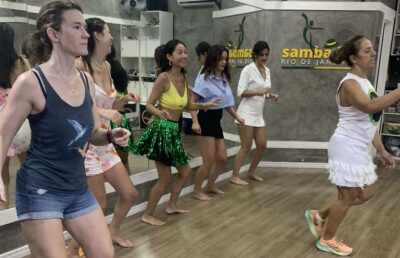
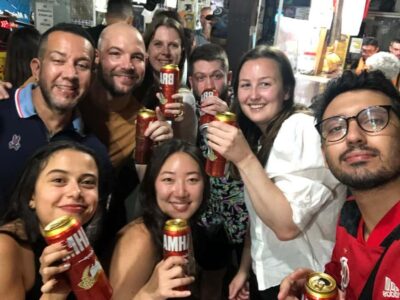
Pub Crawl in Lapa with Cachaça Tasting and Live Samba
Read our review →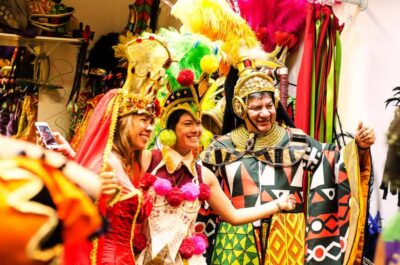
Carnival Backstage Tour at Samba City with Cocktail
Read our review →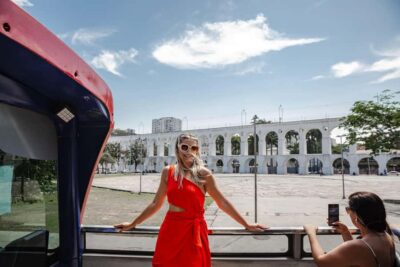
Hop-ON Hop-OFF Sightseeing Bus in Rio de Janeiro – Rio Samba Bus
Read our review →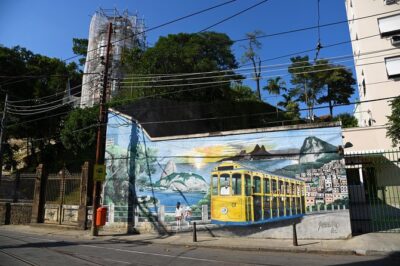
Santa Teresa, Lapa, and Cinelândia with Tram Ride and Selarón Steps
Read our review →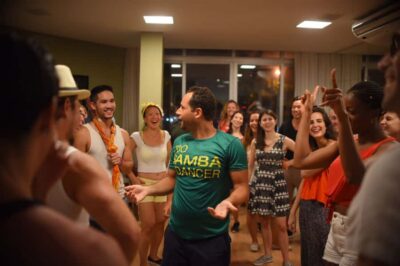
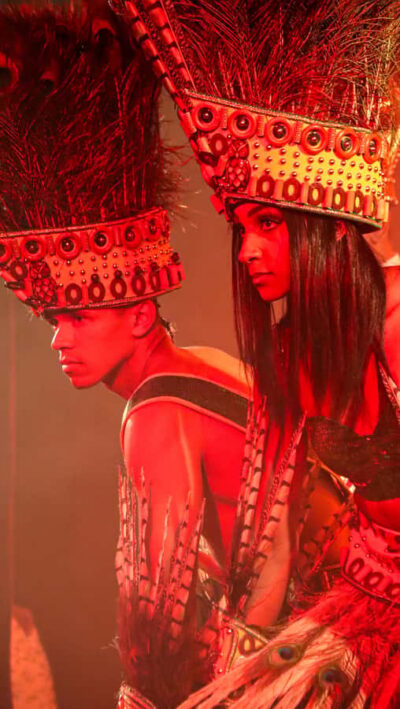
Ginga Tropical – Brazilian Samba and Folklore Show
Read our review →Browse the lists this tour appears in