
Reviewed · WORKSHOPS
Salvador: Capoeira Class at Mestre Bimba’s 1st Ever School.
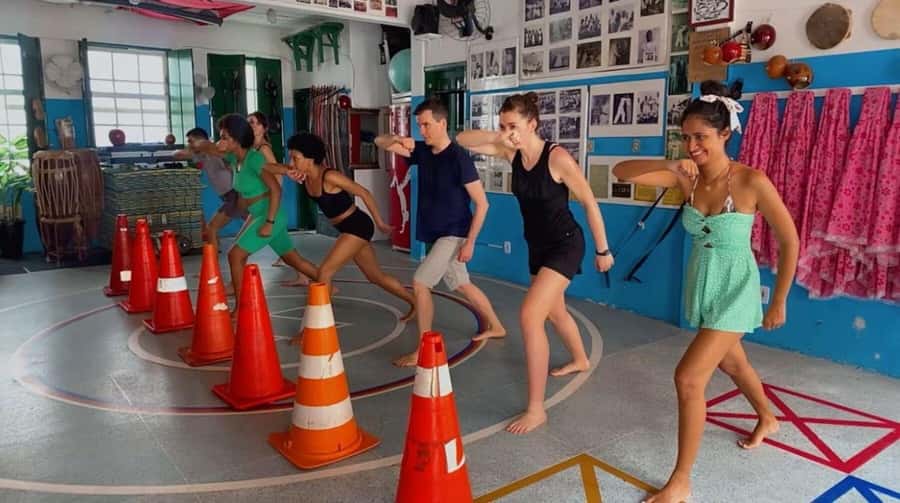
Feel Salvador through movement. This one-hour class introduces you to capoeira at the first school in Brazil, founded by Mestre Bimba in 1937. I especially like the mix of beginner-friendly instruction and cultural background, plus the chance to train in a place tied directly to capoeira’s development.
I also like that the class welcomes people with no martial arts or dance experience. The main consideration is physical effort: one hour can feel intense, and your legs may be sore afterward. You should arrive ready to sweat, not dressed for a quiet museum visit.
In This Review
- Key Points Before You Book
- Why This Class Belongs on a Salvador Itinerary
- Arriving at Largo do Terreiro de Jesus
- What Happens During the One-Hour Lesson
- Learning the History Alongside the Movement
- The Difference Between Capoeira and a Standard Dance Class
- How Hard Is the Class?
- The Instructor Makes the Experience
- Is $43 a Fair Price for One Hour?
- Who Will Enjoy This Most?
- Booking Details That Matter
- Should You Book the Mestre Bimba Capoeira Class?
- FAQ
- Where does the capoeira class take place?
- Is pickup service included?
- Is the class suitable for complete beginners?
- How long does the class last?
- What languages are available?
- What will I learn during the class?
- Is bottled water included?
- How much does the class cost?
- Can I cancel the booking?
Key Points Before You Book
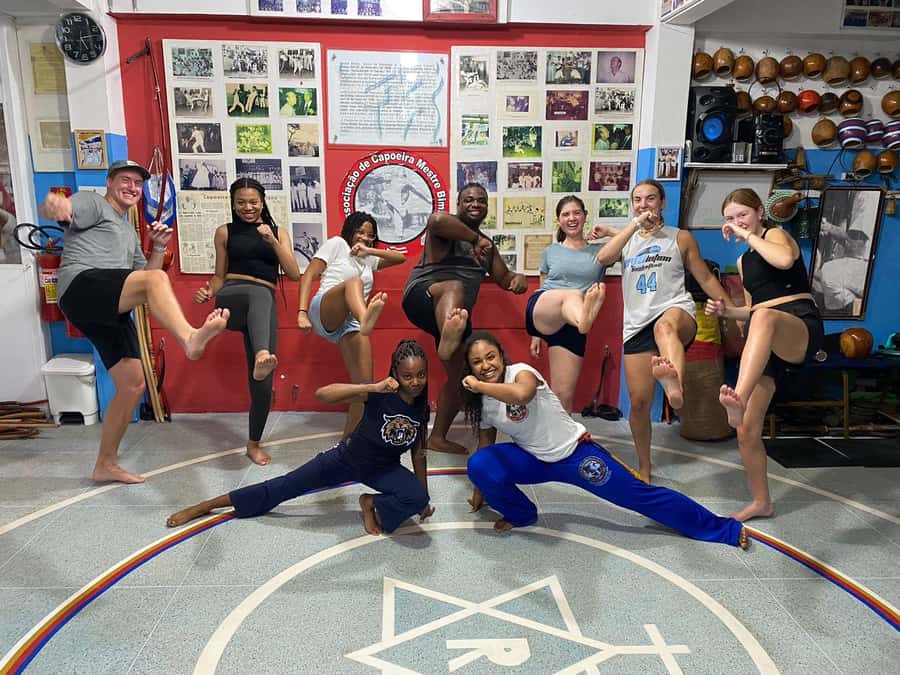
- Historic setting: Train at Associação de Capoeira Mestre Bimba, founded in 1937 and linked to one of capoeira’s most important figures.
- Built for beginners: You learn basic attacks, defenses, and flowing movements without needing prior training.
- More than exercise: The class explains capoeira’s Afro-Brazilian roots, music, culture, and role in Salvador.
- Strong instruction: Yasmin is praised for her patience, clear demonstrations, encouragement, and English teaching.
- Useful location: The meeting point is near Ó Paí Ó Restaurante and São Domingos Gusmão Church in Largo do Terreiro de Jesus.
- Simple one-hour format: Bottled water is included, pickup is not, and the class is available in English or Portuguese.
Why This Class Belongs on a Salvador Itinerary
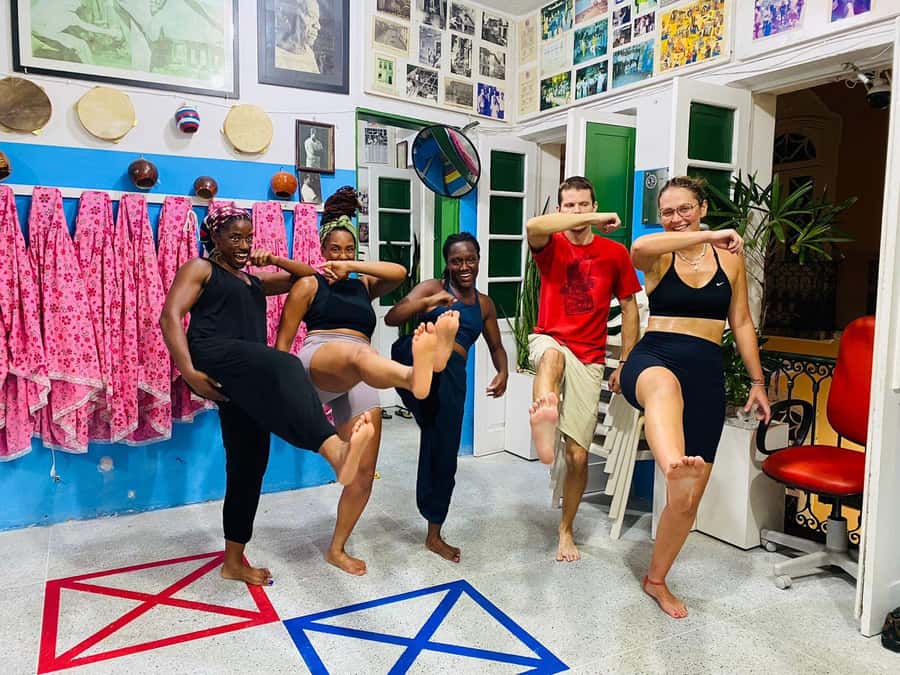
Capoeira is easy to misunderstand if you only see it from a distance. The spinning kicks, low movements, music, and acrobatics can look like a dance performance. In practice, capoeira is an Afro-Brazilian martial art that brings together fighting, defense, rhythm, culture, and physical control.
That combination makes this class useful for understanding Salvador. You are not only copying movements. You are learning why the movements matter and how capoeira connects to Afro-Brazilian ancestry.
I like this approach because it gives the hour a clear purpose. You get exercise, but the physical work is tied to a story. The class helps you see capoeira as part of Brazil’s culture rather than as a tourist show performed for an audience.
The setting adds weight. Associação de Capoeira Mestre Bimba was founded in 1937 and is described as the first capoeira school in Brazil. That does not make the class formal or intimidating. Instead, it gives your basic steps a useful sense of place.
The activity has a 4.9 rating from 34 ratings, and the most consistent praise centers on the instructor, the welcoming atmosphere, and the balance between movement and history. Those are exactly the elements that make this a stronger choice than a generic fitness class.
A few more trips worth weighing up before you book
- Salvador: CAPOEIRA CLASS – CULTURAL
★ 4.6 · 13 reviews - Salvador: Traditional Drumming and Percussion Workshop
★ 4.4 · 10 reviews - Salvador: 3-Hour Percussion Class
★ 4.9 · 10 reviews
Arriving at Largo do Terreiro de Jesus
You meet at Associação de Capoeira Mestre Bimba in Largo do Terreiro de Jesus. There is no pickup service, so you need to make your own way there.
The meeting point is close to two useful landmarks: Ó Paí Ó Restaurante and São Domingos Gusmão Church. Use those names to get oriented, especially if you are already exploring the historic center. Confirm the exact starting time and allow enough time to find the association without rushing into class.
This location is part of the appeal. You are not being taken to an anonymous gym on the edge of town. You meet in a place connected to Salvador’s historic center and to the story of Mestre Bimba’s school.
The practical downside is that you need to handle your own transport. If you are carrying shopping bags, a large daypack, or clothing that restricts movement, you may want to plan around the class. The supplied information confirms bottled water, but one useful personal tip is to bring an extra water bottle as well, particularly because the class can be sweaty.
What Happens During the One-Hour Lesson
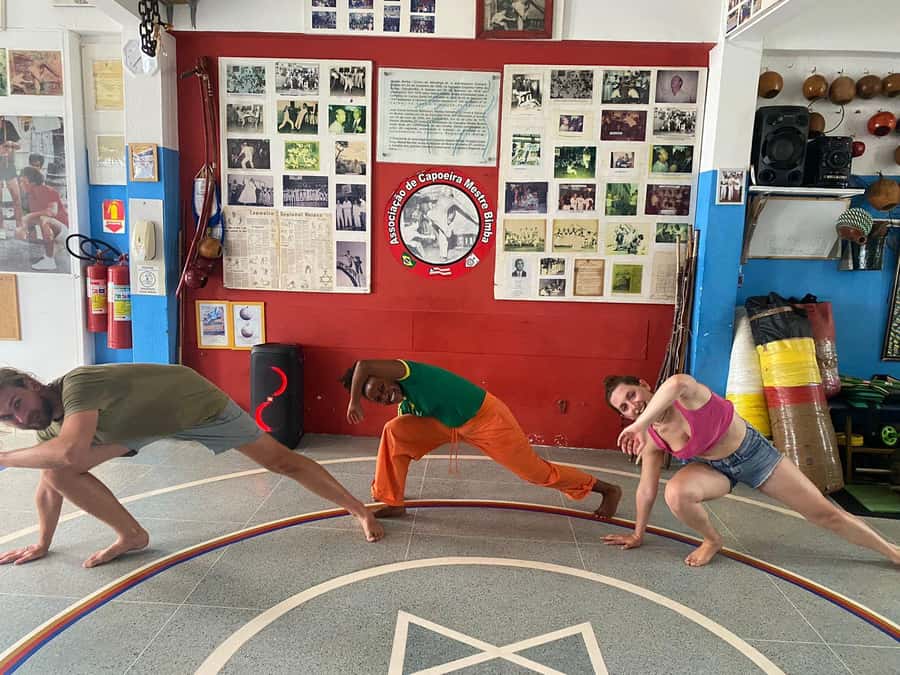
The class is designed for beginners who have never trained capoeira. That point matters. You do not need martial arts experience, dance training, flexibility, or a certain fitness level to take part.
The instructor teaches basic attacks, defenses, and flow movements. The goal is not to turn you into a capoeirista in sixty minutes. It is to give you a working introduction so you can understand the basic language of the art.
Expect the class to ask more of your legs than you might first expect. Capoeira uses low positions, repeated movement, balance, and changes of direction. One person described it as an intense workout, with leg soreness lasting for days. That is useful warning, especially if you are planning a long walking day afterward.
The class also includes demonstrations and guidance designed to help you follow along. Yasmin is repeatedly praised for being patient, supportive, and clear. One especially useful quality is her habit of making sure everyone has learned a movement before moving on.
That pace should suit first-timers. You are less likely to feel abandoned while more experienced people race ahead. At the same time, one account notes that some participants may have more experience, and the class remains kind and inclusive. You can expect a mixed level of ability rather than a room made up only of complete beginners.
The class is taught in English and Portuguese. English instruction is a major benefit if you want to understand the cultural explanations as well as the physical directions. Portuguese is also available, which keeps the activity connected to its local setting.
Learning the History Alongside the Movement
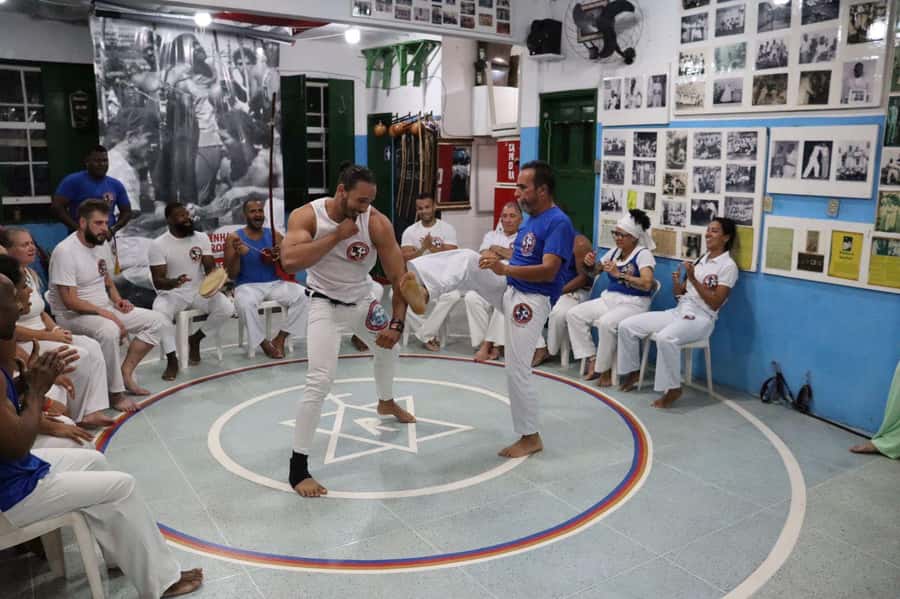
The historical part is not an optional extra. The class explains capoeira’s cultural importance and its connection to Afro-Brazilian ancestry before or alongside the physical work.
That context changes how you see the techniques. A low defensive movement is not just a stretch. A kick is not simply a fitness drill. The music and rhythm are not decoration added to a martial art. They are part of how capoeira works as a complete cultural practice.
I would pay attention to this section even if you are mainly interested in exercise. Several people found the historical explanation one of the best parts of the activity, and that makes sense. Salvador has many places where history is presented through buildings and museums. Here, you learn through your body as well as through spoken explanation.
The teacher’s personal passion also comes through strongly. Yasmin is praised for combining instruction with historical detail, and that balance helps keep the lesson from feeling like either a lecture or a workout with no context.
You should not expect a full academic course on capoeira in one hour. The useful result is more modest and more practical: you leave knowing the basic movements and having a clearer sense of why capoeira matters in Salvador.
A completely different kind of day out around Salvador:
- From Salvador: Schooner Tour to Frades Islands and Itaparica
★ 3.9 · 98 reviews - Afro-Brazilian Roots Private City Tour in Salvador
★ 4.7 · 88 reviews - Salvador Historic Walking Tour – Pelourinho
★ 4.8 · 62 reviews - Salvador de Bahia African Culture Tour
★ 4.5 · 60 reviews
The Difference Between Capoeira and a Standard Dance Class
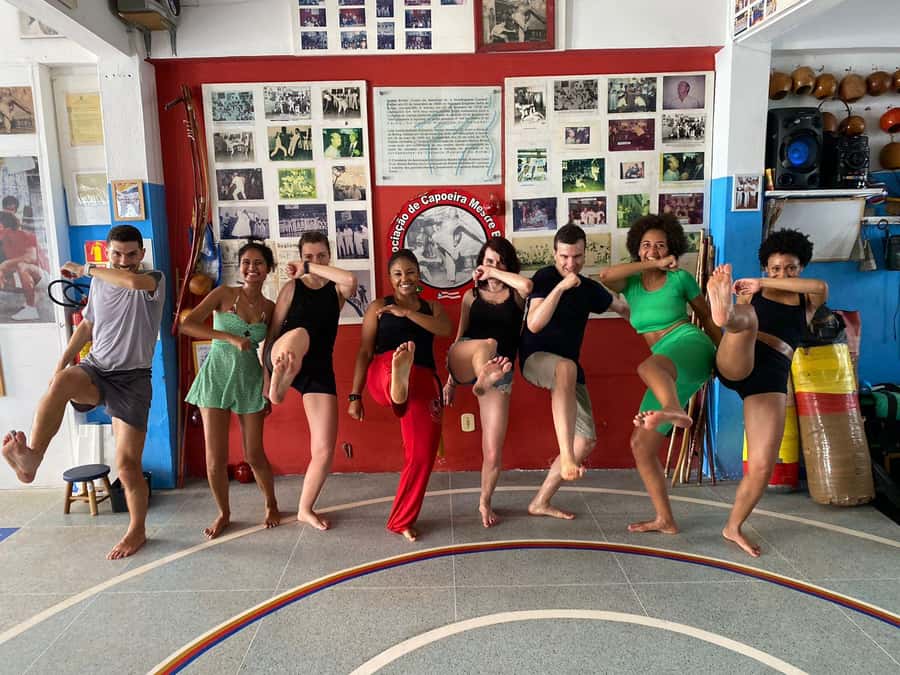
Capoeira includes dance-like movement, but it is not simply a dance lesson. It combines martial arts, self-defense, physical fitness, music, acrobatics, and cultural practice.
That makes the class appealing to different kinds of visitors. If you enjoy learning a local dance, you will find rhythm and flow. If you prefer an active cultural activity, you will get physical instruction with historical meaning. If you are curious about martial arts, you will learn basic attacks and defenses without signing up for a long training program.
The class also asks you to think about movement. Capoeira is not only about performing a technique correctly. The flow between actions matters. Even at a basic level, you begin to understand that the art depends on reaction, balance, timing, and awareness.
Do not expect polished acrobatics from yourself. The activity is intended for beginners, and there is no need to arrive prepared to flip, kick high, or perform difficult tricks. The useful goal is to follow the instruction, stay within your comfort level, and learn the basic pattern of movement.
How Hard Is the Class?
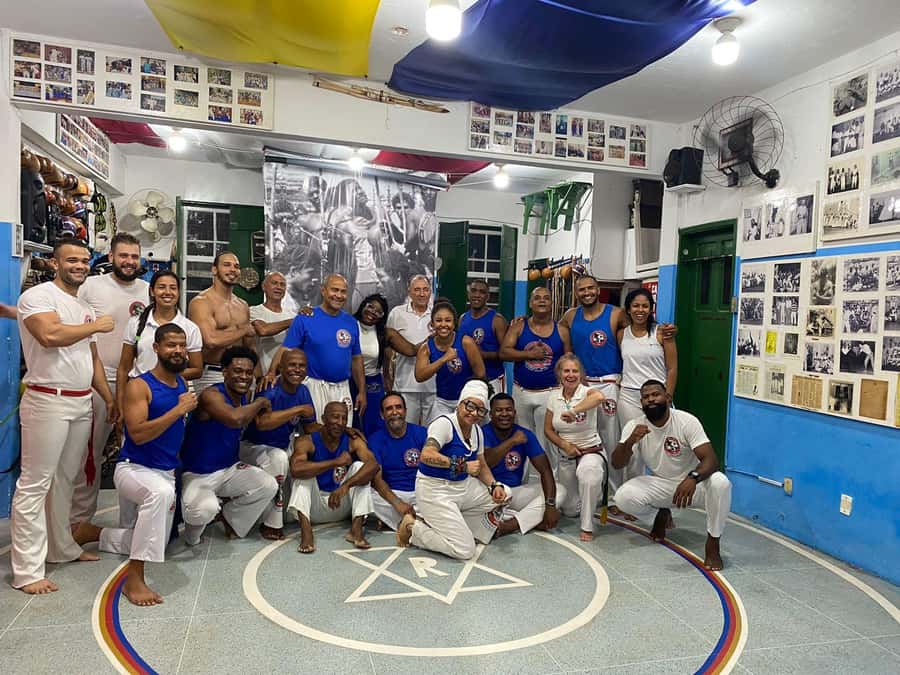
The honest answer is that it depends on your fitness, but you should plan for a real workout. One participant described it as intense, and another specifically advised comfortable sports clothing and preparing to sweat a lot.
Wear clothes that let you bend, step, and move freely. Avoid anything tight or restrictive. Comfortable sportswear is the practical choice, and you should have water available.
The class is still accessible to people who do not consider themselves fit. A mother and daughter with no previous experience found the lesson enjoyable and inclusive. Another participant recommended it regardless of fitness level.
That does not mean the class is effortless. Beginner-friendly means the movements are explained and the pace is supportive. It does not mean you will not work hard. If you have a full day of steep streets and sightseeing planned, consider taking the class earlier or leaving recovery time afterward.
You should also be sensible about your own limits. The supplied information does not describe medical requirements or physical accommodations, so ask the provider directly if you have an injury or a concern about specific movements.
The Instructor Makes the Experience
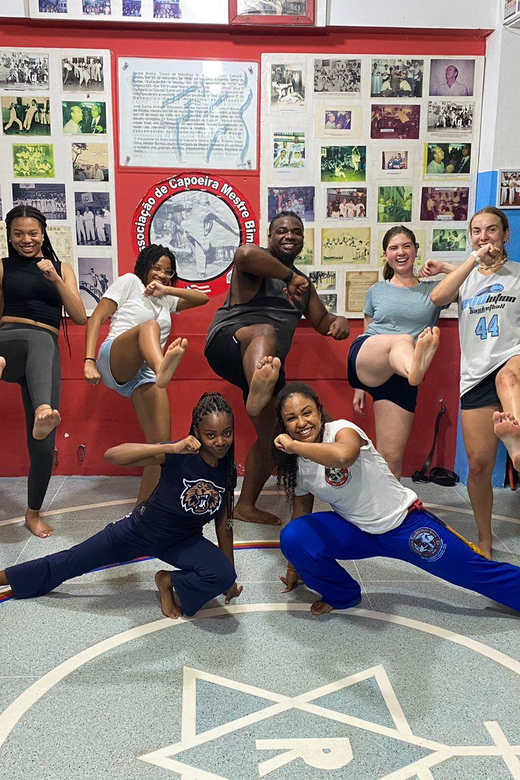
The instructor is the heart of this activity. Yasmin receives the strongest praise for patience, warmth, encouragement, and clear demonstrations.
Those qualities matter more here than flashy athletic ability. A capoeira teacher can perform advanced movements, but a beginner needs someone who can break the art into manageable pieces. You need time to watch, try, make mistakes, and try again without feeling embarrassed.
The teaching also appears inclusive. One class included people with different levels of experience, yet the atmosphere remained friendly. That makes this a good choice if you are nervous about being the least skilled person in the room.
English instruction adds another layer of ease. You can ask questions and follow explanations without guessing what a movement means. Portuguese instruction is also offered, so you can take part in the language most comfortable for you.
The instructor’s historical explanations are as important as the physical demonstrations. That is one reason this activity earns stronger praise than a simple introductory workout.
Is $43 a Fair Price for One Hour?
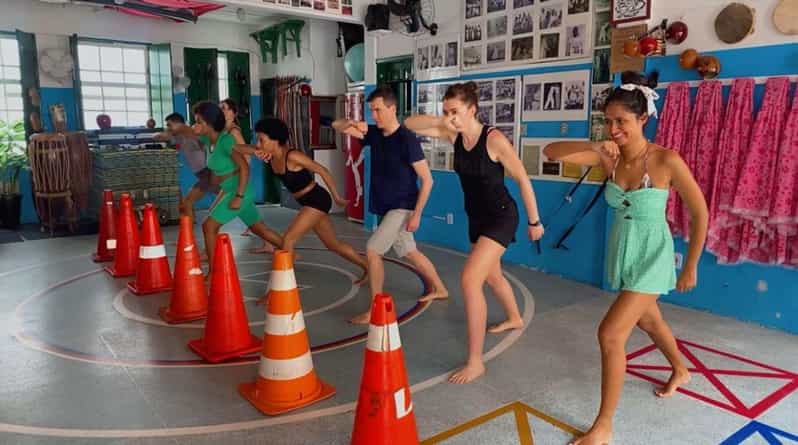
At $43 per person, this is not the cheapest one-hour activity in Salvador. You are paying for more than exercise, though. The price includes access to a school founded in 1937, instruction from an experienced capoeira organization, cultural background, and teaching in English or Portuguese.
Value depends on what you want from the hour. If you only want a short workout, you may find the price high. If you want a local activity with a clear link to Salvador’s Afro-Brazilian culture, the cost is easier to justify.
The location also saves you from booking a separate cultural tour for the same subject. You receive an introduction to the art and its background in one compact session.
Bottled water is included. Do not treat that as a replacement for planning your own hydration, since the physical effort can be substantial.
The class is especially good value if you have more than one day in Salvador. One person enjoyed it enough to return for a second class, and the school also teaches samba and other dance styles. You can ask about those options if you want to continue exploring movement-based culture during your stay.
Who Will Enjoy This Most?
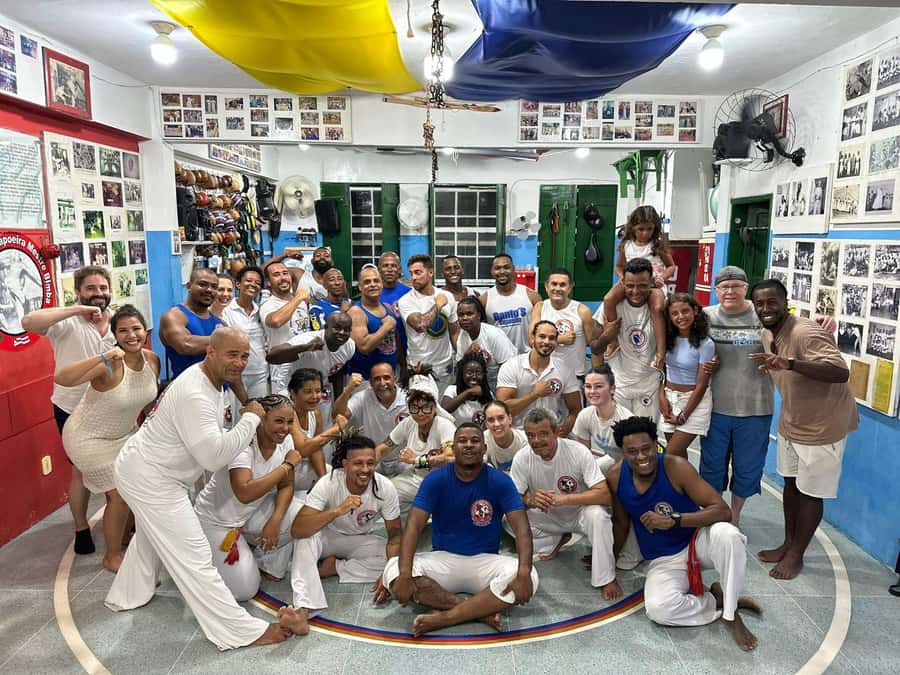
I would recommend this class to you if you want an active way to understand Salvador. It suits solo visitors, couples, families, and anyone who prefers participation to simply watching a performance.
It is also a strong option if you have never tried capoeira. The class is specifically directed at beginners, and the teacher’s patient approach helps reduce the fear of getting something wrong.
You do not need to be athletic, but you should be willing to move and sweat. Comfortable clothing is more important than looking polished.
This may not suit you if you want a quiet, seated cultural talk, a light activity with no exertion, or a polished acrobatics show. It is a class, not a performance. You are expected to take part.
It can also work well for parents and older children, but the supplied information does not provide an age range. Check with the provider if you are booking for children or have questions about participation.
Booking Details That Matter
The class lasts one hour, with starting times depending on availability. You should check the schedule before making it part of a tightly planned day.
You meet at the association and arrange your own transport. Nearby reference points include Ó Paí Ó Restaurante and São Domingos Gusmão Church in Largo do Terreiro de Jesus.
English and Portuguese are available. Bottled water is included. The booking can be canceled up to 24 hours in advance for a full refund, and a reserve-now, pay-later option helps if your itinerary is still changing.
Those terms make the activity easier to fit into a flexible Salvador plan. Still, book a time that leaves room for getting to the meeting point and cooling down afterward.
Should You Book the Mestre Bimba Capoeira Class?
Yes, if you want a personal, active connection to Salvador’s Afro-Brazilian culture. The combination of a historic school, beginner-level teaching, English instruction, and cultural explanation gives the hour real purpose.
I would be particularly keen to book it if I had more than one day in Salvador and wanted something beyond churches, viewpoints, and museums. The workout is genuine, so I would wear sports clothes and avoid scheduling an ambitious walking route immediately afterward.
Skip it if you strongly dislike physical activity or want a passive demonstration. For everyone else, $43 is a reasonable price for a focused lesson in a place with major importance to capoeira. You leave with basic movements, a better understanding of the art, and a story about Salvador that you learned by doing.
FAQ
Where does the capoeira class take place?
The class meets at Associação de Capoeira Mestre Bimba in Largo do Terreiro de Jesus, near Ó Paí Ó Restaurante and São Domingos Gusmão Church.
Is pickup service included?
No. You need to make your own way to the meeting point.
Is the class suitable for complete beginners?
Yes. The lesson is directed at people who have never trained capoeira, and no previous experience is required.
How long does the class last?
The class lasts one hour.
What languages are available?
Instruction is available in English and Portuguese.
What will I learn during the class?
You will learn basic capoeira attacks, defenses, and flow movements, along with information about the art’s cultural and historical importance.
Is bottled water included?
Yes. Bottled water is included, though bringing an additional water bottle is a useful idea because the class can be physically demanding.
How much does the class cost?
The listed price is $43 per person.
Can I cancel the booking?
Yes. You can cancel up to 24 hours in advance for a full refund. A reserve-now, pay-later option is also available.
Just added around Salvador
- From Salvador: Schooner Tour to Frades Island★ 3.9 · 3 reviews
- From Salvador: Quilombo Heritage Daytrip with Lunch★ 3.4 · 3 reviews
- Salvador: Caipirinha Masterclass with Unlimited Drinks★ 4.2 · 4 reviews
- Salvador: Schooner Cruise with Pickup and Itaparica Stop★ 3.8 · 5 reviews
- BOXE CLASS – EX BAHIAN CHAMPION (SALVADOR-BA)★ 5.0 · 7 reviews
- Salvador by Night: Pelourinho & Old Town Tour★ 4.3 · 8 reviews
- Salvador: Traditional Drumming and Percussion Workshop★ 4.4 · 10 reviews
- Salvador: 3-Hour Percussion Class★ 4.9 · 10 reviews
Workshops, compared.

Surf lessons with local instructors in Copacabana/ipanema!
Read our review →
Surf Lesson with Qualified Instructor in Florianópolis
Read our review →Browse the lists this tour appears in