

Reviewed · SAMBA & NIGHTLIFE TOURS
Hop-ON Hop-OFF Sightseeing Bus in Rio de Janeiro – Rio Samba Bus
See Rio with a soundtrack. The Rio Samba Bus links more than 30 major sights across 24 stops, adding MPB and samba to the usual city tour. I like the freedom to hop off at Copacabana, Lapa, or Flamengo, and I like that the route gives first-time visitors a quick sense of Rio’s scale. The main catch is practical: open-top seating can be fiercely hot, and the shared speaker commentary may be hard to hear in traffic.
This is best treated as a city overview, not a complete Christ the Redeemer visit. You pass the entrance to the Corcovado train and see the statue area from the route, but the bus does not include attraction tickets or take you to the summit. Traffic, Carnival crowds, and unclear stop announcements can also affect the day.
In This Review
- Key points to know before boarding
- Rio Samba Bus at a glance
- Copacabana and the South Zone food streets
- Flamengo and Aterro do Flamengo
- Lapa, the Selarón Staircase, and the Arcos
- The Sambadrome and Rio’s Carnival connection
- Corcovado and the Christ the Redeemer question
- Largo do Boticário and the quieter side of the route
- Sugarloaf Mountain and the view from the bus
- What the audio guide and music are really like
- One-day value at $30 per person
- Who should book Rio Samba Bus?
- Should you book the Rio Samba Bus?
- FAQ
- How long is the Rio Samba Bus ticket valid?
- How many stops does the Rio Samba Bus have?
- Does the tour include Christ the Redeemer?
- Does the tour include Sugarloaf Mountain admission?
- What languages are available?
- Are food and drinks included?
Key points to know before boarding

- 24 stops cover the main tourist zones: The route links Copacabana, Flamengo, Lapa, the Sambadrome, Corcovado, and other central sights.
- The upper deck has no shade: On hot days, especially around Carnival, bring sun protection and expect strong heat.
- Music is part of the appeal: MPB, samba, and other Brazilian rhythms give the ride a local feel beyond standard recorded sightseeing.
- Christ the Redeemer is not included: You can pass the Corcovado train entrance, but attraction admission and the trip to the statue are separate.
- The audio guide uses shared speakers: Commentary is available in Portuguese, English, and Spanish, but traffic noise can make it difficult to follow.
- The price is fair for orientation: At $30 per person for one day, it works best if you use several stops instead of riding only once around the city.
Rio Samba Bus at a glance

Rio Samba Bus is a one-day panoramic city tour with a hop-on hop-off setup. You can board at the designated pickup address and get off near sights that interest you, then continue later within the validity period.
The route covers more than 30 attractions through 24 planned stops. That matters in Rio, where the city’s main sights are spread between the beachfront, historic center, western edge of central Rio, and the hills around Corcovado. A regular walking plan can involve repeated taxi rides or complicated public transport connections. The bus gives you a broad first look with less planning.
The advertised price is $30 per person. Food, drinks, and attraction tickets are extra. There is a bar on board where you can buy drinks, including cold beer, which can be welcome during a hot ride.
The overall rating is 3.5 from 457 bookings, a useful signal that the tour can work well as an introduction but has limits. The strongest reasons to book are route coverage, music, and convenience. The main risks are heat, traffic, sound quality, and service timing.
More samba nights:
- Rio de Janeiro: Beginner Samba Lesson in Ipanema
★ 4.9 · 1,071 reviews - Rio: Pub Crawl in Lapa with Cachaça Tasting and Live Samba
★ 4.7 · 881 reviews - Rio: Carnival Backstage Tour at Samba City with Cocktail
★ 4.6 · 520 reviews
Copacabana and the South Zone food streets
Copacabana is the natural starting point for many visitors. The bus passes along the famous waterfront, giving you a quick look at Rio’s best-known beach district and its long curve of sand, pavement, hotels, and city life.
A stop near Posto 5 is listed as a pickup point. If you plan to board there, allow extra time and confirm the departure information before setting out. One booking problem reported at this location involved the bus not being present at the agreed time, so this is not a service where I would arrive at the last second and assume everything will be exact.
The South Zone route also includes food-focused streets. These stops are useful if you want to combine sightseeing with a meal or a snack, though food is not part of the ticket. I would use this section early in the day if you want breakfast or lunch, then continue toward the central sights.
The bus is a good match for you if you want to see several districts without deciding in advance where to spend the whole day. It is less useful if your plan is to sit on board without getting off. Rio’s best moments usually come from leaving the bus, walking a little, and giving each area time.
Flamengo and Aterro do Flamengo

The route continues through Aterro do Flamengo, one of the city’s broad open areas beside the water. This section offers a welcome change from the dense beach and downtown zones, with wide views and a strong sense of Rio’s setting between sea and mountains.
The stop is valuable for orientation. You can connect the central city with the southern neighborhoods and understand how the major districts fit together. It also gives you a good chance to break up the ride rather than spending the entire day seated.
Still, plan around the sun. The upper deck is open and has no shade, and a February ride can be especially punishing. One booking during Carnival took place in temperatures close to 40 degrees Celsius, making the sun deck uncomfortable. I would carry water, sunscreen, a hat, and light clothing. Since drinks are not included, budget for refreshments on top of the ticket.
If you prefer shade, you may find the upper deck difficult at midday. The experience is sold as panoramic, so the best views come with direct sun. That tradeoff is simple, but important.
Lapa, the Selarón Staircase, and the Arcos

Lapa is one of the most useful sections of the route for a first visit. The area is known for the Arcos da Lapa, a major city landmark, and the colorful Selarón Staircase. These stops bring you into a more urban and cultural side of Rio, away from the beach hotels.
The Selarón Staircase is best treated as a short walking stop. You can look closely at the tiled steps, take photographs, and continue through the neighborhood before catching a later bus. The Arcos provide a strong photo point and help explain why Lapa is one of the city’s key sightseeing areas.
This is also where the music theme makes the most sense. Samba is not simply background entertainment in Rio. It connects the city’s streets, dance culture, Carnival traditions, and music venues. The playlist of MPB, samba, and other Brazilian rhythms gives the ride a local character, even if the commentary itself is basic.
Keep a close eye on timing. The bus is affected by city traffic, and stop announcements may not always be clear. One specific complaint was that the next stop was not announced. I would follow the route on your phone, ask the driver or staff when possible, and be ready to get off before the bus reaches your stop.
A few more trips worth weighing up before you book
- Rio de Janeiro: 6-Stop Highlights of Rio with Lunch
★ 4.4 · 5,157 reviews - Christ the Redeemer Entry Ticket by Corcovado Train
★ 4.4 · 4,476 reviews - Rio de Janeiro: Rocinha Favela Walking Tour with Local Guide
★ 4.8 · 3,052 reviews - Rio: Christ the Redeemer, Sugarloaf, Selaron & BBQ Lunch
★ 4.5 · 2,428 reviews
The Sambadrome and Rio’s Carnival connection

The Sambadrome is another meaningful stop, especially if you are interested in samba schools and Carnival. It is the purpose-built parade avenue associated with Rio’s major samba competitions, so seeing it gives the music on the bus a physical setting.
You should not expect a Carnival performance as part of the ticket. The value here is the chance to see the venue while moving through the city. If your visit is outside Carnival season, the bus offers context that might otherwise be missing from a standard beach-and-mountain plan.
During Carnival, the route can become less predictable. Heavy traffic may delay buses, and some planned stops may be skipped during rush hour or road restrictions. One ride involved a 45-minute wait, followed by a route that did not reach every listed stop. That does not make the tour useless, but it means you should avoid booking it as your only way to reach a timed attraction.
Corcovado and the Christ the Redeemer question

Christ the Redeemer is the sight most people will have in mind when they see Rio’s highlights. The Rio Samba Bus passes the entrance to the Corcovado train and crosses the Tijuca Forest area, giving you access to the general route toward the mountain.
It is important to understand what this means. The bus does not include a ticket to Christ the Redeemer, and the tour does not simply carry you up to the statue. You may see Christ the Redeemer from a distance, but one booking found the view less close than expected.
If visiting the statue is a top priority, arrange that separately and treat the Samba Bus as transportation for the wider city, not as your Corcovado ticket. The attraction admission is not included, and the bus schedule can be affected by traffic. You do not want to spend the day hoping a panoramic route will substitute for the actual mountain visit.
The Corcovado section still has value. Crossing the Tijuca Forest gives you a different side of Rio, and the route helps you understand that the city’s famous mountain sights sit close to dense urban neighborhoods. Just keep your expectations precise.
Largo do Boticário and the quieter side of the route

Largo do Boticário is one of the more unusual stops listed on the route. Compared with Copacabana or Lapa, it offers a calmer change of pace and a more intimate setting. It is the kind of stop that makes the bus more than a checklist of famous sights.
I would use this stop as a contrast to the grand views. Rio is not only beaches, cable cars, and famous monuments. Smaller historic corners and neighborhood spaces help you see how varied the city can feel within a short distance.
The practical question is time. With only one day, you cannot explore every stop at length. Pick two or three places where you want to get off, then use the rest of the route for orientation. Trying to visit all 24 stops would turn the day into a series of rushed photographs.
Sugarloaf Mountain and the view from the bus

Sugarloaf Mountain is one of Rio’s defining sights, and the route includes it among the major attractions. The bus gives you a useful approach and viewing opportunity, but the cable car or other admission is not included.
That distinction matters for your budget. The $30 ticket buys the city circuit, audio content, Wi-Fi, and music. It does not cover Sugarloaf Mountain, Christ the Redeemer, food, or drinks. If you want to go up Sugarloaf, add that cost and allow enough time away from the bus.
The scenic value is still strong from street level. Rio’s mountains appear in many parts of the route, and a panoramic bus is a comfortable way to connect the coastal districts with the central city. For a first day, that broad view can help you decide which sights deserve a separate visit.
I would not choose this bus solely for Sugarloaf. Choose it because it links Sugarloaf with many other parts of Rio in one day.
What the audio guide and music are really like
The included guide is described as bilingual in the main tour information, with Portuguese, English, and Spanish available. The live guide language options also include those three languages.
In practice, the commentary is played over shared speakers rather than through individual earphones. That setup has two consequences. You do not need to manage a headset, but traffic noise, engine sounds, and conversations can make the narration hard to hear.
One rider found the announcements difficult to follow and another specifically wanted the next stop announced. I would treat the audio as a bonus, not your only source of directions. Free Wi-Fi is included, so use it to keep the route information available on your phone if the speaker system fades into the traffic.
The playlist may be the most dependable part of the onboard atmosphere. MPB and samba fit the city better than generic sightseeing music, and the soundtrack adds energy to long stretches between stops. If you want a quiet, detailed history lesson, this may feel too loose. If you want a pleasant introduction to Rio’s sound and sights, it works better.
One-day value at $30 per person
At $30, the tour is reasonably priced if you use it as a full-day transport and sightseeing tool. You are paying for access to a large route, not for entry into Rio’s headline attractions.
The value improves when you:
- Board early enough to make several stops.
- Use the bus between districts rather than taking separate taxis.
- Get off for Lapa, the waterfront, or another area you genuinely want to see.
- Use the route to plan later visits to Christ the Redeemer or Sugarloaf.
- Take advantage of the music, Wi-Fi, and panoramic views.
The value drops if you ride only one short section, need precise departure times, or expect a close visit to Christ the Redeemer. It also drops on a very hot day if you cannot tolerate direct sun.
Food and drinks cost extra, though the onboard bar offers drinks and cold beer. Bring money for that, or plan stops around the South Zone food streets. The one-day ticket gives you flexibility, but flexibility is less useful if traffic prevents the next bus from arriving on schedule.
Free cancellation up to 24 hours before the activity and reserve-now, pay-later booking make it easier to fit into a changing Rio plan. I would still check the current departure times on the Rio Samba Bus website before leaving your hotel, especially during Carnival or heavy traffic periods.
Who should book Rio Samba Bus?
I would recommend it to a first-time visitor who wants a broad look at Rio without arranging several separate rides. It suits people who enjoy music, open-air views, and the freedom to choose a few stops on the day.
Families may appreciate the simple route, but should prepare carefully for heat and waiting times. Bring sun protection and do not rely on every departure being exact. Older visitors or anyone sensitive to heat may prefer a shorter ride with more time in shaded areas.
It is also useful for a short stay. If you have only one or two days in Rio, the bus can show you Copacabana, Flamengo, Lapa, the Sambadrome, Corcovado, and Sugarloaf in one organized circuit. You can then choose one major attraction for a dedicated visit.
I would skip it if you want a tightly timed schedule, a detailed personal guide, or included entrance to Christ the Redeemer and Sugarloaf. The shared audio can be hard to hear, and traffic may change the pace of the day.
Should you book the Rio Samba Bus?
Book it if your goal is to get your bearings fast while enjoying Rio’s music and big city views. The route reaches a useful mix of beaches, central landmarks, samba culture, and mountain districts, and $30 is fair when you make several stops.
Do not book it expecting a guaranteed close-up visit to Christ the Redeemer or perfectly timed service. Check departure times, plan for heat, carry sun protection, and keep your schedule flexible. Used as a relaxed overview rather than a precision sightseeing shuttle, Rio Samba Bus can be a fun and practical first day in the city.
FAQ
How long is the Rio Samba Bus ticket valid?
The ticket is valid for one day.
How many stops does the Rio Samba Bus have?
The route has 24 strategic stops and covers more than 30 tourist attractions.
Does the tour include Christ the Redeemer?
No. The bus passes the entrance to the Corcovado train and may provide distant views, but attraction tickets are not included.
Does the tour include Sugarloaf Mountain admission?
No. The route includes Sugarloaf Mountain among its sights, but tickets for attractions are not included.
What languages are available?
The tour information is available in Portuguese, English, and Spanish. The commentary is played through shared speakers.
Are food and drinks included?
No. Food and drinks are not included, but drinks can be purchased at the bar on board.
Just added around Rio de Janeiro
- Pedra Bonita Trail: The easiest trail with a beautiful view of Rio★ 4.6 · 3 reviews
- Rocinha Jeep Tour: A Journey into the Soul of the Favela!★ 3.8 · 3 reviews
- Rio: Private, Custom express, Main Attractions!★ 5.0 · 3 reviews
- Rio: Favela Walking Tour of Rocinha with a Resident Guide★ 4.7 · 3 reviews
- Explore Fernando de Noronha: 7-Hour Ilhatour★ 4.9 · 3 reviews
- Rio: Museum of Tomorrow, Yup Star & Olympic Boulevard★ 3.7 · 3 reviews
- Rio: Best Dive Experience All Inclusive Scuba Diving Package★ 5.0 · 3 reviews
- Rio de Janeiro by Air: 10-Minute Helicopter Tour★ 4.4 · 3 reviews
Samba & Nightlife Tours, compared.


Pub Crawl in Lapa with Cachaça Tasting and Live Samba
Read our review →
Carnival Backstage Tour at Samba City with Cocktail
Read our review →
Santa Teresa, Lapa, and Cinelândia with Tram Ride and Selarón Steps
Read our review →


Ginga Tropical – Brazilian Samba and Folklore Show
Read our review →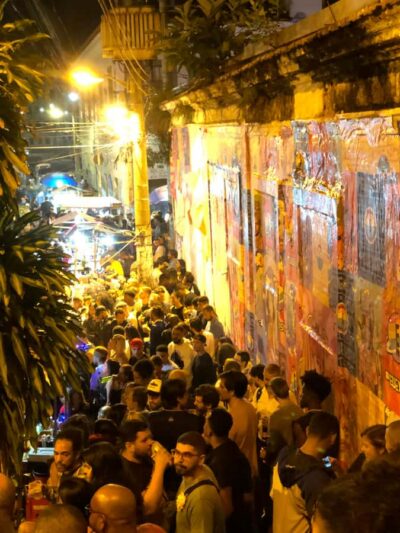
Pedra do Sal: Live Samba Night with Local Guide & Drink
Read our review →Browse the lists this tour appears in