
Reviewed · HISTORICAL TOURS
Rio’s city walking tour: a glimpse of history and olympic legacy
Old Rio rewards curious feet. This four-hour tour links grand churches, imperial squares, museums, markets, and downtown streets in a useful first look at Rio de Janeiro. I especially like the chance to see São Bento Monastery and the Church of Our Lady of Candelaria, two places where art and architecture do much of the talking. I also like the included hotel pickup and drop-off from most hotels in São Conrado, Leblon, Ipanema, and Copacabana.
The main drawback is that the experience may not be as purely on foot as its name suggests. Traffic can interfere with the driving portions, and one account found too much time spent in a tea shop instead of on the streets. The group can reach 35 people, though small bookings may turn into flexible private-style outings. Guides such as JB, Melanie, and André have received especially warm praise, but the quality of the experience depends heavily on who leads the walk.
In This Review
- Key points at a glance
- Why Old Rio makes a smart first afternoon
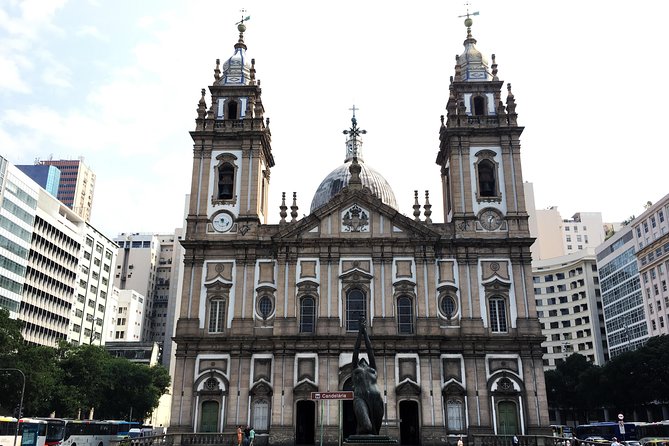
- Candelaria Church opens the history lesson
- São Bento Monastery is the artistic highlight
- Mauá Square shows Rio’s Olympic legacy
- Praça XV and the Imperial Palace connect Rio to Brazil’s rulers
- Uruguaiana Street reveals downtown life
- Tiradentes Palace and the imperial city’s public face
- Confeitaria Colombo adds a graceful pause
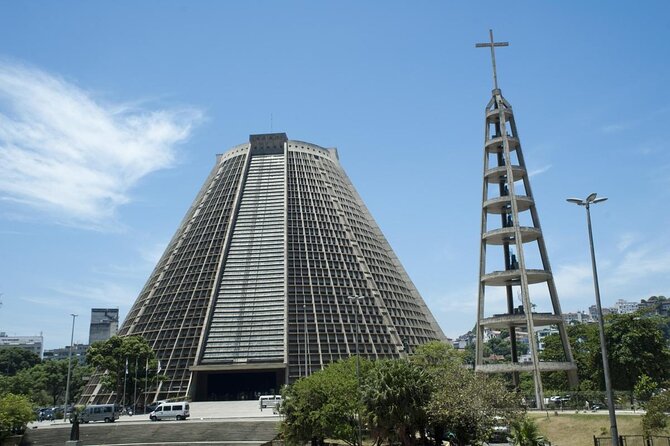
- The Metropolitan Cathedral closes the route
- What the guides add to the experience
- Is $60.77 fair for four hours?
- Who should book this Rio walking tour?
- Final verdict: a useful first look at downtown Rio
- FAQ
- How long does Rio’s city walking tour last?
- What time does the tour begin?
- What is included in the tour price?
- Are food and drinks included?
- Which major churches are visited?
- Does the tour visit the Museum of Tomorrow?
- Where does the tour end?
- How large can the group be?
- Can I cancel for a full refund?
Key points at a glance
- São Bento’s gold and paintings: The Benedictine monastery is the artistic high point, with ornate carvings and religious artwork.
- Old Rio in one afternoon: The route connects Candelaria, Praça XV, the Imperial Palace, Uruguaiana Street, and the Metropolitan Cathedral.
- Olympic-era Mauá Square: The renewed waterfront area brings together the Museum of Tomorrow, Rio Art Museum, and large Cobra murals.
- Guides can shape the day: JB, Melanie, André, and Juan-Baptiste have been praised for history, warmth, language skills, and flexibility.
- A useful first-day orientation: The route helps you understand downtown Rio and decide where to return later.
- Good value, with limits: At $60.77 per person, hotel transport and guiding add value, but food, drinks, and individual museum admissions are not included.
Why Old Rio makes a smart first afternoon
Rio is often sold through its beaches and mountain views, but downtown tells a different story. Here, narrow streets, churches, government buildings, squares, markets, and cultural centers show how the city grew from a Portuguese colonial settlement into Brazil’s imperial capital and modern cultural center.
This tour gives you a broad introduction without asking you to plan every turn yourself. A local guide handles the route and explains what you are seeing, which matters in an area where a plain facade can conceal a major chapter of Brazilian history.
The afternoon starts at 1:00 p.m. and lasts about four hours. That timing works well after a morning at the beach or a relaxed lunch, though it may feel warm and tiring if you are not used to walking in central Rio. You need a moderate level of fitness. One detailed account described a fast pace and a lot of walking, while other outings were more relaxed and included more driving.
I would book this near the beginning of your stay. You get a useful sense of downtown’s layout, and a good guide can point you toward places worth revisiting on your own. It is also a practical way to ask about local food, markets, transport, and neighborhoods.
More City Tours in Rio de Janeiro
- Rio: Carnival Backstage Tour at Samba City with Cocktail
★ 4.6 · 520 reviews - Rio de Janeiro: Private Guided City Tour
★ 4.6 · 207 reviews - Rio de Janeiro: Half-Day Christ the Redeemer and City Tour
★ 4.4 · 101 reviews
Candelaria Church opens the history lesson
The first listed stop is the Church of Our Lady of Candelaria, or Nossa Senhora da Candelária. Construction began in 1630 and ended in 1775, and the building is presented in a neoclassical style.
The church gives you an immediate sense of the scale and ambition of old Rio. The tour allows about 10 minutes, with admission listed as free. That is enough for a guided look and a few photographs, but not enough for a slow study of every detail.
The value here comes from the explanation. Without context, churches can blur together during a city tour. With a guide, you can better understand how religious buildings helped shape the civic center and why these sites remain important landmarks.
Do not expect a long, quiet visit at every church. This is an overview tour, not a specialist architecture walk. If Candelaria captures your attention, note it as a place to revisit when you have more time.
São Bento Monastery is the artistic highlight
São Bento Monastery is likely to be the strongest stop for art lovers. It was founded in 1590 by two monks from Bahia and is considered an important example of Brazilian architecture.
Inside, the focus is on paintings, gilt carvings, and the Benedictine chapel. The ornate interior provides a sharp contrast to the streets outside. A Portuguese library building associated with the downtown visit has also been a major highlight for some people, so ask your guide if it can be included or pointed out.
The monastery receives about 10 minutes in the stated plan, which sounds brief for such a decorated interior. Still, a short guided visit can work if the guide gives clear background and directs your attention to the key details.
JB, also known as Juan-Baptiste, has been praised for explaining the sites with energy and for finding an unusual view of the Museum of Tomorrow from the monastery. That sort of connection is useful: you are not only seeing one building, but also understanding how the old and new parts of Rio relate to each other.
Mauá Square shows Rio’s Olympic legacy
The route then reaches the renewed Mauá Square, an area reshaped during the Olympic-era redevelopment. It created a major new center for culture and entertainment, with the Rio Art Museum, the Museum of Tomorrow, and the well-known Cobra murals.
This is where the tour shifts from colonial and imperial Rio to the city’s modern identity. The large painted mural adds color and scale, while the two museums give the waterfront a contemporary focus.
The tour is designed to show the area, not provide full museum visits. The Museum of Tomorrow is viewed from the outside, and the Rio Art Museum is included as part of the cultural stop. If you want to enter either museum, plan a separate visit and check opening details for your date.
One practical point matters here: some routes include a short shuttle ride around the Museum of Tomorrow. That can be welcome if the day is hot or the group includes people who need a break, but it may disappoint you if you expect four solid hours of walking.
More Historical Tours in Rio de Janeiro
- Rio de Janeiro: Historic Rio and Santa Teresa Half-Day Tour
★ 4.4 · 228 reviews - Rio de Janeiro: Little Africa Heritage Walking Tour
★ 4.9 · 177 reviews - Explore Little Africa : Unveiling Afro Heritage in Rio de Janeiro
★ 5.0 · 97 reviews - Learn the History of Rio with an Unforgettable City Center Walking Tour
★ 5.0 · 82 reviews
Praça XV and the Imperial Palace connect Rio to Brazil’s rulers
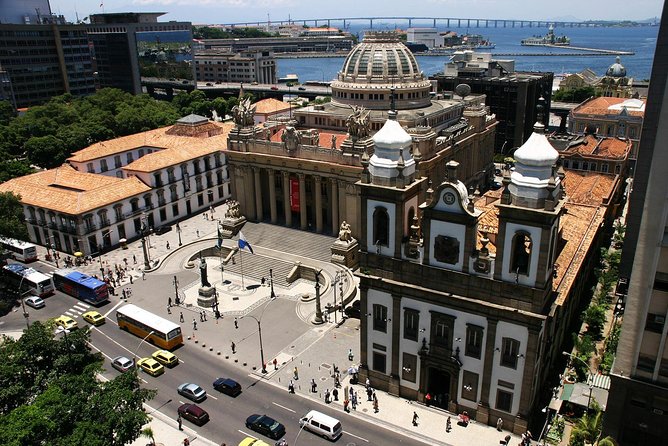
Praça XV do Novembro is one of the key historical spaces on the route. Brazil’s emperors were crowned here in the 1800s, and the square hosted other major events in the country’s past.
From there, you see the Paço Imperial, or Imperial Palace. It was built in the 1700s as a residence and workplace for the governors of the captaincy. Later, it served as a residence for the Portuguese royal family after its arrival in Brazil.
That makes the palace more than a handsome Portuguese-style building. It links colonial administration, the Portuguese monarchy, and Brazil’s imperial period in one place. The guide’s explanation is especially valuable here because the political story is not always obvious from the outside.
The stop is also a reminder that Rio’s center is best understood as a collection of connected places. A square, a palace, a church, and a market street each reveal a different part of the city’s past. The tour does not isolate them as museum pieces. It lets you walk between them and see how they fit into the working city.
Uruguaiana Street reveals downtown life
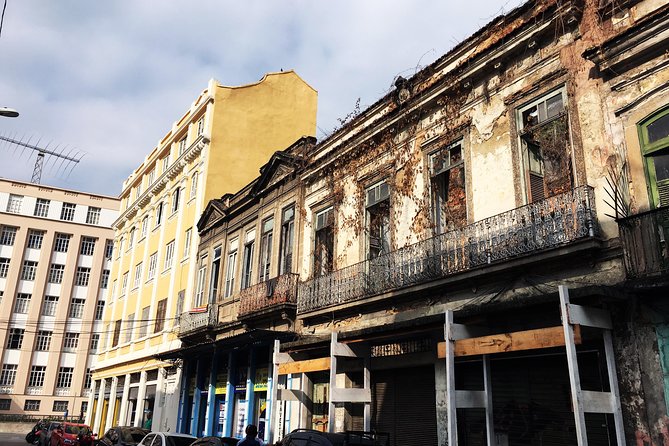
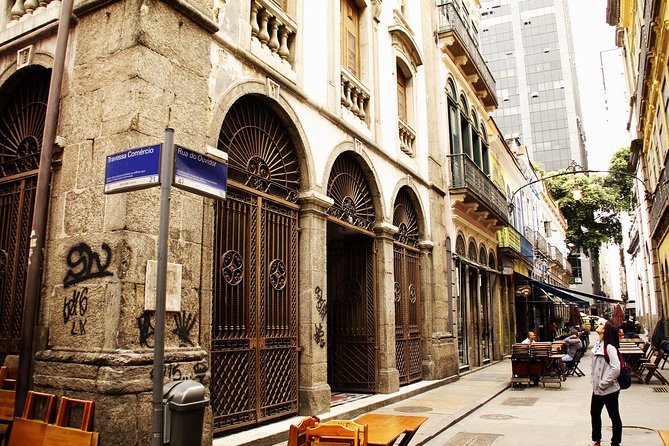
The walk continues along Uruguaiana Street and through famous market streets in central Rio. This is a change of rhythm from formal churches and royal buildings.
You get a look at the commercial side of downtown, with streets that are part of everyday city life rather than arranged for sightseeing. The route can also provide a chance to ask your guide about where to eat, shop, or browse after the tour.
A few practical cautions are worth keeping in mind. Keep your belongings secure, stay with the group, and follow the guide’s advice in crowded areas. One guide was specifically appreciated for helping the group feel safer around pickpockets.
The amount of free time may vary. One account wished for 10 minutes to browse the streets, while another felt the tour spent too much time in a tea shop. If shopping or market browsing matters to you, say so early. A flexible guide may adjust the pace, especially when the group is small.
Tiradentes Palace and the imperial city’s public face
The tour passes the Tiradentes Palace from outside. Since the visit is exterior only, this is a quick architectural and historical stop rather than a full building tour.
That is typical of the experience. You see many landmarks in one afternoon, but you do not spend long inside each one. Some people will appreciate the range. Others, especially those who want detailed architectural study, may find the schedule too brisk.
The route also includes one of Rio’s important cultural centers. The exact amount of time there can depend on the guide and the day’s traffic. The old Portuguese library building has been a particularly memorable stop, with its historic books and ornate setting. Ask about it if it is not already part of the route.
Confeitaria Colombo adds a graceful pause
Confeitaria Colombo is the tour’s food-related landmark, but food and drinks are not included. The stated visit lasts about 20 minutes, and admission is free.
The bakery is a famous downtown institution and offers a welcome pause after several churches and public buildings. Even if you do not buy anything, the setting gives the tour a social and culinary angle.
You should budget separately if you want coffee, tea, pastries, or a snack. Twenty minutes is enough for a look and perhaps a quick purchase, but not necessarily a leisurely meal.
This is also one of the stops where timing matters. One outing reportedly spent about 30 minutes in a beautiful tea shop, which reduced time elsewhere. If you prefer streets and landmarks over a seated refreshment stop, tell the guide. If you need a break, you may welcome it.
The Metropolitan Cathedral closes the route
The final main stop is the Metropolitan Cathedral of Saint Sebastian. Its unusual conical form makes it one of the most recognizable modern religious buildings in Rio.
The dimensions given for the cathedral are striking: a 96-meter internal diameter, a 106-meter external diameter, and an overall height of 75 meters. The interior’s vast circular scale is the point. It feels very different from the more traditional churches earlier in the afternoon.
The planned visit lasts about 10 minutes. The official route concludes at Carioca Square, near the cathedral area, where you can continue exploring on your own or take the ride back to your hotel if that option is available for your departure.
Check exactly where the guide will end the walk. One account found the group finished a block short of the Metropolitan Cathedral and the Teatro Municipal, then returned independently on another day. That is a small issue, but it matters if you expect every nearby landmark to be part of the formal tour.
What the guides add to the experience
The strongest praise centers on the guides. JB, or Juan-Baptiste, is described as energetic, warm, fast-moving, and deeply attached to Rio. He has also been praised for speaking English well and for offering practical advice about getting around the city.
Melanie, also referred to as Malenia in some accounts, has been appreciated for her friendly manner, flexibility, and ability to move between Spanish and English when caring for a mixed group. André has been praised for arriving on time, answering questions, and adjusting the route around personal interests.
That flexibility seems most likely when the group is tiny or the tour becomes private. A few bookings had only one or two people, allowing the guide to skip places already visited and add stops that suited the group.
The experience is not perfectly consistent. One outing had a guide who spent too much time texting and rushed through the checklist. Another suffered from a pickup problem involving the wrong hotel and time, followed by confusing communication between the booking company, local operator, and guide. Those cases appear to be exceptions, but they are worth remembering when you judge the price.
Is $60.77 fair for four hours?
At $60.77 per person, this is not the cheapest way to see downtown Rio. You can visit public streets and many exterior landmarks without paying for a tour.
The price becomes easier to justify if you value hotel transport, an English or multilingual guide, historical explanations, and a planned route through a part of Rio that can feel confusing on your own. Pickup and drop-off are included for most hotels in São Conrado, Leblon, Ipanema, and Copacabana.
You are paying for orientation and context, not for meals or a long list of included admissions. The churches and listed stops have free admission, and food and drinks are extra. If you are comfortable navigating downtown independently and mainly want photographs, the value is weaker.
For a first visit, I think the price can work, especially if you are staying in the covered beach districts. Ask questions, request practical recommendations, and tell the guide what interests you. That is how you turn a standard route into a more useful afternoon.
Who should book this Rio walking tour?
I would recommend it to first-time visitors who want a city overview before exploring downtown alone. It suits people who like churches, architecture, civic history, markets, and a mix of old and modern Rio.
It also works well for anyone who prefers a moderate pace and does not want to spend an afternoon arranging transport between scattered landmarks. Small groups may receive a very personal experience.
I would hesitate if you want a fully walking-based tour with long independent stops. Traffic can change the balance between riding and walking, and the group may have as many as 35 people. People with limited walking ability should also think carefully, since the required fitness level is listed as moderate and some outings involve substantial walking.
Book at least 24 hours ahead if you need to cancel safely. The tour offers a full refund when canceled at least 24 hours before departure, but late cancellations are not refunded. Poor weather or too few bookings can also lead to a rescheduled date or full refund.
Final verdict: a useful first look at downtown Rio
I would book this tour early in a Rio visit, with realistic expectations. It is not a deep architectural study, and it may include more driving or less free time than you expect.
Its strengths are clear: São Bento’s remarkable interior, the imperial landmarks around Praça XV, the modern waterfront at Mauá Square, and guides who can make the city’s story personal. If you get JB, Melanie, André, or another guide with the same warmth and flexibility, the afternoon can give you a strong sense of how Rio fits together.
Book it if you want history, churches, local orientation, and hotel transport in one package. Skip it if you prefer to set your own pace, spend an hour inside each building, or explore downtown entirely on your own.
FAQ
How long does Rio’s city walking tour last?
The tour lasts approximately four hours.
What time does the tour begin?
The stated start time is 1:00 p.m.
What is included in the tour price?
The price includes the Rio de Janeiro walking tour, plus hotel pickup and drop-off from most hotels in São Conrado, Leblon, Ipanema, and Copacabana.
Are food and drinks included?
No. Food and drinks are not included, so you should budget separately if you want something at Confeitaria Colombo or another stop.
Which major churches are visited?
The route includes the Church of Our Lady of Candelaria, São Bento Monastery, and the Metropolitan Cathedral of Saint Sebastian.
Does the tour visit the Museum of Tomorrow?
The tour includes a view of the modern Museum of Tomorrow and the Mauá Square area. It does not state that museum admission is included.
Where does the tour end?
The tour concludes around Carioca Square and the Metropolitan Cathedral area. You may explore on your own or enjoy a ride back to your hotel.
How large can the group be?
The maximum group size is 35 people. Smaller bookings may result in a more flexible experience.
Can I cancel for a full refund?
Yes, if you cancel at least 24 hours before the local start time. Cancellations made less than 24 hours in advance are not refunded. If the operator cancels because of poor weather or too few bookings, you will be offered another date or a full refund.
More Historical Tours
- Olympic Boulevard, Museum of Tomorrow & Historical Rio
★ 4.5 · 66 reviews - Rio: Olympic Boulevard, Museum of Tomorrow & History Tour
★ 4.1 · 47 reviews - Petropolis Bohemia: Historic tour and visit to the Bohemian Brewery
★ 4.5 · 45 reviews - Historical Downtown and Lapa – Walking Tour
★ 5.0 · 44 reviews
More Walking Tours in Rio de Janeiro
- Rio de Janeiro: Rocinha Favela Walking Tour with Local Guide
★ 4.8 · 3,052 reviews - Rio De Janeiro: Half-Day Rocinha Favela Walking Tour
★ 4.7 · 2,272 reviews - Sunrise and Sunrise Walk Two Brothers with Local Guide
★ 5.0 · 193 reviews - Walking tour of the bohemian neighborhoods of Santa Teresa and Lapa
★ 5.0 · 59 reviews
Just added around Rio de Janeiro
- Pedra Bonita Trail: The easiest trail with a beautiful view of Rio★ 4.6 · 3 reviews
- Rio: Private, Custom express, Main Attractions!★ 5.0 · 3 reviews
- Rocinha Jeep Tour: A Journey into the Soul of the Favela!★ 3.8 · 3 reviews
- Rio: Favela Walking Tour of Rocinha with a Resident Guide★ 4.7 · 3 reviews
- Rio: Museum of Tomorrow, Yup Star & Olympic Boulevard★ 3.7 · 3 reviews
- Explore Fernando de Noronha: 7-Hour Ilhatour★ 4.9 · 3 reviews
- Rio: Best Dive Experience All Inclusive Scuba Diving Package★ 5.0 · 3 reviews
- Rio de Janeiro by Air: 10-Minute Helicopter Tour★ 4.4 · 3 reviews
Historical Tours, compared.



Scenic Train ride to historical cities of Morretes and Antonina
Read our review →

From Foz do Iguazu: Triple Frontier Landmark Ticket
Read our review →
Explore Little Africa : Unveiling Afro Heritage in Rio de Janeiro
Read our review →
Downtown-Center History Walking Tour – in English
Read our review →Browse the lists this tour appears in