

Reviewed · SAMBA & NIGHTLIFE TOURS
Historical Downtown and Lapa – Walking Tour
Rio’s center tells stories. This three-hour walk takes you beyond Copacabana and Christ the Redeemer, into the city’s political and cultural past. I like the detailed historical commentary and the chance to ask direct questions about Brazil’s politics. I also like the small-group limit of 20, which should make it easier to hear your guide and keep the pace manageable.
The main point to check is the price and format. The experience is listed at $40 per person, while some descriptions of the same Rio by Foot outing call it free, with optional tipping. Confirm exactly which booking option you are choosing. Also note that an English tour may require at least three people and can be canceled close to departure if that minimum is not met.
In This Review
- Key points to know before you go
- Why Rio’s historic center deserves three hours
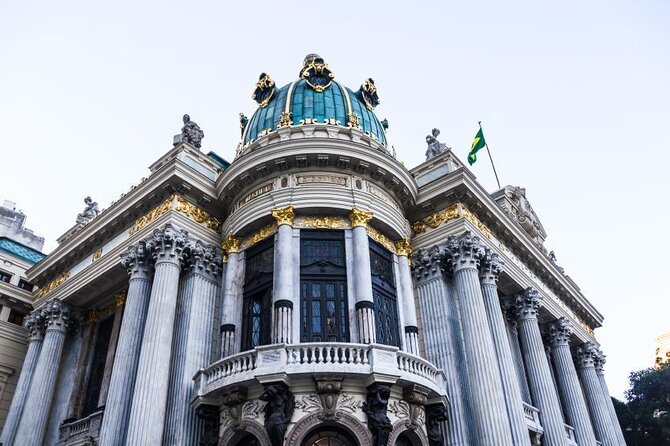
- Starting at Praça Floriano and the Theatro Municipal area
- Biblioteca Nacional: books, power, and a grand opening stop
- Museu Nacional de Belas Artes and the war memorial
- Walking Avenida Rio Branco through the city’s main corridor
- Escadaria Selarón brings color and camera time
- Lapa and the Republic: connecting monuments with public life
- Feira da Praça XV offers a lively finish
- What the guides add to the experience
- Price, pace, and who gets the best value
- Should you book the Historical Downtown and Lapa walk?
- FAQ
- How long does the Historical Downtown and Lapa walking tour last?
- Where does the tour start?
- Where does the tour end?
- Is hotel pickup included?
- Are food and drinks included?
- Can I cancel for a full refund?
Key points to know before you go
- Three hours on foot: Expect roughly three miles at an average walking pace, with several stops for buildings, squares, markets, and photographs.
- Strong history focus: Guides Rafael, Raffael, and Juliana received particular praise for making Brazil’s political and urban history clear and entertaining.
- Begins at Praça Floriano: The meeting point is beside the Theatro Municipal area in central Rio, at Praça Floriano, 1.
- Ends near Praça XV: The walk finishes at Praça Quinze de Novembro, a useful place to continue exploring central Rio.
- Lapa is part of the story: Escadaria Selarón provides one of the tour’s best photo stops and a link between Rio’s old center and its creative side.
- Saturday can add market life: Feira da Praça XV may be open during the tour, adding food, crafts, and local activity, though purchases are not included.
Why Rio’s historic center deserves three hours
Many first visits to Rio focus on beaches, Sugarloaf Mountain, and the Christ statue. Those sights matter, but they can leave you with a thin picture of the city. The Historical Downtown and Lapa walk gives you a more grounded introduction to Rio as Brazil’s former capital, a place shaped by government, religion, art, war, protest, and daily commerce.
I like this kind of city tour because the streets do much of the teaching. A guide can point out a grand facade, a monument, or a public square, then explain why it matters. Without that context, central Rio can look like a collection of attractive buildings. With a good guide, the area becomes a sequence of political decisions and social changes.
The outing lasts about three hours and is conducted on foot. One review describes roughly three miles at an average pace, so you should arrive ready to walk rather than treat this as a stop-and-start sightseeing shuttle. A cool day may make the pace pleasant. Strong sun could make the same route feel more demanding, especially because the tour includes open streets and squares.
The group can reach 20 people. That is not an intimate private tour, but it is still small enough to be more personal than a large coach excursion. Guides have answered questions throughout the walk, including questions about Brazil’s political history, food, and things to do later in your stay.
More Historical Tours in Rio de Janeiro
- Rio de Janeiro: Historic Rio and Santa Teresa Half-Day Tour
★ 4.4 · 228 reviews - Rio de Janeiro: Little Africa Heritage Walking Tour
★ 4.9 · 177 reviews - Explore Little Africa : Unveiling Afro Heritage in Rio de Janeiro
★ 5.0 · 97 reviews
Starting at Praça Floriano and the Theatro Municipal area
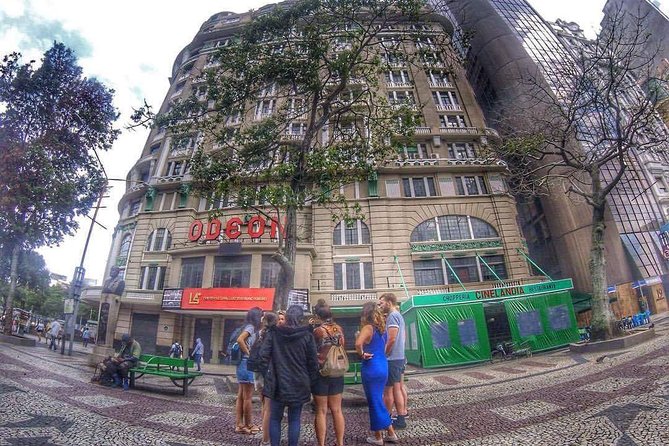
The official meeting point is Praça Floriano, 1, in Centro. The guide may be identified by a green shirt, and one meeting instruction places the start near the Theatro Municipal at 10:30 a.m. Check your confirmation for the exact time and meeting wording, since the supplied tour details do not give one single universal departure time.
Praça Floriano is a fitting place to begin. It puts you in the middle of Rio’s monumental center, where public architecture and national history are close together. Starting here also gives you an immediate sense of scale. You are not being dropped at a single attraction and whisked away. You are entering a district where several eras sit side by side.
The first minutes matter. Use them to tell the guide what interests you most. If you care about government, dictatorship, monarchy, religion, art, or urban change, say so early. Guides such as Rafael and Juliana have been praised for taking questions and adjusting the conversation to the group.
The tour may be multilingual. That can mean English and Portuguese are both used, as happened on one walk led by Juliana. If you need a full explanation in one language, confirm the language arrangement before booking, especially if your schedule is tight.
Biblioteca Nacional: books, power, and a grand opening stop
The tour spends about 25 minutes outside the Biblioteca Nacional. The listing marks the stop as external, although it also says admission is included, so you should confirm whether the group enters or views the building from outside on your particular departure.
Either way, this is a useful early stop because it introduces Rio’s formal cultural institutions. A guide can turn the building from a photo backdrop into part of a larger story about education, national identity, and the role of public culture in Brazil.
Twenty-five minutes is long enough for explanation and photographs without allowing one building to swallow the whole walk. I would listen first, then take pictures. The value here is not simply seeing a handsome institution. It is understanding why the center gathered so many national buildings in one compact area.
This is also a good point to ask questions. The experience is aimed at people who want more than names and dates, and the political angle runs through the tour. If you prefer a quick visual tour with little talking, this may feel too academic. If you enjoy connecting architecture to power, it is likely one of the better parts.
Museu Nacional de Belas Artes and the war memorial
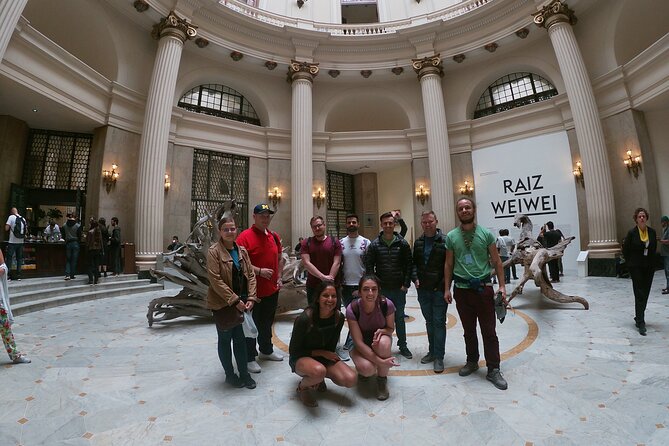
Next comes the Museu Nacional de Belas Artes, with about 15 minutes allocated to the stop. The itinerary also refers to the National Monument to the Dead of the Second World War, so the exact emphasis may depend on the guide and route.
Again, the stop is listed as external, despite the note about admission being included. Treat this as a clarification point rather than assuming you will receive indoor museum time. If entering the museum is important to you, ask before the tour begins.
The pairing of an art museum and a war monument helps show how central Rio mixes cultural life with national memory. You get a short introduction rather than a full museum visit. That is a sensible use of time on a walking route, but art lovers should not book this expecting an in-depth gallery tour.
I like the short format here. Fifteen minutes can give you the story, a look at the setting, and a few photographs while keeping the group moving. The guide’s skill matters. Rafael and Raffael have been praised for making the historical material feel like a lively class rather than a dry lecture.
More Walking Tours in Rio de Janeiro
- Rio de Janeiro: Rocinha Favela Walking Tour with Local Guide
★ 4.8 · 3,052 reviews - Rio De Janeiro: Half-Day Rocinha Favela Walking Tour
★ 4.7 · 2,272 reviews - Sunrise and Sunrise Walk Two Brothers with Local Guide
★ 5.0 · 193 reviews - Learn the History of Rio with an Unforgettable City Center Walking Tour
★ 5.0 · 82 reviews
Walking Avenida Rio Branco through the city’s main corridor
The group then spends about 20 minutes walking along Avenida Rio Branco. This is where the tour’s format becomes most useful. You are moving through the city rather than viewing it from behind glass, so you can notice changes in building scale, street use, and the relationship between older landmarks and modern Rio.
Avenida Rio Branco is not just a route between attractions. It gives the guide room to explain how central Rio developed and how public space reflects political and economic change. You can ask questions as you walk, though you should not expect a long stop at every building.
Walking time can also be social. One of the strengths of a small guided group is the ability to compare impressions and ask for suggestions. Guides have offered advice about food and later activities, which makes this part useful for getting your bearings early in a visit.
Keep your expectations realistic. This is a city walk, not a private architecture seminar. The guide must keep the group together and maintain the schedule. If you want long pauses for every facade, you may need a separate museum or architecture tour.
Escadaria Selarón brings color and camera time
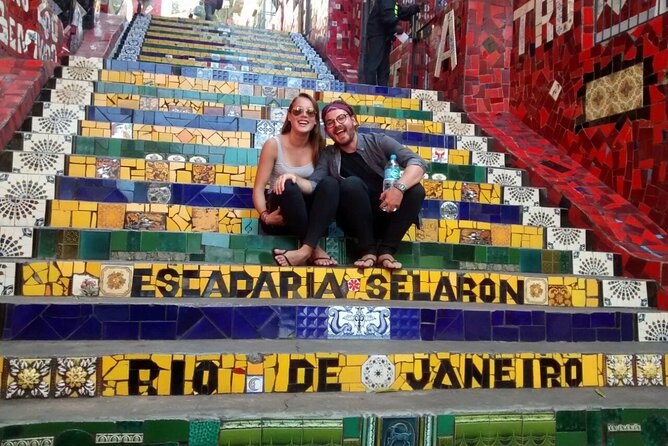
Escadaria Selarón is likely to be the most instantly recognizable stop. The tiled staircase links the historic center with Lapa and provides a clear change in mood from formal public buildings and national monuments.
This is the place to bring your camera, but do not let the photo stop crowd out the explanation. The staircase has a strong visual identity, and a guide can help place it within Rio’s cultural life and the character of Lapa. The itinerary does not specify a fixed duration here, so your time may depend on the group’s pace and the day’s conditions.
One useful feature is that the staircase comes after several history-heavy stops. You have spent time with institutions and public memory, then reach a site that feels more informal and expressive. That contrast gives the route variety.
The staircase can also be busy. The supplied details do not promise quiet conditions or a private photo session, so plan to share the space. Stay with the guide and pay attention while taking pictures. A three-hour schedule leaves room for photographs, but not endless retakes.
Lapa and the Republic: connecting monuments with public life
The route includes Lapa and a stop described as the Republic. The wording is not fully specific about the exact landmark or square, so check the guide’s explanation on the day. What is clear is that the walk uses these areas to connect Rio’s political story with its public streets.
This is where questions about Brazil’s past can become especially useful. You can ask how the city changed after the capital moved, how political periods affected public space, or how Rio’s center fits into modern city life. The tour is not advertised as a formal political lecture, but history buffs should find plenty to discuss.
I would also use this stretch to ask practical questions. Guides Rafael, Raffael, and Juliana have been praised for suggestions about food, neighborhoods, and activities beyond the route. That personal advice can be worth as much as the sightseeing, especially if you have limited time in Rio.
The route is not designed for a quick checklist. You will get more from it if you pause to look at the spaces between the named stops. Notice how the city’s official monuments sit alongside ordinary movement, shops, street activity, and public gathering places.
Feira da Praça XV offers a lively finish
The tour ends at Feira da Praça XV, near Praça Quinze de Novembro. The market stop is external and lasts about 15 minutes, with admission not included. Since the market can be especially active on Saturdays, the day of the week may shape the feel of the final stop.
This is a good ending because it shifts attention from grand history to everyday Rio. You might find food, crafts, and local goods, but the supplied details do not guarantee particular stalls or products. Bring extra money if you want to buy something, since food and drinks are not included.
The final location is practical. Praça Quinze is a central point from which you can continue exploring on your own. Ask your guide for directions and suggestions before saying goodbye. The tour does not include hotel pickup or drop-off unless you select an option that specifically offers it, so you will need to handle your own onward travel.
A market stop also gives the walk a relaxed finish. After three hours, you may be ready for a drink, a snack, or a slower look at the area. One guide allowed time for a quick toilet break and drink refill during the route, but you should not treat that as a full meal stop.
What the guides add to the experience
The strongest part of this tour is the guide. Rafael and Raffael have been praised for clear historical explanations, energy, and the ability to answer questions. Juliana has been described as warm, lively, and easy to talk with, sharing personal experience of living in Rio while guiding in both English and Portuguese.
That matters because central Rio rewards explanation. A guide who simply names buildings will leave you with photographs but little understanding. A guide who connects sites to Brazil’s political history can make the entire walk more memorable.
The tone appears friendly rather than stiff. You can ask where to eat, what to do next, and which parts of Rio deserve your time. I would take advantage of that access, especially if this is your first day in the city.
There is one practical uncertainty. The tour may be canceled if an English-language departure does not reach the minimum of three participants. The cancellation can happen only a few hours before the planned start, which is a real problem if you have a short stay or are arriving from a cruise ship. Have a backup plan, and do not count on a refund if you miss the activity because your cruise ship arrives late or fails to arrive.
Price, pace, and who gets the best value
At $40 per person, the tour is reasonably priced if you want three hours of organized guiding, historical context, and local recommendations. The value depends heavily on the guide and on how much you enjoy walking and asking questions.
The price needs careful checking because the supplied descriptions conflict. Some people experienced a free walking tour and chose to tip at the end, with no set minimum. The booking information here lists $40. Before paying, make sure you understand the exact product, language, meeting time, and tipping arrangement.
This tour suits you best if:
- You enjoy history, politics, architecture, and public spaces.
- You want to understand central Rio beyond its famous beach districts.
- You like walking at a steady pace for about three hours.
- You want food and sightseeing suggestions from a local guide.
- You have enough schedule flexibility to handle a possible last-minute cancellation.
- You are comfortable managing your own transport to and from the meeting points.
It may suit you less if you want indoor museum visits, a slow photography tour, or hotel transportation. Children can participate, but they must be accompanied by an adult. Most people can take part, though the route still requires ordinary walking stamina.
For comfort, wear practical shoes and carry water. That advice follows the route itself: several hours on foot, open streets, public squares, and a staircase. The walk may feel easy in cool weather and much harder under strong sun.
Should you book the Historical Downtown and Lapa walk?
I would book it if you want Rio’s story explained rather than simply photographed. The best reasons are the political focus, the guide interaction, the chance to see the center on foot, and the strong record of satisfaction, with 95 percent recommending it and an overall rating of 4.8 from 44 ratings.
Before you commit, confirm the $40 price, the language, the minimum group size, and whether the museum-related stops are exterior views or include entry. If those details work for your plans, this is a smart first or second activity in Rio. It gives you the city’s historical frame, then leaves you at Praça XV with time to keep exploring.
FAQ
How long does the Historical Downtown and Lapa walking tour last?
The tour lasts approximately three hours.
Where does the tour start?
It starts at Praça Floriano, 1, Centro, Rio de Janeiro, near the Theatro Municipal area.
Where does the tour end?
The tour ends at Praça Quinze de Novembro, Centro, Rio de Janeiro.
Is hotel pickup included?
Hotel pickup and drop-off are not included unless you select an option that specifically provides them.
Are food and drinks included?
No. Food and drinks are not included. The Feira da Praça XV stop also does not include purchases.
Can I cancel for a full refund?
Yes, you can cancel up to 24 hours before the experience starts for a full refund. Cancellations or changes made less than 24 hours before the start time are not accepted for a refund.
More Historical Tours
- Rio’s city walking tour: a glimpse of history and olympic legacy
★ 4.5 · 78 reviews - Olympic Boulevard, Museum of Tomorrow & Historical Rio
★ 4.5 · 66 reviews - Rio: Olympic Boulevard, Museum of Tomorrow & History Tour
★ 4.1 · 47 reviews - Petropolis Bohemia: Historic tour and visit to the Bohemian Brewery
★ 4.5 · 45 reviews
More Samba and Nightlife Tours
- Rio de Janeiro: Beginner Samba Lesson in Ipanema
★ 4.9 · 1,071 reviews - Rio: Pub Crawl in Lapa with Cachaça Tasting and Live Samba
★ 4.7 · 881 reviews - Rio: Carnival Backstage Tour at Samba City with Cocktail
★ 4.6 · 520 reviews - Hop-ON Hop-OFF Sightseeing Bus in Rio de Janeiro – Rio Samba Bus
★ 3.5 · 457 reviews
Just added around Rio de Janeiro
- Pedra Bonita Trail: The easiest trail with a beautiful view of Rio★ 4.6 · 3 reviews
- Rocinha Jeep Tour: A Journey into the Soul of the Favela!★ 3.8 · 3 reviews
- Rio: Private, Custom express, Main Attractions!★ 5.0 · 3 reviews
- Rio: Favela Walking Tour of Rocinha with a Resident Guide★ 4.7 · 3 reviews
- Explore Fernando de Noronha: 7-Hour Ilhatour★ 4.9 · 3 reviews
- Rio: Museum of Tomorrow, Yup Star & Olympic Boulevard★ 3.7 · 3 reviews
- Rio: Best Dive Experience All Inclusive Scuba Diving Package★ 5.0 · 3 reviews
- Rio de Janeiro by Air: 10-Minute Helicopter Tour★ 4.4 · 3 reviews
Samba & Nightlife Tours, compared.


Pub Crawl in Lapa with Cachaça Tasting and Live Samba
Read our review →
Carnival Backstage Tour at Samba City with Cocktail
Read our review →
Hop-ON Hop-OFF Sightseeing Bus in Rio de Janeiro – Rio Samba Bus
Read our review →
Santa Teresa, Lapa, and Cinelândia with Tram Ride and Selarón Steps
Read our review →


Ginga Tropical – Brazilian Samba and Folklore Show
Read our review →Browse the lists this tour appears in