

Reviewed · FAVELA TOURS
Rio De Janeiro: Half-Day Rocinha Favela Walking Tour
Rio looks different from Rocinha. This three-hour walking tour offers two real strengths: local guides who explain daily life from personal experience and a respectful alternative to riding through the community in a jeep. You also get striking views over Rio, plus the chance to see capoeira, samba, and neighborhood life close up.
The main drawback is the walking itself. Rocinha’s narrow alleys, steep stairs, and uneven routes can be tiring, and the experience may feel too tourist-focused for anyone hoping for a completely informal visit. Still, at $35 per person, this is a thoughtful way to confront lazy stereotypes and understand a part of Rio that many people never see.
In This Review
- Key Points Before You Book
- Why Rocinha Changes Your View of Rio
- Starting at Copacabana Palace
- Walking Into Rocinha, Not Looking Down From a Vehicle
- Understanding the History and Hard Realities
- Rooftop Views Across Rio
- Capoeira, Samba, and Community Culture
- How Safe Does the Tour Feel?
- The Physical Demands of Three Hours
- Is $35 a Fair Price?
- Who Will Get the Most From This Tour?
- Should You Book the Rocinha Walking Tour?
- FAQ
- How long is the Rocinha favela walking tour?
- How much does the tour cost?
- Where is the meeting point?
- Is hotel pick-up included?
- What languages does the guide speak?
- Is the tour suitable for wheelchair users or people with mobility issues?
- Can I cancel the booking?
Key Points Before You Book

- Local voices matter: Guides such as Wellington, Alberto, Daniel, Martin, and Roberto explain Rocinha through lived experience, and some have grown up there.
- Walking beats a jeep tour: Small groups move through alleys and stairways instead of simply looking out from a vehicle.
- Capoeira is a highlight: A visit to a local capoeira school may include music, instruments, dance, and a demonstration by local children.
- The views are excellent: Rooftop and hillside stops offer broad views across Rocinha and toward Rio’s famous coastal districts.
- The tour is physically demanding: Expect stairs, narrow passages, and uneven footing. Comfortable shoes are essential.
- Your fee supports the community: Part of the tour cost goes back to the favela community.
Why Rocinha Changes Your View of Rio
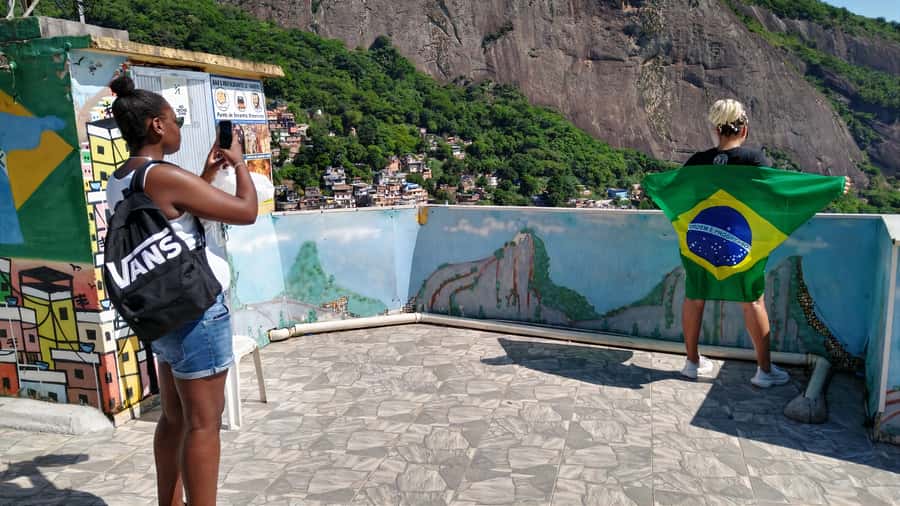
Rocinha is often reduced to a few dramatic headlines. That picture misses the ordinary parts of life: people going to work, children learning, local shops serving neighbors, and families building homes in a crowded hillside community.
This tour tries to replace the stereotype with context. You learn how Rocinha developed, how people make a living, and how social and economic challenges shape the area. The point is not to pretend that life is easy. It is to see residents as people living in a real neighborhood, not as scenery.
I like that the tour does not hide the difficult subjects. Guides discuss poverty, crime, politics, and the complicated relationship between favelas and official institutions. At the same time, they show the humor, creativity, music, and community spirit that are also part of Rocinha.
That balance matters. A tour can become sentimental if it presents only cheerful images, or exploitative if it focuses only on hardship. This experience aims for something more useful: a direct look at how people live in a place shaped by both struggle and pride.
More Walking Tours in Rio de Janeiro
- Rio de Janeiro: Rocinha Favela Walking Tour with Local Guide
★ 4.8 · 3,052 reviews - Sunrise and Sunrise Walk Two Brothers with Local Guide
★ 5.0 · 193 reviews - Rio de Janeiro: Little Africa Heritage Walking Tour
★ 4.9 · 177 reviews
Starting at Copacabana Palace
The meeting point is in front of the Belmond Copacabana Palace Hotel at 13:25. Look for the Statue of Journalist Ibrahim Sued beside the main entrance, on the same sidewalk.
This is a clear meeting point, but give yourself time to find it. The Copacabana Palace is easy to recognize, yet the statue can be overlooked if you are concentrating on the hotel entrance. Arrive a little early rather than trying to identify the group at the last second.
Hotel pick-up is not included, so you need to reach Copacabana on your own. The listed experience lasts three hours, and the available starting times can vary, so check the exact schedule when booking.
The guides speak English, Spanish, and Portuguese. That language choice is useful in a place where casual exchanges with residents add much to the experience. English-speaking guides named Wellington and Daniel receive especially strong praise for clear explanations, friendly manner, and their ability to make people feel at ease. Alberto is described as having lived and grown up in Rocinha for more than 60 years, giving his stories a particularly personal angle.
Guide assignments can change, so you cannot count on one specific person. Still, the tour’s local guiding approach is one of its best features.
Walking Into Rocinha, Not Looking Down From a Vehicle
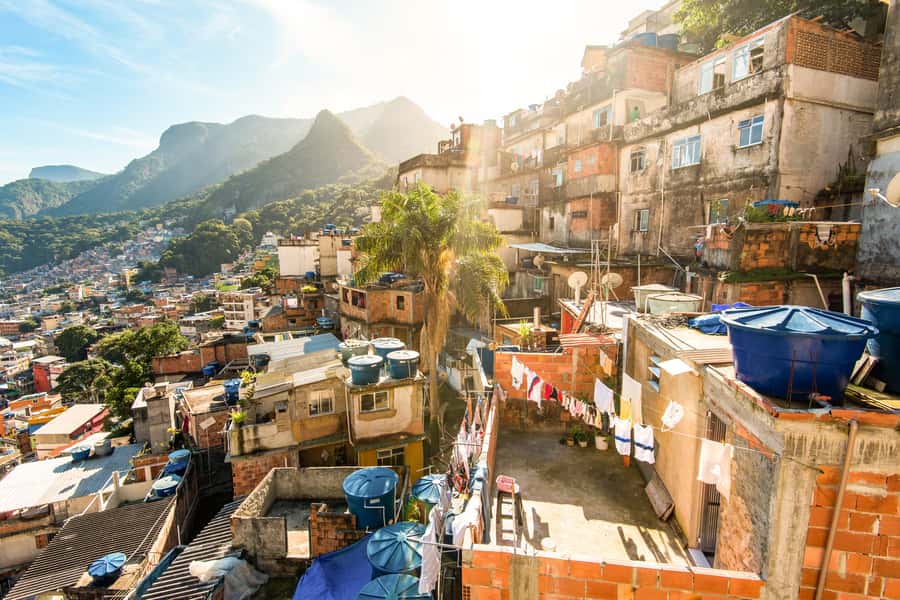
The first major choice here is the decision to walk. Some favela tours drive around in jeeps or motorbikes, giving you a quick visual impression from the road. This tour takes you into narrow lanes and stairways, where you can better understand the shape and pace of daily life.
Walking also changes your behavior. You move more slowly, stop to listen, and notice how the neighborhood fits together. You may see shops, homes, public spaces, and people going about normal routines. The guide helps you know when photography is appropriate, which is important in a residential area.
The tour is described as non-intrusive, but you still have a responsibility. Do not photograph people without permission. Keep your voice low around homes, avoid blocking narrow paths, and follow the guide’s instructions. A respectful attitude is more important than getting a dramatic picture.
Small groups make this approach work better. A large crowd would feel awkward in tight alleys and would make it harder to hear the guide. Group sizes are not specified, but several people describe the experience as small and flexible, including one group of four.
Understanding the History and Hard Realities

A good guide gives you more than a list of dates. You learn why favelas developed, how Rocinha grew, and why its social and economic challenges remain difficult to solve.
The best part is the human detail. Alberto has shown people his own home and explained the difficulties of favela life. Daniel has shared personal stories and connections to local community projects. Those moments help turn broad subjects into something you can understand at a personal level.
You should also expect frank discussion of safety and local control. The tour does not claim that Rocinha is free of problems. Instead, guides explain how the community functions and what visitors need to know while walking through it.
Several people say they felt safe throughout the tour, often crediting the guides’ local relationships and calm leadership. That is reassuring, but it is not a promise that every day is identical. Conditions can change, and you should stay with the group rather than wandering off alone.
This is one reason I would not recommend exploring Rocinha independently for a first visit. A local guide provides orientation, language help, and an understanding of which behavior is respectful.
More guided community visits:
- Rio de Janeiro: Favela Santa Marta Top Tour with Local Guide
★ 4.9 · 488 reviews - Rio de Janeiro: Favela Santa Marta Tour with Resident Guide
★ 4.6 · 220 reviews - Rio: Favela Rocinha Tour with Local Guide & Secret Spots
★ 4.7 · 218 reviews - Rio de Janeiro: Vidigal Favela Tour and Two Brothers Hike
★ 4.5 · 121 reviews
Rooftop Views Across Rio
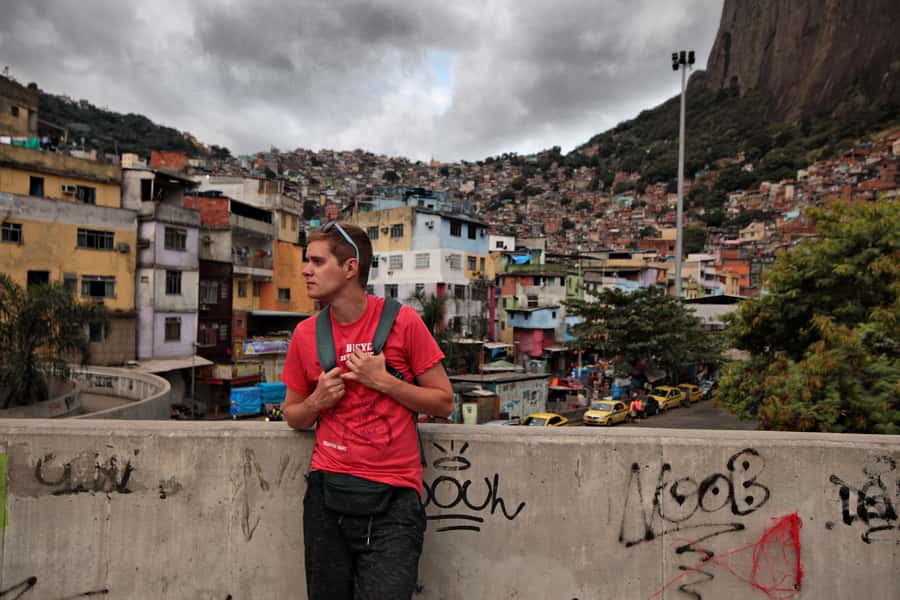
A rooftop stop is one of the tour’s most memorable visual moments. From higher ground in Rocinha, you can look across the dense community and out toward Rio’s more famous districts.
The view shows the sharp contrast between the hillside favela and wealthy neighborhoods nearby. That contrast is not just a photo opportunity. It helps explain the unequal geography of Rio, where very different standards of housing and income exist close together.
A rooftop bar may offer drinks such as caipirinhas, but food and drinks are not included in the $35 price. One reported stop at Novo Visual Rocinha included a panoramic viewpoint, with an additional fee required for access. A drone video was also available for purchase at one rooftop stop for R$200.
Treat these extras as optional spending. The viewpoint can be worthwhile, but you should not feel that you need to buy a drink, video, or add-on to get value from the tour. Bring some Brazilian currency or a payment method if you want refreshments, while keeping your main budget separate.
The rooftop is also a good pause after walking the steep routes. You can catch your breath, take in the scale of Rocinha, and see how the community climbs the hillside.
Capoeira, Samba, and Community Culture
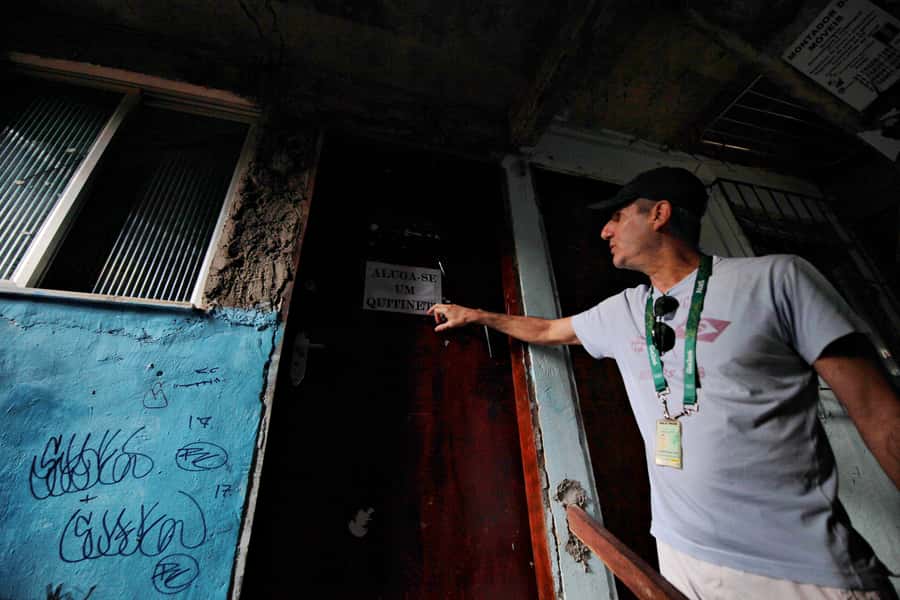
The capoeira visit adds energy and purpose to the afternoon. Depending on the day and the exact group arrangement, you may visit a local capoeira school, watch a demonstration, play instruments, or take part in a simple activity.
This is not just entertainment inserted into a sightseeing route. Capoeira combines movement, music, history, and community teaching. The local sessions described on this tour connect the performance to young people and to the work of people who give time back to the neighborhood.
One particularly praised instructor, Tiane, is described as teaching children and explaining capoeira’s cultural importance. Another account highlights a session led by a former professional female football player who works with children in the community.
You may be asked for a donation at the capoeira stop. It is wise to carry a little extra money if you would like to support the school, but the donation is separate from the tour price.
Some people describe the capoeira presentation as the emotional high point. Others value the history and everyday conversations more. I would see it as a strong complement to the walking portion, not the sole reason to book.
Samba and music may also appear during the experience. The exact program can vary, so think of these cultural elements as likely highlights rather than fixed performances with a guaranteed running order.
How Safe Does the Tour Feel?
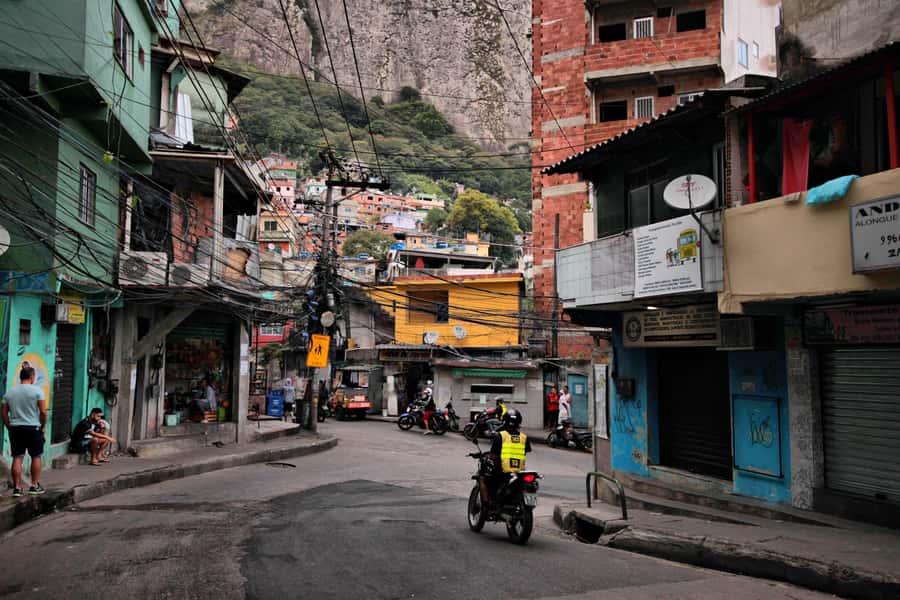
Safety is the first concern for many people considering a favela tour. The strongest feature here is the local guide system. Guides lead the group, explain where to walk, and use their community connections to make the visit feel calm and organized.
People repeatedly praise Wellington, Daniel, Alberto, Martin, and Roberto for making them feel secure. Several describe walking through areas they would never have entered alone, while still feeling looked after by the guide.
That said, a guided visit is not the same as a risk-free visit. Rocinha is a working residential community, not a theme park. Stay close to the group, follow instructions, and avoid displaying expensive watches, jewelry, or large amounts of cash.
The tour’s non-intrusive approach also improves safety. You are not being driven around in a conspicuous convoy, and you are not encouraged to treat residents as a spectacle. Good manners help everyone.
The Physical Demands of Three Hours

You need comfortable shoes with a firm grip. The route includes narrow alleys, stairs, steep sections, and uneven ground. The effort is manageable for many active adults, but it is not a gentle stroll along Copacabana.
The physical challenge can add to your understanding of Rocinha. Climbing the hillside shows how the terrain affects homes, roads, deliveries, and movement. Still, sore knees can turn an interesting tour into an unpleasant afternoon.
The experience is not suitable for wheelchair users or people with mobility impairments. It is also not recommended for people with knee problems, recent surgery, or other conditions that make stairs difficult.
The restrictions provided with the activity include children under six, people over 70 or 75, and weight limits listed as both 130 kilograms and 140 kilograms. Because those details are inconsistent, check the current booking terms directly if any limit applies to you.
Bring water, though food and drinks are not included. Wear light, comfortable clothing and leave bulky bags behind if possible. A camera is welcome, but ask before photographing people or private homes.
Is $35 a Fair Price?

At $35 per person, the tour offers solid value if you want more than a quick drive-by view. You receive about three hours with a local guide, a walking route, cultural stops, and an understanding of Rocinha that would be hard to gain alone.
The community contribution is also important. The fee is not only paying for a sightseeing service. Part of it supports the favela community, which gives the experience a stronger local connection than a purely commercial excursion.
You should budget extra for drinks, food, possible viewpoint charges, a capoeira donation, and the optional R$200 drone video. None of those extras is required, but the advertised price is not an all-inclusive afternoon.
The value depends on what you want. If you only want photographs from a rooftop, you could find a cheaper viewpoint. If you want a guided introduction to favela life, local history, and community culture, $35 is reasonable.
One person felt the tour could have offered more explanation along the route. That is a fair caution. Guide quality can vary, and a charismatic guide may spend more time telling stories while another may provide a more structured history lesson. If you want detailed social analysis, ask questions as you walk.
Who Will Get the Most From This Tour?
I would recommend this experience to you if you want to understand Rio beyond beaches, Sugarloaf Mountain, and postcard views. It suits curious adults and older children who can manage stairs and who are willing to listen as much as they photograph.
It is especially useful if you feel uneasy about the ethics of visiting a favela. The walking format, local guides, community contribution, and emphasis on resident stories make it a more respectful choice than a vehicle tour that treats the area as a spectacle.
You may want to skip it if you have serious mobility limits, dislike steep walking, or expect a polished museum-style presentation. It is also not the right fit if you want to wander freely without a guide.
Keep your expectations flexible. The rooftop, capoeira session, and exact route can vary. The fixed foundation is a guided walk through Rocinha with local context, not a guaranteed performance package.
Should You Book the Rocinha Walking Tour?
Book it if you want a grounded look at Rio’s social divisions and community life, and if you can handle three hours of stairs and uneven streets. The guides are the main reason to go, with Wellington, Daniel, Alberto, Martin, and Roberto all praised for warmth, personal stories, and calm leadership.
The tour is not perfect. Optional costs may appear during the afternoon, and the amount of detail can depend on your guide. Yet the price is fair, the approach is more respectful than a jeep-based tour, and the combination of local stories, capoeira, and hillside views gives you a fuller picture of Rio.
For most physically able visitors who want to challenge their assumptions, this is a worthwhile half-day choice.
FAQ
How long is the Rocinha favela walking tour?
The tour lasts three hours.
How much does the tour cost?
The listed price is $35 per person.
Where is the meeting point?
Meet in front of the Belmond Copacabana Palace Hotel at Av Atlantica 1702, Copacabana. Wait beside the Statue of Journalist Ibrahim Sued near the main entrance.
Is hotel pick-up included?
No. Hotel pick-up is not included, so you must reach the Copacabana meeting point yourself.
What languages does the guide speak?
Guides are available in English, Spanish, and Portuguese.
Is the tour suitable for wheelchair users or people with mobility issues?
No. The route includes narrow alleys, stairs, and physically demanding sections, so it is not suitable for wheelchair users or people with mobility impairments.
Can I cancel the booking?
Yes. You can cancel up to 24 hours in advance for a full refund. A reserve-now-and-pay-later option is also available.
More Walking Tours
- Learn the History of Rio with an Unforgettable City Center Walking Tour
★ 5.0 · 82 reviews - Rio’s city walking tour: a glimpse of history and olympic legacy
★ 4.5 · 78 reviews - Walking tour of the bohemian neighborhoods of Santa Teresa and Lapa
★ 5.0 · 59 reviews - Guided Walk to Telegraph Stone
★ 4.5 · 49 reviews
Just added around Rio de Janeiro
- Pedra Bonita Trail: The easiest trail with a beautiful view of Rio★ 4.6 · 3 reviews
- Rocinha Jeep Tour: A Journey into the Soul of the Favela!★ 3.8 · 3 reviews
- Rio: Private, Custom express, Main Attractions!★ 5.0 · 3 reviews
- Rio: Favela Walking Tour of Rocinha with a Resident Guide★ 4.7 · 3 reviews
- Explore Fernando de Noronha: 7-Hour Ilhatour★ 4.9 · 3 reviews
- Rio: Museum of Tomorrow, Yup Star & Olympic Boulevard★ 3.7 · 3 reviews
- Rio: Best Dive Experience All Inclusive Scuba Diving Package★ 5.0 · 3 reviews
- Rio de Janeiro by Air: 10-Minute Helicopter Tour★ 4.4 · 3 reviews
Favela Tours, compared.

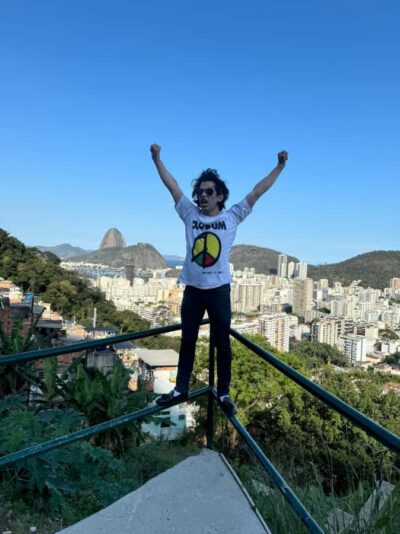
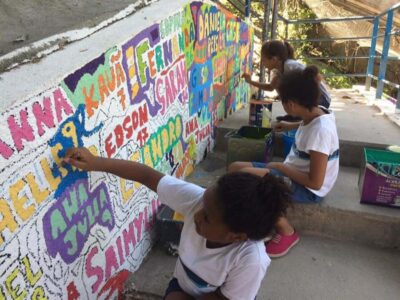
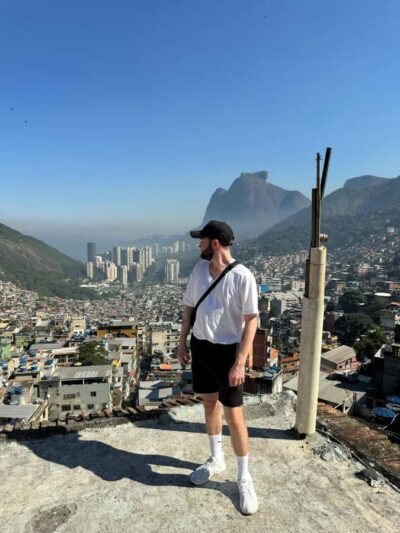
Favela Rocinha Tour with Local Guide & Secret Spots
Read our review →

Favela Tour The Original, Rocinha & Vila Canoas since 1992
Read our review →
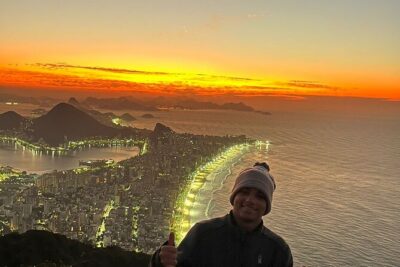
Sunrise at Morro 2 Irmãos – Vidigal – Rio de Janeiro
Read our review →Browse the lists this tour appears in