
Reviewed · MUSEUMS
Rio: Olympic Boulevard, Museum of Tomorrow & History Tour
Rio’s past meets its future here. This four-hour tour links the Valongo Wharf, Eduardo Kobra’s huge mural, the Museum of Tomorrow, Saint Benedict Monastery, and central Rio’s grandest square. I like the strong mix of art, history, and architecture, and I like that hotel pickup from the South Zone removes the hassle of reaching downtown. The main caution is that the walking route and return transfer depend heavily on good guide and driver coordination.
You get a useful first look at a part of Rio that many beach-focused visitors skip. Guides such as Emma, Emanuella, and Pedro earned praise for friendly, detailed explanations, but recent feedback also points to problems with rushing, navigation, and hotel drop-off. I would confirm the pickup and return arrangements before setting out.
In This Review
- Key points to know before booking
- Why this downtown route is worth your morning
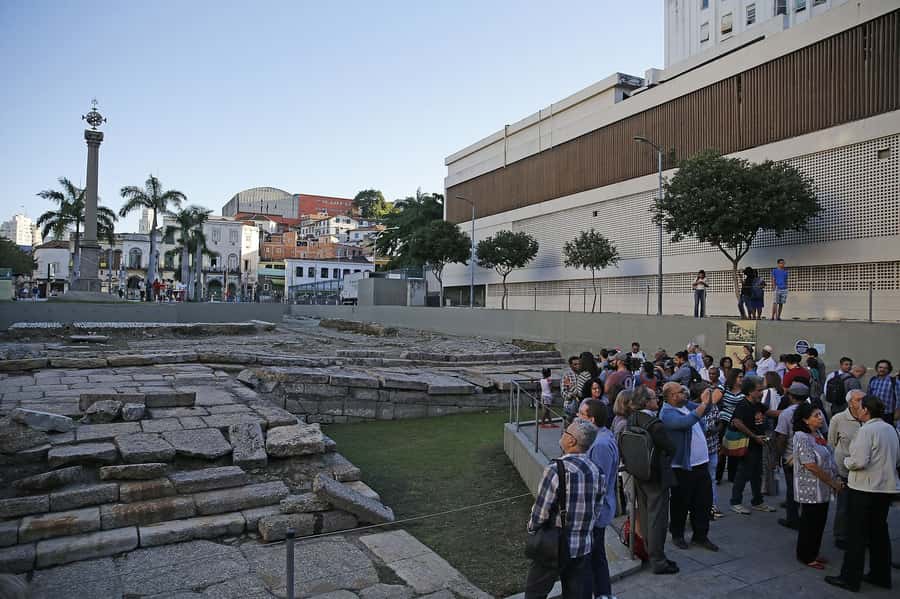
- Valongo Wharf and the African story of Rio
- Eduardo Kobra’s mural brings the route to life
- Walking Olympic Boulevard toward the Museum of Tomorrow
- The Museum of Tomorrow is the modern centerpiece
- Saint Benedict Monastery turns the clock backward
- Praça XV and the political center of old Rio
- Confeitaria Colombo adds a sweet final stop
- What $67 buys you
- Who will enjoy this tour most
- Practical advice for a smoother morning
- Should you book this Rio downtown tour?
- FAQ
- How long does the tour last?
- What languages are available?
- Is hotel pickup included?
- What if I stay in a hostel or bed-and-breakfast?
- What time does hotel pickup take place?
- Is admission to the Museum of Tomorrow included?
- Are food and drinks included?
- Is Confeitaria Colombo open every day?
- How large is the group?
- Can children join the tour?
Key points to know before booking
- Valongo Wharf connects Rio to Brazil’s African past: This UNESCO World Heritage site gives the tour serious historical weight beyond the usual postcard sights.
- Eduardo Kobra’s mural is a major photo stop: Five ethnic groups appear in a colorful geometric design on one of the world’s largest graffiti walls.
- The Museum of Tomorrow is the tour’s main modern attraction: Your ticket is included, and you can explore the museum at your own pace.
- Saint Benedict Monastery offers a striking change of mood: Its plain exterior gives little warning of the gold-covered Baroque interior.
- Confeitaria Colombo adds old Rio glamour: Plan to buy a Brazilian snack or sweet, and remember that the café closes on Sundays.
- The tour suits small-group city explorers: The air-conditioned van holds no more than 19 people, with pickup from hotels in Copacabana, Ipanema, Leblon, and Leme.
Why this downtown route is worth your morning

Rio is often sold through beaches, Sugarloaf Mountain, and Christ the Redeemer. Those sights deserve their fame, but they do not explain much about the city’s political past, African roots, public art, or modern ambitions. This route gives you a compact look at those subjects in one half-day.
The tour begins with hotel pickup in Rio’s South Zone, usually between 8:10 and 8:55 AM. That early collection period matters because the vehicle may visit several hotels before reaching downtown. You should contact the provider to confirm your exact time rather than rely only on the general window.
The vehicle is air-conditioned and carries up to 19 people. That is a manageable group for city touring, though it is not a private tour. The guide provides live commentary in English, Spanish, or Portuguese. A guide who keeps the group together and explains the history well can make this outing excellent. A rushed guide can make four hours feel short, especially because several stops involve walking.
More Historical Tours in Rio de Janeiro
- Rio de Janeiro: Historic Rio and Santa Teresa Half-Day Tour
★ 4.4 · 228 reviews - Rio de Janeiro: Little Africa Heritage Walking Tour
★ 4.9 · 177 reviews - Explore Little Africa : Unveiling Afro Heritage in Rio de Janeiro
★ 5.0 · 97 reviews
Valongo Wharf and the African story of Rio
Valongo Wharf is one of the most important stops because it changes how you read Rio. It was recognized as a UNESCO World Heritage site and is tied to the forced arrival of Africans in Brazil. At the site, your guide explains the African influence on Brazilian culture and the painful history connected with the port.
This is not simply an attractive waterfront pause. It gives context to food, music, religion, language, and customs you encounter across Brazil. I appreciate that the tour places this stop near the beginning, before the colorful mural and modern museum. You first confront the city’s difficult past, then see how Rio continues to express identity through public art and new architecture.
The quality of the explanation matters here. Pedro was praised for giving a detailed account of Brazilian history, while Emanuella was noted for discussing the country’s important buildings and past. Those comments suggest what to hope for from the guide: not just names and dates, but an explanation of why the place matters.
You should expect an outdoor stop, so comfortable shoes and weather-ready clothing are sensible. The tour runs in rain or sunshine. There is a moderate amount of walking, and the route includes streets, public areas, and museum interiors.
Eduardo Kobra’s mural brings the route to life
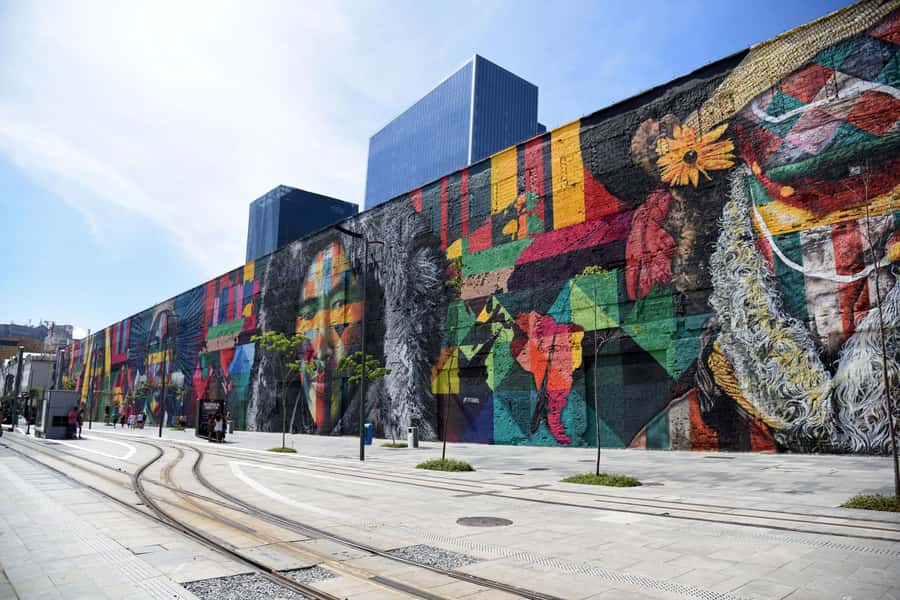
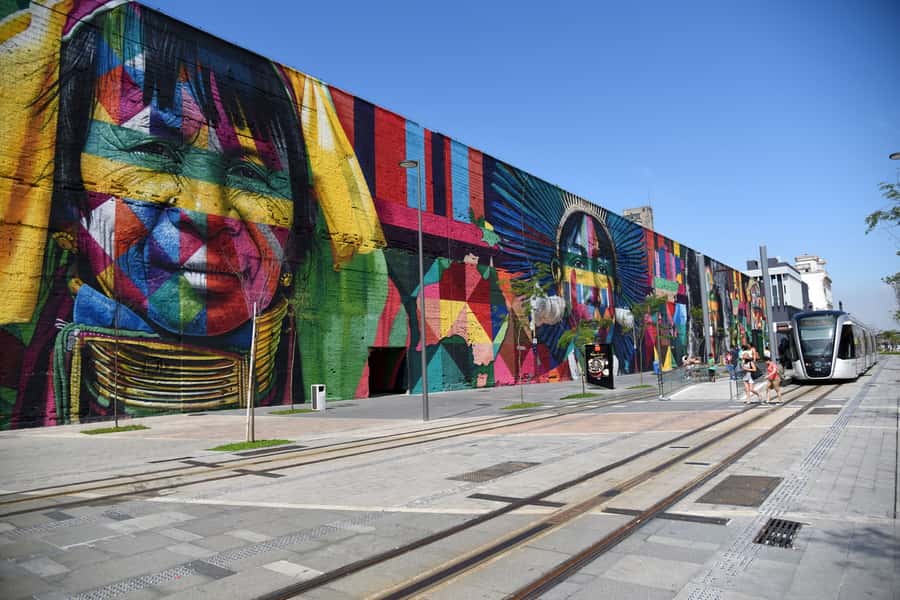
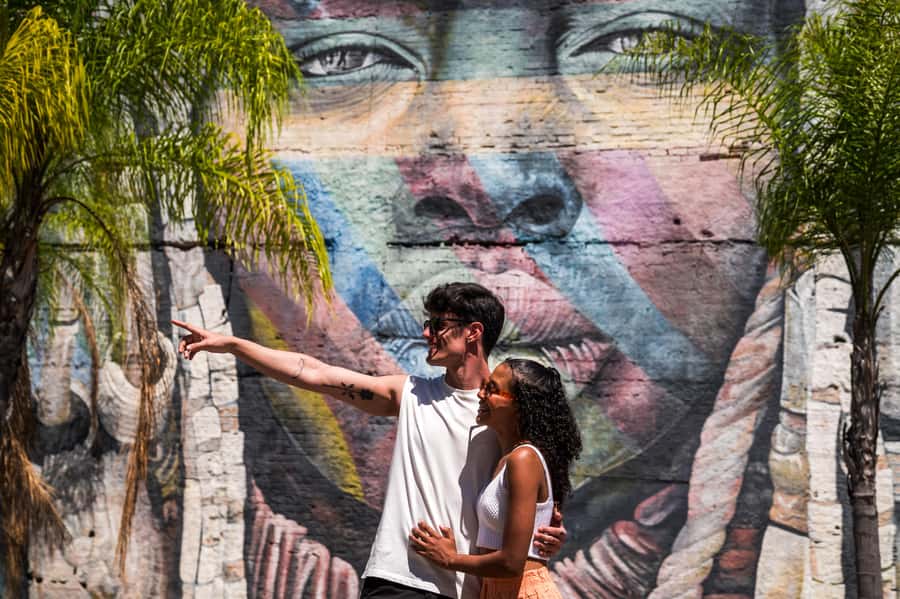
After Valongo Wharf, the group walks to the mural by Brazilian artist Eduardo Kobra. The artwork portrays five ethnic groups against a bold geometric background. It is one of the largest graffiti murals in the world, making it an easy place to understand why Rio’s public art has such a strong presence.
This is the tour’s most immediate photo opportunity. You get time for pictures before continuing along Olympic Boulevard. The mural works well as a visual counterpoint to Valongo Wharf: the history stop asks you to think, while the painted wall gives you something huge, colorful, and public to enjoy.
Do not treat this as a gallery visit. The mural is viewed outdoors, and the exact amount of time depends on the group and the guide. If photography matters to you, stay close and be ready when the group moves on. The tour has a four-hour limit, so this is not a slow art walk.
Walking Olympic Boulevard toward the Museum of Tomorrow
The walk along Olympic Boulevard links the mural to the Museum of Tomorrow. This part of the tour gives you a sense of the area’s modern redevelopment and public spaces after the 2016 Olympic period. It also creates a useful transition from historic Rio to the city’s focus on science and the future.
You will see the Rio 2016 Olympic Cauldron, designed by American artist Anthony Howe. Its reflective, kinetic sphere structure serves as a reminder of the Games. The moving, reflective form is different from the fixed stone and painted surfaces earlier in the route, so the stop adds another type of public art.
The boulevard section is not just transport between attractions. It helps you see how Rio has placed cultural buildings, open areas, and art installations within the same district. Still, be realistic about the format. You are walking as part of a timed group, not choosing your own route or stopping at every feature.
More Museums in Rio de Janeiro
- Petrópolis Day Trip from Rio de Janeiro including Imperial Museum and Crystal Palace
★ 4.0 · 101 reviews - Olympic Boulevard, Museum of Tomorrow & Historical Rio
★ 4.5 · 66 reviews - Rio: Olympic Boulevard, AquaRio and Museum of Tomorrow Tour
★ 4.5 · 54 reviews - Rio: Petrópolis Trip with Palace, Imperial Museum & Brewery
★ 4.6 · 42 reviews
The Museum of Tomorrow is the modern centerpiece
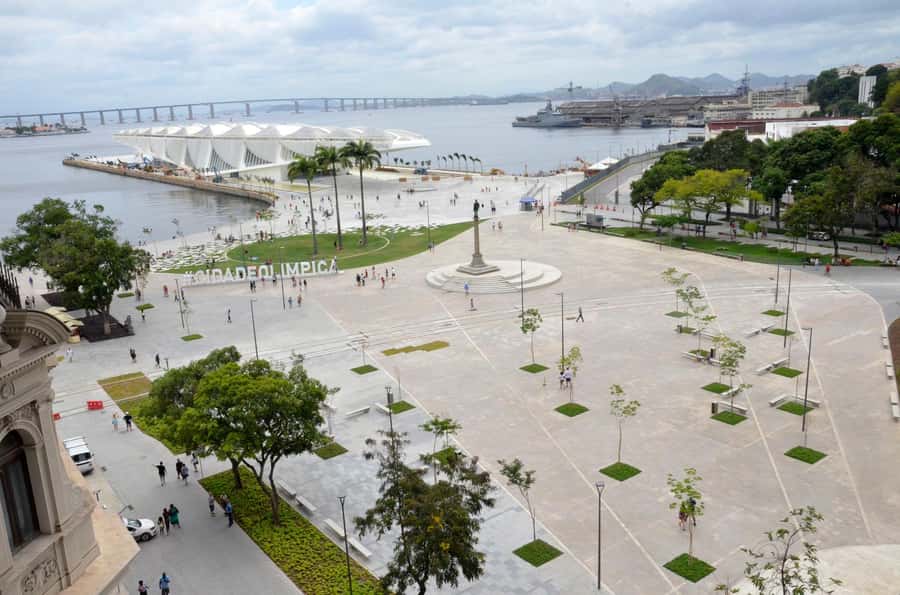
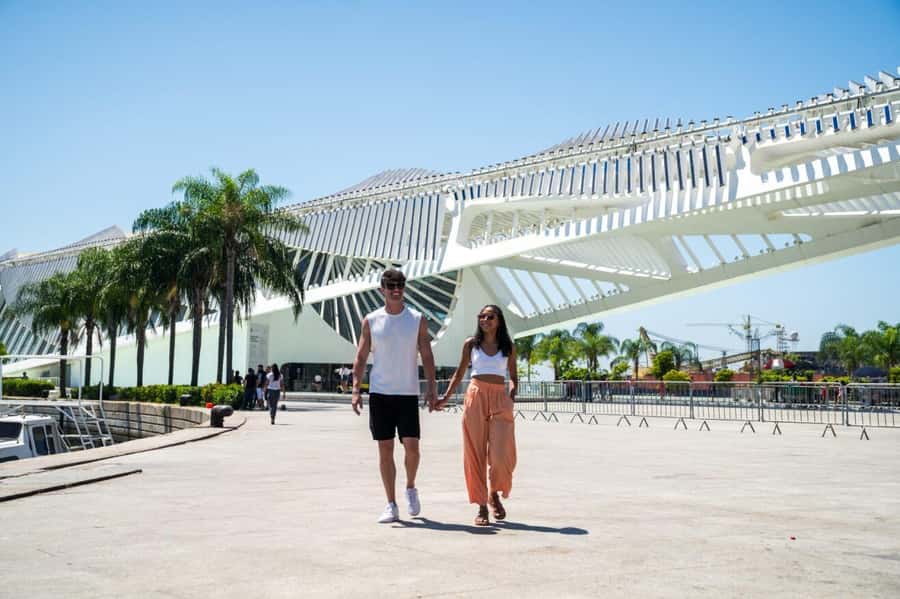
The Museum of Tomorrow is the largest scheduled indoor attraction on the route. Its futuristic structure is designed to make you think about science, the planet, and possible human futures. The museum is described as the most visited museum in Brazil, and admission is included in the tour price.
I like that the visit allows you to explore at your own pace. Your guide brings you to the museum and provides context, but you are not forced to remain beside the group for every display. That gives you room to focus on the exhibits that interest you most.
The museum is also an architectural stop. Even if you are more interested in buildings than science, the exterior makes the visit worthwhile. Its appearance contrasts sharply with Saint Benedict Monastery later in the itinerary, creating one of the tour’s clearest visual comparisons.
The tradeoff is time. Four hours must cover transport, several outdoor stops, the museum, the monastery, Praça XV, and Confeitaria Colombo. You should not expect to see every part of the museum at a leisurely pace. The tour is best for a first introduction, not for someone who wants to study each exhibition in detail.
One particularly positive detail is the flexible museum visit. Elliot praised guide Emma and liked exploring the museum independently. That arrangement gives you a little freedom within an otherwise structured morning.
Saint Benedict Monastery turns the clock backward
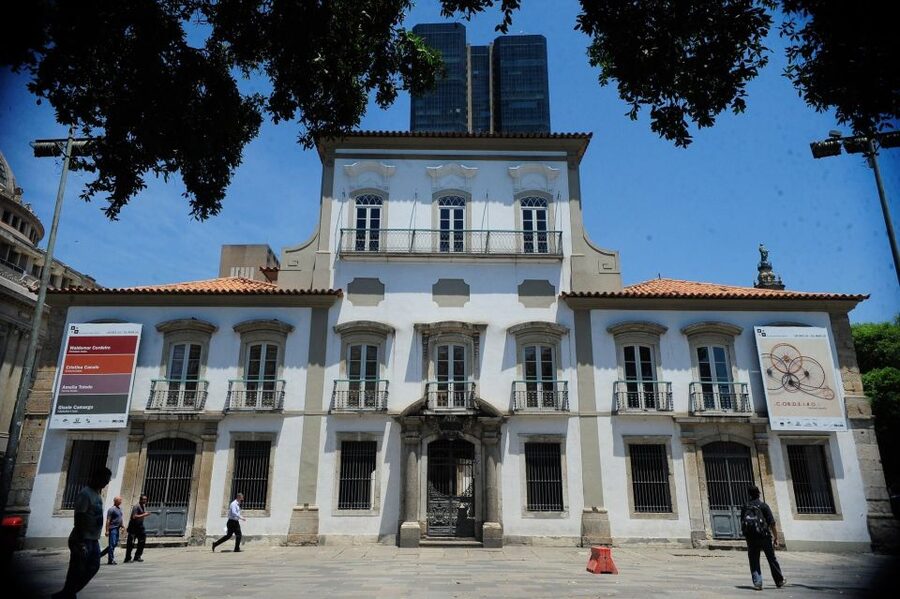
After the futuristic museum, the tour moves into a very different setting at the Monastery of Saint Benedict. The simple façade hides an interior covered with gold ornaments from the Baroque period.
This contrast is one of the strongest reasons to choose the route. You move from a building concerned with the future of the planet to a religious interior shaped by an earlier artistic and spiritual world. The stop also reminds you that Rio’s downtown is not one single period. Modern public projects, colonial-era institutions, imperial sites, and old religious buildings sit within the same broad center.
The monastery is a visual visit rather than a long independent stop. Listen closely to the guide’s explanation, since the value comes from understanding the difference between the plain exterior and ornate interior. Keep your clothing and behavior respectful because this remains a religious site.
Praça XV and the political center of old Rio
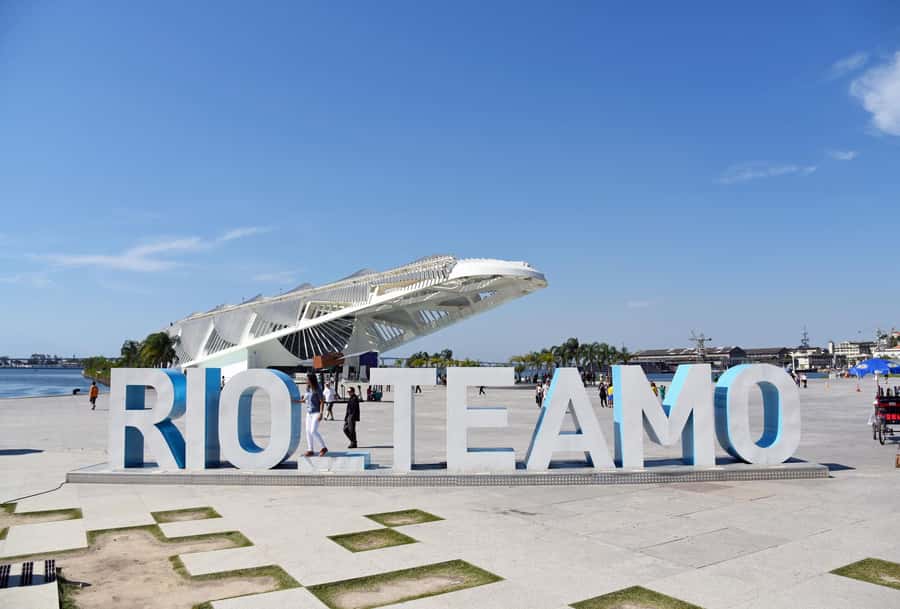
At Praça XV, you learn about one of the former headquarters of the Brazilian Empire and the major events connected with the area. This stop gives the tour a political layer after Valongo Wharf’s social history and the monastery’s religious art.
The square helps you place Rio’s past in a physical setting. Instead of hearing about imperial power only in a museum, you see the urban space where official life once unfolded. Your guide’s storytelling will shape this stop, so it is worth asking questions if you want more detail about the buildings and events.
Praça XV is also a reminder that downtown Rio rewards slow observation. You may notice architectural details, public spaces, and the changing relationship between old buildings and the modern city. The tour cannot cover every nearby landmark, but it gives you a useful framework for returning on your own.
Confeitaria Colombo adds a sweet final stop

The final stop is Confeitaria Colombo, one of Rio’s famous historic cafés. Its Art Nouveau interior features large stained-glass windows, tiles, and mirrors imported from France, Portugal, and Belgium. After several serious historical and cultural stops, the café provides a lighter ending with a strong sense of old Rio style.
Food and drinks are not included, so bring extra money if you want to order something. You might try a coxinha de frango, a savory Brazilian snack, or a brigadeiro, a popular chocolate sweet. The café was one of Rio’s prestigious meeting places at the beginning of the 20th century, which adds context to the ornate setting.
Confeitaria Colombo is closed on Sundays. This is not a minor detail if the café is one of your main reasons for booking. Check the operating day before you reserve, since the tour may still run without this stop or the schedule may be handled differently.
What $67 buys you
At $67 per person, the price is reasonable if you want several downtown sights handled in one morning. You receive hotel pickup and drop-off from the South Zone, an air-conditioned vehicle, a professional multilingual guide, all taxes and fees, and admission to the Museum of Tomorrow.
The value is strongest for first-time visitors staying in Copacabana, Ipanema, Leblon, or Leme. You avoid arranging transport to downtown, and you get a guide to connect places that might otherwise feel scattered. The included museum ticket also removes one extra purchase.
The price is less attractive if you already know downtown Rio well or prefer long visits at individual sites. You are paying for convenience and interpretation, not a private car or a slow museum day. Food at Confeitaria Colombo costs extra, and there is no included meal.
The maximum group size is 19 people. That is smaller than a large coach group, but you should still expect some waiting and coordination. The supplied feedback gives a clear warning: two people reported serious problems with the return transfer, including being left behind and waiting about an hour for a company-arranged Uber. Another person reported a guide losing the route and rushing the group.
Those incidents do not cancel out the strong comments about Emma, Emanuella, and Pedro, but they do show why you should confirm the drop-off plan. At the end of the tour, make sure you know which vehicle and guide are responsible for your hotel. Do not assume every person in the van belongs to the same outing.
Who will enjoy this tour most
I would choose this tour if you want downtown Rio explained rather than simply photographed. It suits people interested in Brazilian history, African influence, public art, architecture, and museums. It also works well when you have only a few days in Rio and want a structured introduction beyond the beaches.
Families can book, but children must be accompanied by an adult. Children under five go free if they do not occupy a seat. The walking is moderate, so anyone who dislikes walking should consider that before booking.
Art and design fans will appreciate the Kobra mural, Olympic Cauldron, Museum of Tomorrow, monastery, and café interiors. History-focused visitors will get the most from Valongo Wharf, Praça XV, and the guide commentary. Food lovers may enjoy finishing at Confeitaria Colombo, but they should budget for their own order.
I would be cautious if you need a perfectly predictable schedule or require a private guide. The tour depends on traffic, group movement, museum timing, and staff coordination. It operates in all weather, so rain will not automatically change the plan.
Practical advice for a smoother morning
Wear comfortable shoes. This is not a vehicle-only sightseeing loop, and the route includes outdoor walking between several downtown stops.
Confirm your exact pickup time and location. Hotel pickup is limited to Copacabana, Ipanema, Leblon, and Leme. If you stay in a hostel or bed-and-breakfast, the company will assign a nearby hotel for pickup and drop-off.
Keep the provider’s contact details available on the day. If you do not receive departure confirmation, contact the company before the pickup window. This is especially useful because collection happens before the official activity start time.
If Confeitaria Colombo matters to you, avoid Sunday. Also remember that snacks and drinks are purchased separately.
The tour requires a minimum number of participants. If the company cancels because too few people book, you will be offered another date or a full refund. You can cancel up to 24 hours ahead for a full refund, and the reserve-now, pay-later option keeps your cash free until closer to the tour.
Should you book this Rio downtown tour?
Book it if you want a compact, well-connected introduction to the city center and prefer having the history explained as you go. The combination of Valongo Wharf, Kobra’s mural, the Museum of Tomorrow, Saint Benedict Monastery, Praça XV, and Confeitaria Colombo covers a surprising range of Rio in four hours.
I would book on a weekday, confirm the hotel transfer in writing, and make sure the café is open. Choose it for variety and convenience, not for long, quiet visits at every stop. The guide can make the day memorable, but recent problems with navigation and drop-off mean you should stay alert during the final transfer.
FAQ
How long does the tour last?
The tour lasts four hours.
What languages are available?
Live guide commentary is available in English, Spanish, and Portuguese.
Is hotel pickup included?
Yes. Pickup and drop-off are included from hotels in Copacabana, Ipanema, Leblon, and Leme.
What if I stay in a hostel or bed-and-breakfast?
You will be informed of the nearest hotel for pickup and drop-off.
What time does hotel pickup take place?
Pickup from South Zone hotels takes place between 8:10 and 8:55 AM. Contact the provider to confirm your exact hotel time.
Is admission to the Museum of Tomorrow included?
Yes. The Museum of Tomorrow ticket is included.
Are food and drinks included?
No. Food and drinks at Confeitaria Colombo are available for purchase but are not included in the tour price.
Is Confeitaria Colombo open every day?
No. Confeitaria Colombo is closed on Sundays.
How large is the group?
The comfortable air-conditioned van has a maximum capacity of 19 people.
Can children join the tour?
Yes. Children must be accompanied by an adult. Children under five go free if they do not occupy a seat.
More Historical Tours
- Learn the History of Rio with an Unforgettable City Center Walking Tour
★ 5.0 · 82 reviews - Rio’s city walking tour: a glimpse of history and olympic legacy
★ 4.5 · 78 reviews - Petropolis Bohemia: Historic tour and visit to the Bohemian Brewery
★ 4.5 · 45 reviews - Historical Downtown and Lapa – Walking Tour
★ 5.0 · 44 reviews
More Museums
- Museum of Tomorrow Guided Tour, Admission & Transfer
★ 4.5 · 38 reviews - Rio de Janeiro: Flamengo Museum Ticket Entrance
★ 4.7 · 22 reviews - Petrópolis: Private Tour with Museum Ticket
★ 4.2 · 9 reviews - Rio: Museum of Tomorrow, Yup Star & Olympic Boulevard
★ 3.7 · 3 reviews
Just added around Rio de Janeiro
- Pedra Bonita Trail: The easiest trail with a beautiful view of Rio★ 4.6 · 3 reviews
- Rio: Private, Custom express, Main Attractions!★ 5.0 · 3 reviews
- Rocinha Jeep Tour: A Journey into the Soul of the Favela!★ 3.8 · 3 reviews
- Rio: Favela Walking Tour of Rocinha with a Resident Guide★ 4.7 · 3 reviews
- Explore Fernando de Noronha: 7-Hour Ilhatour★ 4.9 · 3 reviews
- Rio: Museum of Tomorrow, Yup Star & Olympic Boulevard★ 3.7 · 3 reviews
- Rio: Best Dive Experience All Inclusive Scuba Diving Package★ 5.0 · 3 reviews
- Rio de Janeiro by Air: 10-Minute Helicopter Tour★ 4.4 · 3 reviews
Museums, compared.
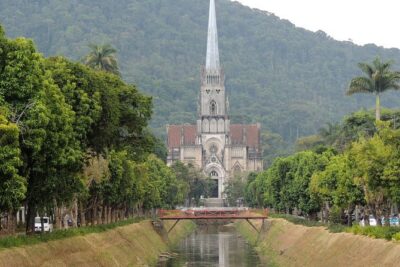
Petrópolis Day Trip from Rio de Janeiro including Imperial Museum and Crystal Palace
Read our review →
7-Hour Shared Group Santos Tour : Mont Serrat, Coffee Museum and Sightseeing
Read our review →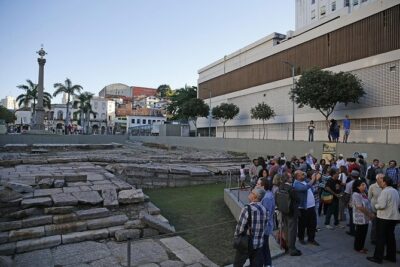
Olympic Boulevard, Museum of Tomorrow & Historical Rio
Read our review →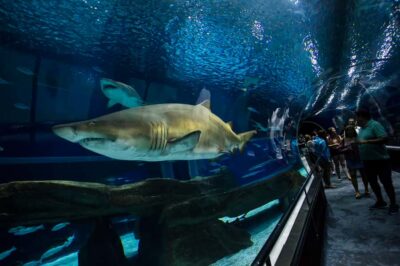
Olympic Boulevard, AquaRio and Museum of Tomorrow Tour
Read our review →
Official Ticket: Oceanographic Museum Univali – Piçarras – SC
Read our review →
Petrópolis Trip with Palace, Imperial Museum & Brewery
Read our review →
Museum of Tomorrow Guided Tour, Admission & Transfer
Read our review →
MUSA and INPA Museums with Observation Tower Tour
Read our review →Browse the lists this tour appears in