
Reviewed · HISTORICAL TOURS
Rio de Janeiro: Afrobrazilian Heritage & Black History Walk
Rio’s past comes alive on foot. I like the way this 150-minute walking tour connects Valongo Wharf, Praça Mauá, and Pedra do Sal instead of treating them as unrelated sights. I also like that guides such as Kelly and Jaíse explain Afro-Brazilian culture through family heritage, music, religion, and daily life. The main consideration is that the tour treats painful subjects directly, so it suits visitors ready for serious history, not just a light city stroll.
You meet under the trees in front of the Rio Art Museum, then walk through Saúde and Rio’s old port district. The route is wheelchair accessible, and tours run in English, Spanish, or Portuguese, although French is not listed. Food, museum entry, and transfers are extra, so budget for those separately.
In This Review
- Key points to know before you go
- Why this Rio walk matters
- Meeting at the MAR Museum in Praça Mauá
- Saúde and the port district
- Valongo Wharf and the memory of the slave trade
- Praça Mauá, murals, and public memory
- Pedra do Sal, the heart of Little Africa
- Candomblé, Umbanda, and the gods of nature
- How much value do you get for $64?
- Timing, comfort, and accessibility
- Who should book this experience?
- Should you book the Afro-Brazilian Heritage Walk?
- FAQ
- Where does the Afro-Brazilian Heritage Walk meet?
- How long does the tour last?
- Which languages are available?
- Does the tour visit a UNESCO World Heritage Site?
- Is food included?
- Are museum tickets included?
- Is the tour wheelchair accessible?
- Can I cancel for a refund?
Key points to know before you go
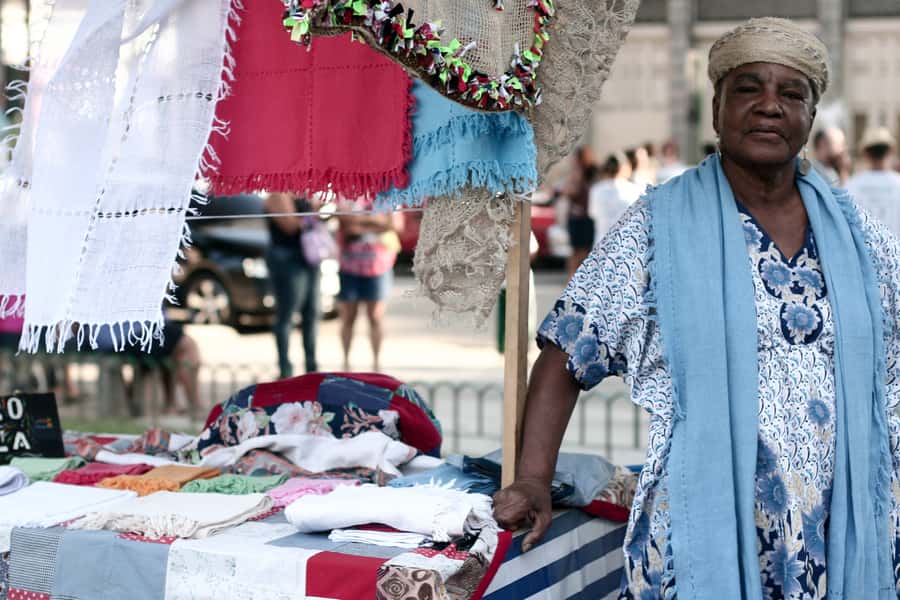
- Valongo Wharf is the emotional center: Visit the UNESCO World Heritage Site linked to the transatlantic slave trade and the arrival of millions of enslaved Africans.
- Pedra do Sal connects history with living culture: This rock in Little Africa is tied to samba, Carnival bloc parties, and weekly samba circles.
- The guides bring personal commitment: Kelly and Jaíse have earned especially warm praise for clear, detailed, inspiring explanations.
- Religion is part of the story: Learn how Candomblé and Umbanda developed, including the influence of Orishas, nkisis, voduns, and Christian traditions.
- The route is urban and practical: Expect roughly 2.5 hours on foot, with a short guided walk through Saúde and several possible finishing points downtown.
- The price buys context, not admission tickets: At $64 per person, the value depends on how much you want a guide to explain Rio’s Black history rather than simply point out buildings.
Why this Rio walk matters
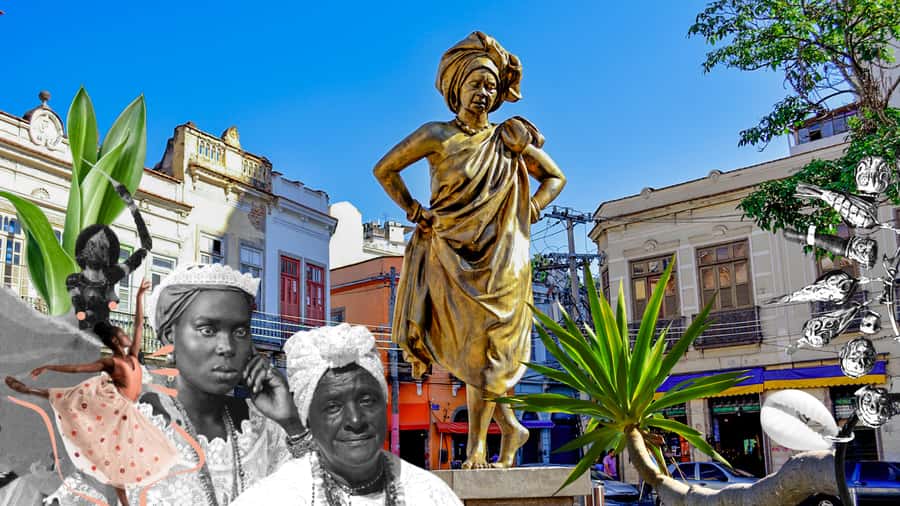
Rio is often sold through beaches, viewpoints, and Carnival. Those are real parts of the city, but they tell only a small piece of the story. This walk focuses on the African descendants whose labor, beliefs, food, music, and political strength helped shape Rio.
I find the subject valuable because it links places you might otherwise pass without understanding. Praça Mauá is not just a waterfront square. Valongo Wharf is not just an archaeological site. Pedra do Sal is not simply a photogenic rock with a good samba reputation. Each stop carries a different part of Rio’s African heritage.
The tour also addresses the Portuguese slave trade in Brazil, which lasted for more than 380 years. That long period shaped the city’s population and culture in ways that are still visible. The route gives you a chance to consider both the violence of enslavement and the creativity and endurance of the people who maintained their traditions under brutal conditions.
This is not a museum lecture delivered indoors. You walk through the district where these events unfolded, with an expert guide of African descent from Rio. That connection matters. It can make the explanations feel less distant and more connected to the city you are seeing around you.
More Historical Tours in Rio de Janeiro
- Rio de Janeiro: Historic Rio and Santa Teresa Half-Day Tour
★ 4.4 · 228 reviews - Rio de Janeiro: Little Africa Heritage Walking Tour
★ 4.9 · 177 reviews - Explore Little Africa : Unveiling Afro Heritage in Rio de Janeiro
★ 5.0 · 97 reviews
Meeting at the MAR Museum in Praça Mauá
The official meeting point is under the trees in front of the MAR Museum, also called the Rio Art Museum, at Praça Mauá. One listed starting option is Museu de Arte do, on Rua Pedro Ernesto, 32, but the clearest practical instruction is to meet outside MAR.
Give yourself enough time to identify the right spot. Praça Mauá is a major downtown area, and the tour may use more than one starting arrangement. A WhatsApp message is recommended for faster communication, which is useful if you are unsure about the exact meeting details or arrive late.
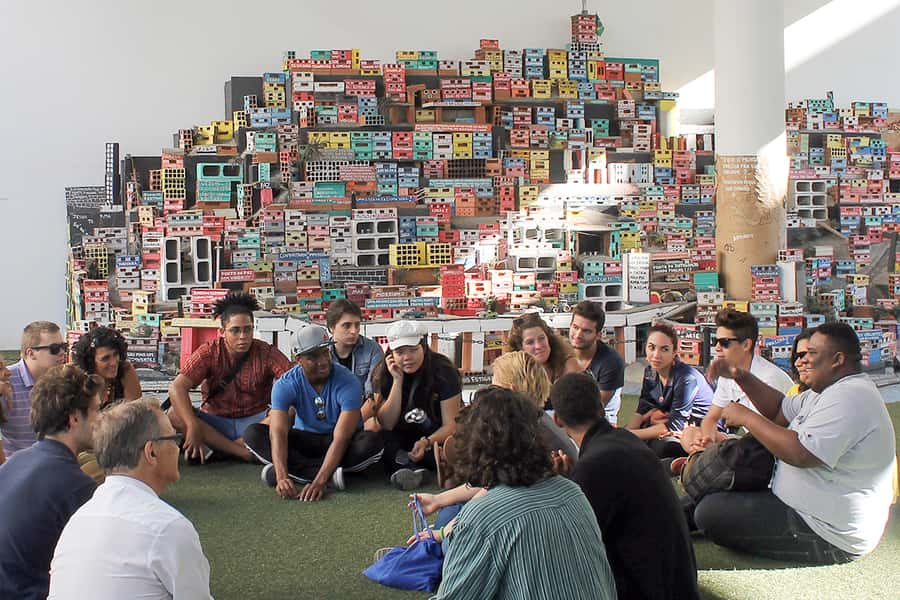
The museum itself is not included in the walking tour. You can visit the Rio Art Museum or the Museum of Tomorrow separately, but you will need to pay their entrance fees. That separation is sensible: the walk is focused on outdoor sites and street-level history, not on adding two full museum visits to a 150-minute schedule.
Wear comfortable clothes and shoes, carry a reusable water bottle, and bring a hat. Rain gear is wise because the tour operates rain or shine. Rio’s weather can change quickly, and there is no advantage in arriving unprepared for a wet walk.
Saúde and the port district
The walk begins in or near Saúde, one of the key areas of Rio’s old port zone. The listed route includes about 15 minutes of walking here before continuing through the wider city area.
This opening section helps place the history in a real neighborhood. You are not only hearing about enslaved Africans as a population in an old textbook account. You are moving through the part of the city connected to their arrival, sale, work, and cultural life.
The guide explains how Africans were brought to Rio and what happened to them after arrival. The subject is difficult, and the tour does not soften the fact that people were trafficked, sold, and forced into labor. At the same time, the story includes what African descendants created and preserved: music, religious practice, community traditions, and forms of celebration.
I would pay close attention here to the guide’s explanations rather than rushing to take pictures. The value of this part is the connection between geography and memory. A street or square becomes more meaningful when you understand why it mattered to the people who lived and worked there.
Valongo Wharf and the memory of the slave trade
Valongo Wharf, or Cais do Valongo, is the route’s most important historical site. It is recognized by UNESCO as a World Heritage Site connected to the memory of the transatlantic slave trade.
The wharf was the main landing place for enslaved Africans brought to Rio, and the tour explains its role in the Atlantic slave market. The site is associated with the arrival of millions of Africans who were sold into slavery. That number alone makes clear the scale of the system, but the guide’s job is to help you understand the human reality behind it.
Valongo is not a cheerful sightseeing stop, and it should not be treated as one. It is a place for reflection. You may find that the physical remains are less visually dramatic than Rio’s famous monuments, but the meaning is far greater than the size of the site suggests.
I appreciate that the experience places the wharf within the broader story of African descendants in Rio. The tour does not end the narrative at arrival. It continues into the ways people formed communities, protected religious practices, developed music, and influenced the city’s identity.
The route can finish at Cais do Valongo, among other possible drop-off points. If you want extra time for photographs or quiet reflection, confirm the end arrangement with the guide before the walk begins.
More Walking Tours in Rio de Janeiro
- Rio de Janeiro: Rocinha Favela Walking Tour with Local Guide
★ 4.8 · 3,052 reviews - Rio De Janeiro: Half-Day Rocinha Favela Walking Tour
★ 4.7 · 2,272 reviews - Sunrise and Sunrise Walk Two Brothers with Local Guide
★ 5.0 · 193 reviews - Learn the History of Rio with an Unforgettable City Center Walking Tour
★ 5.0 · 82 reviews
Praça Mauá, murals, and public memory
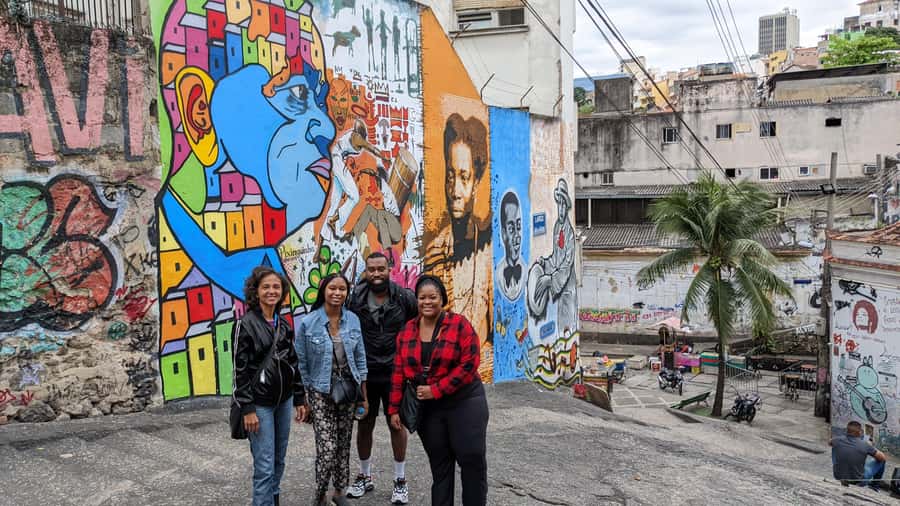
Praça Mauá is another important part of the route. The area includes public art and access to cultural institutions, including the MAR Museum and the Museum of Tomorrow.
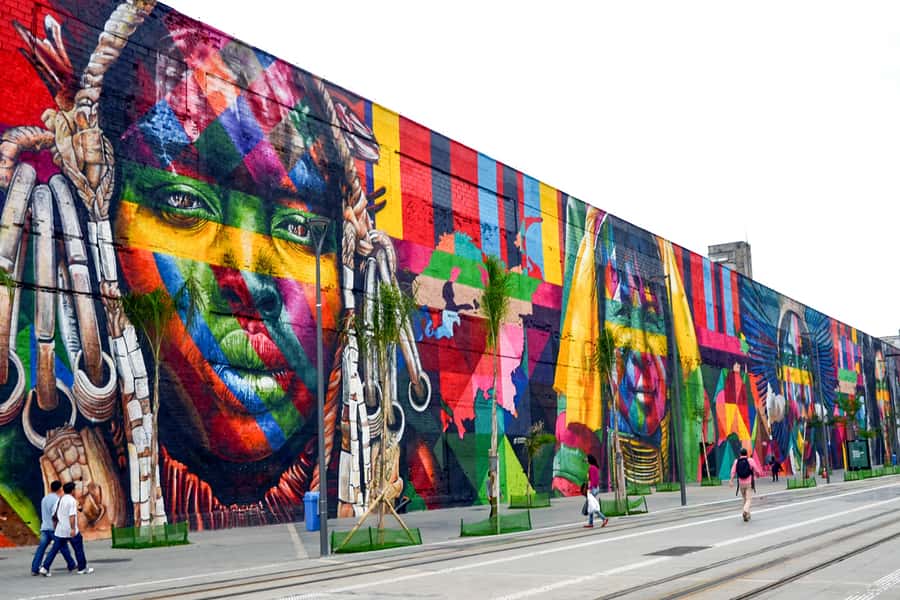
The route also includes the Etnias mural by Brazilian artist Eduardo Kobra. One guide’s detailed explanations and the beauty of the murals received particular praise, and this is an important contrast to the heavier material at Valongo. The artwork gives the route a large, colorful public expression of global Indigenous cultures and Rio’s interest in representing different peoples.
You should not confuse the mural with a simple decoration. On this tour, it forms part of a broader conversation about identity, representation, and the way Rio presents its past in public spaces. The city’s art can help you see how historic memory is made visible today.
Museum admission is not included, so do not assume you will enter MAR or the Museum of Tomorrow during the tour. The walk uses the area around these cultural sites, and you can plan a separate visit if you want more time inside.
Pedra do Sal, the heart of Little Africa

Pedra do Sal, or Rock of Salt, is perhaps the most enjoyable stop in terms of atmosphere, but its importance goes well beyond music. The area is known as the center of Little Africa, the historic zone associated with Rio’s Afro-Brazilian community.
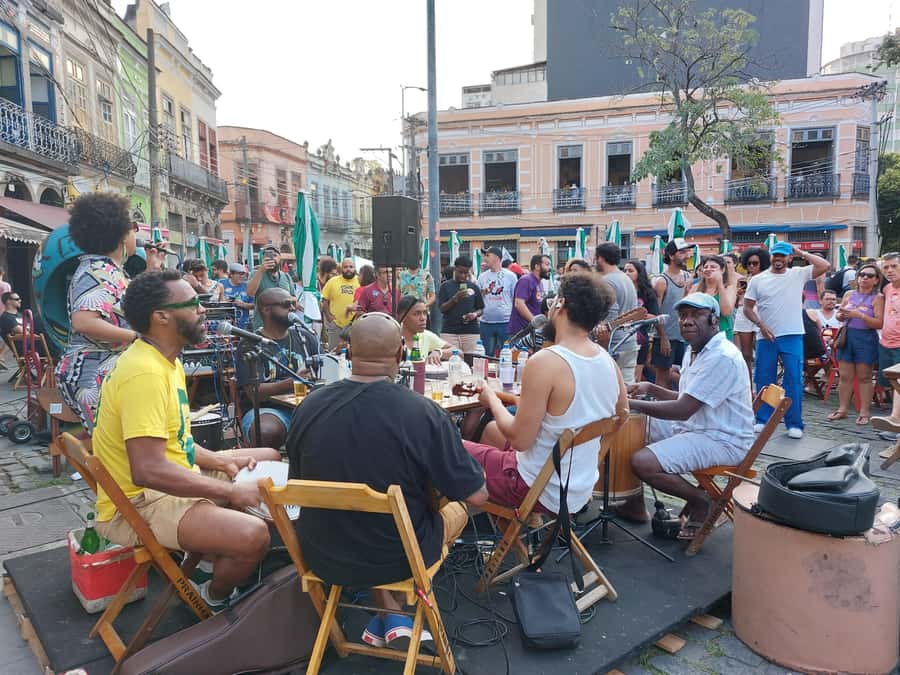
The guide explains Pedra do Sal as a birthplace of samba. Musicians gathered here to sing and dance, and the area became linked to early Carnival bloc parties and parades. That tradition continues with regular samba circles, known locally as rodas de samba.
This is where the walk’s history becomes especially easy to connect with present-day Rio. You can learn how African and Afro-Brazilian musical traditions helped shape samba, then understand why this particular place still matters to musicians and local culture.
A regional food stop is also listed in the Pedra do Sal portion, but food is not included in the tour price. Treat this as an opportunity to ask the guide what local dishes or nearby places fit your schedule, rather than expecting a full meal to be provided.
One guide invited a participant to a genuine samba jam at the town square after the scheduled walk. That sort of local programming tip is one of the tour’s best practical benefits. The guide may also suggest music, art, museums, restaurants, and other parts of Rio’s local scene.
Schedules can change, so ask what is happening on the day you visit. A weekly samba circle may be the perfect follow-up, but do not assume every event occurs every day.
Candomblé, Umbanda, and the gods of nature
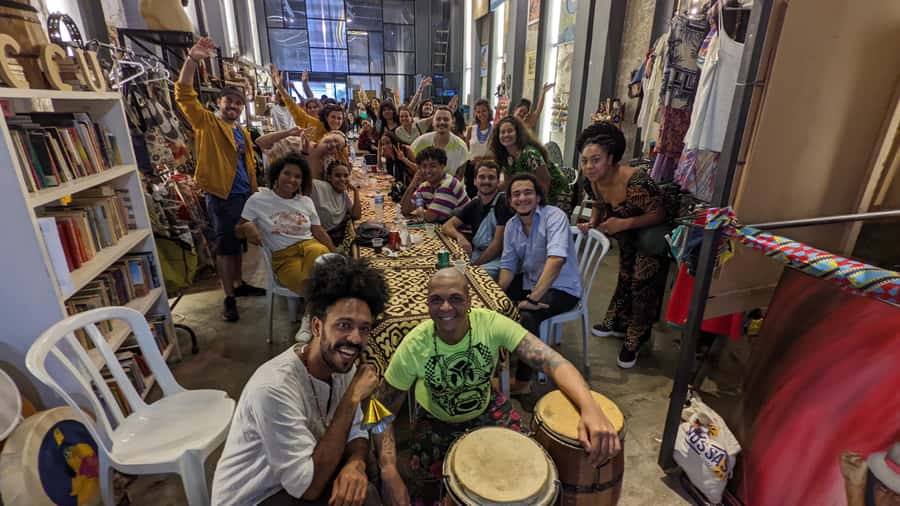
The religious part of the walk adds depth to the music and social history. You learn about the origins of Candomblé and Umbanda, two Afro-Brazilian religions, and about their connections with Christian traditions.
The subject is often reduced to a quick explanation of religious mixing. This tour offers more: it introduces the legacy of Orishas, nkisis, voduns, and ancestral gods and goddesses linked to nature. These terms come from different African religious traditions and should not be treated as interchangeable labels.
The guide also discusses syncretism, the process through which African religious beliefs were connected with Christian symbols and practices. This was not simply a neat cultural blend. Enslaved Africans faced pressure and violence, yet they preserved spiritual ideas by adapting, protecting, and passing them on.
I would consider this section a major reason to choose the tour. It helps explain why Afro-Brazilian religion remains part of Brazil’s cultural life, including music, festivals, family traditions, and ideas about the natural world.
It is also a section where the guide’s approach matters. Kelly has been praised for extensive research and a personal connection to the subject, while Jaíse was singled out for making Afro-Brazilian history clear and inspiring. Names and guide assignments can change, but the experience is strongest when the guide takes time with these details instead of rushing through them.
How much value do you get for $64?
The price is $64 per person. That is not a bargain-priced city walk, but it can be fair value if you want serious historical interpretation and a personal introduction to Rio’s Afro-Brazilian culture.
Your fee covers the guided walking experience and the instruction about slavery, African heritage, samba, religion, and local programming. It does not cover museum entry, food, or transfers. You should factor in those extra costs before booking.
The value improves if you are likely to explore the port district on your own afterward. A guide can point out why Valongo, Praça Mauá, Saúde, and Pedra do Sal belong in one story. Without that context, you might see a wharf, a mural, a museum district, and a samba location as separate attractions.
The price may feel high if you want a short, casual orientation or if you dislike walking tours that spend time on difficult history. This is a focused cultural experience, not a general highlights tour. You are paying for interpretation and access to a local perspective rather than a long list of photo stops.
Timing, comfort, and accessibility
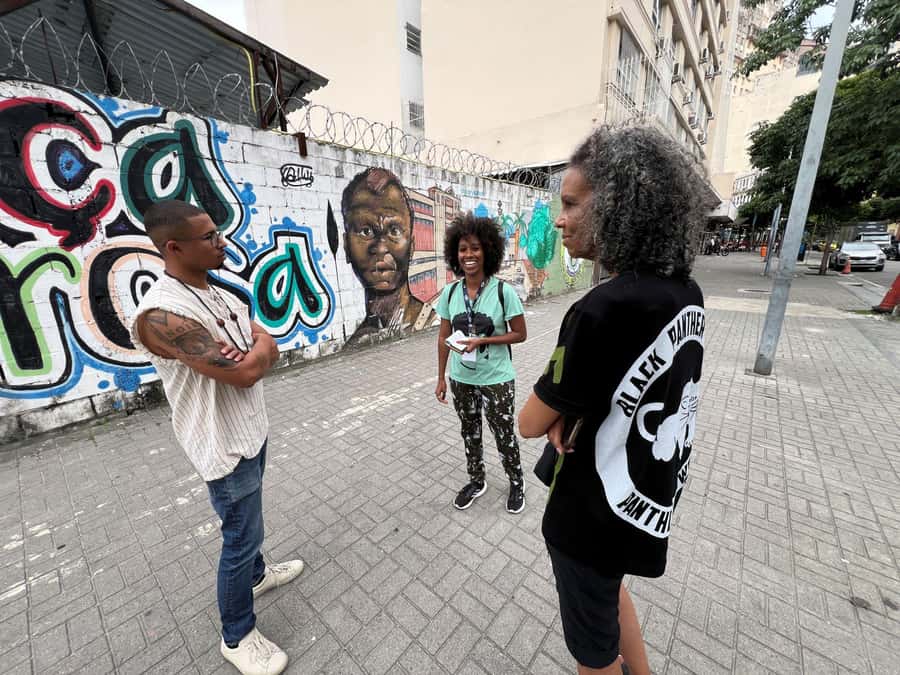
The tour lasts 150 minutes, or about two and a half hours. The itinerary includes walking through downtown Rio, with a roughly 15-minute guided section in Saúde and further walking between historic sites.
Bring water and dress for the weather. Comfortable clothing, a hat, and rain protection are specifically recommended. Since the route takes place rain or shine, a wet-weather plan is part of being ready.
The tour is listed as wheelchair accessible. If you have particular mobility needs, send a message ahead of time so the guide can confirm the practical details for the route and meeting point.
There are no transfers included. You make your own way to Praça Mauá and leave from one of several possible end points, including Cais do Valongo, the Etnias mural, or Largo São Francisco da Prainha. Ask the guide which finish is planned for your date before arranging your next activity.
Pets are not allowed, apart from assistance dogs. The guide works in English, Spanish, and Portuguese. French is not listed, so French-speaking visitors should not assume interpretation will be available.
Who should book this experience?
I would choose this tour if you want to understand Rio through Black history, local culture, and living traditions. It is especially useful early in a Rio visit because the guide can offer suggestions for later music, art, museum, restaurant, and neighborhood visits.
It also suits people who value a guide with a personal connection to the subject. The strongest praise has focused on passion, careful research, patience, and the ability to make difficult history understandable.
You may want a different tour if your priority is Christ the Redeemer, Sugarloaf Mountain, beaches, or broad city sightseeing. None of those are the focus here. You should also think carefully about the emotional weight of the subject. The tour deals with human trafficking, enslavement, and cultural survival, so it asks for attention and respect.
Private groups can request another date, usually with at least 24 hours of notice. Transfer fees may apply and depend on vehicle availability. That option could suit families, schools, or small groups that want a slower pace or a private discussion.
Should you book the Afro-Brazilian Heritage Walk?
Book it if you want the Rio that exists beneath the postcard view. Valongo Wharf gives the route moral weight, while Pedra do Sal, samba, murals, and Afro-Brazilian religions show how African descendants shaped the city beyond the history of enslavement.
At $64, it is best for readers who want meaning and explanation, not a cheap orientation walk. Confirm the meeting point, language, end location, and any same-day samba plans, then bring water and rain gear. If that sounds like your kind of afternoon, this is one of the more worthwhile ways to understand Rio’s roots.
FAQ
Where does the Afro-Brazilian Heritage Walk meet?
The meeting point is under the trees in front of the Rio Art Museum, or MAR, at Praça Mauá.
How long does the tour last?
The experience lasts 150 minutes, which is about two and a half hours.
Which languages are available?
The live guide is available in English, Spanish, and Portuguese.
Does the tour visit a UNESCO World Heritage Site?
Yes. The tour visits Valongo Wharf, also called Cais do Valongo, a UNESCO World Heritage Site connected to the memory of the transatlantic slave trade.
Is food included?
No. Food is not included, although the Pedra do Sal section includes regional food as part of the area visited. Any food purchases are separate.
Are museum tickets included?
No. Entrance to the Museum of Tomorrow and the Rio Art Museum is not included.
Is the tour wheelchair accessible?
Yes. The activity is listed as wheelchair accessible.
Can I cancel for a refund?
You can cancel up to 24 hours in advance for a full refund. Reserve now and pay later is also available.
More Walking Tours
- Walking tour of the bohemian neighborhoods of Santa Teresa and Lapa
★ 5.0 · 59 reviews - Guided Walk to Telegraph Stone
★ 4.5 · 49 reviews - Bossa Nova Walking Tour
★ 5.0 · 48 reviews - Rio de Janeiro: Bossa Nova Walking Tour with Guide
★ 4.9 · 46 reviews
More Historical Tours
- Rio’s city walking tour: a glimpse of history and olympic legacy
★ 4.5 · 78 reviews - Olympic Boulevard, Museum of Tomorrow & Historical Rio
★ 4.5 · 66 reviews - Rio: Olympic Boulevard, Museum of Tomorrow & History Tour
★ 4.1 · 47 reviews - Petropolis Bohemia: Historic tour and visit to the Bohemian Brewery
★ 4.5 · 45 reviews
Just added around Rio de Janeiro
- Pedra Bonita Trail: The easiest trail with a beautiful view of Rio★ 4.6 · 3 reviews
- Rocinha Jeep Tour: A Journey into the Soul of the Favela!★ 3.8 · 3 reviews
- Rio: Private, Custom express, Main Attractions!★ 5.0 · 3 reviews
- Rio: Favela Walking Tour of Rocinha with a Resident Guide★ 4.7 · 3 reviews
- Explore Fernando de Noronha: 7-Hour Ilhatour★ 4.9 · 3 reviews
- Rio: Museum of Tomorrow, Yup Star & Olympic Boulevard★ 3.7 · 3 reviews
- Rio: Best Dive Experience All Inclusive Scuba Diving Package★ 5.0 · 3 reviews
- Rio de Janeiro by Air: 10-Minute Helicopter Tour★ 4.4 · 3 reviews
Historical Tours, compared.



Scenic Train ride to historical cities of Morretes and Antonina
Read our review →
From Foz do Iguazu: Triple Frontier Landmark Ticket
Read our review →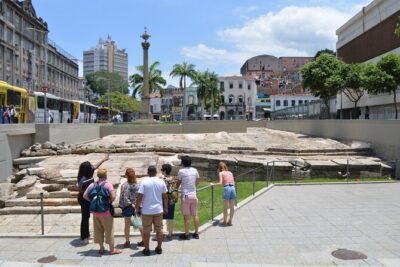
Explore Little Africa : Unveiling Afro Heritage in Rio de Janeiro
Read our review →
Downtown-Center History Walking Tour – in English
Read our review →Browse the lists this tour appears in