
Reviewed · HISTORICAL TOURS
African Heritage: Gastronomy and Musicality Experience
African heritage shapes Rio at every turn. This five-hour private experience connects art, painful memory, food, music, and community across the port district and Little Africa. I especially like the Morrinho Project, which presents favela life with care and detail, and the hands-on percussion workshop led by a drummer from Africa. The main consideration is that the tour is not suitable for people with food restrictions, and drinks cost extra.
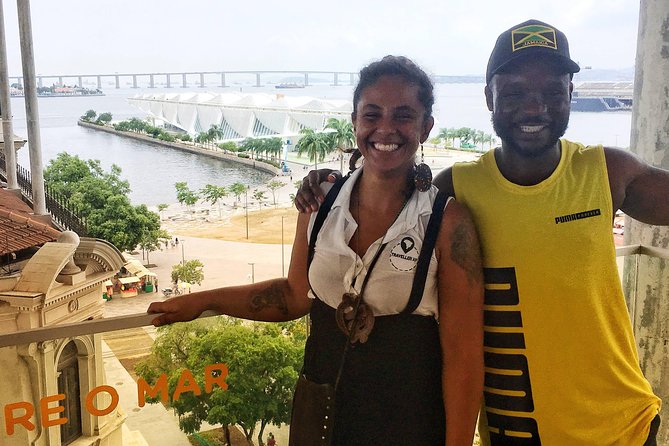
Starting at 10 a.m. near Museu do Amanhã, you move through several important sites before finishing at Largo de São Francisco da Prainha. Guides Isabella and Jaíse have been praised for making difficult subjects clear and personal. This is a serious history tour, but it is not stiff: food, samba, and conversation keep it connected to daily life.
In This Review
- Key points to know before booking
- Why this five-hour route matters
- Starting at MAR with the Morrinho Project
- Remembering at the Pretos Novos Institute
- Cais do Valongo and the meaning of Little Africa
- Pedra do Sal, quilombo memory, and samba
- Tasting Afro-Brazilian and Yoruba food
- Percussion with a drummer from Africa
- Finishing at Largo de São Francisco da Prainha
- How the private format changes the experience
- Who will get the most from this experience
- Booking details and practical advice
- Should you book African Heritage: Gastronomy and Musicality?
- FAQ
- How long does the African Heritage: Gastronomy and Musicality Experience last?
- Where does the tour start and finish?
- Is food included?
- Is the IPN admission included?
- Is this a private tour?
- What happens if the tour is canceled because of weather?
Key points to know before booking
- A private five-hour route through Rio’s port district: Your group has the guide’s attention instead of sharing the experience with strangers.
- The Morrinho Project challenges favela stereotypes: A detailed miniature model shows streets, residents, and ordinary life in Pereira da Silva favela.
- IPN and Cais do Valongo confront Brazil’s slave-trade past: These stops place Afro-Brazilian culture in its proper historical setting.
- Food is part of the lesson: You taste Afro-Brazilian and Yoruba dishes linked to traditions still practiced today.
- Music becomes hands-on at Pedra do Sal: A percussion instructor and drummer from Africa lead a workshop.
- The tour ends in a historic public square: Largo de São Francisco da Prainha brings together samba, funk, jazz, chorinho, bars, and Portuguese architecture.
Why this five-hour route matters
Rio can be easy to read as beaches, viewpoints, and grand landmarks. This experience asks you to look toward the port district, where the city’s African past and present are especially visible. The route is not simply a collection of museums. It links visual art with archaeology, public memory with living music, and historical suffering with cultural survival.
I like that the tour does not treat Afro-Brazilian culture as a decorative extra. The food and percussion are placed beside sites connected to enslavement and resistance. That structure gives the day weight, while the private format allows the guide to adjust explanations to your questions.
You pay $110 per person. That is not a budget walk, but the price includes a private experience, Afro-Brazilian food tasting, the IPN ticket, and roughly five hours of guiding. Drinks are not included. The value is strongest if you want context that would be hard to assemble on your own, especially if you care about the African diaspora, Brazil’s social history, and the way culture survives through community practice.
More Historical Tours in Rio de Janeiro
- Rio de Janeiro: Historic Rio and Santa Teresa Half-Day Tour
★ 4.4 · 228 reviews - Rio de Janeiro: Little Africa Heritage Walking Tour
★ 4.9 · 177 reviews - Explore Little Africa : Unveiling Afro Heritage in Rio de Janeiro
★ 5.0 · 97 reviews
Starting at MAR with the Morrinho Project
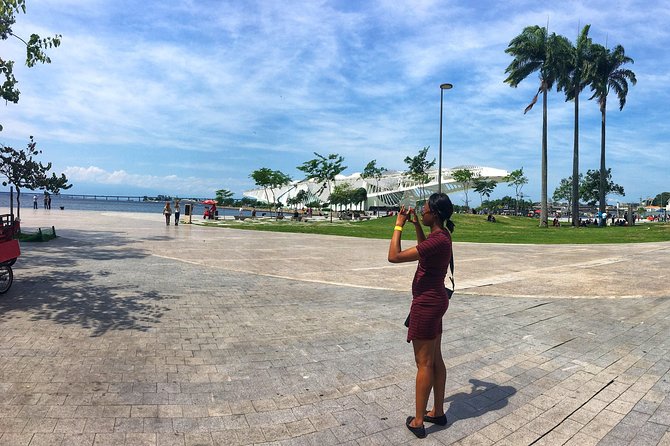
The first stop is the Museu de Arte do Rio, or MAR, where the Morrinho Project is permanently displayed. Allow about 25 minutes here. Admission to this part is free.
The model reproduces the Pereira da Silva favela in striking detail. Streets, residents, and scenes from daily life appear in miniature, offering a view of the favela that goes beyond the usual outside assumptions about danger or deprivation. The work directs your attention to creativity, social life, and resilience, not just hardship.
This is an effective opening because it sets the tone for the day. Before you encounter archaeological evidence and historical sites, you are reminded that communities are not defined by a single stereotype. I value the chance to see favela life represented by its human details, although 25 minutes is a short visit. Much depends on how much background your guide can provide in that time.
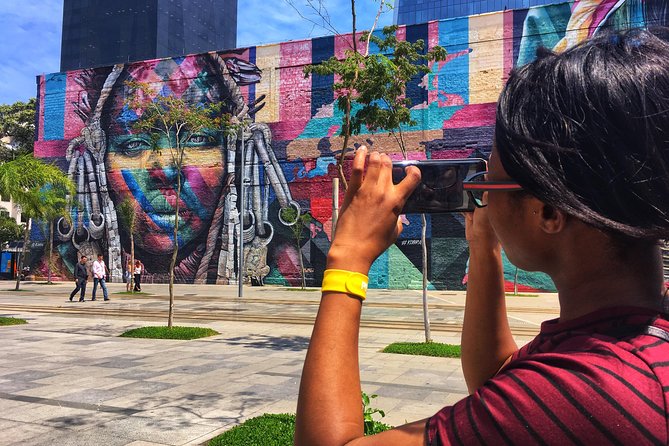
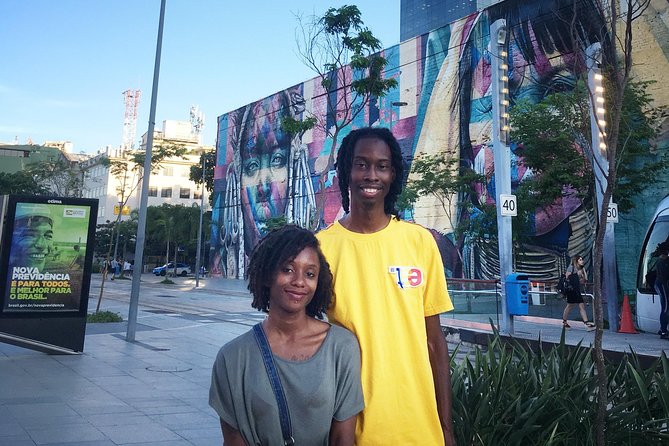
The tour information also refers to a visit or viewing of Eduardo Kobra’s art, described as the world’s largest graffiti mural. The mural features aspects of ancestral ethnic groups and old cultures connected directly and indirectly to Brazil’s story. This adds a large public artwork to the smaller Morrinho model, giving you two different ways to think about ancestry and identity.
Remembering at the Pretos Novos Institute
The Instituto de Pesquisa e Memória Pretos Novos, known as IPN, is the most sobering stop. The visit lasts about 40 minutes, and the IPN ticket is included.
You see an archaeological site and a permanent exhibition containing the bones of Africans found there. The remains bring physical evidence to a subject that can otherwise become distant or abstract. This is not a light museum stop, and you should expect the visit to feel emotionally difficult.
The value here is directness. The site helps explain the conditions faced by the first enslaved Africans brought to Brazil and the brutal system that forced them to work under harsh conditions. It also makes clear that Afro-Brazilian culture did not emerge in spite of history alone. It was shaped through endurance, community, faith, food, music, and the preservation of memory.
I would not rush this part. Forty minutes gives the guide room to explain the site and answer questions, but the subject deserves your full attention. If you prefer a tour focused only on cheerful cultural activities, this experience may feel too heavy. That seriousness is also one of its strengths.
Cais do Valongo and the meaning of Little Africa

The next stop is Cais do Valongo, the historic pier in the area known as Little Africa. The scheduled visit is about 15 minutes.
The stop is brief, yet its location carries enormous importance. The tour uses Cais do Valongo to explain the history and traditions of the surrounding district and its place in the story of humanity. Here, the route moves from an indoor archaeological presentation to the urban setting where the port’s past can be considered in place.
Fifteen minutes will not provide every detail about the district. Instead, think of Cais do Valongo as a connecting point between the IPN and the living culture you encounter later. It helps you understand that Little Africa is not just a nickname or a tourist label. It is tied to the arrival of enslaved Africans, the growth of Afro-descendant communities, and the survival of customs that continue in Rio.
More history-led tours:
- Learn the History of Rio with an Unforgettable City Center Walking Tour
★ 5.0 · 82 reviews - Rio’s city walking tour: a glimpse of history and olympic legacy
★ 4.5 · 78 reviews - Olympic Boulevard, Museum of Tomorrow & Historical Rio
★ 4.5 · 66 reviews - Rio: Olympic Boulevard, Museum of Tomorrow & History Tour
★ 4.1 · 47 reviews
Pedra do Sal, quilombo memory, and samba
Pedra do Sal receives the longest portion of the experience, about three hours. This is where the tour shifts from looking and listening to eating and making music.
The area is associated with the remaining community of Quilombo Pedra do Sal, a place of cultural resistance and heritage preservation. The route presents Pedra do Sal as a setting where Cariocas celebrate Afro-Brazilian identity through weekly outdoor samba sessions. That detail matters because you are not only hearing about tradition in a museum. You are being shown how public music and community gathering keep that tradition active.
The exact samba schedule is not specified, so do not assume a performance is guaranteed at your particular time. The tour begins at 10 a.m., and the focus here is the broader musical culture as well as the workshop. Still, the setting helps explain why Pedra do Sal has such importance in Rio’s cultural life.
Tasting Afro-Brazilian and Yoruba food
The food tasting is included, and it is one of the tour’s clearest links between history and ordinary life. You sample typical dishes from Afro-Brazilian and Yoruba cooking, including foods common in the daily practice of religions of African origin.
This is more meaningful than adding lunch to a sightseeing schedule. Food carries memory in a way that photographs and dates cannot always do. Ingredients, methods, and ritual connections show how African traditions adapted and remained present in Brazil.
The meal also gives you a chance to ask questions in a relaxed setting. One past participant specifically praised the lunch, while another described the experience as changing their view of Brazilian food. That is useful advice: arrive ready to try unfamiliar dishes, not expecting a standard restaurant meal.
The practical warning is important. The experience is listed as unsuitable for people with food restrictions. If you have allergies, dietary rules, or serious intolerances, this is a poor choice unless the provider confirms accommodations before you book. Drinks are not included, so carry money for beverages.
Percussion with a drummer from Africa
The musical part includes a percussion workshop led by an instructor and drummer from the African continent. This is a hands-on session, not simply a talk about samba.
I like this feature because rhythm makes cultural exchange active. You do not need to be a musician to gain something from it. The workshop gives you a physical sense of how percussion works in group settings and how African musical influence continues to shape Brazilian culture.
The supplied details do not specify the instrument, teaching language, or skill level. You should therefore expect an introductory activity rather than a formal music class. Its purpose is connection and understanding, not technical training.
Finishing at Largo de São Francisco da Prainha
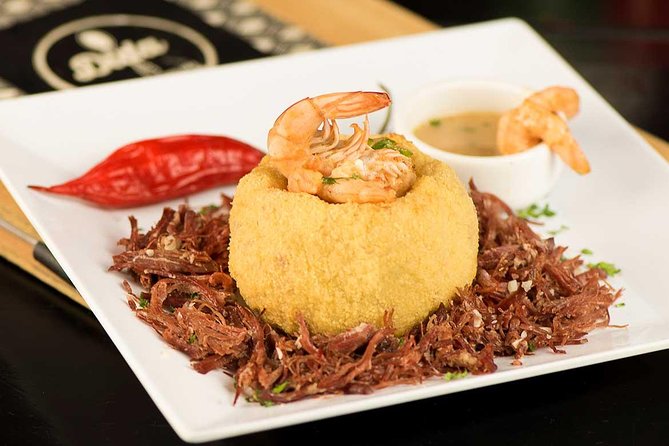
The route ends at Largo de São Francisco da Prainha, a short 15-minute stop. The endpoint is near the Saúde district and is also the listed place where the tour finishes.
The square is surrounded by Portuguese-style buildings and comes alive around sunset with samba, funk, jazz, and chorinho. Outdoor seating, cold beer, and snacks from local bars make it a natural place to continue your evening after the formal tour ends.
Since the tour begins at 10 a.m., you may not experience the square at its liveliest nighttime hour. The stop still works as a useful closing image. You finish in a public space where history, music, architecture, and everyday social life sit together.
I would plan your onward evening from this point rather than expecting the tour to include drinks or a full night out. The provider lists only a 15-minute visit here, so the longer bar-and-music atmosphere is something you may choose to enjoy afterward.
How the private format changes the experience
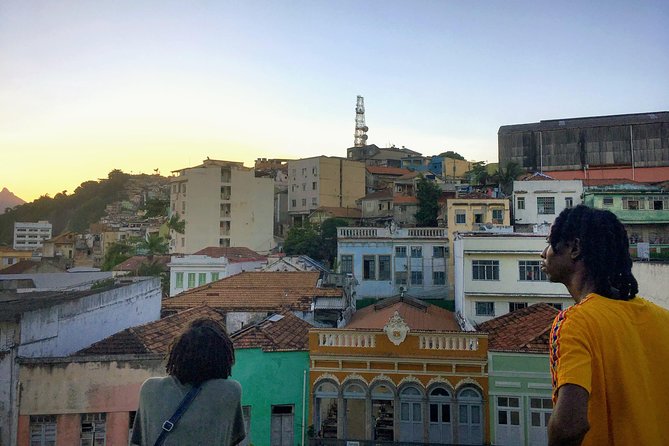
This is a private activity, so only your group participates. That matters for a subject requiring thoughtful explanation. You can ask about the African diaspora, favela life, religion, food, music, or current social conditions without worrying about taking time from a large group.
The private setup also makes the guide central to the experience. Isabella is praised for explaining complex subjects in accessible language, connecting history with economics and sociology, and showing aspects of daily life that are easy to miss alone. Jaíse is praised for offering a diasporic perspective and covering many landmarks and historical events with passion.
You may be assigned either guide, and the booking information does not promise a particular person. Still, the repeated praise for personal attention is a strong reason to choose this tour over a general city sightseeing trip.
The route begins at Museu do Amanhã, Praça Mauá, at 10 a.m., and ends at Largo de São Francisco da Prainha. Transportation between the stops is not detailed, so ask about the movement plan if you need to know how much walking or driving is involved. The tour is near public transportation, and most people can participate. Service animals are allowed.
Who will get the most from this experience
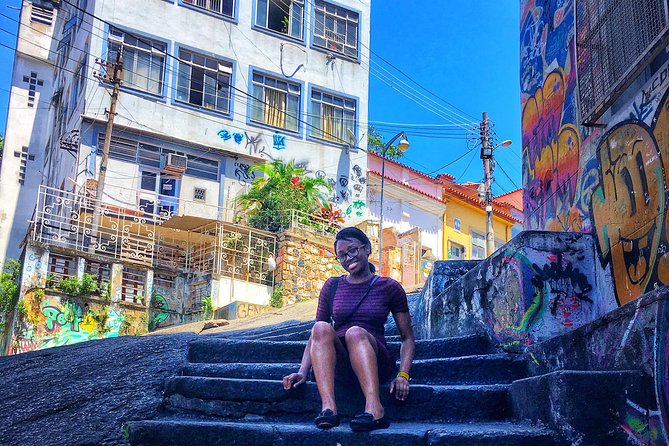
I would recommend this tour to you if you want to understand Brazil through Black history and living culture rather than through monuments alone. It is especially suited to solo visitors, couples, families, and private groups who appreciate discussion and are comfortable with emotionally serious material.
People of African or Afro-diasporic heritage may find particular meaning in the connections between ancestry, survival, music, food, and community. The experience is also valuable if you know little about Brazil’s slave-trade past and want a guided introduction that connects historical events to modern Rio.
It is less suitable if you want a fast list of famous attractions, dislike unfamiliar food, or need a tightly choreographed evening of live music. The tour covers a lot in five hours, and some stops are short. You are paying for interpretation and cultural context as much as for admission or sightseeing.
The experience receives a five-star rating, with 100 percent of the listed participants recommending it. That strong response fits the tour’s clear purpose: it offers a focused account of Afro-Brazilian heritage, led by guides who care about correcting incomplete versions of Brazil’s past.
Booking details and practical advice
The tour costs $110 per person and is booked, on average, 69 days ahead. That advance demand suggests you should reserve early if your Rio dates are fixed, especially since the activity is private.
Confirmation arrives at booking. Most people can take part, the route is near public transportation, and service animals are permitted. The food restriction warning deserves more attention than the ordinary logistics. Ask before booking if your diet is a concern.
Free cancellation is available up to 24 hours before the start time for a full refund. Changes or cancellations inside that 24-hour window are not accepted for a refund. The activity also depends on good weather and a minimum number of participants, so a provider cancellation can lead to another date or a full refund.
Should you book African Heritage: Gastronomy and Musicality?
Book it if you want a serious, personal look at Rio’s African heritage, with the welcome relief of food and music. The combination of MAR, IPN, Cais do Valongo, Pedra do Sal, and Largo de São Francisco da Prainha gives you more than isolated facts. It shows how memory, art, community, cooking, and rhythm connect.
At $110, the experience makes the most sense for people who value a private guide and a focused cultural lesson. I would choose it over a general city tour if you have already seen Rio’s headline sights or if this subject is central to your trip.
Skip it if you need food accommodations, want guaranteed evening samba, or prefer a lighter sightseeing day. For everyone else, this is a thoughtful and unusually focused way to understand a side of Rio that many visitors miss.
FAQ
How long does the African Heritage: Gastronomy and Musicality Experience last?
The experience lasts approximately five hours. It begins at 10 a.m.
Where does the tour start and finish?
It starts at Museu do Amanhã, Praça Mauá, in central Rio de Janeiro. It finishes at Largo de São Francisco da Prainha in Saúde.
Is food included?
Yes. An Afro-Brazilian gastronomy tasting is included, featuring typical Afro-Brazilian and Yoruba dishes. Drinks are not included.
Is the IPN admission included?
Yes. The IPN ticket is included in the price.
Is this a private tour?
Yes. Only your group participates in the activity.
What happens if the tour is canceled because of weather?
You will be offered a different date or a full refund if poor weather causes the experience to be canceled.
Just added around Rio de Janeiro
- Pedra Bonita Trail: The easiest trail with a beautiful view of Rio★ 4.6 · 3 reviews
- Rocinha Jeep Tour: A Journey into the Soul of the Favela!★ 3.8 · 3 reviews
- Rio: Private, Custom express, Main Attractions!★ 5.0 · 3 reviews
- Rio: Favela Walking Tour of Rocinha with a Resident Guide★ 4.7 · 3 reviews
- Explore Fernando de Noronha: 7-Hour Ilhatour★ 4.9 · 3 reviews
- Rio: Museum of Tomorrow, Yup Star & Olympic Boulevard★ 3.7 · 3 reviews
- Rio: Best Dive Experience All Inclusive Scuba Diving Package★ 5.0 · 3 reviews
- Rio de Janeiro by Air: 10-Minute Helicopter Tour★ 4.4 · 3 reviews
Historical Tours, compared.

Scenic Train ride to historical cities of Morretes and Antonina
Read our review →
From Foz do Iguazu: Triple Frontier Landmark Ticket
Read our review →
Explore Little Africa : Unveiling Afro Heritage in Rio de Janeiro
Read our review →
Downtown-Center History Walking Tour – in English
Read our review →Browse the lists this tour appears in