
Reviewed · HISTORICAL TOURS
Florianopolis: Walking Tour – History, Art and Gastronomy
Floripa makes its past edible. This $18 walking tour connects Florianópolis history, art, and food in a compact route through the old center. I like the mix of serious stories and simple local bites, and I like that the guide offers practical bar and food tips at the end. The main drawback is that food and drinks cost extra, so your final bill will be higher than the tour price.
You begin at Café|Bar do Largo da Alfândega and finish at the Public Market after up to 150 minutes on foot. The route covers Indigenous life, Portuguese colonization, African enslavement, Black landmarks, churches, theaters, squares, and bars. The English, Portuguese, and Spanish options make it a useful first activity in Florianópolis, especially if you want a social outing rather than a silent stroll past old buildings.
In This Review
- Key points to know before booking
- Why this Florianópolis walking tour works
- Starting at Café|Bar do Largo da Alfândega
- Catedral Metropolitana and the first layer of the city
- Cruz e Sousa Palace and Praça XV
- Fernando Machado Square and Black Florianópolis
- The Public Market and a taste of local life
- Álvaro de Carvalho Theatre and the city’s arts
- Avenida Hercílio Luz and Forte de Santa Bárbara
- Ending at Bar do Noel
- Guide quality and language options
- What the $18 price really buys
- Who should book this tour?
- Should you book the Florianópolis History, Art and Gastronomy Walk?
- FAQ
- Where does the walking tour begin?
- Where does the tour finish?
- How long does the tour last?
- Which languages are available?
- Are food and drinks included?
- What should I wear?
- Can I cancel the booking?
Key points to know before booking
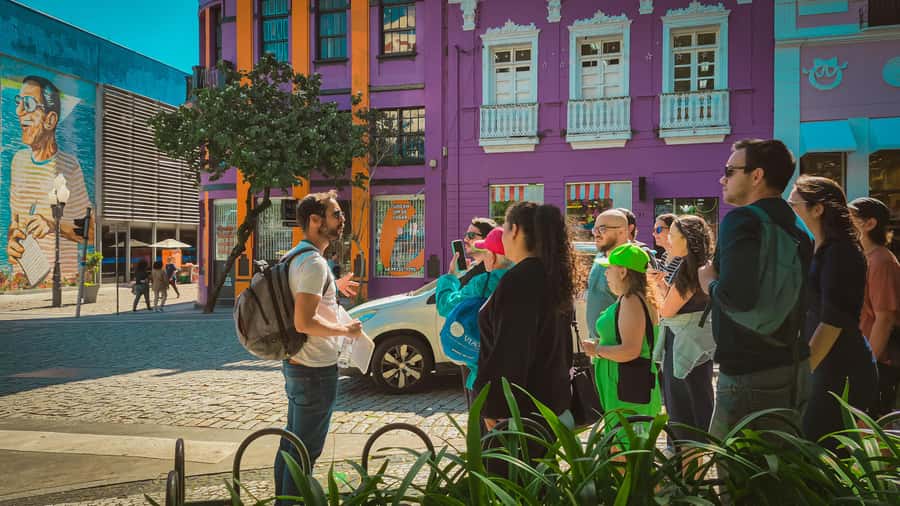
- History with a local food stop: You learn about Indigenous groups, Portuguese colonizers, African enslaved people, and the making of Florianópolis while sampling pastéis, coxinhas, sugar cane juice, or local beer.
- A practical city-center route: The tour links the cathedral, Cruz e Sousa Palace, Praça XV, the Public Market, Álvaro de Carvalho Theatre, Avenida Hercílio Luz, and Forte de Santa Bárbara.
- A strong guide-led experience: Isaac received special praise for clear explanations, excellent English, friendly manner, and useful suggestions for bars and food.
- Food and drinks are extra: The average pint costs about $4, and the tour price does not include snacks, beverages, or alcohol.
- Good for mixed-language groups: The guide speaks English, Portuguese, and Spanish, and the activity is wheelchair accessible.
- Weather backup is provided: Rain coats are available if the weather turns wet, but you should still wear comfortable shoes and clothes.
Why this Florianópolis walking tour works
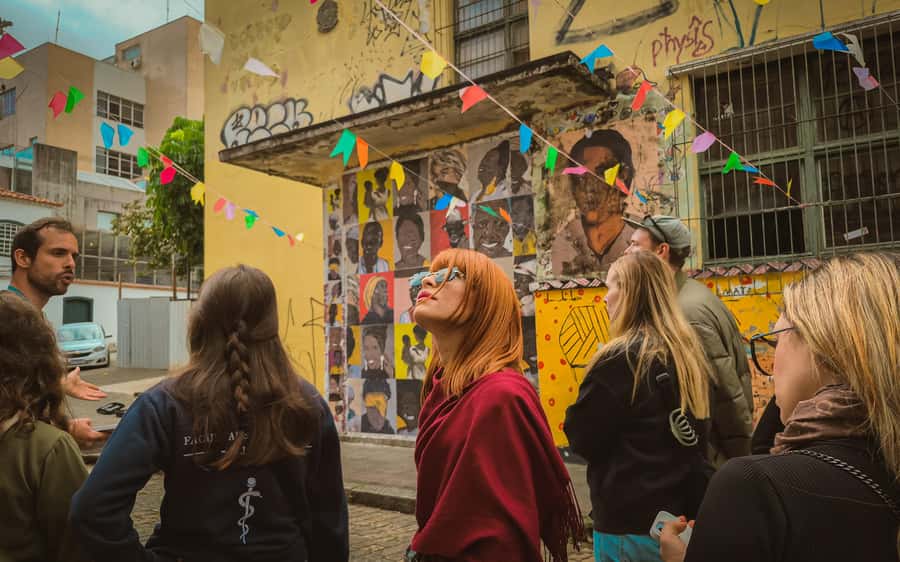
Florianópolis is often sold through its beaches, but the historic center tells a different story. This tour gives you a way to understand the city beyond sand and surf. You move through the old central streets while learning how the island developed through Indigenous occupation, Portuguese settlement, African enslavement, trade, public institutions, and local culture.
I like this approach because the tour does not treat history as a list of dates. The route ties people and power to actual places. A church, palace, square, theater, market, and fort each add another piece to the story.
The food element keeps the pace relaxed. Pastéis and coxinhas are familiar Brazilian snacks, while sugar cane juice gives you a very local taste of the street-food tradition. You might also sample local beer, though alcohol is not included. These stops are not a full meal, so eat something beforehand if you need substantial food.
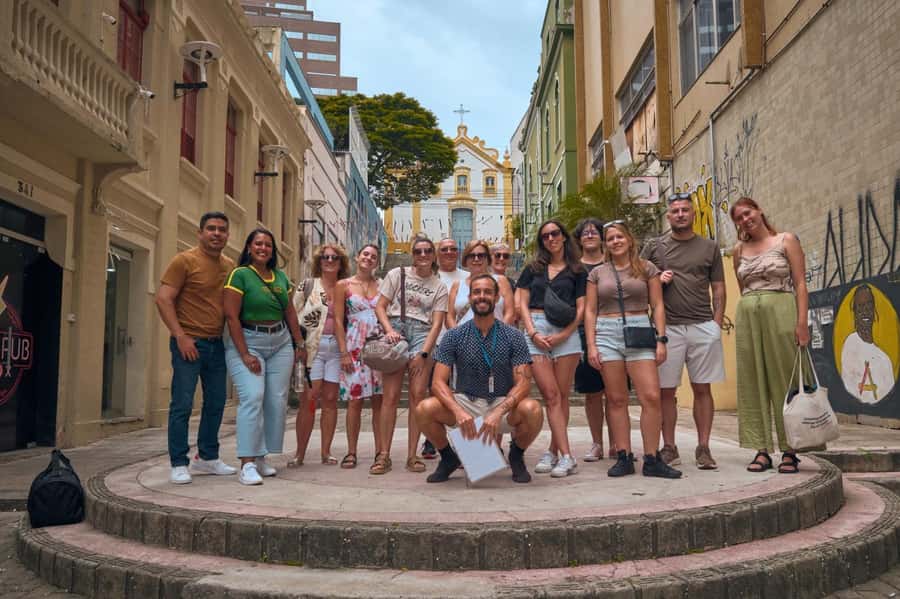
The group atmosphere is another part of the appeal. The experience is designed for people from different countries, and the guide speaks three languages. That makes it easy to meet others, though the social format may not suit you if you prefer a private, quiet tour with no group interaction.
More history-led tours:
- Florianópolis: Historical Center, Beach & Nature Tour
★ 3.3 · 25 reviews - Rio de Janeiro: Historic Rio and Santa Teresa Half-Day Tour
★ 4.4 · 228 reviews - São Paulo: Downtown Historical Bike Tour
★ 4.9 · 191 reviews
Starting at Café|Bar do Largo da Alfândega
The meeting point is outside Café|Bar do Largo da Alfândega, a useful place to arrive a little early. You can buy a coffee and use the restroom before setting off, which is a small but helpful advantage on a walking tour.
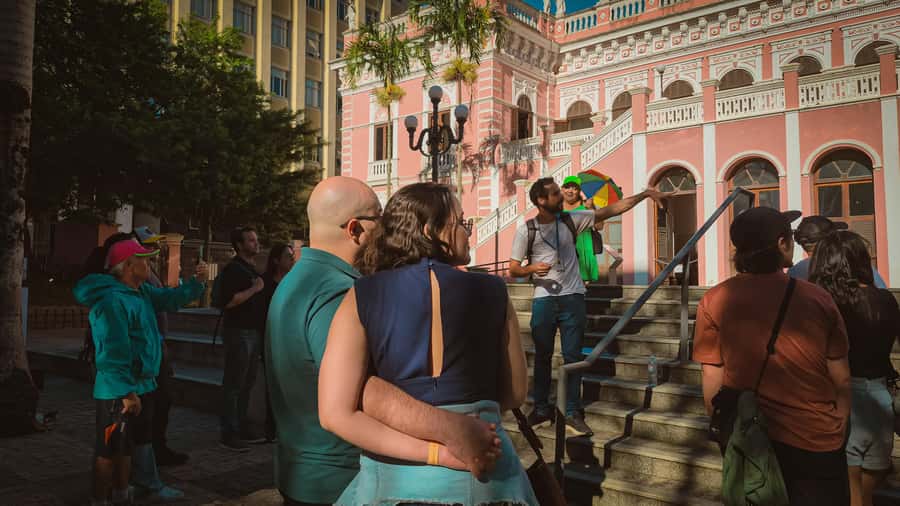
The guide is identified by a white T-shirt marked The Best of Florianopolis, a tour credential, and a small colorful umbrella. That visual marker matters in a busy city center, especially if several groups gather near the same square.
From here, you begin on foot. There is no sightseeing bus or transfer between stops, so comfortable shoes are essential. The tour lasts about two hours to 150 minutes, depending on how the schedule runs, and the listed stop times add up to a full walking outing.
Catedral Metropolitana and the first layer of the city
The Catedral Metropolitana de Florianópolis Nossa Senhora do Desterro e Santa Catarina de Alexandria receives about 20 minutes of guided attention. This is the longest early stop, giving the guide room to explain the cathedral’s place in the city and its connection to the development of Florianópolis.
The cathedral also gives you a useful starting point for the wider story. The tour introduces the Indigenous groups who occupied Santa Catarina Island before Portuguese colonization, then moves into the 17th century and the arrival of Portuguese settlers and African enslaved people.
That context is important. Without it, the old center can look like a pleasant collection of colonial buildings. With it, you begin to see how religion, settlement, labor, and government shaped the city. If you want detailed interior art or a long architectural study, 20 minutes will feel brief. If you want a clear introduction, the timing works well.
Cruz e Sousa Palace and Praça XV

Next comes Cruz e Sousa Palace, with around 10 minutes of explanation. The building is connected to the official and cultural life of Florianópolis, and the tour uses it to introduce an important part of the city’s public identity.
The palace stop is short, so expect an overview rather than a slow museum visit. You will get more from it if you listen for how the building fits into the social and economic development of Brazil and the island.
The group then reaches Praça XV de Novembro for another 10 minutes. Squares are useful places to pause because the guide can point out buildings and public spaces while you get your bearings. This is also where the historical story becomes easier to picture. You are not just hearing about the city’s founders and institutions, you are standing in the central area where public life took shape.
More walking tours:
- Rio de Janeiro: Rocinha Favela Walking Tour with Local Guide
★ 4.8 · 3,052 reviews - Rio De Janeiro: Half-Day Rocinha Favela Walking Tour
★ 4.7 · 2,272 reviews - Sunrise and Sunrise Walk Two Brothers with Local Guide
★ 5.0 · 193 reviews - Rio de Janeiro: Little Africa Heritage Walking Tour
★ 4.9 · 177 reviews
Fernando Machado Square and Black Florianópolis

Praça Fernando Machado receives about 10 minutes, and this part of the route helps shift attention toward Florianópolis’s Black community. The tour also passes landmarks that matter to Black residents and to the city’s wider story of labor, exclusion, survival, and cultural identity.
I consider this one of the most valuable parts of the experience. Many city walks focus on colonial façades and famous officials while giving little time to the people whose work made the city function. Here, the guide places Black history within the main route rather than treating it as a side note.
The supplied information does not identify every landmark by name, so you should think of this section as a guided introduction rather than a complete study of Black Florianópolis. Still, it adds needed balance to the story of Portuguese colonization and the city’s formation.
The Public Market and a taste of local life
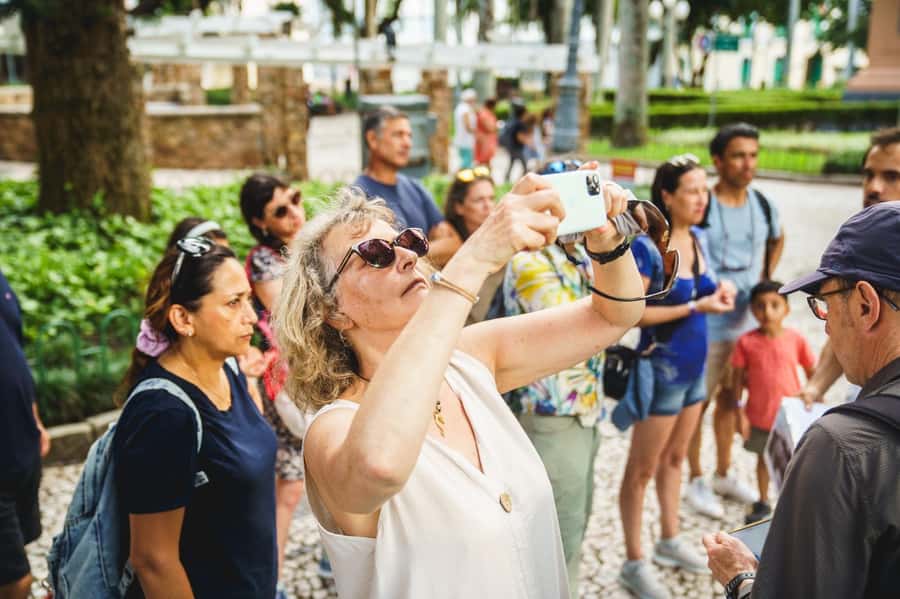
The Mercado Público de Florianópolis is both a major stop and the final meeting point. The guided visit lasts around 30 minutes, making it the second-longest section of the walk.
A market is a smart place to include in a food-and-history tour. It connects the older city to everyday commerce, local eating, and social life. You can expect a short exploration of the market, along with a surprise arranged by the guide. The exact surprise is not specified, so part of the fun is discovering it on the day.
This is also where the food focus becomes most useful. You may have a chance to try pastéis, coxinhas, sugar cane juice, or local beer, but the price of the food and drinks is not included. Plan for extra spending, especially if you want a beer. A pint averages about $4.
The market is the finish point, but the schedule includes later stops and a return here. That means the tour leaves you in a practical location for continuing your afternoon or evening. You can stay in the market area, follow the guide’s recommendations, or continue exploring the center on your own.
Álvaro de Carvalho Theatre and the city’s arts

The Álvaro de Carvalho Theatre receives about 10 minutes. It is described as one of Florianópolis’s most beautiful monuments, and the stop adds an arts and performance angle to a route otherwise centered on government, religion, commerce, and social history.
Ten minutes will not give you a full theater visit. Instead, expect the guide to explain the building’s importance and point out its architectural features from the route. I like this kind of stop because it breaks up the historical material and shows that the city’s identity is not only about colonial settlement or food.
If seeing the inside matters to you, check what access is available on your tour date. The information provided confirms a guided stop, but it does not promise an interior performance or extended theater visit.
Avenida Hercílio Luz and Forte de Santa Bárbara
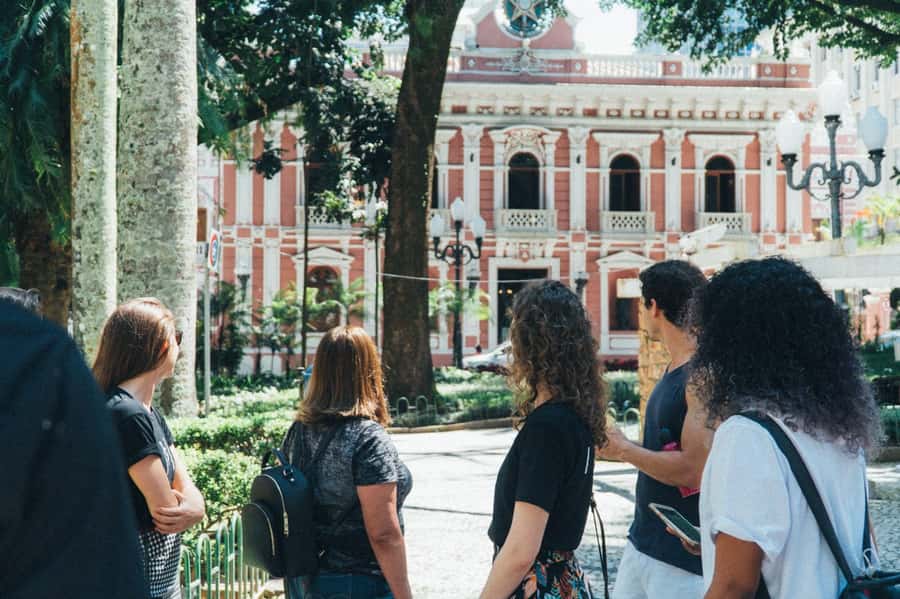
The walk continues along Avenida Hercílio Luz for about 10 minutes. This section helps connect the older monuments to the city’s later streets and urban growth. You can expect the guide to explain why this avenue matters rather than simply use it as a passage between attractions.
Forte de Santa Bárbara receives another 10 minutes. A fort naturally brings questions of defense, coastal control, and the political importance of the island. The brief stop gives you a concise explanation of the site and its role in the city’s past.
Together, these two stops widen the tour’s range. You move from churches and palaces to streets, military history, and the changing shape of the city. The drawback is the same as with the theater: the schedule allows for interpretation, not a long visit at each place.
Ending at Bar do Noel
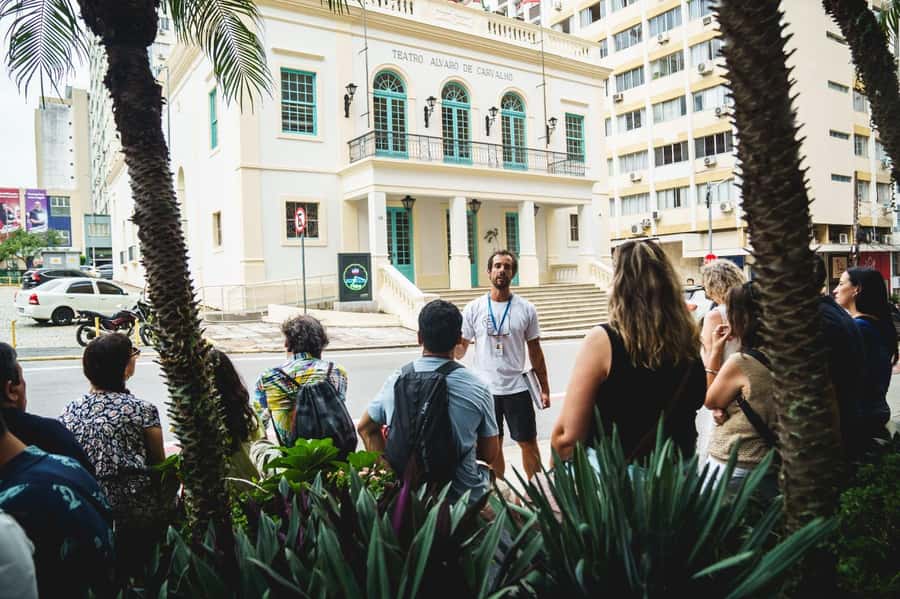
The final major stop is Bar do Noel, where the schedule allows about 40 minutes. This is the longest food and social portion of the tour, giving you time to relax after the walking and historical explanations.
You pay for your own food and drinks here. The average pint price of about $4 gives you a rough idea of the cost, but the total depends on what you order. If you are trying to keep the outing strictly to $18, skip the extras. If you want the full food-and-drink side of the experience, set aside additional money.
This ending suits the tour’s character. You get history first, then a casual place to talk with people from around the world and ask the guide for personal suggestions. The guide may even join you at one of the city’s better bars after the formal tour, though that is presented as a possibility rather than a guaranteed part of the schedule.
The guide also provides a city map with local recommendations. That can be more useful than a generic list because you can ask for ideas based on where you plan to go next. Several strong comments about the tour specifically praised the guide’s bar and food tips.
Guide quality and language options
The strongest praise is directed at the guide. Isaac is described as friendly, well prepared, easy to understand, and especially strong in English. One detailed account called the tour one of the best walking tours the writer had taken and praised Isaac’s overview of Brazil and Florianópolis.
That matters because the subject is broad. In 150 minutes, the guide has to explain Indigenous occupation, Portuguese colonization, African enslavement, architecture, Black history, public spaces, food, and modern city life. Clear organization and plain explanations make the difference between an enjoyable overview and a jumble of facts.
Tours are offered in English, Portuguese, and Spanish. If you are traveling with a multilingual group, this is a practical choice. The rating is 5 out of 5 from 21 ratings, with additional comments describing the experience as well organized, interesting, friendly, and easy to follow.
What the $18 price really buys
At $18 per person, the value is strong if you want a guided introduction to central Florianópolis. You are paying for up to 150 minutes of guiding, several landmark explanations, a market visit, local recommendations, a city map, and rain coats if needed.
The price does not cover food or drinks. That is not unusual for a walking tour, but it changes how you should compare the cost. Add a snack, juice, and beer, and the day will cost more than the advertised rate. Still, you have control over the extras, which is useful for different budgets.
You also get practical flexibility. Cancellation is free up to 24 hours before the start, and you can reserve now and pay later. The tour is wheelchair accessible, though the route still involves walking for around two hours, so you should confirm that the pace and specific needs work for you.
Who should book this tour?
I would choose this tour if you are new to Florianópolis, want context for the historic center, or enjoy combining landmarks with local food. It is also a good first-day activity because the guide gives suggestions for bars and food after the walk.
It suits solo visitors and couples who like meeting an international group. It also works for people who want a tour in English, Portuguese, or Spanish. Families may appreciate the short stops and snacks, though young children might find 150 minutes of walking and historical discussion tiring.
I would think twice if you want a private architectural tour, a slow museum visit, or a full meal included in the price. The itinerary is broad, and some stops last only 10 minutes. You get a clear city overview, not an exhaustive examination of every building.
Should you book the Florianópolis History, Art and Gastronomy Walk?
Book it if you want to understand central Florianópolis through its people, buildings, and food. The combination of Indigenous and colonial history, Black community landmarks, the Public Market, and a relaxed bar finish gives the tour more substance than a simple monument checklist.
The best reason to book is the guide-led explanation, especially if Isaac is leading your departure. The practical recommendations, multilingual format, rain coats, map, and wheelchair accessibility add value. Just wear comfortable shoes and budget extra for snacks and drinks.
If you want a friendly, well-paced introduction before exploring the island’s beaches, this is a sensible $18 choice. If you already know the historic center well or prefer independent sightseeing, you may get more from visiting the market and landmarks on your own.
FAQ
Where does the walking tour begin?
The tour begins outside Café|Bar do Largo da Alfândega, a local coffee shop in the historic center.
Where does the tour finish?
The experience finishes at the Mercado Público de Florianópolis.
How long does the tour last?
The stated duration is two hours to 150 minutes. You should allow up to two and a half hours for the full outing.
Which languages are available?
The live guide speaks English, Portuguese, and Spanish.
Are food and drinks included?
No. Food, nonalcoholic drinks, and alcoholic beverages cost extra. An average pint is about $4.
What should I wear?
Wear comfortable clothes and comfortable shoes because the tour involves around two hours of walking.
Can I cancel the booking?
Yes. You can cancel up to 24 hours in advance for a full refund. You can also reserve now and pay later.
Just added around Florianopolis
- Florianópolis: Caminho da Costa da Lagoa Trail★ 4.7 · 3 reviews
- Florianópolis: Balneario Camboriu and Unipraias Park Tour★ 4.2 · 7 reviews
- Florianópolis: Blumenau and Pomerode Germanic Route Day Trip★ 4.0 · 11 reviews
- City Tour Florianópolis★ 4.3 · 13 reviews
- Florianopolis: Gravata Beach Trail with Picnic★ 4.9 · 14 reviews
- Florianópolis: Historical Center, Beach & Nature Tour★ 3.3 · 25 reviews
- Campeche Island – Speedboat★ 4.4 · 25 reviews
- Surfing Lesson with Sea Wolf★ 4.4 · 30 reviews
Historical Tours, compared.



Scenic Train ride to historical cities of Morretes and Antonina
Read our review →
From Foz do Iguazu: Triple Frontier Landmark Ticket
Read our review →
Explore Little Africa : Unveiling Afro Heritage in Rio de Janeiro
Read our review →
Downtown-Center History Walking Tour – in English
Read our review →Browse the lists this tour appears in