
Reviewed · HISTORICAL TOURS
Germanic Route – Cultural and historical in Ilhota, Blumenau and Pomerode
German heritage feels close here. This full-day trip from Balneário Camboriú takes you into Santa Catarina’s European Valley, with time in Ilhota, Blumenau, and Pomerode. I like the mix of German customs and Brazilian culture, and I like that the tour includes an air-conditioned vehicle, a guide, and round-trip transfers from your accommodation.
The $28 price is also a strong point for an eight-hour outing. You get three different towns and guided context without paying separate transport costs. The main concern is pickup reliability and timing. One poor experience involved a missed pickup, while another praised the route but noted delays when people were not ready on time, so confirm your pickup details and be ready early.
In This Review
- Key points before you book
- Why this route is worth a day from Balneário Camboriú
- Ilhota: a quick look at local shopping culture
- Blumenau: beer, city life, and German traditions
- Pomerode: the most German setting on the route
- German customs with a Brazilian accent
- Food, shopping, and what to budget
- Transport, group size, and timing
- Language and guide style
- Who should book this tour?
- My call: book it for the regional story
- FAQ
- How long does the Germanic Route tour last?
- Which towns does the tour visit?
- How much time is scheduled in each town?
- Is lunch included?
- What is included in the price?
- How many people can join the tour?
- Can I cancel for a full refund?
Key points before you book
- Three very different stops: Ilhota is a short shopping-oriented stop, Blumenau brings beer, architecture, and city history, while Pomerode offers a quieter German-Brazilian setting.
- Pomerode is the cultural highlight: About 90 percent of residents speak German, and local customs remain visible in food, folk festivals, half-timbered buildings, and small-town life.
- Blumenau needs realistic expectations: It is the largest and most important city on the route, but its German character is mixed into a modern Brazilian city rather than presented as one preserved old town.
- Food is part of the appeal: Leave room for German pies, sausages, craft beer, liqueurs, chocolates, and other local products. Lunch is not included.
- Guide quality matters: Guides named in past feedback include Jilson, Junior, Fabio, Rosana, and Fernando. Fabio took time to explain in both Spanish and Portuguese, while Rosana was praised for her attention and knowledge of Santa Catarina.
- Plan for a group setting: The vehicle can hold up to 45 people. That keeps the price low, but large groups can make pickup and departure times less exact.
Why this route is worth a day from Balneário Camboriú
Balneário Camboriú is known for beaches, high-rise buildings, and a lively coastal setting. This tour gives you a very different view of Santa Catarina. Within a few hours, you trade the coast for towns shaped by German immigration, regional food, family businesses, beer culture, and buildings with European touches.
I find the route valuable because it does not reduce German heritage to one themed street or a single festival. You see several versions of it. Ilhota shows one side of local commerce. Blumenau presents a larger city where German customs remain part of public life. Pomerode gives you the most concentrated sense of language, architecture, and tradition.
The tour lasts about eight hours and begins at 8:00 a.m. Since the route starts from Balneário Camboriú, a fair part of the day goes to driving between the coastal resort area and the inland towns. That is normal for this route, but you should book it for the regional story rather than expecting hours of free time in each location.
A guide makes the long day more useful. Without one, you would see attractive buildings and shops but miss much of the reason these places look and feel different from the coast. The best guides add local stories, explain German customs, and help connect food, language, architecture, and festivals.
More history-led tours:
- Rio de Janeiro: Historic Rio and Santa Teresa Half-Day Tour
★ 4.4 · 228 reviews - São Paulo: Downtown Historical Bike Tour
★ 4.9 · 191 reviews - Scenic Train ride to historical cities of Morretes and Antonina
★ 4.0 · 188 reviews
Ilhota: a quick look at local shopping culture
The first stop is Ilhota, with about 20 minutes set aside. It is known for underwear, beach clothing, and fitness-related products. Admission is free, and this is not a long sightseeing visit. Think of it as a brief introduction to a town whose identity is tied strongly to commerce and regional shopping.
The short stop can work well if you enjoy browsing local products or want a quick break after the morning departure. It can also feel too brief if you expect a historic center, a museum, or a detailed cultural visit. The supplied description gives no specific attraction beyond the town’s shopping profile, so keep your expectations modest.
This is one place where the group format matters. Twenty minutes disappears quickly, especially if many people are entering shops or waiting to regroup. I would use the time to get a quick look, make a note of anything worth returning to, and avoid wandering too far from the meeting point.
The stop also helps explain that German influence in Santa Catarina is not only about old houses and beer halls. It is part of modern regional business too. Ilhota’s retail identity gives the route a practical, everyday angle before the more historical stops later in the day.
Blumenau: beer, city life, and German traditions
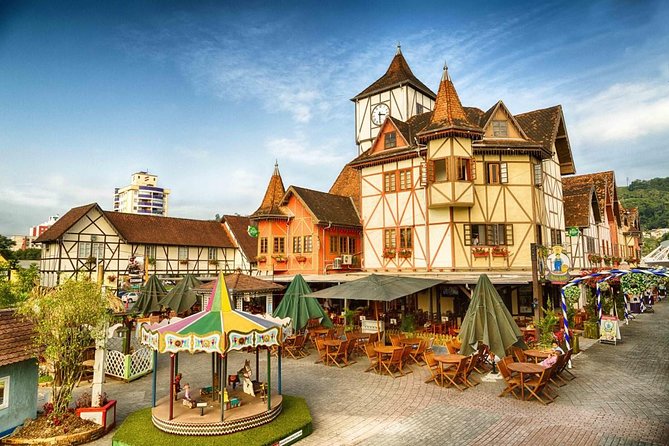
Blumenau receives about three hours, making it the longest stop. It is the key city of Santa Catarina’s European Valley and is widely associated with Oktoberfest and Brazilian beer culture. The city is also presented as a place for history, architecture, strolling, and shopping.
This is the broadest part of the tour. You should expect a city visit rather than a small village outing. German customs appear in gastronomy, public celebrations, architectural details, and the way the city presents its identity. The result is not a fully preserved German town. It is a Brazilian city with visible German roots, which is exactly why expectations matter.
One past assessment found Blumenau less appealing because its German character felt limited to certain details. That is a fair point. If you want an intact old-world setting around every corner, Blumenau may feel only partly German. If you want to see how an immigrant culture became part of a modern city, the stop makes more sense.
The three-hour window should give you enough time to walk, take photographs, hear the main explanations, and browse some shops without feeling rushed. A Spanish-speaking participant specifically praised Fabio for explaining in Spanish as well as Portuguese. That kind of flexibility can make a major difference if you understand some Portuguese but want more detail in Spanish.
Blumenau is also the place to pay attention to food and drink. The city’s beer reputation is central to its identity, but the appeal is broader than a drink stop. German-style dishes and local products help show how old recipes were adapted to southern Brazil.
You may find shopping woven into the visit. One positive account noted that stores were included, but not to an excessive degree. That is useful for anyone who dislikes tours that turn into nonstop retail stops. Here, shopping appears to be part of the city visit rather than the whole purpose.
Pomerode: the most German setting on the route
Pomerode gets about two hours, and for many people it will be the strongest stop. It is described as the most German city in Brazil, with around 90 percent of residents speaking German. That statistic gives you a clear sense of how strongly the local identity has been preserved.
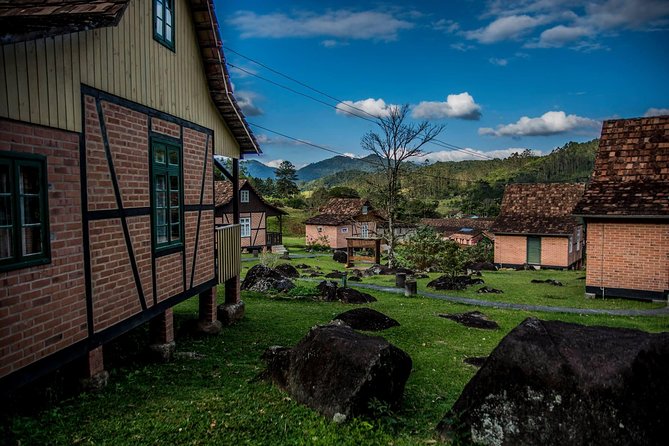
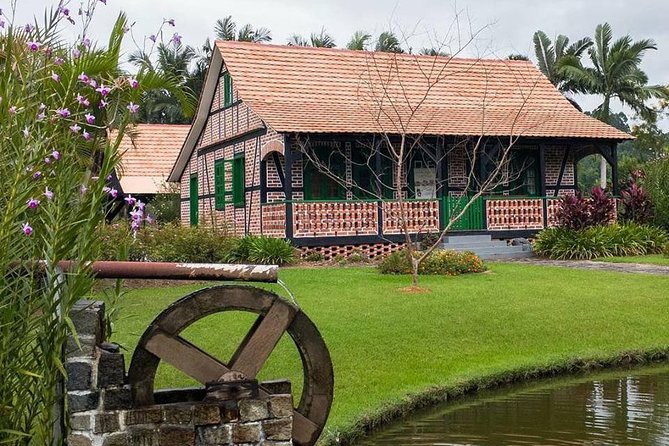
The town is known for folk festivals, half-timbered architecture, historic houses dating from the World War II era, and a quiet interior-Brazil atmosphere. Compared with Blumenau, Pomerode feels more like a village or small town. One direct assessment preferred Pomerode because it was prettier and more intimate.
This is where you should slow down and look closely. The pleasure is not only in checking off a landmark. It is in noticing how architecture, language, food, and local products work together. The half-timbered houses provide the visual appeal, but the continued use of German and the preservation of folk customs give the visit more substance.
Pomerode is also the best stop for tasting and buying regional food. You might find German pies, sausages, craft beers, liqueurs, chocolates, and handmade goods. Since lunch is not included, this is a sensible place to purchase something to eat, although the exact meal arrangements are not specified.
The two-hour stop is long enough to enjoy the town at a comfortable pace, according to one highly positive assessment. That person appreciated having enough time at each location and did not feel hurried. Still, your actual free time can depend on the group and the guide’s schedule.
Christmas decorations were also noted during one visit, making Pomerode especially attractive during that season. Decorations can change throughout the year, so do not book solely for that feature. The town’s architecture, food, and language are the more dependable reasons to go.
A completely different kind of day out around Brazil:
- Rio de Janeiro: 6-Stop Highlights of Rio with Lunch
★ 4.4 · 5,157 reviews - Christ the Redeemer Entry Ticket by Corcovado Train
★ 4.4 · 4,476 reviews - Rio de Janeiro: Rocinha Favela Walking Tour with Local Guide
★ 4.8 · 3,052 reviews - Rio de Janeiro: Sugarloaf Cable Car Official Ticket
★ 4.6 · 2,873 reviews
German customs with a Brazilian accent
The tour’s main subject is not Germany transplanted to Brazil. It is the way German settlers’ customs continued and changed in Santa Catarina. You see that process in the food, festivals, buildings, beer culture, and language.
Blumenau gives you the public, city-sized version of that identity. Oktoberfest is the most famous expression, but the German connection also appears in restaurants, local products, and architecture. Pomerode offers a more personal and local version, where language remains part of daily life for much of the population.
I like this contrast because it keeps the trip from feeling repetitive. You are not visiting three towns that all present the same half-timbered facade. Ilhota is commercial, Blumenau is urban and event-focused, and Pomerode is quieter and more traditional.
The guide’s explanations are important here. A good guide can tell you why a building matters, how customs survived, and what is genuinely local rather than simply designed for visitors. Past guide feedback was especially warm for Rosana, who was praised for being attentive and answering questions about Santa Catarina. Fernando was described as friendly and approachable, while Jilson and Junior were credited with making one day both fun and informative.
Guide assignments can change, so treat those names as examples rather than a promise. The consistent lesson is simple: the quality of the commentary can shape the whole day.
Food, shopping, and what to budget
The $28 fee does not include lunch, so plan for an additional food expense. The route offers plenty of reasons to spend a little more, especially in Pomerode, where you may want to try a pie, sausage, beer, or local sweet.
You might also see chocolates, drinks, liqueurs, handicrafts, and other regional products. This is useful if you want souvenirs with a connection to the area rather than generic beach merchandise. It is less useful if you prefer a tour with no shopping at all.
The low tour price is appealing because transport, an air-conditioned vehicle, and a guide are included. Hiring a private car for three towns would cost much more, and driving yourself would require handling the route, parking, and navigation. The tradeoff is less control over how long you stay and where you eat.
For me, the value is strongest if you are staying in Balneário Camboriú and want to see inland Santa Catarina without renting a car. It is also a good choice for a first visit, since the guide gives you an overview of several towns in one day. If you already know Blumenau and Pomerode well, the fixed schedule may feel limiting.
Transport, group size, and timing
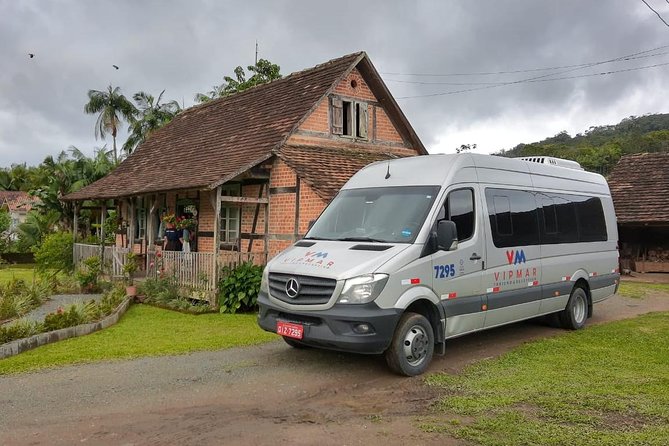
The tour uses an air-conditioned vehicle and includes round-trip transfers from your accommodation. That matters in southern Brazil, where a full day of driving and walking can be tiring, especially if the weather is warm.
The maximum group size is 45 people. A group of that size can keep the price at $28, but it can also slow down departures, shop visits, and meeting points. One account praised the route but complained that some people did not follow the agreed times, causing delays.
I would be ready before 8:00 a.m. and keep your belongings organized for quick boarding. Confirm the pickup location carefully when booking. One very poor experience involved waiting for a pickup that never arrived. That appears to be an isolated but serious warning, so do not ignore the practical details.
The tour is listed as suitable for most people and near public transportation. No special accessibility details are provided, so anyone with mobility concerns should ask the operator directly before booking. The itinerary includes walking, getting in and out of a vehicle, and moving with a group through town centers and shops.
Language and guide style
The tour may be conducted in Portuguese, with support in Spanish depending on the guide and group. Fabio received praise for explaining first in Spanish and then Portuguese for Spanish-speaking participants. The same account noted that some Portuguese explanations were easy to understand, which may help visitors who know a little of the language.
This is not a guarantee of a dedicated bilingual tour. If language support is essential, confirm it with Vipmar Turismo before you pay. The guide names connected with positive feedback include Fabio, Rosana, Fernando, Jilson, and Junior, but the assigned guide may differ on your date.
The strongest descriptions focus on friendly conversation, clear explanations, and a relaxed manner. That matters on an eight-hour outing. You are spending most of a day with the same guide and group, so warmth and patience are more important than a memorized speech.
Who should book this tour?
I would recommend it to you if you want a low-cost regional trip, enjoy cultural history without needing a formal museum program, and like combining sightseeing with food and shopping. It suits first-time visitors to Santa Catarina who want an introduction to the inland towns.
It is especially good for people interested in German-Brazilian traditions, local beer, historic architecture, folk festivals, and regional cooking. Families may also appreciate the variety, since the day includes city streets, shops, food, and smaller-town scenery rather than one long indoor visit.
I would hesitate if you want a slow, private schedule or dislike group departures. The 20-minute Ilhota stop is very short, and Blumenau may not satisfy anyone expecting a perfectly preserved German town. Pomerode is the more convincing cultural stop, while Blumenau offers the larger picture.
The cancellation terms are friendly: you can cancel at least 24 hours before the 8:00 a.m. start for a full refund. Changes or cancellations made less than 24 hours before the start are not accepted for a refund. The tour also requires a minimum number of people, and if that minimum is not met, you are offered another date or a full refund.
My call: book it for the regional story
Book this tour if you want to understand why Santa Catarina feels different from Brazil’s beach destinations. The best parts are the contrast between Blumenau and Pomerode, the chance to try German-influenced food, and the help of guides who can explain the customs behind what you see.
Do not book it expecting a private tour, a full German village, or a long visit in every town. Come ready for a group schedule, bring money for lunch and local products, and confirm your pickup details. At $28, the route offers very good value for an eight-hour introduction to Ilhota, Blumenau, and Pomerode.
FAQ
How long does the Germanic Route tour last?
The tour lasts approximately eight hours and begins at 8:00 a.m.
Which towns does the tour visit?
The route visits Ilhota, Blumenau, and Pomerode.
How much time is scheduled in each town?
The schedule gives about 20 minutes in Ilhota, three hours in Blumenau, and two hours in Pomerode.
Is lunch included?
No. Lunch is not included in the tour price.
What is included in the price?
The price includes an air-conditioned vehicle and a tour guide. Round-trip transfers from your accommodation are also provided.
How many people can join the tour?
The maximum group size is 45 people.
Can I cancel for a full refund?
Yes, you can cancel at least 24 hours before the experience start time for a full refund. Cancellations or changes made less than 24 hours before the start are not accepted for a refund.
Just added around Brazil
- Idyllic Islands Private Speedboat Tour in Paraty★ 5.0 · 3 reviews
- Pedra Bonita Trail: The easiest trail with a beautiful view of Rio★ 4.6 · 3 reviews
- Campos do Jordão: Full-Day Private Tour from São Paulo★ 5.0 · 3 reviews
- Itacare: Jeribucaçu Trail and Usina Waterfall★ 4.7 · 3 reviews
- Paraty: Half-Day Bike Rental★ 3.6 · 3 reviews
- Walk to the Big Rock in Cantareira State Park★ 5.0 · 3 reviews
- Rio: Private, Custom express, Main Attractions!★ 5.0 · 3 reviews
- Rocinha Jeep Tour: A Journey into the Soul of the Favela!★ 3.8 · 3 reviews
Historical Tours, compared.


Scenic Train ride to historical cities of Morretes and Antonina
Read our review →

From Foz do Iguazu: Triple Frontier Landmark Ticket
Read our review →
Explore Little Africa : Unveiling Afro Heritage in Rio de Janeiro
Read our review →
Downtown-Center History Walking Tour – in English
Read our review →Browse the lists this tour appears in