
Reviewed · WALKING TOURS
São Paulo: Paulista Avenue Walking Tour
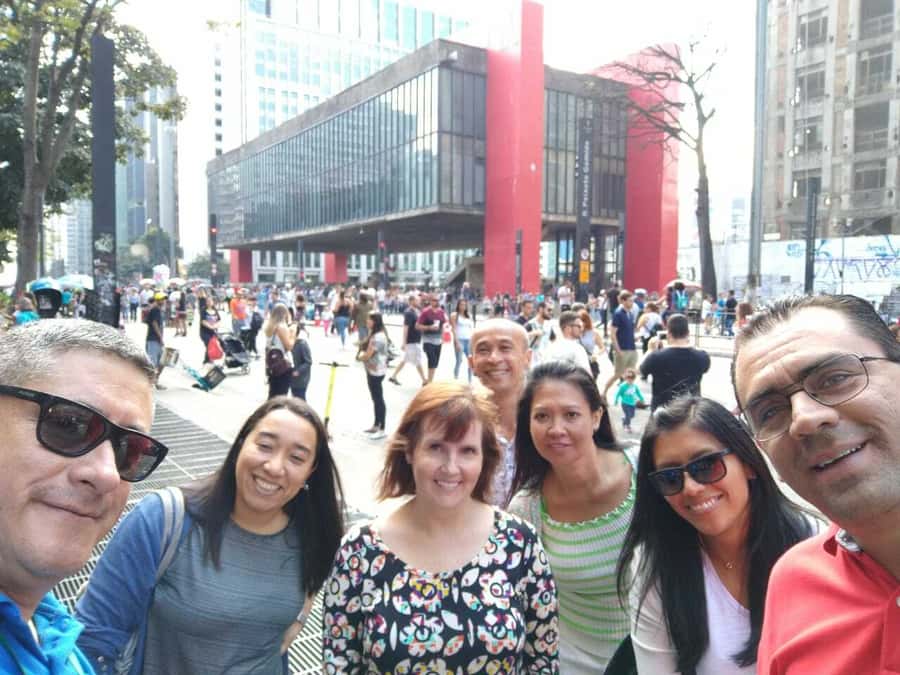
Paulista Avenue rewards a slow walk. I like the way this three-hour private tour connects famous buildings, murals, parks, and viewpoints instead of treating the avenue as one long photo stop. I also like the chance to hear the area’s story from guides such as Renato, Priscila, Doris, Ilan, and Laura, whose personal explanations earned especially warm praise.
The main consideration is the price: at $100 per person, this is not a cheap stroll, especially since food, drinks, and museum admission are extra. You are paying for a private guide, a planned route, and useful context rather than entry into attractions. If you want to go inside MASP or another cultural venue, budget separately and check its opening arrangements.
In This Review
- What makes this Paulista Avenue walk worthwhile
- Starting at Japan House on Paulista Avenue
- From Santa Catarina Hospital to the Pasteur Institute
- FIESP, MASP, and the city’s best-known public stage
- Trianon Park and the July 9 belvedere
- Gazeta Building, Rocha Azevedo, and a historic residence
- Augusta Street, Conjunto Nacional, and Livraria Cultura
- Instituto Moreira Salles and the final stretch
- What $100 buys you, and what it does not
- Pace, access, languages, and weather
- Who should book this walk?
- Should you book the São Paulo Paulista Avenue Walking Tour?
- FAQ
- Where does the Paulista Avenue walking tour begin?
- How long does the tour last?
- How many sights are included?
- Is this a private tour?
- Which languages are available?
- Is the tour wheelchair accessible?
- Are museum entrance fees included?
- Are food and drinks included?
- What should I bring?
What makes this Paulista Avenue walk worthwhile
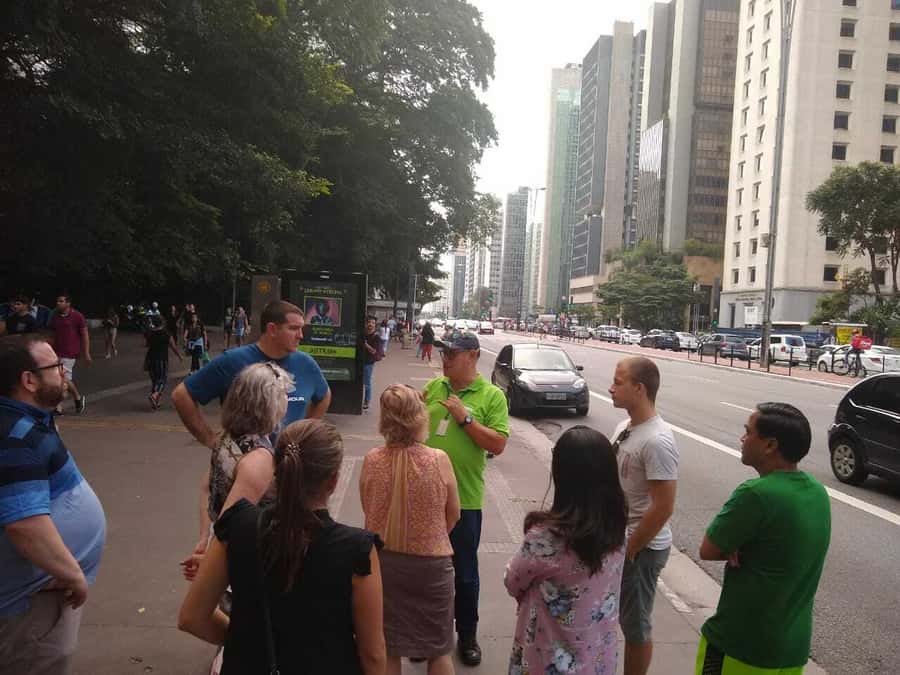
- Eighteen named sights in three hours: The route covers major institutions, historic homes, public art, parks, viewpoints, and shopping landmarks.
- A guide-led history lesson: Renato was praised for detailed explanations, while Ilan helped connect the buildings to the avenue’s changing identity.
- Private-group pacing: You can walk at a smooth pace with scheduled time for photos, snacks, contemplation, and small purchases.
- Three language choices: You can book with a guide speaking English, Spanish, or Portuguese.
- Useful first-day orientation: One visitor said the tour helped turn later visits along Paulista Avenue into a much easier experience.
- Accessible in all weather: The walk is wheelchair accessible, but you should bring sensible clothing and shoes for changing conditions.
Starting at Japan House on Paulista Avenue
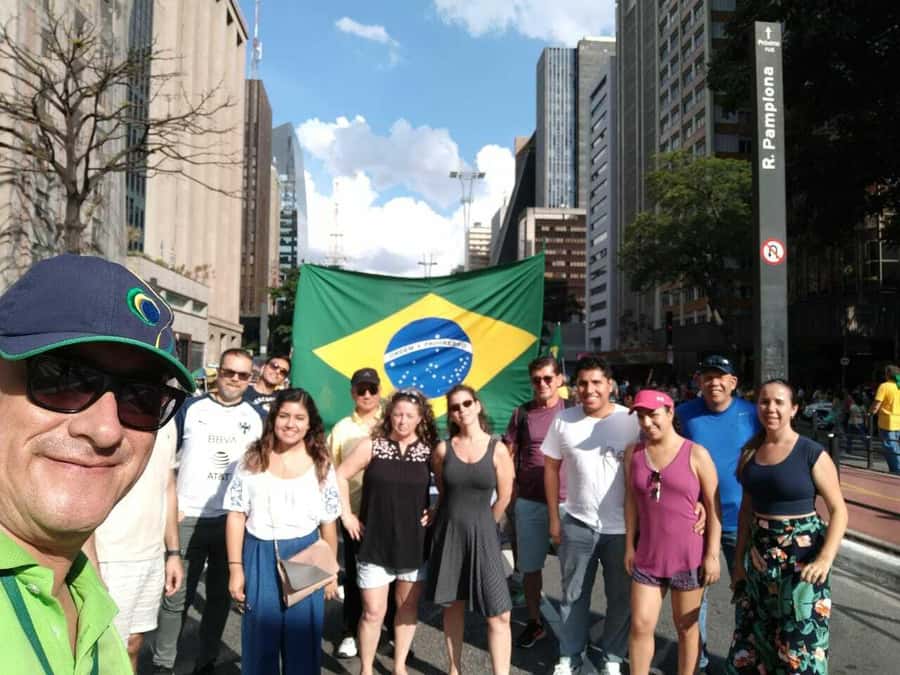
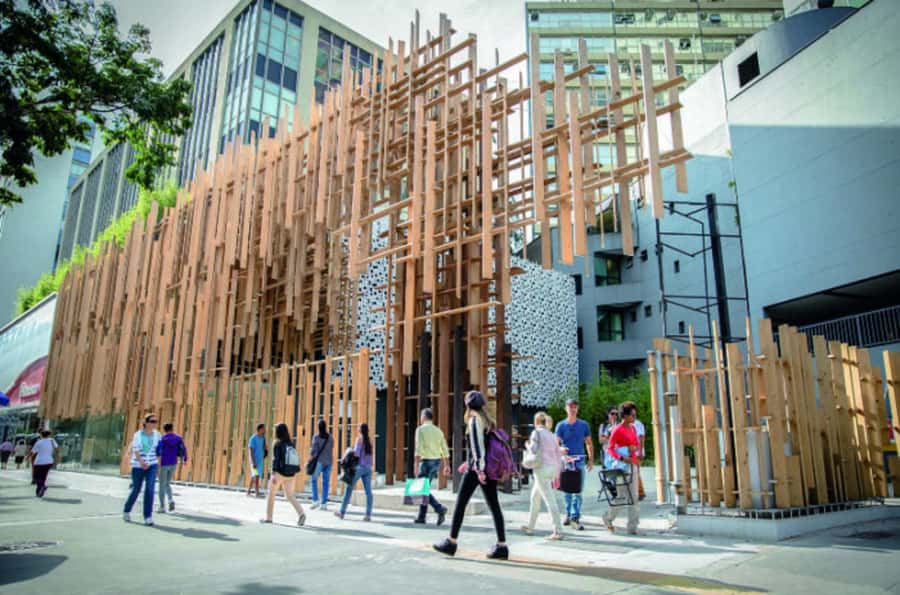
The tour begins at Japan House, a strong meeting point on Paulista Avenue. Your guide first gives you background on the avenue and the district, which matters because the route is more than a parade of impressive facades. You get a framework for understanding why so many cultural, educational, medical, and commercial buildings gathered here.
Starting here also gives you a clear sense of the tour’s style. This is an outdoor history walk, not a museum crawl. The guide keeps you moving but allows several pauses, so you can listen, take pictures, look around, and stop for a snack or a small souvenir.
Japan House may occasionally be affected by construction or closure. On one occasion, Doris adapted the route and took her group to other parts of town instead. That shows useful flexibility, but you should not assume the building itself will always be open during your visit.
Wear shoes that can handle three hours of walking. Sunglasses and sunscreen are also recommended. Since the tour operates in all weather, bring clothing suited to the forecast rather than relying on a perfect sunny day.
More walking tours:
- Rio de Janeiro: Rocinha Favela Walking Tour with Local Guide
★ 4.8 · 3,052 reviews - Rio De Janeiro: Half-Day Rocinha Favela Walking Tour
★ 4.7 · 2,272 reviews - Sunrise and Sunrise Walk Two Brothers with Local Guide
★ 5.0 · 193 reviews
From Santa Catarina Hospital to the Pasteur Institute
The first stretch introduces several very different sides of Paulista Avenue. Santa Catarina Hospital brings the medical and institutional character of the avenue into the story. Casa das Rosas offers a change of mood, with a more historic residential feel amid the modern city setting.
Sesc Avenida Paulista adds a cultural stop, and its place on the route helps show how the avenue serves as a setting for public programs and major events. The tour is not designed for entry into attractions that charge admission, so you should treat these stops mainly as exterior visits unless you arrange a separate visit.
Public art is part of the fun here. The route includes murals by Eduardo Kobra, giving you a colorful, camera-friendly pause and a chance to discuss how street art has become part of São Paulo’s public identity. The guide can add meaning that you would likely miss if you simply walked past with your phone raised.
The Itau Cultural Institute continues the cultural thread. You then pass the State School Rodrigues Alves and the Pasteur Institute, which bring education and science into the picture. These stops are valuable because the avenue does not fit into one simple category. It is not only a financial center or shopping street. It also carries public institutions, schools, hospitals, arts venues, and older traces of the city.
This part of the walk may feel more informative than spectacular at first. That is normal. The appeal comes from the contrast between the uses of the buildings and the guide’s explanation of how the area developed.
FIESP, MASP, and the city’s best-known public stage
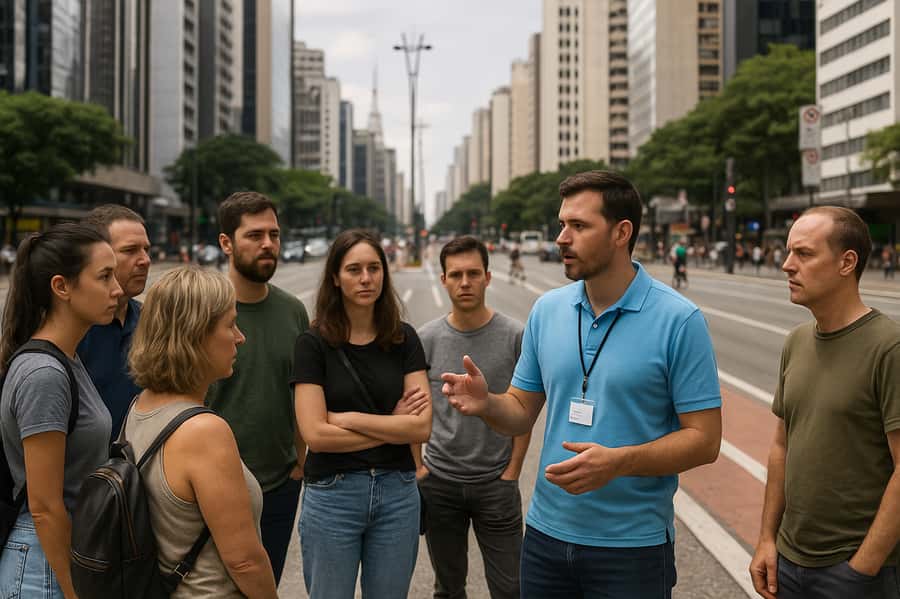
The FIESP Building is one of the route’s major architectural stops. Your guide explains the building and its place on Paulista Avenue, while you get time to take in the exterior and photograph it. The stop works well for visitors who like modern city design but also want to understand the institutions behind the facades.
The São Paulo Museum of Art, better known as MASP, is likely the visual high point of the walk. Its bold structure is easy to recognize, and its position on Paulista Avenue makes it one of the city’s signature sights. The tour gives you the setting and story, but entrance is not included.
That distinction is important. If your main goal is to see the MASP collection, this walk will not replace a museum visit. You will need to pay any entrance fee separately and allow time outside the three-hour route. If your aim is to understand where MASP fits into the avenue, photograph the building, and hear the guide’s explanation, the stop is well chosen.
The guide-led approach also helps keep the visit from becoming a rushed checklist. Renato was praised for stopping at important landmarks and explaining them in detail. Daniel, who had Ilan as a guide, found the explanations useful for understanding both the buildings and the way the area changed over time.
Trianon Park and the July 9 belvedere
Trianon Park gives the walking tour a needed break from the avenue’s hard surfaces and large buildings. The stop is a chance to pause, contemplate the surroundings, and reset before continuing. You are not simply walking from one facade to the next, and that rhythm makes three hours feel more manageable.
The July 9 belvedere viewpoint adds another kind of pause. It gives you a place to look outward and take photographs rather than focusing only on street-level details. Exact views can depend on conditions and your position, but the purpose is clear: the route includes places where you can stop and take in the wider setting.
These pauses are particularly helpful if you have just arrived in São Paulo or have spent much of the day on a plane. One visitor described the walk as a good choice after a long flight. That does not mean it requires no effort. Three hours on foot is still three hours on foot, but the moderate pace and regular stops make it less punishing than a nonstop march.
A completely different kind of day out around Brazil:
- Rio de Janeiro: 6-Stop Highlights of Rio with Lunch
★ 4.4 · 5,157 reviews - Christ the Redeemer Entry Ticket by Corcovado Train
★ 4.4 · 4,476 reviews - Rio de Janeiro: Sugarloaf Cable Car Official Ticket
★ 4.6 · 2,873 reviews - Rio: Christ the Redeemer, Sugarloaf, Selaron & BBQ Lunch
★ 4.5 · 2,428 reviews
Gazeta Building, Rocha Azevedo, and a historic residence
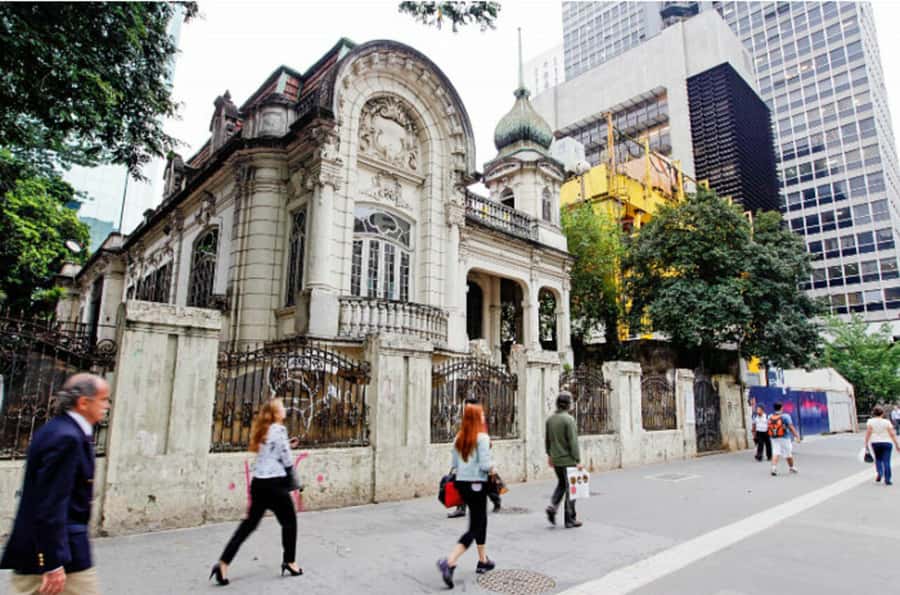
The Gazeta Building continues the avenue’s mix of media, commerce, and public life. It is followed by Alameda Ministro Rocha Azevedo, where the route shifts into a more street-level exploration of the surrounding area.
The Residência Joaquim Franco de Melo is one of the more distinctive stops because it brings a residential piece of the past into a corridor better known for large institutions and modern city life. You get a reminder that Paulista Avenue was not always defined by its current skyline and cultural centers.
This is where a good guide adds real value. A list of addresses tells you where to look, but it does not explain why a residence matters beside a hospital, school, museum, or corporate building. The strongest feedback about the guides focused on this kind of context. Renato was praised for detailed historical explanations, while Ilan helped connect the avenue’s buildings with its evolution across time.
You should expect the walk to remain mostly observational. There is no promise of interior access to the residence or other sights, and entrance fees are not part of the price. If you prefer a tour filled with indoor visits, this may feel limited. If you like reading a city through its streets, the route has more to offer.
Augusta Street, Conjunto Nacional, and Livraria Cultura
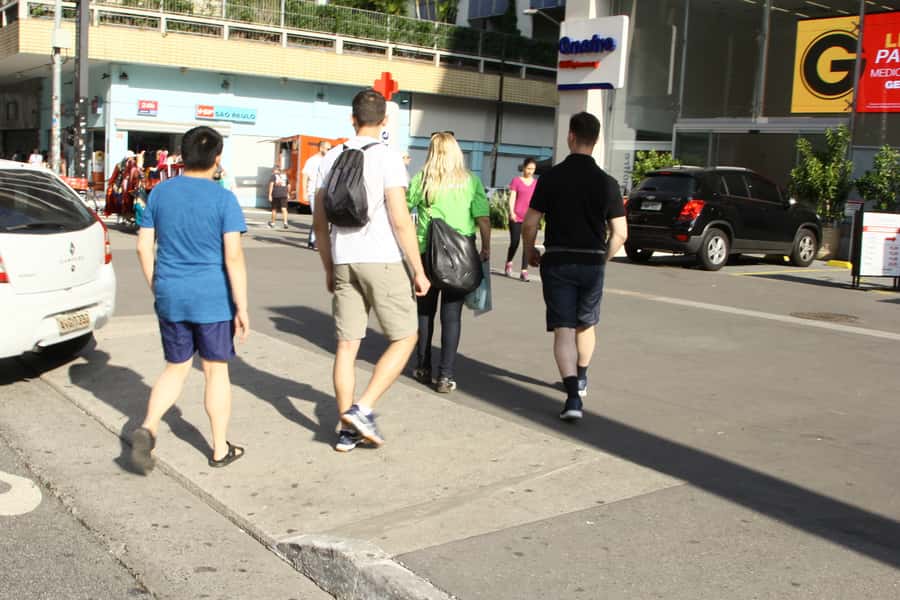
Augusta Street brings a different energy and a useful contrast to the monumental parts of Paulista Avenue. The route lets you see how the surrounding streets connect with the avenue and how the district supports everyday city life as well as major attractions.
Conjunto Nacional is another important architectural and cultural landmark. The nearby Livraria Cultura book store adds a natural stop for anyone who enjoys browsing books, design, and local cultural spaces. The tour includes time for a little souvenir shopping, but purchases are your own responsibility.
These stops also make the walk practical for planning the rest of your day. Laura was praised for her energy and for staying attentive from the start of the experience through the return to the hotel. Renato offered suggestions about places to visit along the avenue, which can be useful if you plan to come back independently.
That is one of the best reasons to schedule this activity early in your São Paulo stay. You can use the walk to get oriented, then return to MASP, Livraria Cultura, cultural centers, or other places at your own pace. A later visit will feel less like wandering and more like choosing.
Instituto Moreira Salles and the final stretch
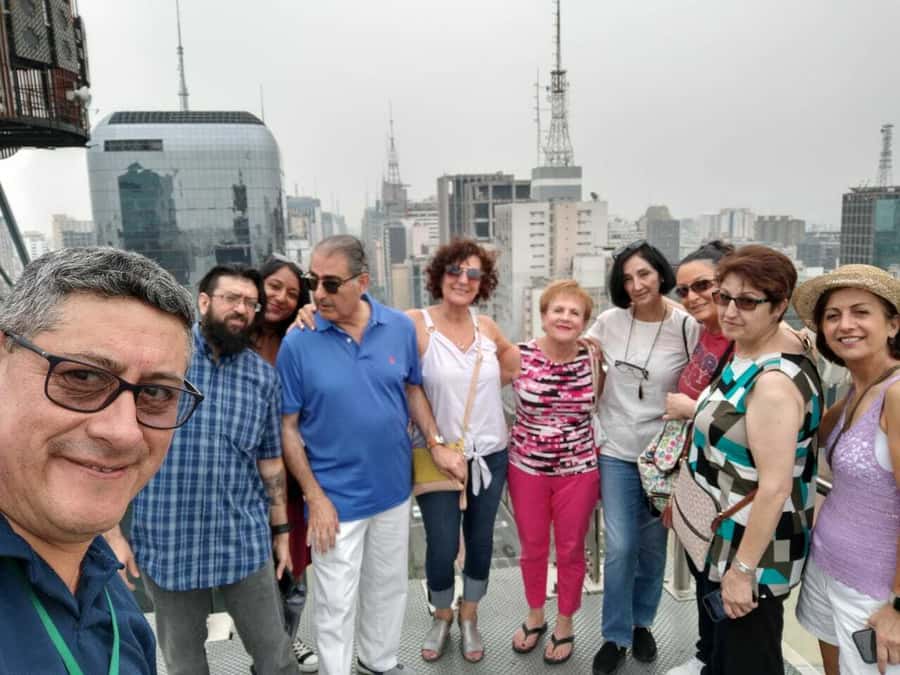
The route finishes with the Instituto Moreira Salles, another important cultural stop along Paulista Avenue. It reinforces the tour’s central theme: the avenue brings together art, architecture, education, public institutions, commerce, and places for simply being in the city.
As with the other cultural venues, do not assume admission is included. The stated plan is not aimed at entering museums or other sights that charge fees. You can ask your guide for context, take in the exterior, and decide later if you want to return for a longer indoor visit.
The final stretch should feel like a full reading of Paulista Avenue rather than a single attraction tour. You have seen major landmarks, smaller historic details, street art, green space, and viewpoints. You have also had breaks for pictures, snacks, reflection, and shopping, which keeps the experience from becoming a lecture delivered while walking.
What $100 buys you, and what it does not
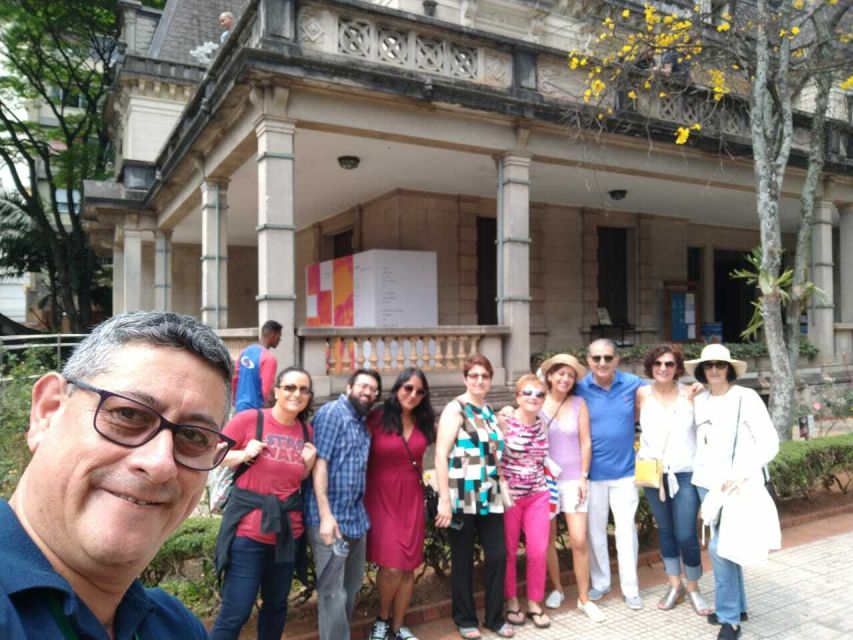
At $100 per person, value depends heavily on how much you want personal guidance. The fee includes a professional licensed guide, the walking route, and taxes and handling charges. It does not include food, drinks, or entrance fees.
For a private group, the price can make sense if you care about asking questions, adjusting the pace, and receiving recommendations for the rest of your time in São Paulo. It also has value if you want the avenue explained rather than merely photographed. The positive feedback focused on the quality of the explanations, the guides’ friendliness, and the useful suggestions.
The price is harder to justify if you only want to see MASP, take a picture of a mural, or walk a short section of Paulista Avenue. You could explore the avenue independently, but you would lose the organized route and the historical connections between the stops.
Adult pricing applies to everyone, so families should calculate the full cost before booking. Since gratuities are optional and not included, you can also decide separately if the guide’s service deserves a tip.
Pace, access, languages, and weather
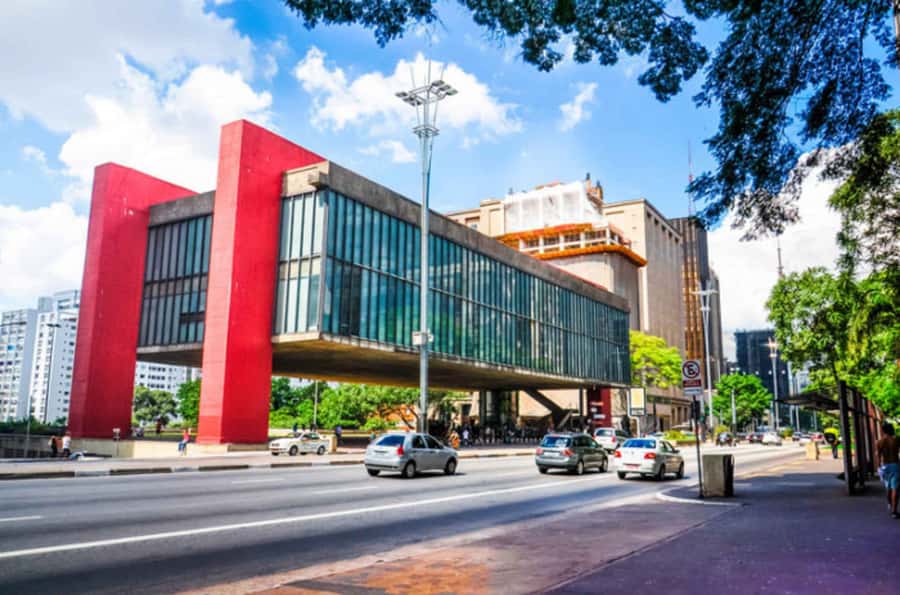
The walk lasts three hours and follows a smooth pace with several stops. That makes it more approachable than an intense city march, but you still need comfortable shoes. The route is wheelchair accessible, an important practical point for many visitors, though individual comfort can vary depending on weather and the amount of time spent outdoors.
You can choose English, Spanish, or Portuguese. The range is useful for couples or private groups who want explanations in a familiar language. The guide names associated with especially strong feedback include Priscila, Doris, Renato, Ilan, and Laura. The praise was consistent: friendly service, clear explanations, and strong background on Paulista Avenue.
The tour runs in all weather. Bring sunscreen and sunglasses, and dress for rain or cooler conditions if needed. Food and drinks are not included, but the itinerary allows stops for snacks, so you can plan to buy something along the way.
Cancellation is free up to 24 hours before the activity for a full refund. You can also reserve now and pay later, which helps if your São Paulo plans are still shifting.
Who should book this walk?
I would recommend it to a first-time visitor who wants an organized introduction to São Paulo’s most famous avenue. It also suits you if you enjoy architecture, public art, cultural institutions, local history, and stories about how a city changes.
It is a good fit after a long flight because the pace is steady and the route includes pauses. It is also useful for anyone who wants practical suggestions for returning to Paulista Avenue later. The private format should appeal to families, couples, or small groups who prefer their own guide rather than a large shared outing.
I would think twice if you want extensive indoor sightseeing. Museum and attraction admissions are extra, and the tour is not built around entering those venues. I would also compare the price carefully if you are traveling alone and mainly want a self-guided walk.
Should you book the São Paulo Paulista Avenue Walking Tour?
Book it if you want Paulista Avenue explained by a personable guide, not just photographed. The strongest reason to choose it is the combination of 18 sights, a manageable pace, and detailed historical context from guides such as Renato, Ilan, Priscila, Doris, and Laura.
Skip it if your priority is low-cost sightseeing or museum interiors. At $100 per person, you are paying for private attention and orientation. For the right visitor, especially one booking early in a São Paulo stay, that can be worthwhile.
FAQ
Where does the Paulista Avenue walking tour begin?
The meeting point is Japan House on Paulista Avenue.
How long does the tour last?
The walking tour lasts three hours.
How many sights are included?
The tour visits 18 famous sights along Paulista Avenue and its nearby streets.
Is this a private tour?
Yes. The activity is offered for a private group.
Which languages are available?
You can take the tour in English, Spanish, or Portuguese.
Is the tour wheelchair accessible?
Yes, the tour is listed as wheelchair accessible.
Are museum entrance fees included?
No. Entrance fees are not included, and the tour is not aimed at entering museums or other sights that charge admission.
Are food and drinks included?
No. Food and drinks are not included, though the route includes stops where you can have a snack.
What should I bring?
Bring comfortable shoes, sunglasses, and sunscreen. The tour operates in all weather, so dress accordingly.
Just added around Brazil
- Idyllic Islands Private Speedboat Tour in Paraty★ 5.0 · 3 reviews
- Pedra Bonita Trail: The easiest trail with a beautiful view of Rio★ 4.6 · 3 reviews
- Campos do Jordão: Full-Day Private Tour from São Paulo★ 5.0 · 3 reviews
- Itacare: Jeribucaçu Trail and Usina Waterfall★ 4.7 · 3 reviews
- Paraty: Half-Day Bike Rental★ 3.6 · 3 reviews
- Walk to the Big Rock in Cantareira State Park★ 5.0 · 3 reviews
- Rio: Private, Custom express, Main Attractions!★ 5.0 · 3 reviews
- Rocinha Jeep Tour: A Journey into the Soul of the Favela!★ 3.8 · 3 reviews
Walking Tours, compared.



Sunrise and Sunrise Walk Two Brothers with Local Guide
Read our review →
Downtown-Center History Walking Tour – in English
Read our review →
Downtown-Center Walking Tour | 2 Hours – English
Read our review →
Learn the History of Rio with an Unforgettable City Center Walking Tour
Read our review →Browse the lists this tour appears in