Reviewed · RIO DE JANEIRO TOURS
Pantanal of Rio de Janeiro
Rio has more than beaches and famous viewpoints. The Pantanal of Rio de Janeiro leads you into the calm waterways around Barra da Tijuca, where caimans, capybaras, mangroves, and island life share the scene. I like the close look at local nature and the view toward Pedra da Gávea. I also like that the tour includes Gigóia Island, a place many first-time visitors would otherwise miss. The main drawback is the extra boat charge, which is paid separately and makes the real cost higher than the headline price.
This is a three-hour outing with an accredited guide in English, Portuguese, or Spanish. Ione has been praised for her clear explanations, warm manner, and strong Spanish, while another guest appreciated the guide’s excellent English and broad knowledge of the area. One practical concern is timing: a guide was late on at least one departure, and the activity status caused some confusion, so you should allow patience at the meeting point.
In This Review
- Key points to know before you go
- Why this Pantanal is part of Rio, not the Amazon
- Meeting at Jardim Oceânico and getting started
- Paying for the boat: the cost most people need to notice
- Cruising among the islands and mangroves
- Meeting caimans and capybaras from the water
- Gigóia Island: more than a quick photo stop
- Pedra da Gávea and the Rio setting
- Optional Barra da Tijuca beach visit
- What the guide adds to the experience
- Who should book this three-hour outing?
- Practical planning for a smoother day
- Final call: is the Pantanal of Rio worth it?
- FAQ
- How long does the Pantanal of Rio de Janeiro tour last?
- Where is the meeting point?
- Is the boat ride included in the tour price?
- Which languages are available?
- What animals might I see?
- Can I cancel the booking?
Key points to know before you go
- The boat fee is separate: The advertised price is $32 per person, but the captain charges R$60 for the boat directly. Card payments add 5 percent.
- Gigóia Island is the main stop: You get more than a boat ride, with time to see an island community and find restaurants afterward.
- Wildlife is the star: Caimans and capybaras are the animals most clearly associated with this outing, along with other local species.
- Pedra da Gávea frames the trip: The large granite formation gives the water route a distinctly Rio setting.
- Barra da Tijuca beach is optional: This adds a coastal stop, but it is not the central reason to book the tour.
- Meet at Jardim Oceânico: The meeting point is in front of the metro station, at Exit A.
Why this Pantanal is part of Rio, not the Amazon
The name can sound grand, and it may lead you to picture the huge wetlands of central Brazil. This experience is much closer to Rio’s urban coast, in the waterways around Barra da Tijuca and its island archipelago.
That difference matters. You are not leaving the city for a remote wildlife expedition. Instead, you are seeing how river channels, mangroves, homes, restaurants, beach districts, and granite peaks fit together in one corner of Rio.
The water route offers a useful change of pace after Rio’s busy avenues and packed beach fronts. From the boat, the city feels less like a collection of landmarks and more like a living mix of water and stone. Pedra da Gávea rises in the distance, giving you a dramatic point of reference as the boat moves between the islands.
I especially like the contrast here. The setting is not untouched wilderness, and it should not be sold that way. You may see signs of ordinary island life along with the animals. That combination is part of the appeal.
A few more trips worth weighing up before you book
- Rio de Janeiro: 6-Stop Highlights of Rio with Lunch
★ 4.4 · 5,157 reviews - Christ the Redeemer Entry Ticket by Corcovado Train
★ 4.4 · 4,476 reviews - Rio de Janeiro: Rocinha Favela Walking Tour with Local Guide
★ 4.8 · 3,052 reviews
Meeting at Jardim Oceânico and getting started
The meeting point is in front of Jardim Oceânico metro station, Exit A. This is a sensible place to meet because it gives you a clear public transport landmark rather than an obscure street corner.
Still, arrive with enough time to locate the exit and find the guide. The meeting instructions have been clear for some departures, but a late guide once caused concern because the activity appeared to have already started. If you do not see the guide right away, stay near the stated entrance and contact the operator rather than assuming you missed the group.
The experience lasts about three hours. That is long enough for a proper boat outing and time on Gigóia Island, but short enough to fit beside other Rio plans. I would avoid booking it immediately before an important flight, timed attraction, or long-distance transfer. Small delays are possible, and the boat payment process can take a few extra minutes.
Your guide leads the experience in English, Portuguese, or Spanish. This is more than a translation service. A good guide helps explain why the waterways matter, points out animals that are easy to miss, and connects the island setting with daily life in Rio.
Paying for the boat: the cost most people need to notice

The listed tour price is $32 per person, but the boat ride itself is not included in that amount. You pay the captain R$60 directly.
Cash is the simplest option. Credit and debit cards are accepted, but the boat charge carries an additional 5 percent tax when paid that way. Bring the required amount in Brazilian reais if you want the least complicated payment.
This separate charge does not automatically make the outing poor value. You are paying for a guided route through several islands, wildlife viewing, a stop at Gigóia Island, and the chance to see a less familiar side of Rio. The value depends on what you want from a city tour.
If your main goal is a low-cost boat ride, the total price may feel high once the extra fee is added. One visitor described the experience as overpriced because the main rewards were the animals and the island view, while another found the boat ride and the unusual setting well worth it.
My advice is simple: calculate the tour price plus R$60 before you book. That way, you are judging the full experience rather than the lower starting price.
Cruising among the islands and mangroves
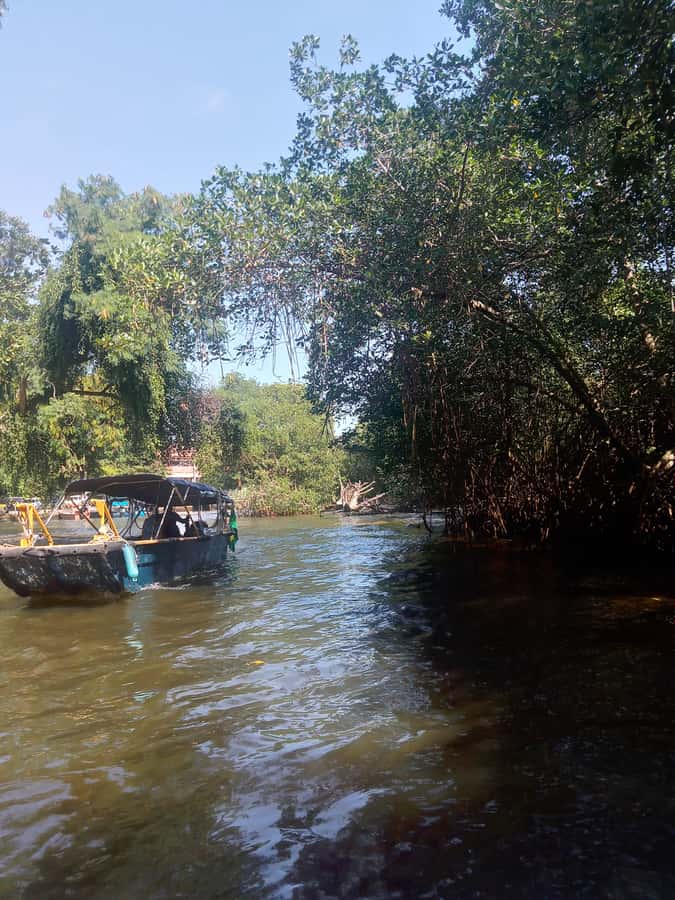
The boat route passes through the archipelago around Barra da Tijuca, with Gigóia Island as the largest island in the group. The setting changes gradually as you move through channels bordered by mangroves and water plants.
This is where the tour earns its name. You get a look at a wetland environment without spending a full day outside Rio. The boat keeps the pace relaxed enough for animal spotting and photographs, while the guide explains what you are seeing.
The wildlife is the main reason to choose this outing. Caimans and capybaras are the featured animals, and you may also see other species connected to the waterways. The animals are not performers on a schedule, so keep your eyes open and listen closely when the guide points toward the banks.
Caimans can be difficult to spot at first. They may sit low in the water or remain still along the edge. Capybaras are easier to appreciate when they gather near the shoreline, but sightings still depend on conditions and location.
This is not a zoo visit. You are looking at animals in their natural setting, which means the experience is less predictable but more genuine. If you need guaranteed close-up views, this is not the right kind of activity. If you enjoy patient observation, the boat provides a pleasant way to do it.
A completely different kind of day out around Rio de Janeiro:
- Rio: Christ the Redeemer, Sugarloaf, Selaron & BBQ Lunch
★ 4.5 · 2,428 reviews - Rio De Janeiro: Half-Day Rocinha Favela Walking Tour
★ 4.7 · 2,272 reviews - Rio de Janeiro: Angra dos Reis and Ilha Grande Full-Day Tour
★ 4.6 · 1,673 reviews - Rio: Maracanã Stadium Official Entrance Ticket
★ 4.4 · 1,632 reviews
Meeting caimans and capybaras from the water
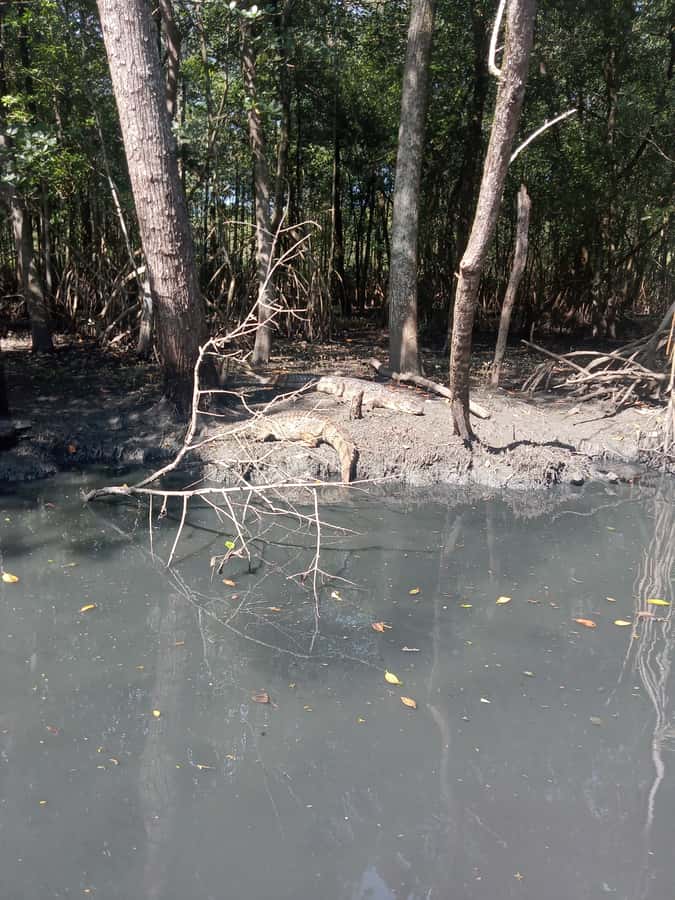
The wildlife encounters are the strongest part of the tour for many people. Seeing a caiman resting near a channel or a capybara beside the water gives you a memorable connection to Rio’s lesser-known ecosystems.
I like that the animals are not separated from the city by a long transfer. You can spend the morning around the urban coast and soon be looking at wildlife in mangrove channels. That makes the experience especially useful for anyone who has already seen Rio’s famous beaches and wants a different setting.
Keep your expectations measured. The description focuses on caimans, capybaras, and other animals, but it does not promise a fixed number of sightings or a particular viewing distance. Weather, water conditions, and animal behavior can affect what you see.
The guide’s role makes a real difference. Ione has received especially warm praise for explaining the area without rushing the group. Her Spanish was described as excellent, and she was also praised for answering questions about Brazil, its culture, history, and current affairs. Another guide was appreciated for speaking perfect English and explaining the area in detail.
That human side adds value. Without a guide, the channels might look pleasant but remain hard to interpret. With one, the boat ride becomes a lesson in how Rio’s water, wildlife, and communities connect.
Gigóia Island: more than a quick photo stop
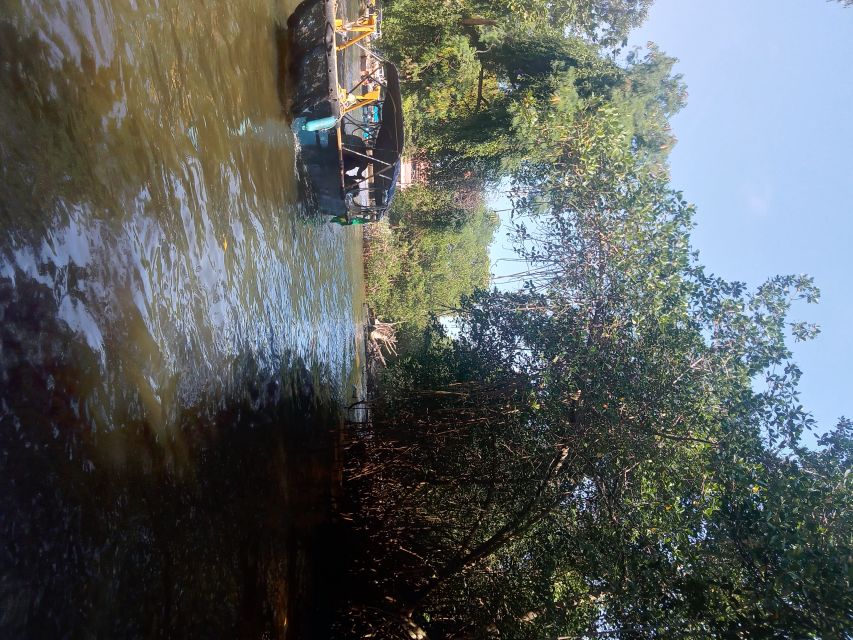
Gigóia Island is the largest island on the route and an important part of the experience. You get to see a place that feels removed from Rio’s usual tourist circuit, even though it is still within the city.
The island visit adds a human element to the animal viewing. You are not simply circling the waterways and leaving. You get a brief look at island life, local restaurants, and the slower rhythm of this part of Barra da Tijuca.
Several restaurants are available on the island after the tour. Ione recommended a restaurant with a pleasant view to one visitor, who used it as a relaxed place to eat after the boat trip. This is a useful way to extend the outing, especially if you do not need to hurry back to the metro.
Plan for a little extra transport expense if you eat and return from the island by water taxi. One person paid R$6 extra for a water taxi back toward the metro. That cost was not listed as part of the tour, so treat it as a possible add-on rather than a guaranteed inclusion.
The island stop may not impress you if you want a long cultural tour or a packed schedule of sights. It is better understood as a brief, local pause that gives context to the waterways.
Pedra da Gávea and the Rio setting
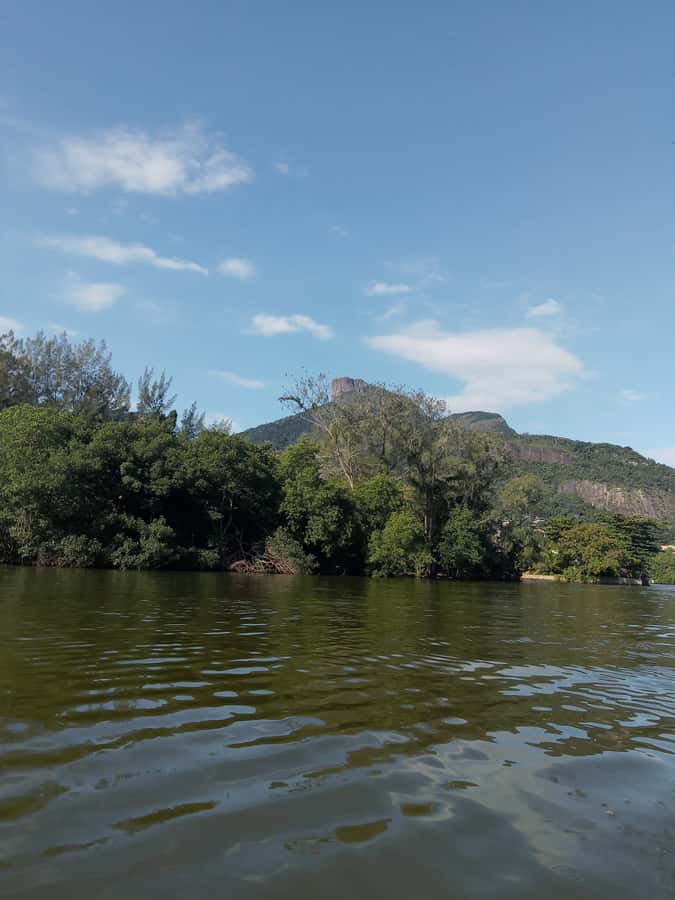
The view toward Pedra da Gávea is one of the outing’s most memorable visual details. This massive rock formation helps you remember that you are still in Rio, even while the boat moves through mangroves and island channels.
Many Rio tours frame the city from hills or beaches. Here, you see the stone from a lower, wetter setting. The view connects the famous mountain scenery with a quieter part of the city that is easy to overlook.
The combination of river, mangrove, wildlife, and granite is what gives this tour its character. None of these elements alone would fill three hours. Together, they create a clear sense of place.
Bring a camera, but do not spend the entire route looking through it. Animal sightings can happen quickly, and the guide may identify something at the edge of the water before you have time to raise your phone.
Optional Barra da Tijuca beach visit
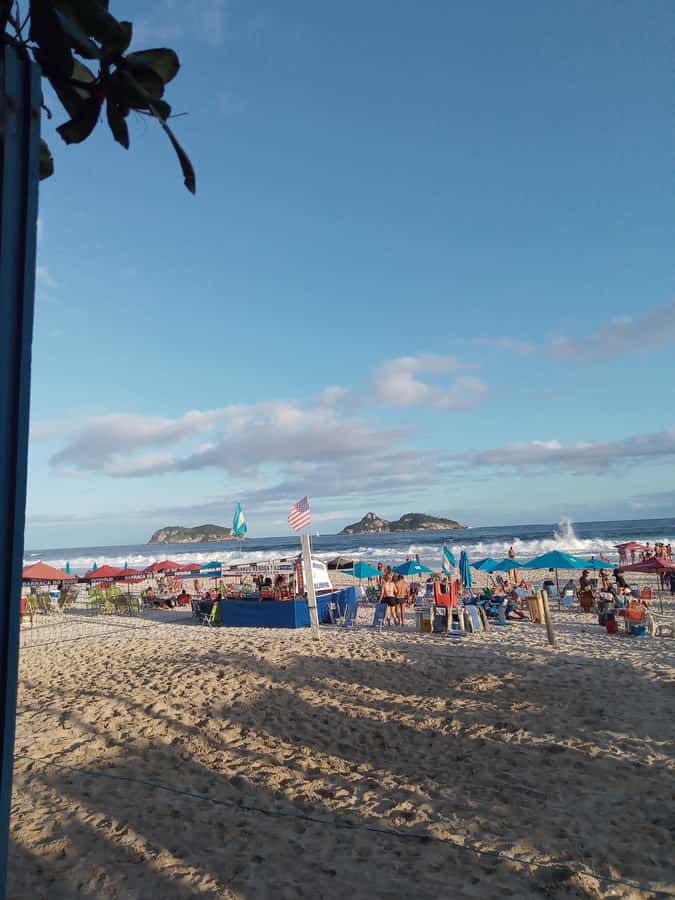
A visit to Barra da Tijuca beach is optional. It can be a good addition if you have not spent time in this part of Rio and want to connect the waterways with the coast.
The beach is not the core attraction, so I would not book this experience mainly for the sand. Rio has many famous beach areas, and the Pantanal outing offers something different. The beach stop makes more sense as a bonus after the island and boat route.
One person particularly enjoyed seeing Barra da Tijuca because it was outside the usual list of Rio stops. That is a fair point. The tour works well for people who want to widen their view of the city rather than repeat the standard postcard route.
Ask the guide how the optional stop fits into the day. The tour is limited to three hours, so the exact balance between boat time, island time, and beach time matters.
What the guide adds to the experience
The quality of the guide is one of the clearest strengths of this outing. The best reports focus not only on wildlife but also on the explanations and conversations during the trip.
Ione has been described as friendly, patient, and willing to answer questions without rushing anyone. That matters on a tour where the scenery can be subtle. You need someone to point out what makes the waterways important and explain the setting in a way that feels connected to local life.
Another guide was praised for strong English and detailed knowledge of the area. The experience is available in English, Portuguese, and Spanish, so check that your preferred language is selected when booking.
The tour also seems suited to curious people who enjoy asking questions. One couple used the time to discuss Brazilian culture, history, and present-day life with the guide. You should not expect a formal lecture, but the conversation can add much more than animal names.
Who should book this three-hour outing?
I would recommend it to you if you:
- Have already seen some of Rio’s standard sights and want a less familiar setting.
- Enjoy wildlife viewing without needing a guaranteed checklist.
- Like small cultural observations mixed with nature.
- Want a short outing rather than a full-day trip outside the city.
- Are comfortable paying the boat captain separately.
- Can remain flexible if the guide or boat timing runs late.
Families may enjoy the capybaras and caimans, though the available information does not specify age limits or child facilities. Nature photographers may like the chance to watch animals from the water, but should remember that sightings are not staged.
I would be more cautious if you dislike extra fees, expect a nonstop schedule, or want a major historical attraction. The island walk is relatively brief, the beach stop is optional, and much of the pleasure comes from simply watching the waterways.
Practical planning for a smoother day
Wear clothing suited to a warm outdoor boat ride and bring protection from the sun. The tour details do not specify equipment, shade, or weather arrangements, so prepare for ordinary outdoor conditions rather than assuming every comfort will be supplied.
Keep cash in Brazilian reais for the R$60 boat fee. If you plan to eat on Gigóia Island or use a water taxi afterward, bring extra money for those costs as well.
Meet at Jardim Oceânico metro station, Exit A. Since one departure involved a late guide and confusing activity timing, do not panic if the guide is not visible at the exact start time. Wait at the agreed meeting point and contact the provider if needed.
The cancellation policy is useful if your Rio plans are uncertain. You can cancel up to 24 hours before the activity for a full refund, and you can reserve now while paying later. Check the available start times before committing, since the schedule is not given as one fixed departure.
Final call: is the Pantanal of Rio worth it?
Book this tour if you want to see Rio through water, mangroves, animals, and island life rather than only beaches and viewpoints. The best parts are the caimans and capybaras, the view toward Pedra da Gávea, the stop on Gigóia Island, and the personal attention from guides such as Ione.
Go in knowing the full cost is higher than $32 because the boat requires a separate R$60 payment. Also accept that the island visit and optional beach stop may feel modest if you want a packed sightseeing program.
For a visitor seeking an unusual three-hour change of pace, I think the tour offers good value when the extra fee is understood in advance. For someone who wants guaranteed wildlife, a polished timetable, or a major landmark at every turn, it may feel less satisfying.
FAQ
How long does the Pantanal of Rio de Janeiro tour last?
The tour lasts three hours. Starting times vary, so you should check availability for the date you want.
Where is the meeting point?
Meet in front of Jardim Oceânico metro station at Exit A.
Is the boat ride included in the tour price?
No. The boat fee is paid directly to the captain and costs R$60 in cash. Card payments are accepted with an additional 5 percent charge.
Which languages are available?
The tour is offered with a live guide in English, Portuguese, or Spanish.
What animals might I see?
The tour focuses on caimans, capybaras, and other animals found around the waterways and mangroves.
Can I cancel the booking?
Yes. You can cancel up to 24 hours in advance for a full refund. You can also reserve now and pay later.
Just added around Rio de Janeiro
- Pedra Bonita Trail: The easiest trail with a beautiful view of Rio★ 4.6 · 3 reviews
- Rocinha Jeep Tour: A Journey into the Soul of the Favela!★ 3.8 · 3 reviews
- Rio: Private, Custom express, Main Attractions!★ 5.0 · 3 reviews
- Rio: Favela Walking Tour of Rocinha with a Resident Guide★ 4.7 · 3 reviews
- Explore Fernando de Noronha: 7-Hour Ilhatour★ 4.9 · 3 reviews
- Rio: Museum of Tomorrow, Yup Star & Olympic Boulevard★ 3.7 · 3 reviews
- Rio: Best Dive Experience All Inclusive Scuba Diving Package★ 5.0 · 3 reviews
- Rio de Janeiro by Air: 10-Minute Helicopter Tour★ 4.4 · 3 reviews
Rio de Janeiro Tours, compared.


Christ the Redeemer Entry Ticket by Corcovado Train
Read our review →

Christ the Redeemer, Sugarloaf, Selaron & BBQ Lunch
Read our review →