

Reviewed · SAMBA & NIGHTLIFE TOURS
Rio Samba Bus: hop-on hop-off city tour in Rio de Janeiro
Rio is big, beautiful, and spread out. The Rio Samba Bus gives you a useful first look at the city, linking Copacabana, Sugarloaf Mountain, downtown, Lapa, Ipanema, and Christ the Redeemer in one sightseeing loop. I like the open-top views and the chance to see far more than you could comfortably cover on foot. I also like the live commentary in Portuguese, English, and Spanish, plus the bus’s Brazilian music program.
The main caution is that this is not a perfectly timed city shuttle. The first departure times are published, but later buses may arrive late, and some stops are not clearly marked. You can lose time waiting, and the attraction tickets, hotel transport, food, and drinks all cost extra.
In This Review
- Key points before you book
- What the Rio Samba Bus actually gives you
- Copacabana starts with Rio’s famous seafront
- Urca and Sugarloaf require extra planning
- Central Rio brings the city’s historic core
- The cathedral, imperial buildings, and port area
- Corcovado is the day’s biggest attraction
- Smaller stops on the way back to the beaches
- The music can make the ride feel special
- Open-top views versus Rio’s weather
- Why the hop-on system is the weak link
- Is $31 good value in Rio?
- Who should choose this tour?
- Should you book the Rio Samba Bus?
- FAQ
- Where does the Rio Samba Bus start?
- How long does the experience last?
- How often does the bus depart?
- How many stops are on the route?
- Are Christ the Redeemer tickets included?
- Is the Sugarloaf cable car included?
- What languages are available for the guide commentary?
- Is food included?
- Does the bus have Wi-Fi and music?
Key points before you book

- The route connects Rio’s major zones: You pass through Copacabana, Urca, Flamengo, central Rio, Lapa, the port area, Corcovado, Lagoa, and Ipanema.
- The bus has 24 hop-on and hop-off stops: The supplied route list actually runs from stop 1 through stop 26, so check the day’s map and route details before setting out.
- Christ the Redeemer and Sugarloaf tickets are not included: The bus takes you near the access points, but the Corcovado train and Sugarloaf cable car require separate payment.
- The best value comes from staying aboard for a full circuit: If you hop off often, delays can leave you waiting 40 minutes or more for the next bus.
- Music is part of the plan, but not guaranteed: Brazilian rhythms such as samba and MPB are advertised, though one recent ride did not include the promised music program.
- The first bus leaves at 9:15 am: Later departures are listed through 5:15 pm, with additional departures roughly every 45 minutes earlier in the day.
What the Rio Samba Bus actually gives you

At $31 per person, this is a sightseeing transport pass with commentary, not a package covering Rio’s famous monuments. You get one day on the panoramic bus, a guide speaking Portuguese, English, and Spanish, onboard Wi-Fi, and the chance to get off at listed stops.
The advertised experience lasts two hours, which appears to describe the sightseeing circuit rather than a full day of unlimited exploring. The pass is promoted as a one-day hop-on and hop-off ticket, so you can use it as a moving introduction to Rio or as transport between selected stops. I would not plan to visit every major attraction in one day. Rio’s traffic, queues, walking distances, and separate admission fees make that unrealistic.
The bus begins in Copacabana and covers more than 30 tourist and cultural points. The formal route includes South Zone sights, central Rio, and several stops around the port and Corcovado area. That range is the real reason to book it. You get a broad picture of Rio’s shape before deciding where to spend more time.
A recent score of 3.8 from 94 ratings suggests a useful but uneven experience. The strongest praise centers on the views, the number of sights, and the fun of sitting on the bus while someone else handles the route. The weaker points are late buses, unclear stop locations, and the occasional gap between the advertised music and what actually happens onboard.
More City Tours in Rio de Janeiro
- Rio: Carnival Backstage Tour at Samba City with Cocktail
★ 4.6 · 520 reviews - Rio de Janeiro: Private Guided City Tour
★ 4.6 · 207 reviews - Rio de Janeiro: Half-Day Christ the Redeemer and City Tour
★ 4.4 · 101 reviews
Copacabana starts with Rio’s famous seafront
The first six stops run along Copacabana, from Shopping Cassino Atlântico through beach stations 5, 4, 3, and 2, then the Hilton Hotel. This is a good opening stretch because the bus gives you a quick sense of Rio’s most recognizable shoreline.
From the upper deck, you can look across the beach and out toward the sea while the bus follows the lively promenade. The view is the attraction here. If you stay aboard, the ride gives you a broad sweep of Copacabana without committing to a long walk in the heat.
I would use these early stops for orientation rather than trying to visit every beach station. The route begins at Shopping Cassino Atlântico, and one Canadian passenger missed the experience after being unable to reach the starting stop. That is a practical warning: plan your way to the first stop carefully, especially if you are staying outside Copacabana.
The published first departure is 9:15 am, followed by 10 am, 10:45 am, 11:30 am, 12:15 pm, 1 pm, 1:45 pm, 2:30 pm, 3:15 pm, 4:15 pm, and 5:15 pm. These times are most useful for the initial departure. Later buses may not keep the same rhythm once traffic and passenger delays enter the picture.
Urca and Sugarloaf require extra planning
Stop 7 is Rio Sul Shopping Mall, followed by stop 8 at the Sugarloaf Cable Car Park. This is one of the most useful parts of the route because Sugarloaf is awkward to combine with distant sights using ordinary walking alone.
The bus does not include the cable car. You pay separately if you want to ride up to Morro da Urca and continue toward Sugarloaf Mountain. That extra cost matters when you compare the $31 bus price with your complete day’s budget.
Still, the bus has clear value here. It brings you to the cable car area while giving you commentary and views along the way. The height also creates some of the best photo opportunities on the route, especially with Sugarloaf behind you.
I would not squeeze the cable car into a rushed circuit. If you get off at stop 8, allow enough time for the cable car visit, photographs, and any line at the attraction. The bus’s flexible ticket sounds ideal for this, but the long gaps reported between buses can turn a short stop into a slow wait.
Central Rio brings the city’s historic core
After Urca, the route moves toward central Rio. Stop 9 is the Municipal Theatre, located in Cinelândia, an important historic square with the Museum of Fine Arts and the National Library nearby.
This is where the tour becomes more than a beach-and-mountain ride. Central Rio shows you the city’s civic and cultural side. The theatre, library, and museum help explain how Rio developed as Brazil’s former capital and cultural center, even if you only see them from outside.
Stops 10 and 11 serve the Selarón Steps and the Arcos da Lapa. These are two of central Rio’s most recognizable sights. The colorful staircase is a quick, visually rewarding stop, while the Lapa Arches offer a strong sense of the district’s old infrastructure and current street life.
I like this part of the route because it gives you a reason to leave the bus. You can take photographs, walk around, and then continue toward the cathedral. But keep your expectations practical. The bus is a transport link and sightseeing overview, not a private walking tour of Lapa. You will need to watch the clock and find the correct pickup point again.
More samba nights:
- Rio de Janeiro: Beginner Samba Lesson in Ipanema
★ 4.9 · 1,071 reviews - Rio: Pub Crawl in Lapa with Cachaça Tasting and Live Samba
★ 4.7 · 881 reviews - Hop-ON Hop-OFF Sightseeing Bus in Rio de Janeiro – Rio Samba Bus
★ 3.5 · 457 reviews - Santa Teresa, Lapa, and Cinelândia with Tram Ride and Selarón Steps
★ 4.5 · 274 reviews
The cathedral, imperial buildings, and port area
Stop 12 is the Metropolitan Cathedral of Rio de Janeiro, followed by Paço Imperial at stop 13 and Candelária Church at stop 14. These stops add architecture and national history to an itinerary otherwise dominated by scenery.
The cathedral is especially easy to recognize, with its striking modern form. Paço Imperial and Candelária Church offer a different visual character, giving you a compact look at several periods of Rio’s past.
Stop 15 reaches the Aquarium and Yup Star Rio, the giant observation wheel. These are separate attractions, and their tickets are not part of the bus fare. You can use the stop as a gateway to the port area, but I would check opening hours and admission prices before deciding to get off.
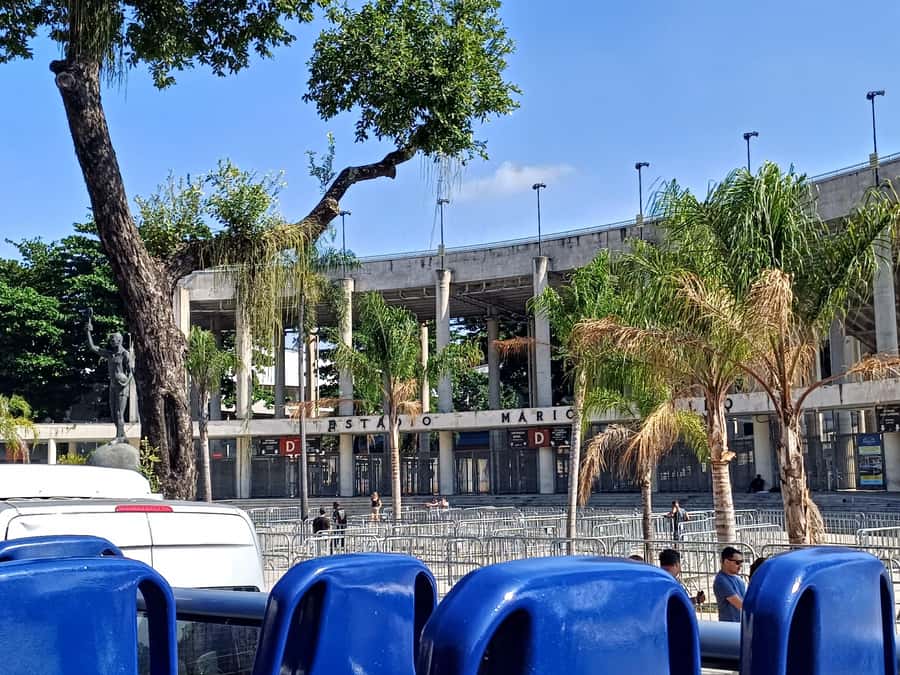
The route then lists Maracanã as stop 16. One passenger specifically noted that the bus did not pass by Maracanã during their ride, despite it appearing in the route information. Treat this as a point to confirm on the day rather than a guaranteed highlight. Route changes, traffic, or a shortened circuit may affect what you see.
Corcovado is the day’s biggest attraction

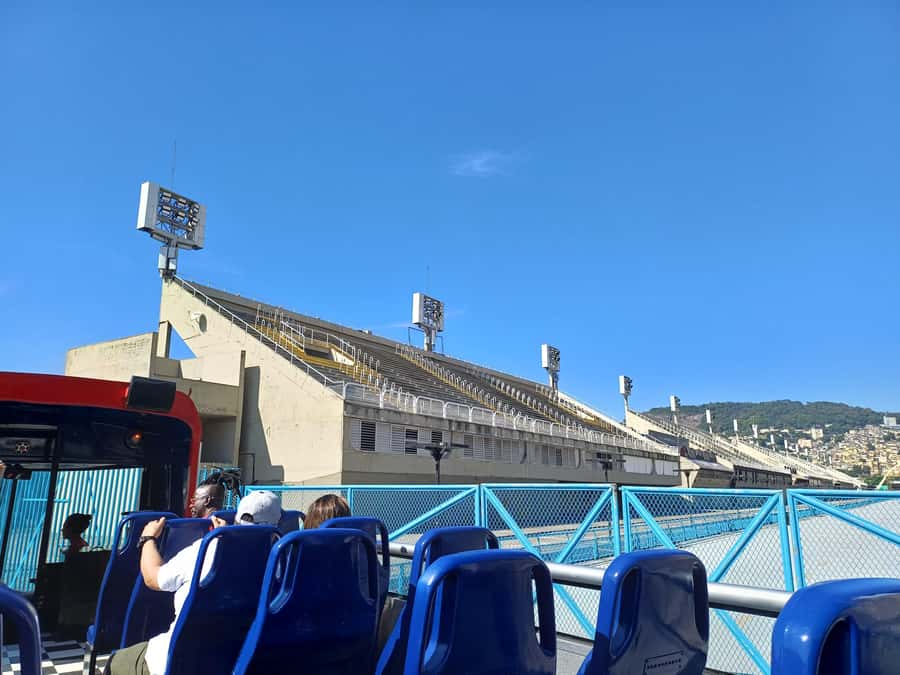
The return section lists the Corcovado Train to Christ the Redeemer at stop 19, after Biopark and Sambadrome. Christ the Redeemer is the headline sight, but the bus fare does not include the train or monument admission.
To reach the statue, you take the century-old Corcovado Railway through Tijuca Forest. The train journey is part of the appeal. As it climbs, you get changing views of Rio before reaching the summit and the statue’s famous lookout.
This is not a quick hop-off. If you plan to visit Christ the Redeemer, schedule it as a major part of your day and allow time for the train, queues, viewing area, and return. Trying to fit it between several short bus stops is likely to make the day stressful.
The bus makes the Corcovado stop valuable because it connects a difficult-to-organize attraction with the rest of the city. The drawback is timing. If the bus is late, or if your visit takes longer than expected, your next connection may not arrive when the printed schedule suggests.
Smaller stops on the way back to the beaches

After Corcovado, the route passes Largo do Boticário, Lage Park, Lagoa Skate Park, the Flamengo Museum, Rua Garcia Dávila, and Ipanema Beach Posts 9 and 8.
Largo do Boticário and Lage Park offer a change from the major landmarks. They are useful if you want to see less formal parts of the South Zone, though the information provided does not promise a guided walking visit at each stop.
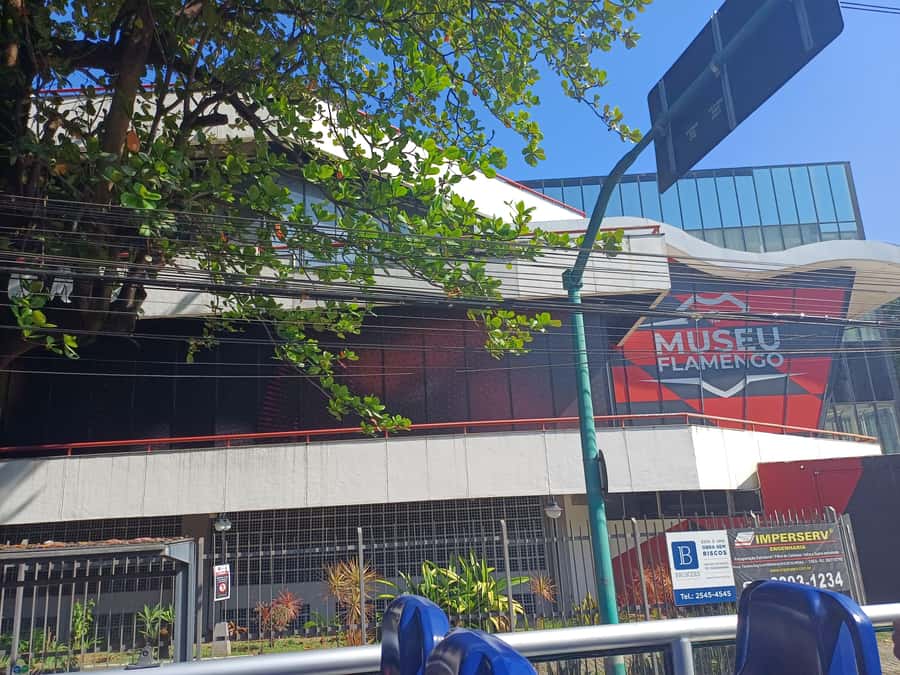
The Flamengo Museum gives the route a sports connection. Vasco da Gama Sports Club is also listed among the points of interest, although the stop list and route description do not make clear exactly how long the bus pauses at each location.
Rua Garcia Dávila is presented as a gastronomic center, making it a sensible place to end a sightseeing day with a meal. Food is not included, but it is available for purchase at attractions. Drinks are also extra.
The final two stops are Ipanema Beach Post 9 and Post 8. These are convenient for finishing near one of Rio’s most famous beaches. The beach views here are a pleasant counterpoint to the older buildings and monuments in central Rio.
The music can make the ride feel special

The Rio Samba Bus is designed to be more than a silent sightseeing vehicle. Brazilian music, including samba and MPB, is part of the experience, and the idea fits the city well. A bus moving past Copacabana and Lapa with local rhythms onboard can make the route feel connected to Rio rather than like a standard international city tour.
I would keep expectations measured. One recent passenger said the music program did not happen at all, while the advertised inclusions describe musical performances onboard. That means the music may depend on the departure, vehicle, or operating conditions.
The live commentary is more dependable as a listed feature. Guides speak Portuguese, English, and Spanish, and they provide facts about Rio’s culture and past as you move between sights. The commentary is most useful when you remain aboard for a full circuit. If you get off repeatedly, you may miss the explanations that give the route its meaning.
Open-top views versus Rio’s weather

Some buses are open, while others are enclosed and air-conditioned. That choice matters in Rio. The open bus gives you the clearest view of Copacabana, Flamengo, Sugarloaf, and the city center, while the enclosed bus is a sensible refuge during heat or rain.
One passenger had a disappointing day because of rain. That is not a small concern on a panoramic route. Bad weather can reduce the value of the upper deck and make waiting at exposed stops uncomfortable.
I would check the forecast and choose your departure accordingly. Sit upstairs when the sky is clear, but keep the enclosed, air-conditioned option in mind if available. A passenger also praised the driver for slowing down or stopping so people could take photographs. That is a genuine advantage for a sightseeing ride, though it cannot remove traffic delays.
Why the hop-on system is the weak link
The biggest issue is not the route. It is the reliability of the connections. One German passenger used the bus mainly as a stationary sightseeing circuit and found it worked well. Using it as a true hop-on and hop-off service was much harder because buses did not arrive at the advertised times after the first departure.
That passenger waited 40 minutes at one point and eventually used an Uber. The lack of clearly marked stops made the situation worse. A small stop map is not enough if you did not get off at that location and cannot tell where the bus will actually stop.
For that reason, I would use the bus in one of two ways:
- Stay aboard for most or all of the circuit and treat it as a two-hour city overview.
- Choose one major stop, such as Sugarloaf or Christ the Redeemer, and accept that the return connection may take time.
I would not build a tight schedule around three or four hop-offs. Do not book a timed attraction immediately after an expected bus arrival unless you have a large cushion.
Is $31 good value in Rio?
The price is fair if you value convenience and a broad first look at Rio. In one ride, you can see beaches, mountains, historic squares, the port, Corcovado, Lagoa, and Ipanema. Recreating that route with separate taxis or ride-hailing trips could cost more and require much more planning.
The value drops if you expect admission to the city’s famous sights. The Sugarloaf cable car, Corcovado train, Christ the Redeemer, Aquarium, Yup Star, museums, food, drinks, and hotel transfers are not included.
I see this as a good orientation purchase, especially for a first day in Rio. It is less attractive as your only transport plan for a full day of scheduled sightseeing. The bus gives you context and views. You still need to buy attraction tickets and manage your own timing.
Free cancellation up to 24 hours before departure and the option to reserve now and pay later add useful flexibility. Those terms help if your weather forecast is uncertain, but they do not solve the route’s timing problem.
Who should choose this tour?
I would recommend the Rio Samba Bus to you if you want to see the city’s main zones without arranging several separate rides. It suits first-time visitors, people with limited time, and anyone who prefers a narrated overview before choosing which attractions deserve a longer visit.
It also works well for photographers who want broad views from an open bus. The driver’s habit of slowing down for photographs, when traffic allows, is a welcome touch.
I would be cautious if you dislike waiting, need exact departure times, or want to visit several ticketed attractions in one day. Families and older visitors may appreciate the reduced walking, but they should still plan for boarding points, traffic, and time on their feet at major sights.
Should you book the Rio Samba Bus?
Book it if you want an easy first survey of Rio, particularly Copacabana, Sugarloaf, central Rio, Lapa, Corcovado, and Ipanema. Stay aboard for the first circuit, use the commentary to choose your priorities, and treat hop-offs as optional rather than perfectly timed connections.
Skip it if your schedule depends on precise buses or if you expect the $31 fare to include the cable car and Christ the Redeemer. For the best value, start early, confirm the pickup point at Shopping Cassino Atlântico, keep extra time between stops, and plan only one or two major visits.
FAQ
Where does the Rio Samba Bus start?
The route begins at Shopping Cassino Atlântico in Copacabana. The first published departure is at 9:15 am.
How long does the experience last?
The activity is advertised as two hours, while the ticket is described as a one-day hop-on and hop-off pass. The two-hour figure appears to refer to a circuit, not a full day of getting off at every attraction.
How often does the bus depart?
Published departures begin at 9:15 am and continue at 10 am, 10:45 am, 11:30 am, 12:15 pm, 1 pm, 1:45 pm, 2:30 pm, 3:15 pm, 4:15 pm, and 5:15 pm.
How many stops are on the route?
The information describes 24 hop-on and hop-off stops, while the detailed route lists stops numbered 1 through 26. Confirm the active route and stops before relying on the map.
Are Christ the Redeemer tickets included?
No. The Corcovado train and tickets for Christ the Redeemer are not included in the bus price.
Is the Sugarloaf cable car included?
No. The bus stops at the Sugarloaf Cable Car Park, but the cable car ride requires a separate ticket.
What languages are available for the guide commentary?
Live commentary is available in Portuguese, English, and Spanish.
Is food included?
No. Food and drinks are not included, though they can be purchased at the attractions.
Does the bus have Wi-Fi and music?
Free Wi-Fi and musical performances are listed as inclusions. The buses may be open or enclosed with air conditioning, and the music program may not occur on every departure.
Just added around Rio de Janeiro
- Pedra Bonita Trail: The easiest trail with a beautiful view of Rio★ 4.6 · 3 reviews
- Rocinha Jeep Tour: A Journey into the Soul of the Favela!★ 3.8 · 3 reviews
- Rio: Private, Custom express, Main Attractions!★ 5.0 · 3 reviews
- Rio: Favela Walking Tour of Rocinha with a Resident Guide★ 4.7 · 3 reviews
- Explore Fernando de Noronha: 7-Hour Ilhatour★ 4.9 · 3 reviews
- Rio: Museum of Tomorrow, Yup Star & Olympic Boulevard★ 3.7 · 3 reviews
- Rio: Best Dive Experience All Inclusive Scuba Diving Package★ 5.0 · 3 reviews
- Rio de Janeiro by Air: 10-Minute Helicopter Tour★ 4.4 · 3 reviews
Samba & Nightlife Tours, compared.


Pub Crawl in Lapa with Cachaça Tasting and Live Samba
Read our review →
Carnival Backstage Tour at Samba City with Cocktail
Read our review →
Hop-ON Hop-OFF Sightseeing Bus in Rio de Janeiro – Rio Samba Bus
Read our review →
Santa Teresa, Lapa, and Cinelândia with Tram Ride and Selarón Steps
Read our review →


Ginga Tropical – Brazilian Samba and Folklore Show
Read our review →Browse the lists this tour appears in