
Reviewed · SUGARLOAF MOUNTAIN TOURS
Rio de Janeiro: Sugarloaf Mountain Hike and Climb
Sugarloaf rewards effort with views. This four-hour outing gives you a more active way to reach Rio’s famous summit, combining a forested hike, scrambling over stone ramps, and a guided climb up a 20-meter vertical wall. I especially like the changing viewpoints and the chance to see Sugarloaf beyond the standard cable-car ride.
I also like that the climb is handled with certified equipment and a bilingual guide. Guides such as Sergio, Didi, Thomas, and Tommy have helped set a calm pace, explain hand and foot holds, and share details about Rio’s wildlife and outdoor culture. The main caution is simple: this is not an easy walk. Steep sections, scrambling, and exposure make good footwear and a fair level of fitness important.
In This Review
- Five things to know before you book
- Why this Sugarloaf route feels different
- Starting at Pista Claudio Coutinho
- The first 20 minutes and Guanabara Bay
- Stone ramps, scrambling, and smaller belvederes
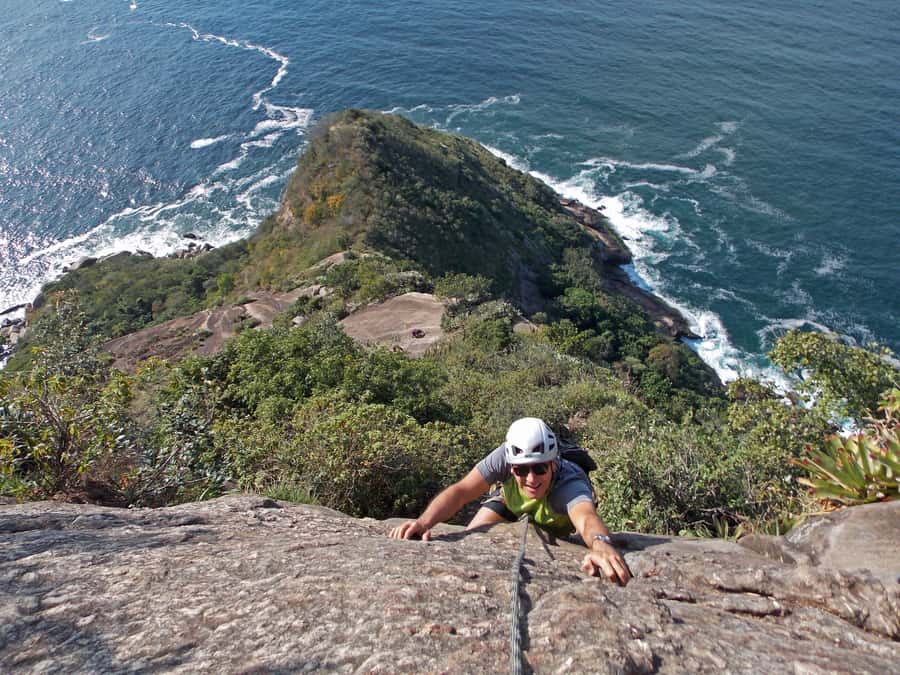
- The 20-meter climbing wall
- Pedra Filosofal and the Copacabana view
- Reaching the summit without taking the cable car up
- Cable-car descent and the walk toward Urca
- Monkeys, guides, and the human side of the tour
- Fitness, safety, and what to pack
- Guide quality and group choice
- Booking flexibility and weather planning
- Should you book the Sugarloaf hike and climb?
- FAQ
- How long does the Sugarloaf Mountain hike and climb take?
- What is the price?
- Where do I meet the guide?
- Is hotel pickup available?
- Do I need previous climbing experience?
- How high is the climbing wall?
- What languages are available?
- Is climbing equipment provided?
- What should I bring?
- Can I cancel the booking?
Five things to know before you book
- The route follows an old ascent path: You use the same general route associated with the first person to walk up Sugarloaf in 1817.
- The first lookout comes quickly: From Pista Claudio Coutinho, it takes about 20 minutes to reach broad views over Guanabara Bay and Niterói.
- The climbing wall is 20 meters high: You receive certified climbing equipment and guidance, even if you have never climbed before.
- The hike is harder than the cable-car ride: Expect steep ground and plenty of scrambling, with the climb to the top taking about 2.5 to 3 hours for some people.
- Wildlife is part of the outing: Monkeys may appear along the route, especially around the descent.
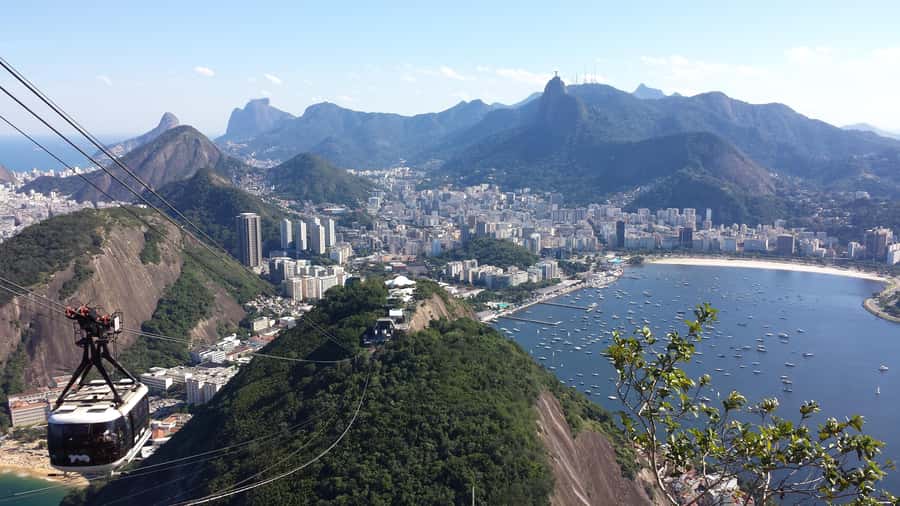
- The cable car saves your knees: The route reaches Sugarloaf’s summit on foot, then descends by cable car to Urca Hill.
Why this Sugarloaf route feels different
Most visitors meet Sugarloaf through a cable-car window. That is easy and scenic, but it gives you only a small taste of the mountain itself. This outing lets you earn the summit through a mix of walking, rock scrambling, and beginner-friendly climbing.
I like the sense of progression. You begin on the Pista Claudio Coutinho, reach an early lookout, then move onto rougher ground. The route grows more technical as it goes, so the views feel like rewards for each stage rather than one quick photo stop at the top.
The tour is listed at $68 per person, which is a fair price if you want more than transport to a viewpoint. It includes a bilingual guide, the guided hike and climb, certified climbing equipment, personal accident insurance, and taxes and handling charges. If you choose the transport option, hotel pickup and drop-off are included within the stated service area.
The price is less attractive if your main goal is simply to see Sugarloaf. The regular cable-car visit will be a better fit for that. Here, you are paying for guiding, equipment, route-finding, safety support, and an active half-day in one of Rio’s best-known settings.
More Sugarloaf cable car trips:
- Rio: Christ the Redeemer, Sugarloaf, Selaron & BBQ Lunch
★ 4.5 · 2,428 reviews - Skip the Line to Christ Redeemer, Sugar Loaf and Barbecue Lunch
★ 4.0 · 593 reviews - Rio de Janeiro: Christ the Redeemer and Sugarloaf Tour with…
★ 4.6 · 499 reviews
Starting at Pista Claudio Coutinho
The meeting point is at Praça General Tibúrcio, 75, in Urca, close to the obelisk. This location matters because the walk begins near the base of the mountain rather than at a distant city meeting point.
If you book transportation, pickup is offered from most hotels in Rio’s South Zone and Downtown. Hotels in Barra da Tijuca, Recreio, São Conrado, and Santa Teresa are not eligible for pickup. If your hotel is outside the pickup route, the operator redirects you to the nearest available meeting location, so check this before assuming a door-to-door ride.
The start is also a good reason to arrive prepared. Bring water, a small daypack, sunscreen, and a light snack. Three liters of water are recommended, which tells you something about the heat and exertion you may face. A small bag is useful, but large bags and luggage are not allowed.
Wear shoes with a solid grip. Sandals and flip flops are not permitted, and they would be a poor choice on steep rock anyway.
The first 20 minutes and Guanabara Bay
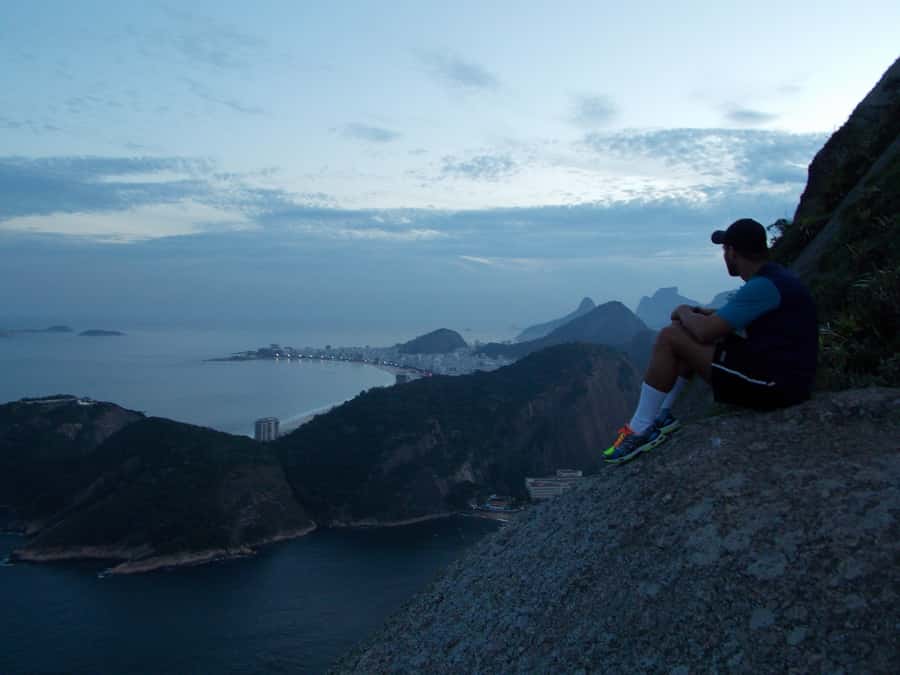
The opening stretch reaches a lookout in about 20 minutes. This early stop gives you views toward the entrance of Guanabara Bay and across to Niterói, while also helping you settle into the pace.
I like this part because it does not hold all the scenery until the summit. You start seeing Rio from a side angle almost at once, and the bay gives you a clear sense of how the city, water, and mountains fit together.
The first section also helps you judge the physical demand. If the opening walk already feels hard in the heat, tell your guide early. Guides can adjust the pace, and several have been praised for doing exactly that. Thomas, for example, was noted for being considerate with the pace, while Didi was praised for making clear where the route was headed and allowing time for photos.
Stone ramps, scrambling, and smaller belvederes
After the first lookout, the route becomes more technical. You cross stone ramps and scramble over uneven rock to reach several smaller belvederes.
Scrambling means using your hands as well as your feet. This is not a paved mountain path, and you should expect steep ground, rough surfaces, and moments when balance matters more than speed. One experienced hiker rated the route as advanced, even though the total time to the summit was not especially long.
That distinction is useful. You do not need to be an expert mountaineer, but you do need to be comfortable moving over rock. Average fitness can be enough, according to one detailed account, while people who are not fit may struggle. The route is manageable for an active person who takes care with footing, but it is not a casual sightseeing stroll.
Your guide is especially valuable here. Sergio was praised for helping first-time climbers through difficult spots and pointing out hand and foot holds. That kind of coaching turns a strange rock face into a series of small, understandable moves.
More hikes and trails:
- Rio: Tijuca Forest Small Group Hike to Caves and Waterfalls
★ 4.9 · 536 reviews - Pedra do Telégrafo Hike and Beach Full-Day Tour
★ 4.5 · 417 reviews - Rio de Janeiro: Pedra da Gávea 7-Hour Hike
★ 4.7 · 183 reviews - Rio de Janeiro: Tijuca Forest Challenge Hike Full-Day Trip
★ 4.9 · 163 reviews
The 20-meter climbing wall
The major challenge is a 20-meter vertical wall. You use certified climbing equipment and receive an introduction to basic rock-climbing technique.
You do not need previous professional climbing experience. Several people with no prior climbing background found the climbing sections fun and manageable, while experienced climbers also enjoyed the added challenge. The key requirement is comfort with height and a willingness to follow instructions.
This is not a full climbing course. The point is to get a taste of climbing while moving up Sugarloaf, not to spend the whole morning learning rope systems or technical theory. Your guide handles the safety side and helps you identify the holds.
Expect the wall to feel more demanding than the ordinary trail. The height may be the hardest part for some people, while others will find the steep hike more tiring. If you are afraid of heights, think carefully before booking. The activity is best for someone who can stay calm when the ground falls away and who is happy to trust the equipment and guide.
The guides receive especially warm praise for safety and encouragement. Tommy was described as making the climb feel safe, while Thomas brought strong energy to an early start. Sergio was repeatedly singled out for practical help and steady support.
Pedra Filosofal and the Copacabana view
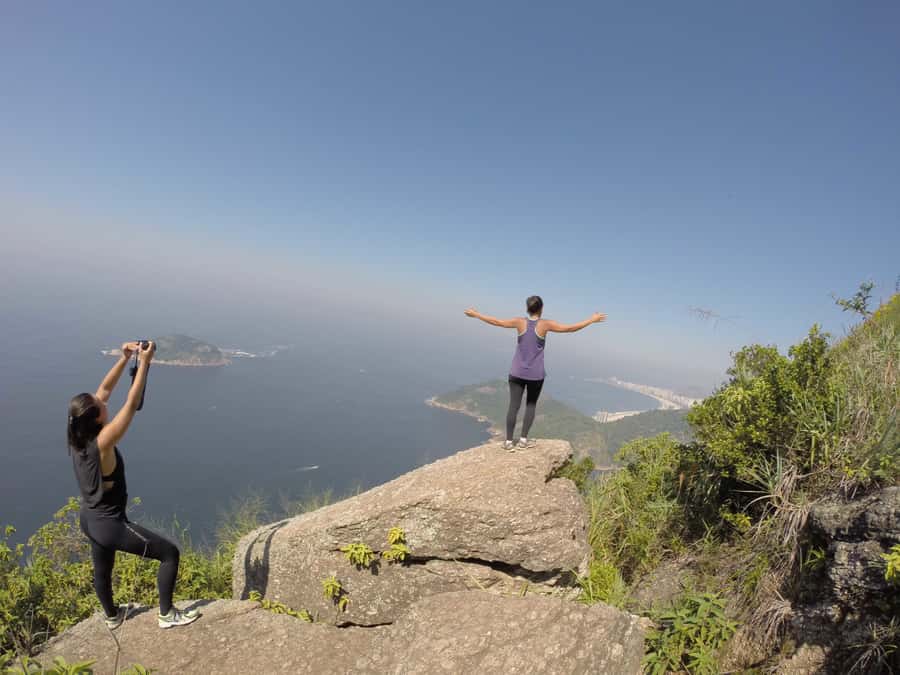
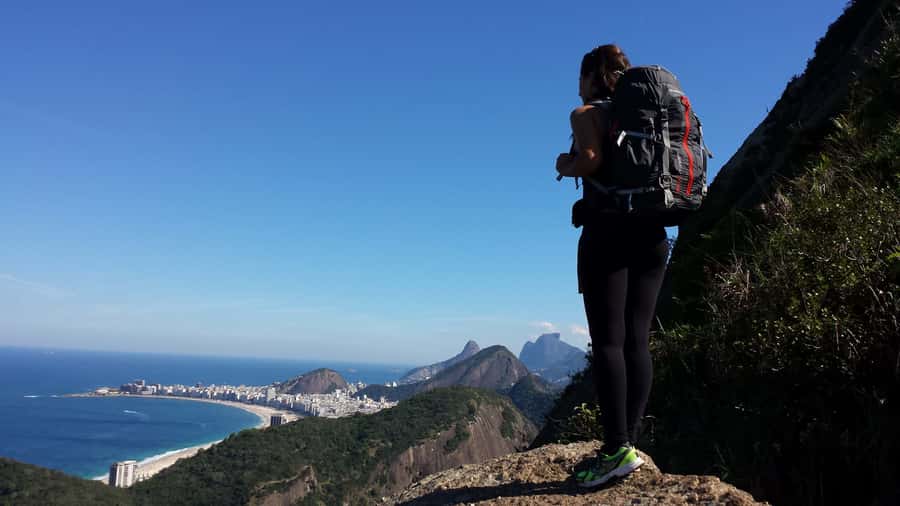
The Pedra Filosofal viewpoint is one of the route’s best stops. From here, you can look toward Copacabana Beach, Pedra da Gávea, and Morro Dois Irmãos.
This is where the value of approaching Sugarloaf on foot becomes clear. You see more than the postcard view from the summit. The angle changes as you climb, and each belvedere gives you a different relationship with the bay, beaches, and granite peaks.
Bring a phone or camera, but do not let photography turn the route into a stop-and-start march. The rock can be uneven, and it is easier to enjoy the outlook once you have both feet in a secure place. Your guide can point out good photo positions and help you keep the group moving.
Weather matters greatly here. Cloud, rain, or wet rock can change the order of the route or alter the sightseeing plan. A clear, dry day offers the best chance of seeing the full sweep toward Copacabana and the distant peaks.
Reaching the summit without taking the cable car up

The summit is the payoff, but it is not the only reason to choose this tour. You arrive after a morning of effort, with the city appearing in stages behind you.
At the top, you get the classic Sugarloaf views, now backed by the memory of the route you climbed. You may also find time for a snack before the descent. One person enjoyed a slice of pizza at the summit, a reminder that the cable-car station area offers a more developed break than the trail itself.
The summit can also feel busy compared with the quieter trail. That contrast is part of the experience. You get the solitude and physical challenge of the route, then reach one of Rio’s major sightseeing points.
The total activity lasts about four hours. People who moved at a steady pace reached the top in roughly 2.5 to 3 hours, followed by the cable-car descent and the remaining time around Urca. Your exact timing can change with weather, group pace, and how long you stop for views.
Cable-car descent and the walk toward Urca
The descent is by cable car to Urca Hill. This is a smart finish: after steep rock and climbing, you do not need to repeat the hard route downhill.
The cable car also gives you one last high view of the mountain and city without more strain. From Urca, the route becomes easy, and one account specifically noted that the walk from there was simple. The beach at the end was described as a welcome final touch.
Do not confuse this finish with a long beach day. The outing is built around hiking and climbing, not extended time by the water. Still, ending near the beach gives you a pleasant place to cool down and reset before your next Rio plan.
Monkeys, guides, and the human side of the tour
The chance to encounter monkeys in the wild adds a nice surprise. It is not guaranteed, so you should not book this as a wildlife tour, but monkeys have appeared along the route, including during the descent.
The guides also add more than route control. They may talk about Rio’s history, local flora, animals, and Brazil’s outdoor industry. Sergio was praised for sharing information about the country and animals, while another guide was noted for explaining Rio’s past and the local climbing scene.
The available languages are English, Spanish, and Portuguese. Private and small-group formats are available, which can make a real difference on a route that includes scrambling. A smaller group usually makes it easier to ask for help, pause for photos, or keep a pace that suits you, though the exact group size is not specified.
Fitness, safety, and what to pack
Take the physical warnings seriously. This activity is not recommended for people with heart problems or other serious medical conditions. Alcohol and drug use before or during the activity, along with possession of weapons, can result in cancellation.
For most people, the main issue is not technical skill but stamina, footing, and comfort with height. You should be able to handle a steep hike, use your hands on rock, and follow climbing instructions. No previous professional hiking or climbing experience is required, but being afraid of heights could make the 20-meter wall unpleasant.
Pack:
- Comfortable shoes with good grip
- Water, with three liters recommended
- Sunscreen
- A light snack
- A small daypack
Leave luggage and large bags behind. The route is easier when your hands are free and your pack stays light.
Guide quality and group choice
Guide quality appears to be one of the strongest parts of this outing. Sergio, Didi, Thomas, Tommy, and Eduardo were each praised for encouragement, safety, communication, pacing, or route knowledge.
That matters more here than on a standard city walk. A guide who explains handholds, watches your footing, and keeps you calm can change the whole experience. Didi was also praised for handling weather-related rescheduling and keeping communication clear through WhatsApp.
Private or small-group bookings are available. If you are new to climbing, traveling with mixed fitness levels, or want more time at viewpoints, a small group is worth considering. If you simply want the lowest price and are comfortable matching the group pace, the standard option may be enough.
Booking flexibility and weather planning
You can cancel up to 24 hours in advance for a full refund, and the reserve-now-pay-later option lets you hold a place without paying immediately. Those terms help because mountain weather can be changeable.
The itinerary and order of stops may change in adverse conditions. This is not a flaw in the operator’s plan. Wet rock and poor visibility can affect both safety and the quality of the views, so flexibility is sensible.
If your schedule allows, keep some room around this activity. A clear, dry morning is the best setup, and a weather change may require rescheduling. Confirmation is provided when you book, and starting times depend on availability.
Should you book the Sugarloaf hike and climb?
Book it if you want an active half-day, enjoy steep trails, and like the idea of combining sightseeing with a real physical challenge. It is especially good for first-time climbers who want professional guidance rather than a stand-alone climbing session.
Skip it if you only want an easy route to the summit, dislike heights, have heart problems, or would rather spend four hours on beaches and city streets. The cable car remains the simpler choice.
At $68, I consider this good value for an active visitor. You get several viewpoints, a guided 20-meter climb, certified equipment, a cable-car descent, and the possibility of seeing monkeys. The main cost is effort, not money. If that sounds like a fair trade for a fresh view of Rio, this is one of the more memorable ways to meet Sugarloaf.
FAQ
How long does the Sugarloaf Mountain hike and climb take?
The activity lasts four hours. The climb to the summit can take about 2.5 to 3 hours, followed by the cable-car descent and the remaining route near Urca.
What is the price?
The listed price is $68 per person.
Where do I meet the guide?
Meet at Praça Gen. Tibúrcio, 75, in Urca, Rio de Janeiro, near the obelisk.
Is hotel pickup available?
Pickup is available as an optional transportation service from most hotels in Rio’s South Zone and Downtown. Hotels in Barra da Tijuca, Recreio, São Conrado, and Santa Teresa are not eligible.
Do I need previous climbing experience?
No professional hiking or climbing experience is required. You do need reasonable fitness, comfortable footwear, and the ability to follow the guide’s instructions on steep rock.
How high is the climbing wall?
The vertical climbing wall is 20 meters high.
What languages are available?
Guides operate in English, Spanish, and Portuguese.
Is climbing equipment provided?
Yes. Certified climbing equipment is included.
What should I bring?
Bring water, a small daypack, sunscreen, a light snack, and comfortable footwear with good grip. Three liters of water are recommended.
Can I cancel the booking?
You can cancel up to 24 hours in advance for a full refund. A reserve-now-pay-later option is also available.
Just added around Rio de Janeiro
- Pedra Bonita Trail: The easiest trail with a beautiful view of Rio★ 4.6 · 3 reviews
- Rio: Private, Custom express, Main Attractions!★ 5.0 · 3 reviews
- Rocinha Jeep Tour: A Journey into the Soul of the Favela!★ 3.8 · 3 reviews
- Rio: Favela Walking Tour of Rocinha with a Resident Guide★ 4.7 · 3 reviews
- Explore Fernando de Noronha: 7-Hour Ilhatour★ 4.9 · 3 reviews
- Rio: Museum of Tomorrow, Yup Star & Olympic Boulevard★ 3.7 · 3 reviews
- Rio: Best Dive Experience All Inclusive Scuba Diving Package★ 5.0 · 3 reviews
- Rio de Janeiro by Air: 10-Minute Helicopter Tour★ 4.4 · 3 reviews
Sugarloaf Mountain Tours, compared.


Christ the Redeemer, Sugarloaf, Selaron & BBQ Lunch
Read our review →
Skip the Line to Christ Redeemer, Sugar Loaf and Barbecue Lunch
Read our review →

5-hour Christ the Redeemer and Sugarloaf Express Tour
Read our review →
Christ the Redeemer Early Access and Sugarloaf
Read our review →
Two of Rio’s Best: Christ the Redeemer & Sugarloaf Mountain Half-Day Tour
Read our review →
Sugarloaf Cable Car and Corcovado Train Tickets
Read our review →Browse the lists this tour appears in