
Reviewed · SANTA TERESA & SELARON STEPS TOURS
Ancient Rio and Santa Teresa Tour with Hotel pick-up and drop-off
Old Rio still tells its story. This four-hour tour pairs Santa Teresa’s hillside charm with downtown Rio’s grand civic buildings, old arches, and colonial-era streets. I especially like the chance to see Santa Teresa’s 1897 tram and the handsome early-20th-century mansions, then switch gears in Centro for Praça XV, Cinelândia, and the Theatro Municipal.
I also like the hotel pickup and drop-off, plus the chance to hear Rio’s past explained by local guides such as Dario, Renato, Roger, Wagner, and Monica. The main catch is simple: the tram is viewed, not ridden, and the schedule can feel rushed when traffic or a full minivan gets in the way.
In This Review
- Key points to know before booking
- Why Santa Teresa makes a strong first stop
- Parque das Ruínas and Laurinda Santos Lobo’s artistic legacy
- Arcos da Lapa, from waterworks to transport route
- Praça XV and the old center of power
- Arco do Teles and the small streets around it
- Cinelândia and Rio’s grand civic face
- Three landmark façades in ten-minute visits
- Four hours is useful, but the pace is tight
- What the guide can add to the route
- Price, group size, and what you receive for $55
- Who should book this Rio history tour
- Final call: book it for context, not a tram ride
- FAQ
- How long does the Ancient Rio and Santa Teresa tour last?
- Where does the tour start?
- Where does the tour end?
- Is hotel pickup included?
- Is the Santa Teresa tram ride included?
- Does the tour enter the museums and cultural buildings?
- Is lunch included?
- How large is the group?
- What should I wear?
- Can I cancel for a full refund?
- What happens if bad weather cancels the tour?
- Is there a minimum number of people required?
Key points to know before booking
- Santa Teresa combines mansions, street art, and a historic tram: You get a quick look at Rio’s artistic hillside district, but tram rides are not part of the standard tour.
- Downtown Rio supplies the grand architecture: Praça XV, Arco do Teles, Cinelândia, the National Library, the Fine Arts Museum, and the Municipal Theater show another side of the city.
- The tour lasts about four hours: That is enough for a useful first look, not enough for long museum visits or leisurely café stops.
- Hotel pickup and drop-off simplify the day: The tour begins and ends at the Hotel Rio Othon Palace meeting point, with pickup timing arranged according to your hotel.
- Guiding quality can shape the experience: Guides including Renato, Dario, Roger, Monica, and Wagner have earned strong praise, though a few tours were hurt by rushed pacing or weak communication.
- Expect walking on old, uneven streets: Santa Teresa’s cobblestones and hills require comfortable shoes and may be difficult if you have walking problems.
Why Santa Teresa makes a strong first stop
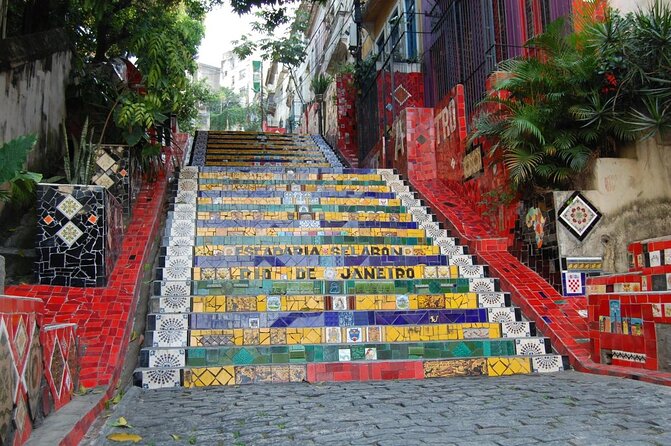
Santa Teresa feels unlike Rio’s famous beach districts. Its streets climb through a leafy, older neighborhood known for painters, artists, colorful walls, small shops, and grand houses dating from the early 1900s.
The appeal is not one grand monument. It is the combination of details: weathered façades, steep streets, old masonry, and the sense that this was once a fashionable residential quarter. You get a look at a more local and artistic side of Rio, far from the usual Corcovado and Sugarloaf circuit.
The area is also linked to Rio’s historic tram, built in 1897. That detail matters because the tram is part of Santa Teresa’s identity, not merely an object for a quick photograph. But set your expectations correctly. The standard excursion does not include a ride. You admire the tram and the neighborhood around it, then continue by vehicle and on foot.
That distinction is important. One unhappy customer booked expecting to ride the old yellow tram. Another specifically wished there had been time for a tram trip. The operator explains that a ride needs more time than this shared half-day schedule allows. If riding the tram is your main goal, this is not the right product unless you arrange a private version with a customized plan.
You should also expect uneven cobblestones. Santa Teresa’s old streets are part of its appeal, but they are not easy pavement. Wear shoes with a firm sole, and tell the operator in advance if you have walking limitations. Monica earned special praise for reducing walking distances and helping a husband who had difficulty walking, but the route itself remains historic and uneven.
More Santa Teresa and Selaron Steps walks:
- Rio: Christ the Redeemer, Sugarloaf, Selaron & BBQ Lunch
★ 4.5 · 2,428 reviews - Rio de Janeiro: Christ, Selaron Steps, and Tijuca Park Tour
★ 4.7 · 857 reviews - Santa Teresa, Lapa, and Cinelândia with Tram Ride and Selarón Steps
★ 4.5 · 274 reviews
Parque das Ruínas and Laurinda Santos Lobo’s artistic legacy
The Centro Cultural Municipal Parque das Ruínas occupies the former home of Laurinda Santos Lobo, an important supporter of artists. The house now serves as a cultural center, keeping that connection to art and creative life alive.
The scheduled visit lasts about 20 minutes, so think of it as a short cultural stop rather than a full museum visit. The value here comes from tying Santa Teresa’s artistic character to a specific person and place. You are not just looking at colorful streets. You are also hearing how the neighborhood became associated with artists and cultural activity.
Some tours include time around art and cultural centers, and one particularly positive account praised the art, the neighborhood’s friendly atmosphere, and the chance to see local character beyond standard sightseeing. Still, the exact amount of time can depend on traffic, the guide, and the pace of the group.
Arcos da Lapa, from waterworks to transport route
The Arcos da Lapa is one of the most recognizable structures in this part of Rio. It was originally built to transport water. Today, it supports the Santa Teresa tram route, linking an old public-works project with a living form of transport.
The stop lasts around 30 minutes. That gives you time to look at the arches, take photographs, and hear why the structure matters. The listing marks admission as not included, so treat this as an exterior sightseeing stop rather than an included museum entry.
The arches also help connect the two halves of the tour. Santa Teresa is above the city, with its old houses and tram. Lapa and downtown reveal Rio’s infrastructure, public spaces, and political center. A good guide can make that transition meaningful instead of simply moving you from one photograph to the next.
Praça XV and the old center of power
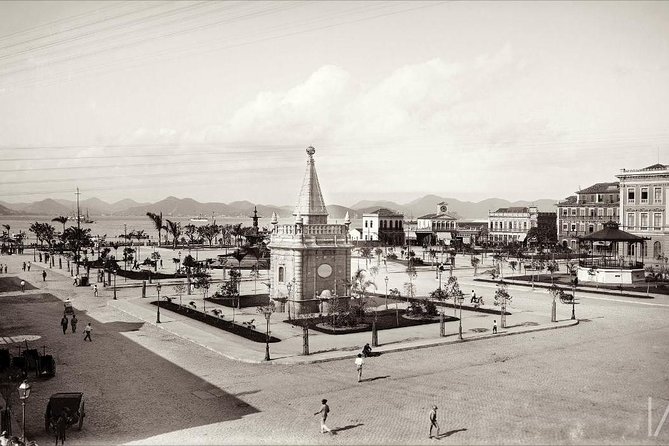
Praça Quinze de Novembro sits in Rio’s historic center and is surrounded by some of the city’s most important civic buildings. The Paço Imperial, the Palácio Tiradentes, and the Legislative Assembly of Rio de Janeiro all help explain how Rio functioned as a seat of government and power.
The square is also home to Praça XV Station, a ferry terminal serving destinations in Rio and Niterói. That gives the area a practical role as well as a historical one. You are seeing a public square that remains part of city life, not an isolated monument.
The scheduled stop is about 30 minutes. That is enough for an overview and photographs, but you should not expect a long guided visit inside every building. The itinerary focuses on the setting and architecture, and the listed admission is free for the square itself.
This is one of the places where guide quality makes a real difference. An engaged guide can explain how the buildings relate to Rio’s changing government and urban life. Guides such as Renato and Roger were praised for connecting historical facts with broader questions about economics, colonial rule, and modern Brazil. That kind of context gives the square more meaning than a quick name-and-date explanation.
A few more trips worth weighing up before you book
- Rio de Janeiro: 6-Stop Highlights of Rio with Lunch
★ 4.4 · 5,157 reviews - Christ the Redeemer Entry Ticket by Corcovado Train
★ 4.4 · 4,476 reviews - Rio de Janeiro: Rocinha Favela Walking Tour with Local Guide
★ 4.8 · 3,052 reviews - Rio De Janeiro: Half-Day Rocinha Favela Walking Tour
★ 4.7 · 2,272 reviews
Arco do Teles and the small streets around it
Arco do Teles leads into a section of the old downtown market area. Its narrow streets and alleys are now lined with bars and small restaurants, giving the stop a more intimate feel than the large ceremonial squares.
You get approximately 20 minutes here. The stop is best for atmosphere, architecture, and a short walk. It is not designed as a meal break, and lunch is not included.
Some earlier versions or individual guides may have offered time around famous cafés, but you should not count on sitting down for coffee and cake during this four-hour shared tour. One disappointed customer had only seconds for photographs and was not given time to stop for a drink. That is a useful warning: if you want to linger in Arco do Teles, eat, or visit a café, a private tour would give you more control.
Cinelândia and Rio’s grand civic face
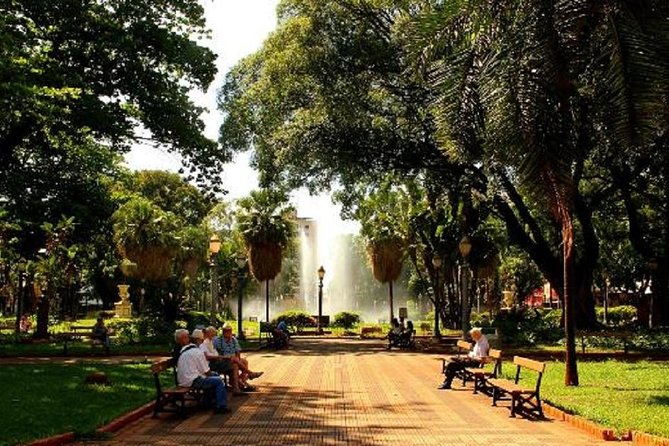
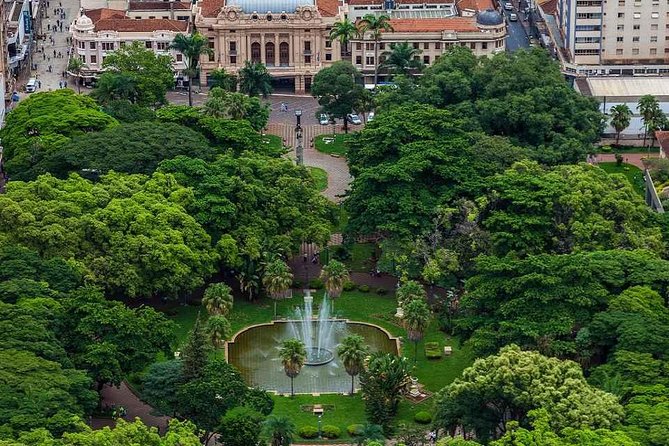
Cinelândia is one of downtown Rio’s best architectural stages. The square is surrounded by historic buildings and offers good angles for photographs. Here, Rio shifts from intimate lanes to broad public architecture.
The stop lasts around 30 minutes, which should allow you to walk around the square and take in the façades. The exact experience depends on the guide’s rhythm. Some guides allow time for photographs and explanations, while others move quickly to fit the remaining stops.
This part of the route is especially useful if you have already seen Rio’s natural icons. Corcovado and Sugarloaf show the city’s famous scenery. Cinelândia and the old center show how Rio presented itself as Brazil’s capital and cultural center.
Three landmark façades in ten-minute visits
The final downtown stops are the Museu Nacional de Belas Artes, Theatro Municipal do Rio de Janeiro, and Biblioteca Nacional. Each receives about ten minutes, and the tour does not enter these buildings.
The Fine Arts Museum was designed in 1908 by Adolfo Morales de los Rios to house the National School of Fine Arts. That school followed the Imperial Academy of Fine Arts and formed part of the major urban modernization carried out under Mayor Pereira Passos when Rio was Brazil’s federal capital.
The Municipal Theater opened in 1909 and became one of Brazil and Latin America’s leading performance venues. It has hosted major dancers, musicians, opera singers, and performing artists. Since the 1930s, it has maintained its own choir, symphony orchestra, and ballet company.
The National Library began in 1810 under King João VI of Portugal. It is the largest library in Latin America, with an archive of almost nine million items, including rare books, manuscripts, letters written by Princess Isabel, early Brazilian newspapers, and two copies of the Mainz Psalter Bible, printed in 1492.
Those facts are impressive, but the schedule is not meant for serious museum visits. You will mainly inspect the architecture from outside. If you want to enter the library or theater, check opening days and arrange extra time separately. A tour taken on a day when these buildings are closed can still be worthwhile, but you should know in advance that the interiors are not part of the standard plan.
Four hours is useful, but the pace is tight
The published stops add up to roughly four hours, with Santa Teresa receiving the longest visit at one hour. The cultural center gets 20 minutes, Arcos da Lapa and Praça XV receive 30 minutes each, and the remaining downtown sights get shorter visits.
That structure gives you range. You see a hillside neighborhood, cultural center, historic arches, government buildings, market lanes, grand squares, and major cultural institutions in one morning or afternoon. For a first visit, that variety is the main reason to book.
The tradeoff is limited time at each place. You cannot reasonably explore Santa Teresa, ride the tram, enter three cultural buildings, stop for lunch, and stroll downtown at a relaxed pace in four hours. You need to choose the tour for orientation and context, not unhurried discovery.
Traffic can also change the day. One tour affected by Carnival started more than an hour late, and the return journey took much longer because the van had to drop off other passengers. Another person waited more than 30 minutes for pickup, then spent about 90 minutes on the return route. These problems may not happen, but they are worth allowing for if you have a flight, dinner reservation, or another timed activity afterward.
What the guide can add to the route
The best part of this experience may be the guide rather than any individual building. Rio’s old center can look like a collection of façades unless someone explains how the pieces fit together.
Several guides received especially warm praise. Renato was appreciated for linking history and economics. Roger was praised for fluent English, wide knowledge, and an honest explanation of Brazil’s complicated past. Dario was repeatedly described as friendly, informed, patient, and reassuring. Monica earned praise for professionalism and attention to a passenger with limited mobility. Wagner and Jack Daniel also received strong marks for clear explanations and a smooth day.
That said, the standard is not perfectly consistent. A few people found their guide disengaged, hard to understand, or incorrect about some facts. Others felt hurried from one stop to another. On a shared tour, the guide is also balancing different walking speeds and photo requests, so the experience can feel less personal than a private car tour.
If historical explanation matters greatly to you, contact the operator about the pickup time and ask what language support is available. If you get an excellent guide, the tour can become a thoughtful introduction to Rio’s past. If the guide is simply driving and pointing, the same route can feel thin.
Price, group size, and what you receive for $55
At $55 per person, the tour offers reasonable value if you want transportation, a guide, hotel pickup and drop-off, and a broad look at two important areas. The air-conditioned vehicle matters in Rio’s heat, especially when you are moving between uphill Santa Teresa and downtown.
The advertised minivan limit is 19 people. That is small enough to be more manageable than a full-size coach, but it is not intimate. The overall activity information also gives a maximum of 99 participants, so the actual group arrangement can vary. Some people have ended up in very small groups or private cars, while others found the van full and disliked sitting in the middle or rear with limited views.
Lunch is not included, and museum admissions are not included. The three final cultural landmarks are exterior visits, so the price is best judged as a guided sightseeing and transport fee, not a museum tour.
I consider it good value for a short stay, a first orientation, or a day when you want to connect places that are awkward to combine independently. I would choose a private version if your priorities are tram riding, café time, indoor visits, photography, or a slower pace.
Who should book this Rio history tour
I would recommend it most strongly to you if you have limited time in Rio and have already planned, or do not need, another major attraction such as Christ the Redeemer or Sugarloaf. It adds a different side of the city and helps you understand why the old center matters.
It also suits people who prefer seeing a lot with a guide rather than sorting out transport between Santa Teresa and Centro. The hotel pickup and return reduce planning, though you should confirm the pickup time and allow extra room for traffic.
You should think twice if you have difficulty walking on cobblestones, need regular rest and drink breaks, or dislike fixed schedules. The tour can be adapted in some cases, but the route itself includes historic streets and several short stops.
For Santa Teresa’s shops and handicraft stalls, Sunday may be a better choice than Monday. One person found many places closed on Monday, while another enjoyed an art fair during the visit. New Year’s Day can also be quiet, with downtown shops and Santa Teresa stores closed.
Final call: book it for context, not a tram ride
Book this tour if you want a compact introduction to Santa Teresa and Rio’s old center, with strong architecture, local history, and convenient transport. At $55, it earns its price when your guide is engaged and the traffic cooperates.
Skip it, or choose a private alternative, if you want to ride the historic tram, enter the museums, sit in a famous café, or spend an hour simply wandering. The best booking strategy is to choose a day with open shops, avoid major traffic disruptions when possible, wear sturdy walking shoes, confirm pickup details, and keep the rest of your schedule flexible.
FAQ
How long does the Ancient Rio and Santa Teresa tour last?
The tour lasts approximately four hours.
Where does the tour start?
The listed meeting point is Hotel Rio Othon Palace, Av. Atlântica, 3264, Copacabana, Rio de Janeiro.
Where does the tour end?
The activity ends back at the meeting point.
Is hotel pickup included?
Hotel pickup and drop-off are offered, but you must contact the operator to confirm the pickup time according to your hotel location.
Is the Santa Teresa tram ride included?
No. The tour lets you see Santa Teresa’s historic tram, but a tram ride is not included in the standard schedule.
Does the tour enter the museums and cultural buildings?
No. The Museu Nacional de Belas Artes, Theatro Municipal, and Biblioteca Nacional are viewed from the outside. Museum entrance fees are not included.
Is lunch included?
No. Lunch is not included in the tour price.
How large is the group?
The tour information gives a maximum of 19 people per minivan. It also lists an overall maximum of 99 participants for the activity.
What should I wear?
Comfortable clothing and walking shoes are recommended. Santa Teresa includes old, uneven cobblestone streets.
Can I cancel for a full refund?
Yes, if you cancel at least 24 hours before the experience start time. Cancellations made less than 24 hours in advance are not refunded.
What happens if bad weather cancels the tour?
If poor weather causes cancellation, you will be offered another date or a full refund.
Is there a minimum number of people required?
Yes. At least two people are required for the activity to take place.
Just added around Rio de Janeiro
- Pedra Bonita Trail: The easiest trail with a beautiful view of Rio★ 4.6 · 3 reviews
- Rocinha Jeep Tour: A Journey into the Soul of the Favela!★ 3.8 · 3 reviews
- Rio: Private, Custom express, Main Attractions!★ 5.0 · 3 reviews
- Rio: Favela Walking Tour of Rocinha with a Resident Guide★ 4.7 · 3 reviews
- Explore Fernando de Noronha: 7-Hour Ilhatour★ 4.9 · 3 reviews
- Rio: Museum of Tomorrow, Yup Star & Olympic Boulevard★ 3.7 · 3 reviews
- Rio: Best Dive Experience All Inclusive Scuba Diving Package★ 5.0 · 3 reviews
- Rio de Janeiro by Air: 10-Minute Helicopter Tour★ 4.4 · 3 reviews
Santa Teresa & Selaron Steps Tours, compared.

Christ the Redeemer, Sugarloaf, Selaron & BBQ Lunch
Read our review →

Santa Teresa, Lapa, and Cinelândia with Tram Ride and Selarón Steps
Read our review →

Corcovado, Sugarloaf Mountain, and Selarón Steps 6-Hour Tour
Read our review →
Christ the Redeemer & Selarón Steps Half-Day Tour
Read our review →
Christ the Redeemer and Escadaria Selarón Half-Day Tour
Read our review →
Rio in Style: A Journey Thru Corcovado, Sugarloaf, Selaron
Read our review →Browse the lists this tour appears in