
Reviewed · STREET ART
Rio Street Art Tour
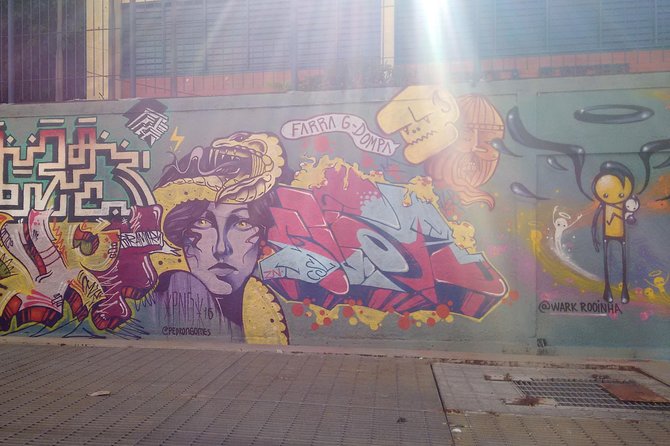
Rio’s walls tell stories in plain sight. This private tour links street art with Rio’s history, architecture, politics, Carnival, and Afro-Brazilian culture, while taking you through central neighborhoods by subway, VLT, and on foot. I like the mix of famous sights and places you might skip on your own, especially the Selarón Steps and the huge mural at Porto Maravilha. I also like that guide Wellington receives repeated praise for clear English, warmth, and lively local stories.
The main consideration is pace. You cover several parts of central Rio in about three hours, and one review specifically warns that there is lots of walking. Public transportation adds local flavor, but it also means this is not a sit-back sightseeing trip. Bring water, wear comfortable shoes, and expect the tour to end somewhere different from where it begins.
In This Review
- Five things to know before you book
- Why Rio’s street art deserves your attention
- Meeting at the Municipal Theater in Cinelândia
- Glória and Rio’s first legalized graffiti
- The Selarón Steps, colorful but crowded
- Cinelândia’s theater, libraries, and public buildings
- Taking the VLT toward Olympic Boulevard
- Olympic Boulevard and the Museum of Tomorrow
- Porto Maravilha and the Etnias mural
- Carnival, samba, and a possible extra stop
- What the $68.61 price gets you
- Is the three-hour pace right for you?
- Who should book the Rio Street Art Tour?
- Should you book it?
- FAQ
- Where does the Rio Street Art Tour begin?
- Where does the tour end?
- How long does the tour last?
- Is the tour private?
- Does the tour include public transportation?
- What happens if the weather is poor?
Five things to know before you book
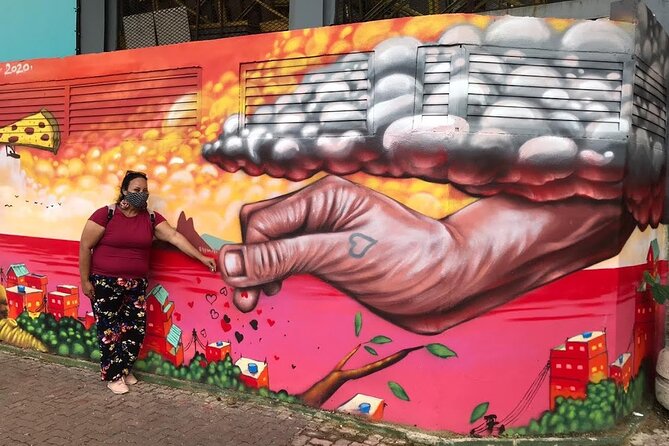
- The tour connects art to real Rio stories: Expect discussion of slavery, politics, Carnival, samba schools, architecture, and current city life.
- You use the city like a local: The route includes the subway and VLT, Rio’s light rail, rather than relying on a private vehicle.
- The giant Porto Maravilha mural is the finale: The Etnias mural is described as the largest graffiti mural in the world.
- Wellington is a major part of the experience: He is praised for his English, humor, personal stories, and ability to explain difficult subjects clearly.
- It is private for your group: The experience can work for solo visitors, couples, families, or friends who want to ask plenty of questions.
- Plan for a lot of walking: Admissions are free, but the price pays mainly for guiding, interpretation, local knowledge, and the time spent moving between neighborhoods.
Why Rio’s street art deserves your attention
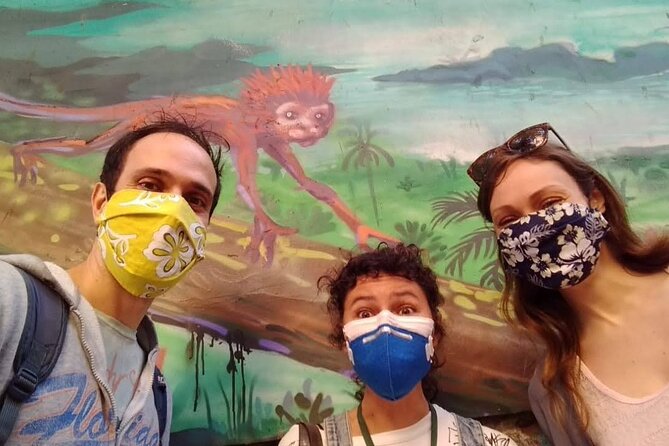
Rio’s street art is not just decoration slapped onto a blank wall. The art gives you a way to read the city. Images may point toward race, inequality, faith, politics, Brazilian identity, or the country’s painful history of slavery.
That is the strength of this experience. You are not simply taken to a mural, given a photo stop, and hurried onward. Wellington explains the people and ideas represented in the work. He also connects the paintings to the streets around them, so the city itself becomes part of the lesson.
I especially like this approach for a first visit to Rio. Famous sights such as Sugarloaf and Christ the Redeemer show the city from above. This tour shows it at street level, where old buildings, public transit, port districts, museums, and neighborhood life sit close together.
The art also gives Wellington a natural way to discuss subjects that can be difficult to understand from a short visit. Several parts of the route touch on Afro-Brazilian culture and the area known as Little Africa. If you want a pleasant walk with a few colorful walls, you will get that. If you want to understand why those walls matter, you will get much more.
A few more trips worth weighing up before you book
- Rio Street Art Tour
★ 5.0 · 76 reviews - São Paulo: Bar and Street Art Crawl with Local Guide
★ 4.9 · 102 reviews - Street Art and Park Bike Tour
★ 5.0 · 56 reviews
Meeting at the Municipal Theater in Cinelândia
The tour begins at the Municipal Theater of Rio de Janeiro in Praça Floriano, in central Rio. This puts you in the Cinelândia area, a useful starting point because the first part of the tour is about more than graffiti.
Cinelândia is known for important civic and cultural buildings, including the city’s main theater and libraries. Wellington uses this setting to explain Rio’s European architectural influence. That context matters because the city’s central districts are full of visual contrasts: formal public buildings, older urban streets, contemporary murals, and public art created for a modern Rio.
The starting point is near public transportation, which makes sense for a tour that uses the subway and VLT. You should arrive ready to walk rather than expecting a coach or private car. The experience is designed around seeing the city from close range.
For many people, Cinelândia will be familiar only as a place to pass through on the way to another attraction. That is exactly why the stop works. You begin by looking at Rio as an urban and cultural center, not only as a beach destination.
Glória and Rio’s first legalized graffiti
From the meeting area, the route includes subway travel to Glória. This transfer is part of the experience, not wasted time. You get a practical introduction to Rio’s public transportation and see how the central neighborhoods connect.
In Glória, the group looks at what is described as Rio’s first legalized graffiti. That detail gives the artwork a useful frame. Graffiti often sits between art, protest, public expression, and regulation. A legalized piece raises questions about who gets to use public space and how a city decides what belongs on its walls.
The stop is short, about 20 minutes, so do not expect a long workshop on a single artwork. Instead, it works as an opening chapter. Wellington sets up the idea that Rio’s street art has a history and that public walls can reflect changes in the city.
This is also where the tour begins to move beyond the standard central-Rio route. You are not confined to one plaza or museum. The experience links separate districts, using the city’s own transport system to make the connections.
The Selarón Steps, colorful but crowded
The Escadaria Selarón is one of Rio’s best-known public artworks and one of the city’s most visited sights. The staircase is covered with colorful tiles and has become a major photo stop.
The visit lasts about 20 minutes and admission is free. That short timing is sensible. The steps are visually striking, but they can also be crowded and noisy, so the attraction is better treated as one part of a wider route rather than the entire reason to book.
A guide adds value here by placing the staircase within Rio’s wider artistic life. You can take your photographs, then ask questions about the neighborhood, the artist, or how the staircase fits into the city’s public art scene.
One practical point: the tour may visit the Selarón Steps at the beginning or end of the route, depending on how the stops are arranged on the day. The supplied itinerary mentions them both in the early route and as a possible finishing point in the central tourist area. Either way, you should expect a brief visit rather than unlimited time for photographs.
A completely different kind of day out around Rio de Janeiro:
- Rio de Janeiro: 6-Stop Highlights of Rio with Lunch
★ 4.4 · 5,157 reviews - Christ the Redeemer Entry Ticket by Corcovado Train
★ 4.4 · 4,476 reviews - Rio de Janeiro: Rocinha Favela Walking Tour with Local Guide
★ 4.8 · 3,052 reviews - Rio: Christ the Redeemer, Sugarloaf, Selaron & BBQ Lunch
★ 4.5 · 2,428 reviews
Cinelândia’s theater, libraries, and public buildings
The Cinelândia portion lasts around 30 minutes. Here, Wellington discusses the main theater and libraries of the city, along with the architectural influence that shaped central Rio.
I like this part because it keeps the tour from becoming a collection of disconnected murals. Street art makes more sense when you understand the buildings nearby. The grand public architecture speaks to official culture and civic ambition, while graffiti often gives space to voices that are less formally represented.
The contrast is useful for families and first-time visitors. Children may focus on the colors and characters in the murals, while adults can follow the discussion of politics, social issues, and urban change. Solo visitors also benefit because a private format lets you ask for more explanation when a subject catches your attention.
The route is not designed for people who want to spend an hour inside a museum. The buildings are part of the street experience. You see them from the outside and move on to the next district.
Taking the VLT toward Olympic Boulevard
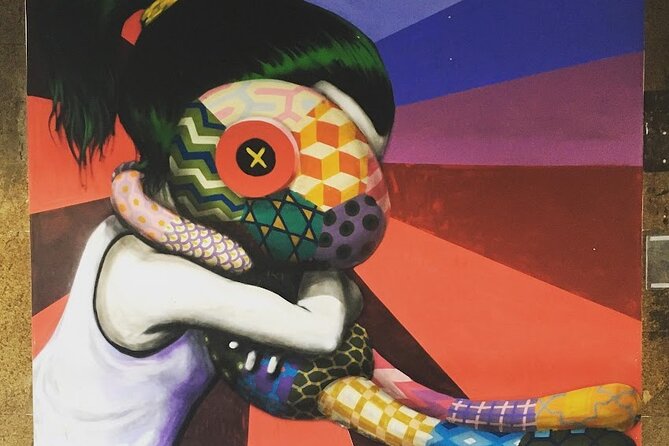
The tour uses Rio’s VLT, or light rail, to reach the Olympic Boulevard and Porto Maravilha. This is one of the most distinctive parts of the experience because you travel between attractions by public transport rather than watching the city through a vehicle window.
One review specifically notes that the guide bought a train ticket for the participant, helping avoid a possible fine. That suggests Wellington pays attention to the practical side of the route. Still, it is sensible to clarify at the start how transport tickets are handled, since the tour price and the free admission notes do not clearly state that transit is included.
The VLT ride also changes the rhythm. You are walking, looking, listening, then riding through the city before continuing on foot. If you enjoy seeing how locals move around Rio, this is a plus. If you prefer a tightly controlled sightseeing schedule, the transfers may feel less polished than a private vehicle.
The tour’s use of public transport is valuable because it makes the city feel connected. You are not only visiting isolated attractions. You are seeing how central Rio, the port district, museums, and historic neighborhoods fit together.
Olympic Boulevard and the Museum of Tomorrow
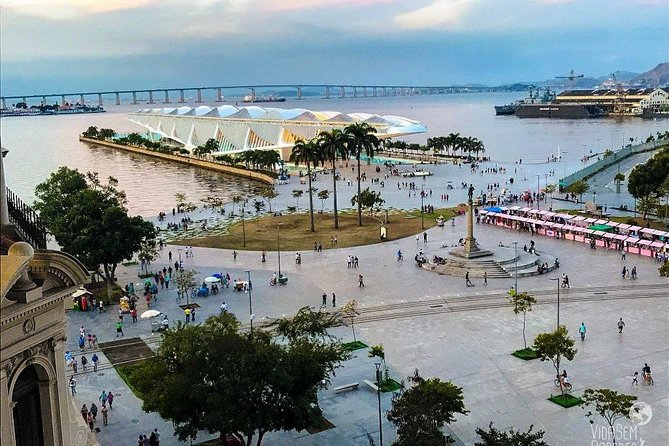
At Olympic Boulevard, the group reaches an area associated with several major museums. The Museum of Tomorrow is the most recognizable landmark in the itinerary, and its futuristic design provides a strong contrast with the older architecture around Cinelândia and Glória.
The visit here lasts about 30 minutes. The tour does not list an admission visit inside the museum, and all stops are marked as having free admission. You should therefore expect to see the area and discuss its museums rather than spend time exploring an exhibition.
That is not a flaw, but it is important to know what you are buying. This is an interpretive walking tour, not a museum ticket package. Wellington’s role is to help you understand the city’s changing port district, its public art, and the meaning of the surrounding buildings.
Olympic Boulevard is also a good place to see how Rio has used large-scale public art and redevelopment to reshape an old waterfront area. The route links new museums and monumental murals with the older social history of the port.
Porto Maravilha and the Etnias mural
The final major stop is Porto Maravilha, where the tour spends about an hour. This is the longest stop, and it makes sense because the area contains the tour’s largest visual payoff: the Etnias mural.
The mural is described as the largest graffiti mural in the world. Its scale is hard to appreciate from a single photograph. You need time to look at the full wall, notice the different faces and patterns, and understand how the work relates to ideas of ethnicity and shared humanity.
This is where Wellington’s explanations appear to have the greatest value. He discusses the messages in the murals, the history of the port area, and its connection to enslaved Africans. The art is impressive on its own, but the surrounding story gives it weight.
Porto Maravilha also provides a bridge to Little Africa. For some visitors, this may be the most meaningful part of the tour. The subject is not presented as a footnote. Wellington can explain how slavery shaped Brazil and how Afro-Brazilian culture continues to influence Rio through music, religion, Carnival, food, and public life.
A few people may find that some murals on the route are older rather than newly painted. One participant wished for more recent or younger work. That is a fair point if you follow current graffiti closely. The tour appears to focus on major works and their cultural meaning, not on chasing the newest pieces in town.
Carnival, samba, and a possible extra stop
The tour can also bring in Rio’s Carnival culture. One account describes seeing Carnival floats from a previous parade, and another mentions the possibility of visiting the grounds of Cidade do Samba near a train stop if open.
This is not presented as a guaranteed part of every departure, so treat it as a possible addition rather than a promised stop. If Carnival interests you, ask Wellington about it early in the tour.
That extra context can make the art easier to understand. Rio’s murals do not exist apart from music and public celebration. Carnival, samba schools, racial identity, and neighborhood traditions all shape how the city presents itself.
I would particularly recommend this tour to anyone who has already seen Rio’s headline attractions and wants a more grounded look at city life. It also works well near the start of a visit because Wellington can point out places to eat and suggest areas worth returning to. One pair finished with lunch at a local spot recommended during the tour.
What the $68.61 price gets you
At $68.61 per person, this is not the cheapest way to see public art. The listed stops have free admission, so the price is not paying for entry tickets.
The value comes from the private format, the guide’s time, and the interpretation. You are paying for a three-hour route that combines central Rio, Glória, Cinelândia, the Selarón Steps, Olympic Boulevard, and Porto Maravilha. You also get help with public transportation and the chance to shape the conversation around your interests.
For a solo visitor, the price may feel high compared with a self-guided walk. But a solo participant can still book the experience privately, and that makes the guide’s attention more personal. For a family or small group, the cost can make better sense, especially if you want history and cultural context rather than only photographs.
The tour is also good value for people who would not feel comfortable piecing together this route alone. You avoid spending time finding the murals and trying to work out their meaning from a quick internet search.
Is the three-hour pace right for you?
Three hours is enough to sample several parts of central Rio, but it is not enough for long stops at every sight. You should expect short visits at the first four stops and more time at Porto Maravilha.
The walking is described as easy, but there is a lot of it. Comfortable shoes are essential, and water is a sensible addition. The route includes subway and VLT travel, so you should also be comfortable with a changing pace and ordinary public transportation.
The experience is private, which helps. You can ask Wellington to slow down, spend more time on a subject, or explain a mural in greater detail. Most people can participate, but the amount of walking may matter if you have mobility concerns.
The tour requires good weather. If poor weather causes cancellation, you are offered another date or a full refund. You can cancel for a full refund up to 24 hours before the start time, but changes made inside that window are not accepted.
Who should book the Rio Street Art Tour?
I would choose this tour if you want Rio explained through art, public spaces, and local stories. It suits solo visitors, families, friends, and anyone who prefers a small private experience to a large group outing.
It is especially useful for people interested in architecture, Brazilian politics, Afro-Brazilian culture, Carnival, or the history of slavery. You do not need to be an art expert. The guide explains the works in plain language and connects them to daily life.
I would think twice if you want a relaxed vehicle tour, lots of indoor museum time, or a route devoted only to new graffiti. The experience involves walking, public transit, and several short stops.
Should you book it?
Book it if you want to see Rio from street level and understand what its murals are saying. The combination of Wellington’s personal approach, central neighborhoods, public transit, the Selarón Steps, Little Africa, and the enormous Etnias mural gives you a strong cultural introduction for three hours.
Before booking, make sure the walking distance suits you and confirm the meeting details, transport arrangements, and the final drop-off point. If those practical details work for you, the price is reasonable for a private guide-led experience that goes well beyond taking pictures.
FAQ
Where does the Rio Street Art Tour begin?
It begins at the Municipal Theater of Rio de Janeiro, at Praça Floriano in central Rio de Janeiro.
Where does the tour end?
The activity ends in a different location from the meeting point. The supplied details do not specify the exact final address.
How long does the tour last?
The tour lasts approximately three hours.
Is the tour private?
Yes. Only your group participates, and the experience can accommodate a group as small as one person.
Does the tour include public transportation?
The route uses the subway and the VLT. The provided details do not clearly state whether transportation tickets are included in the tour price, so confirm this before departure.
What happens if the weather is poor?
The experience requires good weather. If it is canceled because of poor weather, you can choose another date or receive a full refund.
Just added around Rio de Janeiro
- Pedra Bonita Trail: The easiest trail with a beautiful view of Rio★ 4.6 · 3 reviews
- Rocinha Jeep Tour: A Journey into the Soul of the Favela!★ 3.8 · 3 reviews
- Rio: Private, Custom express, Main Attractions!★ 5.0 · 3 reviews
- Rio: Favela Walking Tour of Rocinha with a Resident Guide★ 4.7 · 3 reviews
- Explore Fernando de Noronha: 7-Hour Ilhatour★ 4.9 · 3 reviews
- Rio: Museum of Tomorrow, Yup Star & Olympic Boulevard★ 3.7 · 3 reviews
- Rio: Best Dive Experience All Inclusive Scuba Diving Package★ 5.0 · 3 reviews
- Rio de Janeiro by Air: 10-Minute Helicopter Tour★ 4.4 · 3 reviews
Street Art, compared.

Private Street Art Tour of São Paulo with Batman´s Alley Visit
Read our review →

Browse the lists this tour appears in