
Reviewed · CITY TOURS
Manaus: City Tour
Manaus reveals its story one building at a time. This three-hour city tour links Teatro Amazonas, colonial architecture, the Municipal Market, and the rubber boom while giving you practical advice on food, crafts, nightlife, and jungle lodges. I like the focus on both history and useful local tips, and I also like the chance to speak with a guide in English, Portuguese, Spanish, Italian, or German. The main concern is reliability: one recent booking was forgotten and began an hour late, and German guiding was not available on that occasion.
At $80 per person, this is not the cheapest way to walk around Manaus. You are paying for a private-feeling introduction with a local guide, cultural background, and help planning the rest of your stay. The experience may suit you best if you have only a short time in the city or want advice before heading into the Amazon.
In This Review
- Key points at a glance
- Starting on Rua 10 de Julho
- Teatro Amazonas and Portuguese colonial life
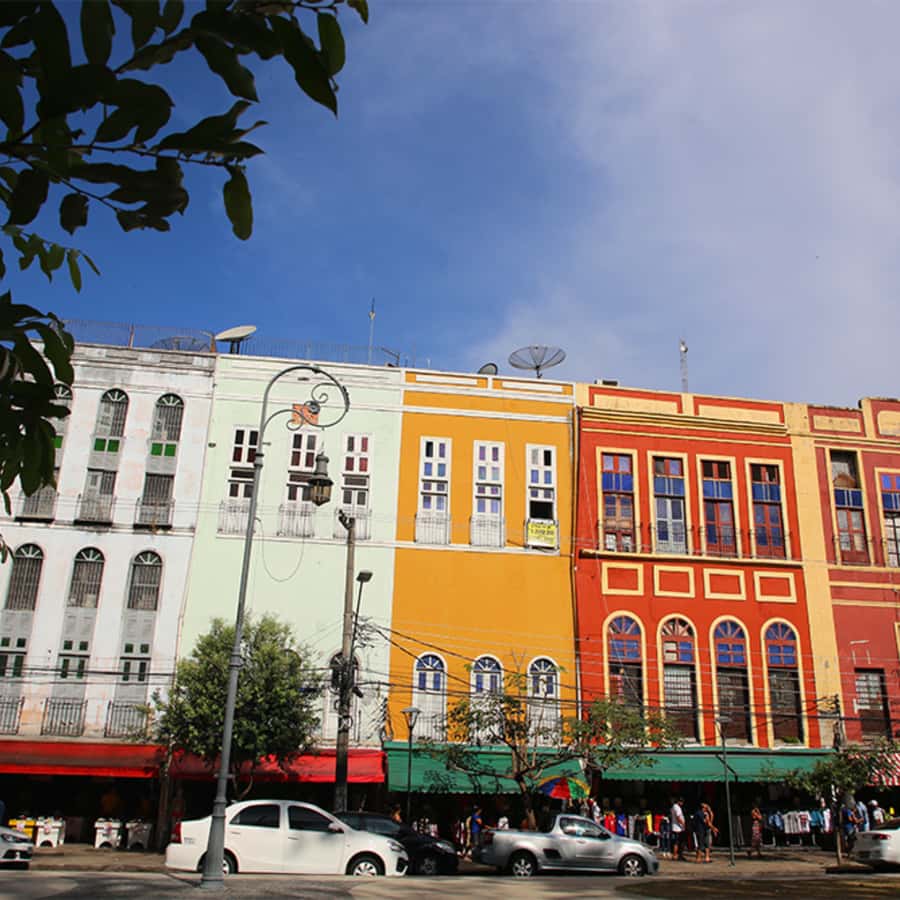
- Colonial buildings on the way to the Municipal Market
- The rubber boom and Manaus’s unexpected wealth
- Local food, crafts, and curious places
- Planning an Amazon jungle stay from Manaus
- Nightlife advice for a short stay
- Languages and the human side of the tour
- Is $80 good value for three hours?
- Who should book this Manaus tour?
- Final verdict: book it for context and local planning
- FAQ
- Where does the Manaus city tour start?
- Where does the tour finish?
- How long does the experience last?
- What languages are available?
- Is a guide included?
- Does the tour visit the Municipal Market?
- Does the tour explain the rubber history of Manaus?
- Can the guide recommend food and restaurants?
- Can the guide suggest Amazon jungle lodges?
Key points at a glance
- Teatro Amazonas sets the historical scene: Begin with the famous theater and learn how Portuguese colonists lived and how Manaus developed.
- The route connects several parts of Manaus: You move toward the Municipal Market while seeing colonial buildings and discussing local architecture.
- The rubber era explains the city’s surprising wealth: The guide places Manaus’s grand construction within the rise of rubber production.
- Local advice is part of the experience: Ask where to eat, shop for crafts, go out at night, or arrange a jungle lodge.
- Five guide languages are offered: Spanish, Italian, German, Portuguese, and English are listed, though language availability should be confirmed.
- Timing deserves attention: The advertised length is three hours, but one booking began an hour late after the reservation was missed.
Starting on Rua 10 de Julho
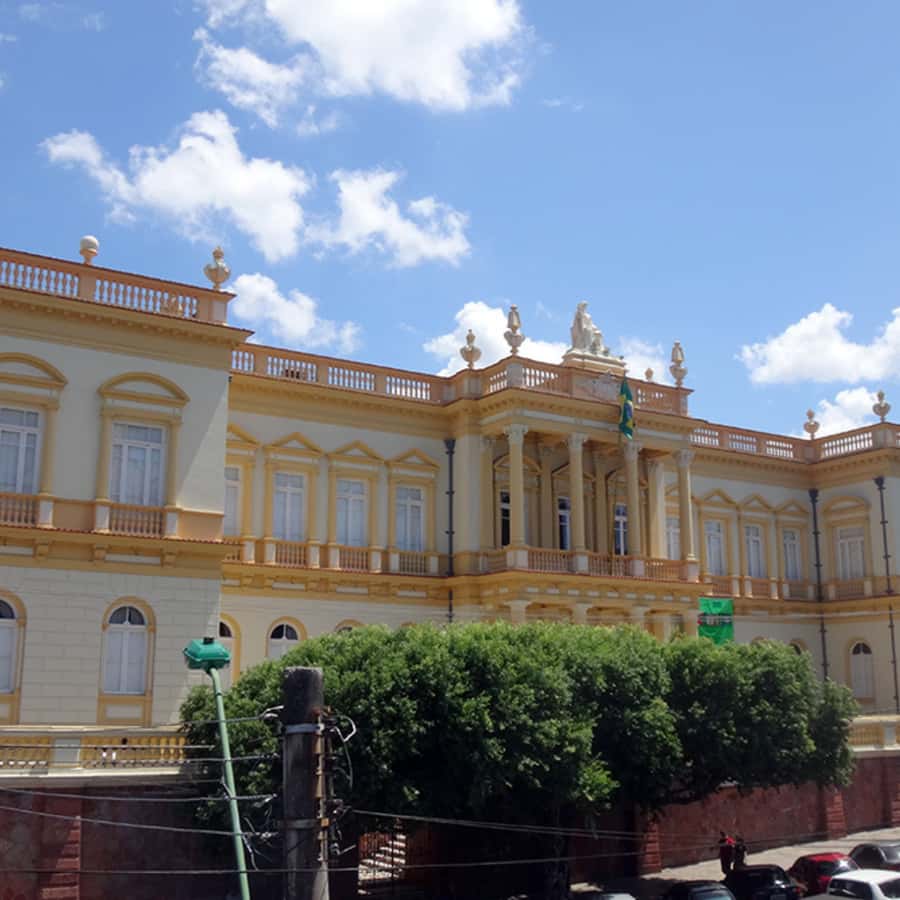
The meeting point is Rua 10 de Julho, 679. The tour ends at Teatro Amazonas, so you should check the exact meeting instructions before setting out. The supplied route information also describes the theater as the starting point for the historical discussion, which makes the published order slightly unclear.
That is worth sorting out in advance. A quick confirmation can prevent you from waiting at the wrong place, especially since one recent booking was not recorded properly and started one hour behind schedule. This is not a reason to dismiss the tour, but it is a good reason to leave some space in your Manaus plans.
The activity lasts three hours. That gives the guide enough time to do more than point at a few facades, but it is still a compact introduction rather than a full study of the city. I would place it early in your stay, when advice about meals, nightlife, crafts, and the Amazon can shape the days that follow.
A few more trips worth weighing up before you book
- From Manaus: One-Day Amazon Jungle Experience
★ 4.8 · 408 reviews - Manaus: Full-Day Tour on the Amazon River
★ 4.2 · 362 reviews - From Manaus: Presidente Figueiredo Waterfalls Daytrip
★ 4.3 · 149 reviews
Teatro Amazonas and Portuguese colonial life
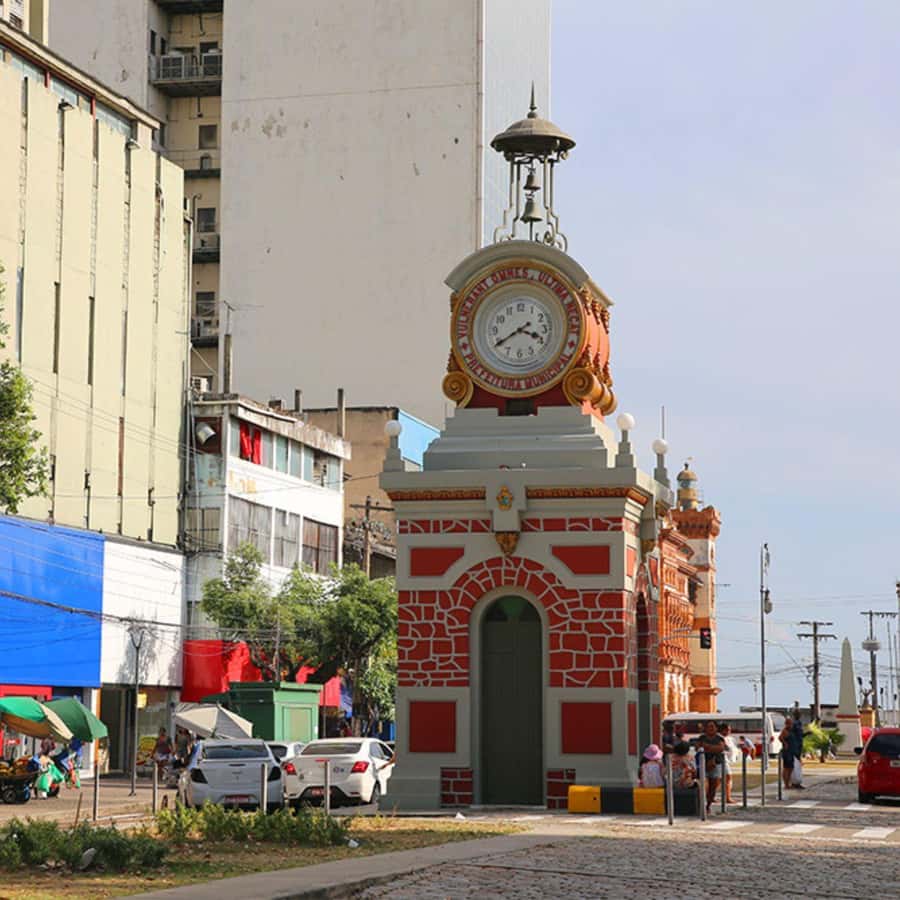
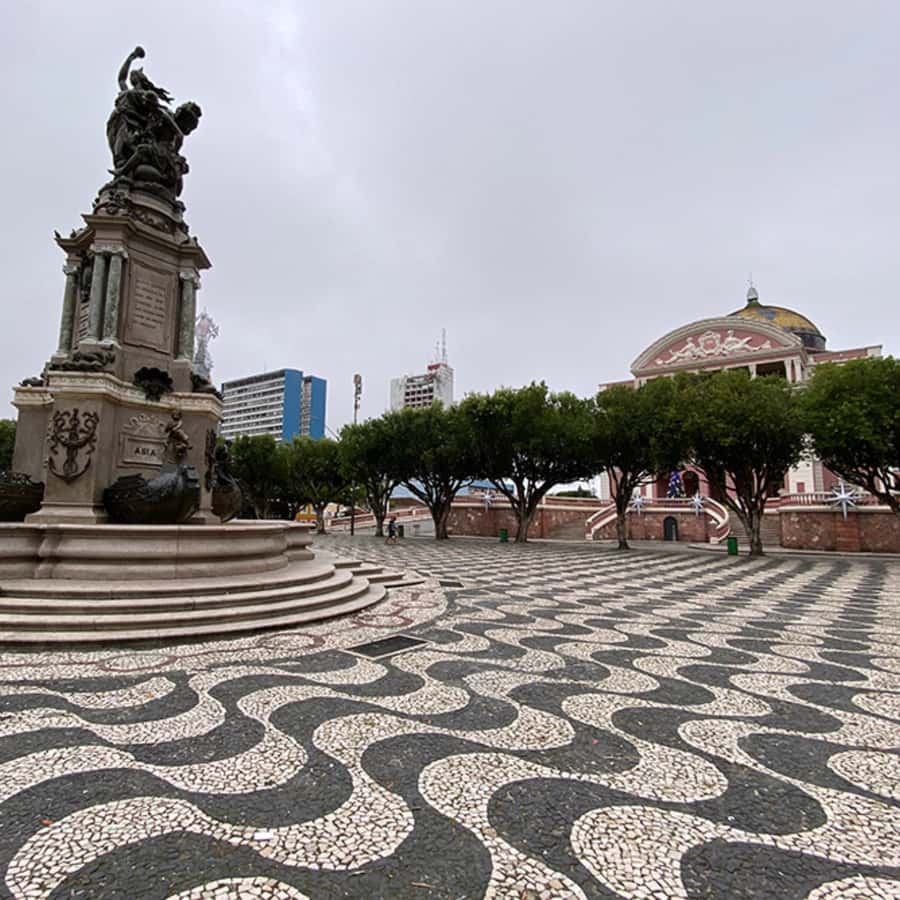
The theater provides the tour’s clearest starting point. Here, the guide explains how the Portuguese lived during colonization and uses the building and surrounding area to introduce the city’s early development.
This matters because Manaus can feel surprising at first. It is a major city in the middle of the Amazon, yet its central architecture reflects European influence and colonial planning. The tour helps connect those two facts rather than treating the theater as an isolated photo stop.
You should expect historical explanation more than a stage performance or a long interior program. The available information does not promise entrance to the theater, a concert, or a formal theater tour. The listed finish is Teatro Amazonas, so confirm what access is included if seeing the interior is important to you.
The guide’s role is especially useful here. A building can tell you that Manaus once had money and ambition, but the story explains why. The discussion ties colonial life to the wider process that shaped a city far from Brazil’s coast.
Colonial buildings on the way to the Municipal Market
The route continues toward the Municipal Market, with colonial buildings along the way. This is one of the strongest parts of the plan because the city’s architecture becomes part of a walking lesson rather than a series of disconnected sights.
Ask the guide to point out what is original, what reflects later changes, and how different forms of colonization affected construction. The provided description promises discussion of architecture and the way colonization helped build a city within the jungle. That broad subject gives you a useful frame for looking at streets and facades after the tour ends.
The market adds a different side of Manaus. Instead of focusing only on grand public buildings, the walk reaches a place linked to everyday commerce and local food. You receive recommendations about what to eat and where to find it, though the exact dishes and restaurants are not specified in advance.
That makes the conversation important. Tell the guide what you enjoy, how adventurous you want to be, and how much time you have. Advice is more useful when it matches your own tastes rather than a one-size-fits-all food list.
The rubber boom and Manaus’s unexpected wealth
The rubber story gives the tour its strongest historical thread. The guide explains how the rubber era affected the construction of Manaus and helped shape the city’s grand colonial buildings.
You do not need to know the full economic history before arriving. The key idea is simple: a valuable Amazon product brought money, ambition, and building projects to a city surrounded by forest. That contrast is what makes Manaus different from a standard colonial walking tour.
The tour also links Spanish and Portuguese colonization. The supplied description does not spell out every stop or event connected with Spanish influence, so you should not expect a detailed survey of every colonial power. Still, the comparison can help you understand that Manaus’s past was shaped by more than one outside influence.
I like this approach because it connects architecture to economics. Instead of simply admiring ornate buildings, you learn why such construction was possible and how the Amazon ecosystem formed the setting for the city’s growth.
More city tours:
- Manaus: Half-Day City Tour
★ 4.0 · 94 reviews - Historic City Tour Manaus by car with 3 stops.
★ 4.9 · 18 reviews - São Paulo: Main City Sights in 7 Hours – Shared Group Tour
★ 4.9 · 587 reviews - Rio: Carnival Backstage Tour at Samba City with Cocktail
★ 4.6 · 520 reviews
Local food, crafts, and curious places
The practical advice may be as valuable as the historical talk. Your guide can recommend local food, places to eat it, crafts, and unusual spots to visit. These suggestions give the tour a personal quality and may help you avoid spending your limited time in Manaus without a plan.
The information does not identify specific dishes, craft markets, or restaurants, so I would treat this as a conversation rather than a fixed food itinerary. Bring questions. Ask where to eat near your accommodation, what local product makes a useful gift, and which curious places fit your interests.
This part also helps you decide how much time to spend in the center. If you are staying only briefly, the guide can help you choose between another cultural stop, a meal, shopping, or an evening out. If you have several days, the suggestions may point you toward places beyond the basic city route.
The tour description says the hosts aim to make you feel like family. That is warm wording, but the available feedback gives it some support: one booking praised the service, and another described the English-speaking guide as sympathetic. Still, the personal quality will depend on the guide assigned and the language available that day.
Planning an Amazon jungle stay from Manaus
Manaus is often a gateway to a longer Amazon visit. If you have not yet reserved a jungle experience, the guide can recommend lodges for a personalized stay.
This does not mean a lodge visit is included. It is advice offered during the city tour. You should also remember that the listing does not name particular lodges, set out prices, or describe transport and activities. Use the conversation to explain what you want, then compare the recommendations with your own budget and schedule.
The value here is timing. You can ask about a jungle stay before committing money elsewhere. A local guide may help you think through the type of experience you want, but you should still request clear details about accommodation, transport, meals, and activities directly from any lodge you consider.
For visitors who have already booked their Amazon stay, this section is less important. You can redirect the conversation toward food, crafts, architecture, or evening plans.
Nightlife advice for a short stay
The guide also recommends places to go out at night. That can be useful because a three-hour city tour is not only about the hours spent walking. It can help you plan the rest of the evening with more confidence.
The description does not name bars, music venues, neighborhoods, or opening hours. Do not book this expecting a nightlife tour. Instead, think of it as local orientation, with the chance to ask what kind of evening suits you.
If nightlife is a major reason for booking, request current details during the tour. Advice can change, and the supplied information gives no guarantee about a particular venue or event.
Languages and the human side of the tour
Guiding is offered in Spanish, Italian, German, Portuguese, and English. That range is a major advantage for international visitors, especially in a city where historical explanations can lose their force if you are struggling with language.
Language availability may not be guaranteed in practice. One recent booking expected German but received no German-speaking guide. The English guide was described as sympathetic and spoke very well, so the problem was not the quality of communication, but the mismatch between the requested and available language.
If language matters to you, confirm it before booking and again before the meeting time. If your preferred language is unavailable, decide whether you are comfortable taking the tour in English or Portuguese.
The customer service record is mixed but not uniformly poor. One booking received praise for good service, while another was affected by a missed reservation and a late start. I would keep the tour flexible rather than scheduling a flight, long transfer, or fixed meal immediately afterward.
Is $80 good value for three hours?
At $80 per person, the price makes the most sense when you value local guidance and planning help. You are not paying only for a walk past buildings. You are also paying for explanations of colonization and the rubber era, food recommendations, craft suggestions, nightlife advice, and possible lodge guidance.
The value drops if you want only a quick look at Teatro Amazonas and the Municipal Market. Since the route covers a compact three-hour period and the included item is a guide, you should not assume that meals, entrance tickets, lodge transport, or other activities are included.
For a first visit, I can see the appeal. A city tour early in your stay gives you context before you explore on your own. It can also prevent the common problem of spending a short Manaus visit without knowing where to eat or how the city’s main buildings fit together.
For two people, the cost adds up quickly. Compare it with other guided options available for your dates, especially if you mainly want architecture. But if you want one conversation covering history, food, crafts, nightlife, and jungle planning, the broader advice may justify the price.
Who should book this Manaus tour?
I would recommend it to you if:
- You have about three hours for a first look at Manaus.
- You want history explained in plain terms rather than only taking photographs.
- You are interested in the connection between the rubber era and the city’s architecture.
- You still need advice about food, crafts, nightlife, or a jungle lodge.
- You want a guide in English, Portuguese, Spanish, Italian, or possibly German.
- You prefer a personal local introduction to exploring alone.
I would be more cautious if you need a strict start time. The reported one-hour delay is the clearest practical warning. I would also look elsewhere if your main goal is a detailed theater interior visit, because entrance and interior programming are not listed.
The average score is 3.5 from four ratings, which suggests a mixed but limited record. The most positive points are the good service, the interesting city content, and the English-speaking guide’s friendly manner. The main weaknesses are the missed reservation and unavailable German guide on one occasion.
Final verdict: book it for context and local planning
Book this tour if you want Manaus to make sense quickly. The combination of Teatro Amazonas, colonial buildings, the Municipal Market, and the rubber era gives you a useful historical base, while food, nightlife, crafts, and lodge advice make the experience practical.
I would confirm the starting point, requested language, and booking before the day. Keep your schedule open around the three-hour visit. If those details are settled, the tour offers a friendly way to meet Manaus through both its architecture and its everyday life.
FAQ
Where does the Manaus city tour start?
The stated starting location is Rua 10 de Julho, 679.
Where does the tour finish?
The tour finishes at Teatro Amazonas.
How long does the experience last?
The tour lasts three hours.
What languages are available?
The listed guide languages are Spanish, Italian, German, Portuguese, and English.
Is a guide included?
Yes. A guide is included.
Does the tour visit the Municipal Market?
The route includes reaching the Municipal Market and seeing colonial buildings along the way.
Does the tour explain the rubber history of Manaus?
Yes. The guide discusses the history of rubber and how the rubber era influenced the construction of Manaus.
Can the guide recommend food and restaurants?
Yes. Local food recommendations and suggestions about where to eat are part of the experience.
Can the guide suggest Amazon jungle lodges?
Yes. If you do not already have a jungle immersion reservation, the guide can recommend lodges for a personalized stay.
Just added around Manaus
- Manaus: Folklore Amazonian Dinner Show★ 3.3 · 3 reviews
- Manaus : Visit to MUSA (Amazon Museum)★ 3.0 · 4 reviews
- Manaus : A day of fishing on the Rio Negro★ 4.5 · 4 reviews
- Manaus: Amazon Rainforest Panoramic Airplane Flight★ 4.4 · 5 reviews
- Amazon Jungle 3-Hour Tree Climbing Activity★ 4.6 · 6 reviews
- Manaus: Multi-Day Amazon Survival Trip with Camping★ 4.7 · 6 reviews
- Amazon Safari® Manaus: Day trip on the Amazon River★ 3.8 · 9 reviews
- Amazon Experience: Indigenous culture and nature phenomenon★ 4.4 · 10 reviews
City Tours, compared.
Main City Sights in 7 Hours – Shared Group Tour
Read our review →
Carnival Backstage Tour at Samba City with Cocktail
Read our review →

Browse the lists this tour appears in